

PulseAI Medical Files for IPO: Revolutionizing ICU Care with AI-Driven Clinical Decision Support
When patients are admitted to the intensive care unit (ICU), they effectively entrust their lives entirely to the medical team. However, given the multitude of parameters monitored in the ICU and the varying clinical significance of these metrics across different patients, errors remain inevitable despite the utmost diligence of physicians and nurses in managing patient care.
Data show that in 2005, the incidence of errors in U.S. intensive care units (ICUs) was as high as 1,497 per 10,000 patients, with 13% posing life-threatening risks; on average, 1.7 medical errors occurred per patient per day, and an estimated 98,000 ICU patients died annually from medical errors. However, there is also encouraging data: 28% to 84% of these medical errors were preventable, provided that hospitals identify effective prevention strategies.
The domestic situation is equally concerning. With the onset of population aging, the number of patients continues to rise, while the lengthy training period for physicians has led to a widening gap between supply and demand, resulting in a severe shortage of professional medical resources. Furthermore, many diseases currently lack specialized clinical guidelines tailored to the Chinese population, forcing reliance on physicians’ clinical judgment; however, experienced clinicians are in short supply.
The situation in the ICU is even more severe. For physicians, patients admitted to the ICU generally present with highly variable and complex conditions, involving up to 236 comprehensive data dimensions—far beyond the scope of manual management and making it difficult to accurately assess changes in their condition. For patients, ICU care is costly, with an average medical expenditure of RMB 75,673 per person (amounting to over RMB 100 billion in annual medical costs). In this sense, the ICU is the most “cost-intensive” department in hospitals.
Addressing the current pain points in hospital ICUs, Maixing Medical, located in Hangzhou’s AI Town, has built a patient condition assessment system based on ICU medical big data. This system leverages artificial intelligence to assist in predicting the progression of patients’ conditions and has given rise to an intelligent ventilator management system and an early warning system for acute kidney injury (AKI), thereby providing physicians with auxiliary alerts and decision support to improve patient survival rates and prognostic outcomes. Currently, through the accumulation of structured data, Maixing Medical’s development model empowers the ICU sector with AI, striving to become the “Zero-Crypton Technology” of the ICU industry.
Maixing Medical focuses on building an intelligent big data platform for multi-parameter critical care, providing data sources for medical big data platforms and AI product development. By leveraging clinical data through machine learning methods such as Natural Language Processing (NLP), image recognition, and predictive modeling, the company develops clinically viable clinical decision support systems to assist physicians in making precise assessments of patient conditions.
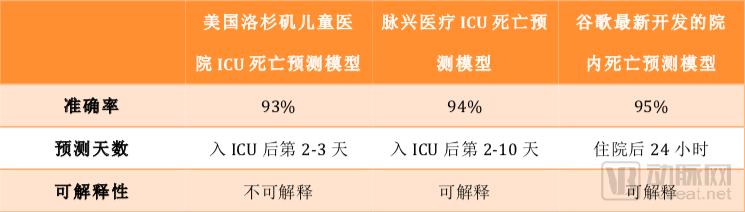
The core of Maixing Medical’s flagship product, the Disease Assessment System, is a disease evaluation model built on the MIMIC database. This system can analyze clinical data in real time, display the most relevant parameters to physicians according to their weights, and predict trends in disease progression and mortality risk, thereby assisting doctors in leveraging their clinical experience to make rapid diagnostic and therapeutic decisions. Maixing’s independently developed mortality prediction model achieves a prediction accuracy of 94% for patient outcomes, with an accuracy rate of 87% demonstrated during real-world validation at Peking Union Medical College Hospital.
In the ICU, more than 50% of critically ill patients may require mechanical ventilation. Adjusting ventilator parameters and determining the optimal timing for weaning demand substantial clinical expertise. WeanDoc assists in selecting appropriate ventilation modes and setting parameters during the initial phase of mechanical ventilation, providing rational respiratory support to maintain and improve patients’ respiratory and physiological status, thereby buying valuable time for treating the underlying disease. It tailors tidal volume (VT), positive end-expiratory pressure (PEEP), fraction of inspired oxygen (FiO2), and respiratory rate (RR) to individual patient needs. As patients’ conditions improve, WeanDoc guides clinicians in appropriately reducing respiratory support at the right time, enabling gradual restoration of spontaneous breathing, shortening the duration of mechanical ventilation, reducing ventilator dependence, and improving disease prognosis.
Under the continuous monitoring of WeanDoc, all patient indicators are under uninterrupted system surveillance, leading to significant reductions in infection risk, patient suffering, medical costs, and ventilator usage time. With WeanDoc’s assistance, physicians can also minimize errors; even if mistakes occur in parameter settings, they can be corrected immediately to prevent serious consequences. Meanwhile, this means that respiratory therapists with less clinical experience gain a 24/7 mentor, thereby helping hospitals alleviate their talent shortages.
To gain firsthand insight into Maixing Medical’s ICU early warning system, VCBeat visited the Medical Intensive Care Unit (MICU) at Peking Union Medical College Hospital. This initiative represents a collaboration between the MICU and Maixing Medical, spearheaded by Professor Du Bin, Director of the MICU at Peking Union Medical College Hospital. Professor Du serves as President of the Asia Pacific Association of Critical Care Medicine (APACCM) and Chairman of the Critical Care Medicine Branch of the Chinese Medical Doctor Association, holding a highly prestigious position within the ICU community.
As a partner of Maixing Medical, Weng Shou, Deputy Director of the Internal Medicine ICU at Peking Union Medical College Hospital, discussed the current pain points of medical databases: “In terms of data, every hospital in Beijing has its own massive database, but much of the data within these repositories is incomplete and non-standardized, making it difficult to extract for clinical research. Therefore, our first step must be to establish a standardized database. However, merely discussing standardization is insufficient; we need pioneers to test the waters first.”
Maixing Medical and Peking Union Medical College Hospital have jointly established a big data platform for ICU scientific research, enabling ICU physicians to independently utilize clinical data for related research purposes. Currently, Maixing’s research platform has been progressively deployed in multiple hospitals in Beijing. The demo version was officially launched on August 31 in the case showcase section of Maixing’s official website. We hope that more ICU departments will join us in participating in the development and maintenance of relevant standards. Associate Professor Weng Li will deliver a special report titled “Establishment of a Specialty Database for ICUs” at the Chinese Congress of Critical Care Medicine on September 8 this year.
Peking Union Medical College Hospital places great emphasis on data standardization in its ICU. Its data structure is comprehensive and standardized, allowing for easy export for algorithm training without requiring enterprises to spend additional time on data processing. This is highly valuable, as some data, due to missing indicators, cannot achieve the desired outcomes even with meticulous remediation.
“Although the number of cases available from Peking Union Medical College Hospital’s MICU is not large, with a total of over 2,000 patients’ complete datasets, ICU data differs significantly from conventional medical data. Taking heart rate as an example, we record data every five seconds, resulting in nearly 17,280 data points per day. Viewed across the entire timeline, the volume of data within each patient’s record is substantial, making it sufficient for algorithm training. Furthermore, after training our algorithms, we not only test them on our own database but also validate them using data from other hospitals. This approach enables us to promptly identify errors and refine the algorithms accordingly.”
Therefore, this collaboration with Peking Union Medical College Hospital has laid a solid foundation for Maixing to enter the ranks of leading medical AI enterprises.
Numerous companies focus on healthcare informatization, yet only a handful employ AI-assisted detection. However, AI enablement alone is not sufficient justification for hospitals to select an AI vendor. Most large-scale informatization companies already provide hospitals with comprehensive suites of information systems, including Hospital Information Systems (HIS), Picture Archiving and Communication Systems (PACS), Radiology Information Systems (RIS), and Clinical Decision Support Systems (CDSS). Once a hospital adopts such an integrated solution, there is little rationale for it to separately purchase a standalone, AI-enabled CDSS.
Maixing Medical clearly understands the needs and challenges of hospital informatization. This integrated system, combining a research platform with AI-driven clinical applications, can be deployed for clinical use by partnering with healthcare IT companies and integrating their data interfaces.
Compared to top-tier tertiary hospitals brimming with star specialists, primary care hospitals have a greater need for this ICU early warning system. Constrained by limited resource allocation, primary care hospitals suffer from a shortage of qualified personnel, leading to a higher incidence of medical malpractice; furthermore, the small scale of these hospitals restricts the influx of medical talent, creating a vicious cycle.
Frequent medical incidents have undermined the reputation of primary care hospitals and intensified residents’ inclination to seek treatment at tertiary (Grade III) hospitals, which in fact hinders the implementation of tiered diagnosis and treatment policies. Maixing Medical’s early warning system not only reduces the incidence of such incidents in primary care settings and improves public perception of grassroots healthcare, but also continuously provides doctors and nurses with key alerts regarding potential errors. This frequent error correction facilitates substantial improvement in the clinical competence of medical staff.
Physicians have always been the core of hospitals, with their every action impacting institutional reputation and development. As AI becomes an integral part of physicians’ workflow, it can help narrow the technological gap between primary care hospitals and tertiary Grade A hospitals, thereby providing a long-term boost to the development of primary healthcare.
The mortality warning system is only the first step for Maixing Medical. More importantly, through continuous machine learning, we can not only provide alerts to physicians but also offer corresponding decision support. Deputy Director Weng Li told VCBeat, “This system helps us correct errors in real time. However, what actions should be taken when errors occur remains unpredictable. Physicians can only adjust device parameters based on their experience, without any guarantee that such adjustments will positively impact patients—this is precisely what we aim to investigate. By continuously analyzing databases with AI, we may identify underlying patterns and make decisions most beneficial to patients. This, however, requires a substantial database. We hope more hospitals and physicians will join us in establishing industry data standards and promoting the intelligent development of the ICU sector.”
To date, there is still no compelling standard for evaluating databases. However, we cannot wait for official standards to be established before making decisions; taking the initiative is always beneficial. Moving forward, Maixing Medical will deepen its collaboration with hospitals. By adopting the perspectives of both physicians and patients, we aim to support clinical research, refine the interaction design of existing systems, enhance the user experience for physicians, and provide more reliable ICU services for patients.
On the other hand, Maixing Medical will also assist physicians in uncovering the long-term impacts of changes in various ICU indicators on patients, exploring precise solutions for patient deterioration, and making ICUs smarter.