

Philips Launches IntelliSpace AI Platform at The First Bethune Hospital of Jilin University to Propel Medical Imaging into the AI Era
Recently, VCBeat learned that Royal Philips announced the launch of China’s first “Philips Nebula Medical Imaging AI Platform” at the First Hospital of Jilin University (hereinafter referred to as “Jida First Hospital”). The platform assists radiologists in providing precise diagnosis and treatment for patients through intelligent image post-processing, and supports clinical research and application translation. Based on this platform, both parties will promote AI imaging research in specific clinical scenarios and the translation of research outcomes through close clinical and scientific cooperation.
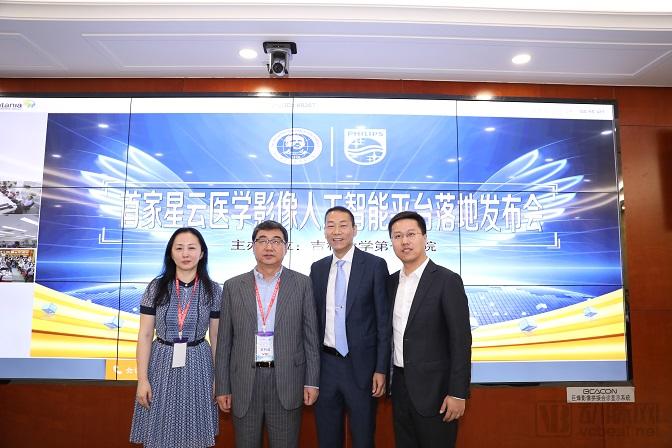
The First Hospital of Jilin University, also known as the Bethune First Hospital of Jilin University, is a large comprehensive Grade A tertiary hospital integrating medical care, teaching, scientific research, prevention, healthcare, and rehabilitation. In 2016, the hospital ranked 44th nationwide in the Fudan University China Hospital Rankings. In recent years, with the increasing number of patients, radiologists have faced mounting work pressure. To improve efficiency, Professor Hua Shucheng, President of the First Hospital of Jilin University, decided to collaborate with enterprises to explore and pilot artificial intelligence applications.
Regarding this collaboration, President Hua stated, “Precision medicine begins with imaging. Artificial intelligence technology can fully unlock the value of big data in medical imaging. Currently, the nation is vigorously promoting the application of healthcare big data. Against this backdrop, our hospital is actively making preparations. Our Department of Radiology is leveraging our advantages of a large patient volume and a wide variety of disease cases to pioneer an innovative path for translational medicine-engineering collaboration, thereby better ensuring that data originates from clinical practice and serves clinical needs. The implementation of the ‘Philips Nebula Medical Imaging AI Platform’ will undoubtedly serve as a powerful driver for the development of our hospital’s imaging big data and artificial intelligence capabilities.”
From the Department of Radiology to the Entire Hospital
There are many companies in China engaged in AI + healthcare, and Professor Wang Haifeng, Vice President of the First Hospital of Jilin University (Baiqiuen), believes that it is not easy to select the most suitable ones from among them.
“We first examine the company’s distinctive features, along with its products and growth prospects. Although there are numerous big data and artificial intelligence companies both domestically and internationally, the companies we ultimately select must have a more substantial track record and a sufficiently strong research and development team, with a deeper and more practical understanding of clinical research, diagnosis, and applications in hospitals.” Based on these selection criteria, the hospital ultimately entered into a collaboration with Philips.
According to President Wang, the First Hospital of Jilin University (Bethune First Hospital) serves a vast patient population with a wide variety of medical conditions. By leveraging Philips’ big data collection and organization capabilities, data on specific diseases can be aggregated within a very short timeframe.
President Wang believes that hospital administrators should not view issues solely from the perspective of individual departments. Instead, they must think from the standpoint of the entire hospital, the provincial region, or even higher levels. Given the high academic standing of The First Bethune Hospital of Jilin University, as a large public tertiary Grade-A hospital, it should assume corresponding social responsibilities. This includes extending high-quality medical resources to its medical consortium and assisting primary care hospitals in integrating their internal data resources, thereby achieving mutual improvement for both parties.
Specifically, hospitals facilitate the maturation of AI products through the operational oversight and coordination of these systems by professors and experts. This enables downstream dissemination to support clinical decision-making for physicians at lower-tier hospitals. By leveraging AI platforms, tertiary hospitals can also save time and effort while focusing on the treatment of critically ill patients. In this way, medical services and quality at lower-tier hospitals are improved, while tertiary hospitals assume a leading and driving role.
Nebula Medical Imaging AI Platform
The “Philips Nebula Medical Imaging AI Platform” mentioned by President Wang is the key product of this collaboration. It is reported that the platform has obtained dual certification from the FDA and the CFDA, and consists of two components: the “Philips Nebula 3D Image Post-Processing Platform (IntelliSpace Portal, hereinafter referred to as ISP)” and the “Philips Nebula Discovery Platform (IntelliSpace Discovery, hereinafter referred to as ISD).”
ISP, as a clinical imaging diagnosis platform, covers multiple clinical fields in radiology, including cardiology, oncology (liver, lung, breast, prostate, etc.), and neurology. With over eighty applications, it enables image fusion across different brands and types of imaging equipment, providing advanced visualization processing for multi-modal images, mining of disease imaging features, longitudinal tracking of lesions, and advanced feature description functions. This assists clinicians in making rapid and precise clinical diagnostic decisions based on imaging, planning personalized treatment plans, and monitoring disease treatment.
As a scientific research platform, ISD adopts an open-source architecture and is equipped with professional research services, including rich algorithm components, an open artificial intelligence platform, a programming platform, and database management systems. It comprises three major research modules—oncology, cardiology, and neurology—that support hospitals and third-party platforms in independently developing and rapidly validating clinical research algorithms. ISD helps physicians seamlessly integrate proprietary algorithms or third-party clinical research applications into hospital workflows and research processes, thereby translating research achievements into meaningful clinical applications.
Regarding the “Philips Nebula Medical Imaging AI Platform,” Mr. He Guowei, CEO of Philips Greater China, stated: “The ‘Philips Nebula Medical Imaging AI Platform’ represents one of Philips’ innovative achievements in leveraging AI technology to create value for precision medicine. Looking ahead, our goal is to address the pain points and needs of China’s healthcare system by closely aligning global leading innovative resources with local clinical contexts. We are actively building a ‘local ecosystem’ that integrates industry, academia, and research, thereby supporting China in achieving ‘breakthrough innovations’ in AI-driven healthcare and promoting the equitable distribution of high-quality medical resources.”
Integrated Solutions for Pulmonary Diseases
The Pulmonary Nodule Assessment System is a clinical application within the "Philips Nebula Workstation" integrated solution for pulmonary diseases, utilizing computer-aided technology to assist physicians in the rapid detection of small pulmonary nodules.
In the latest v9 release, the Philips team upgraded the pulmonary nodule detection algorithm by incorporating machine learning techniques. Literature has confirmed that this algorithm achieves an error rate of less than 1% in detecting nodules ranging from 4 mm to 30 mm in size. Moreover, its stability significantly surpasses that of radiologists, serving as a "second pair of eyes" for radiologists and enhancing physicians' confidence in clinical decision-making.
Meanwhile, detailed quantitative information regarding nodules is also presented in the form of structured reports. This includes metrics such as nodule volume doubling time, percentage of volume growth, effective diameter, and statistical data on Hounsfield Unit (HU) values. The Nebula Workstation’s proprietary one-click nodule volume extraction and advanced structured reporting capabilities enable the rapid dissemination of these findings in either paper-based or digital formats.
As a comprehensive solution for pulmonary diseases, the “Nebula Workstation” also helps medical staff manage the full cycle of patient disease through a series of applications targeted at different pulmonary conditions:
For example, in pulmonary vascular assessment systems, Philips leverages fully automated analytical tools to assist physicians in detecting pulmonary embolism in adults; for patients with chronic obstructive pulmonary disease (COPD), Philips employs a semi-automated tool (CT COPD) to measure and visualize the severity of the condition; addressing pulmonary calcification characteristics, the CT Calcium application enables one-click disease risk assessment through 3D segmentation and quantification of calcification in pulmonary vessels.
Once these diagnostic procedures are completed, the multimodal tumor tracking system provided by the Nebula Workstation offers additional tools to assist clinical healthcare professionals in monitoring disease progression. These include drug sensitivity analysis for tumors and longitudinal tracking of individual tumor changes. As part of Philips’ one-stop solution for pulmonary diseases on the Nebula Workstation, comprehensive services spanning detection, diagnosis, and treatment plan management are delivered throughout the patient’s entire care journey.
An Open AI Environment for Medical Imaging
IntelliSpace Discovery (ISD) is an enterprise-grade research solution and a medical imaging platform powered by a forward-looking artificial intelligence framework.
ISD not only helps research institutions rapidly develop the algorithms and products they need, but also mobilizes third-party medical technology companies to jointly build platforms and innovate together, thereby accelerating the translation of scientific achievements into clinical applications.
The platform comprises both software and hardware components. The software is categorized by disease type into oncology, cardiovascular, and neuroscience research suites. The hardware component utilizes NVIDIA’s next-generation AI data center-grade dedicated processing accelerators, boosting the performance of artificial intelligence training frameworks by fivefold. This configuration not only accelerates algorithm development but also enhances overall efficiency in clinical applications.
As hospitals place increasing emphasis on academic research, Philips will also provide professional technical consulting services in artificial intelligence and medical image processing based on the ISD platform, helping research institutions break through scientific research bottlenecks and achieve higher academic accomplishments.
Furthermore, Philips scientists have engaged in clinical collaboration with Bosh Medical to integrate the algorithm for radiotherapy target volume planning in nasopharyngeal carcinoma into the ISD clinical workflow. This algorithm not only employs advanced image segmentation and enhancement techniques but also utilizes Markov artificial neural networks to improve the accuracy of target volume prediction. It reduces the manual radiotherapy planning time from four hours to just a few minutes, achieving accuracy comparable to that of senior radiation oncologists.
Intelligent Radiomics
Radiomics, one of the frontier hotspots in medical imaging research, was first proposed by Dutch scholar Lambin in 2012.
The concept of radiomics originates from tumor heterogeneity. The spatial and temporal heterogeneity exhibited by solid tumors at the genetic, protein, cellular, microenvironmental, tissue, and organ levels limits the accuracy and representativeness of results obtained from invasive diagnostic methods such as pathology and molecular analysis. Medical imaging enables comprehensive, non-invasive, and quantitative assessment of the overall tumor morphology, allowing for real-time monitoring of tumor progression and treatment response, thereby providing a reliable solution to the challenge of tumor heterogeneity.
The profound implication of radiomics lies in the high-throughput extraction of extensive imaging data from modalities such as CT, MRI, and PET, to achieve tumor segmentation, feature extraction, and model construction. By conducting in-depth mining, prediction, and analysis of massive imaging datasets, it assists physicians in making the most accurate diagnoses.
Radiomics can also be intuitively understood as the conversion of visual imaging information into deep-level features for quantitative analysis. With the growing adoption of radiomics, significant attention is currently being devoted to research on the differentiation and grading of benign versus malignant tumors, as well as prognosis.
Philips Radiomics, a platform developed by the Philips Clinical Science team, is the first in the industry to integrate two core modules: radiomics feature calculation and machine learning-based feature analysis. The platform streamlines and intelligentizes the complex workflows of radiomics research, providing physicians with a more user-friendly interface.
The radiomics feature calculation suite includes a 2D data manipulation window and a 3D data visualization window. The machine learning feature analysis suite is used to analyze the high-dimensional radiomics features obtained from calculations. The established models are ultimately tested on the test set to evaluate their performance, and the optimal machine learning model is selected accordingly.
Currently, the Philips Clinical Science team has leveraged this platform to conduct medical imaging research in oncology and neurology with more than ten Grade A tertiary hospitals, including Ruijin Hospital, Peking Union Medical College Hospital, Shengjing Hospital, Beijing Tiantan Hospital, and West China Hospital, covering multiple imaging modalities such as CT, MR, and PET.
Experts from the First Hospital of Jilin University’s Bethune Medical Center and Philips share a unified vision for the future of imaging AI platforms: artificial intelligence is ushering in a transformative new era.
When humans transform their vast amounts of data into meaningful insights, intelligent solutions will enable proactive, precise, and personalized care, promoting equitable access to high-quality healthcare services for all. However, artificial intelligence can never fully replace doctors, nurses, or caregivers, as only human experience and wisdom can train “smart AI.” Moreover, only humans can provide compassionate, empathetic care to other humans.