

2018 MedAI World AI Healthcare Innovation Challenge: Exploring Infinite Possibilities in Medicine, AI Applications Flourish Across Multiple Domains
In July last year, the State Council issued the "Development Plan for New Generation Artificial Intelligence," proposing a three-step strategic goal for China's new generation of artificial intelligence development by 2030. In October of the same year, the Shanghai Municipal Government released the "Implementation Opinions on Promoting the Development of New Generation Artificial Intelligence in This City," aligning with the first step of the national strategic goals set for 2020, and deployed and fully implemented the "AI@SH" action plan. Artificial intelligence will become a growth engine for the new economy. In recent years, the integration of artificial intelligence technology with the healthcare sector has deepened continuously. Tech giants and capital heavyweights are actively laying out their strategies in the smart healthcare industry, while numerous startups in niche fields are poised to take off. Therefore, whether from policy dividends or technological innovation dividends, the healthcare industry is set to face more opportunities and challenges.
On August 25, 2018, the grand finals of the 2018 World Artificial Intelligence Innovation Competition—Artificial Intelligence Excellence in Medicine Innovation Challenge (MedAI Challenge), themed “Exploring the Infinite Possibilities of Medicine,” concluded successfully at the Fenglin Campus of Fudan University. The event was guided by the National Development and Reform Commission, the Ministry of Science and Technology, the Ministry of Industry and Information Technology, the Cyberspace Administration of China, the Chinese Academy of Sciences, the Chinese Academy of Engineering, and the Shanghai Municipal People’s Government; hosted by the Xuhui District People’s Government and the Shanghai Jiao Tong University Institute of Artificial Intelligence; organized by the Shanghai Perception City Data Science Research Institute; and co-organized by the Xuhui District Science and Technology Commission, BioValley, and Fenglin Group.
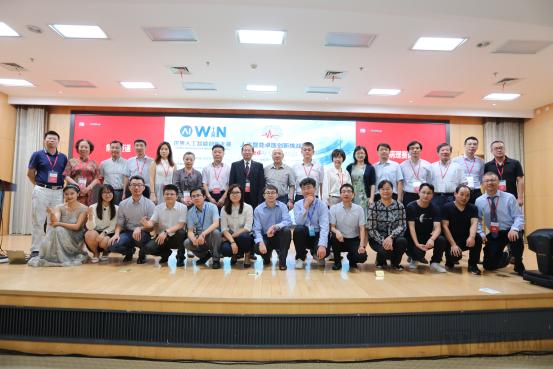
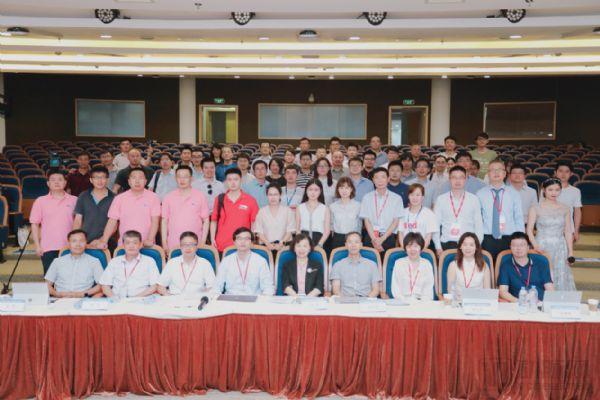
Figure: Group Photo from the Competition
A total of 125 outstanding teams from around the world participated in this competition. After three months of fierce competition, 11 exceptional teams emerged as finalists. Mr. Shi Wenjun, Deputy Inspector of the Shanghai Municipal Commission of Economy and Informatization, and Ms. Chen Shiyan, Deputy District Mayor of Xuhui District, delivered opening remarks at the finals. The “Di Xiaojiao (Diyingjia)” team from the pathology track won the Innovation Challenge Award. The “Heart Dimension · Zhongshan Hospital · Jialianyi” team from the ECG track received the Best Popularity Award. Meanwhile, “Voxel Technology” from the diabetic retinopathy track and the “Cloud Pathology & Wonders Information Joint Team” from the pathology track both received the Most Promising Award. Winning teams of the MedAI Challenge not only receive cash prizes but also gain access to various incubation and support services, including incubation bases, entrepreneurial mentors, resource matchmaking, and policy guidance.
A World-Class Jury: Challenging the “Pioneers” of Global AI in MedAI
The judging panel for this competition consists entirely of leading authorities in the fields of artificial intelligence and healthcare.
The AI experts attending the finals included Professor Yang Xiaokang, Executive Vice Dean of the Institute of Artificial Intelligence at Shanghai Jiao Tong University; Professor Shen Dinggang, Co-CEO of United Imaging Intelligence; Zhang Qian, General Manager of Microsoft China’s Healthcare Division; and Dr. Jin Xi, Senior Expert of the Smart Healthcare Professional Committee of the Chinese Association for Artificial Intelligence.
The medical experts in the pathology track who attended the finals included Professor Zheng Jianming, Director of the Department of Pathology at Naval Medical University and Director of the Department of Pathology at Changhai Hospital; Professor Yin Yulei, Director of the Department of Pathology at Huadong Hospital; Professor Ping Bo, Head of the Cytopathology Subspecialty at Fudan University Shanghai Cancer Center; Professor Wang Shuyang, Head of the Clinical Gene Amplification Testing Laboratory at the Fudan Clinical Pathology Diagnosis Center; and Professor Cui Quancai, Chief Physician of the Department of Pathology at Peking Union Medical College Hospital and Director of the Beijing Center for Pathology Quality Control and Improvement.
The medical experts in the ECG track attending the finals include Professor Su Yangang from the Department of Cardiology, Zhongshan Hospital Affiliated to Fudan University; Professor Lu Yongxin from the Department of Cardiology, Union Hospital, Huazhong University of Science and Technology; Professor Jiang Meng from the Department of Cardiology, Renji Hospital Affiliated to Shanghai Jiao Tong University; and Professor Yuan Jinqing, Deputy Director of the Coronary Heart Disease Center, Fuwai Hospital, Chinese Academy of Medical Sciences.
The medical experts attending the diabetic eye disease track include Professor Gao Xin, Vice President of Zhongshan Hospital Affiliated to Fudan University; Professor Lin Haotian, Associate Chief Physician in the Cataract Specialty at Zhongshan Ophthalmic Center of Sun Yat-sen University; Professor Zhao Mingwei, Director of the Department of Ophthalmology at Peking University People's Hospital; and Professor Yuan Yuanzhi, Associate Chief Physician in the Department of Ophthalmology at Zhongshan Hospital Affiliated to Fudan University.
AI “Revolutionizing the Old and Establishing the New”: Artificial Intelligence Will Ultimately Become Physicians’ Most Important Assistant
Over the past few years, the field of smart healthcare has undergone remarkable transformations. The medical knowledge system is being reshaped by technologies such as big data and artificial intelligence (AI). Solutions based on this reconstructed medical knowledge framework and smart healthcare are emerging as new catalysts for transformation within the healthcare industry. AI applications are most widespread in niche markets such as drug development and medical imaging. Drug development accounts for the largest share of the global medical AI market. In the coming years, AI technology will play an increasingly vital role in target identification, drug discovery and design, and high-throughput compound screening. Additionally, AI is seeing expanding application in clinical research, robotic personal assistants, genomics, and precision medicine.
Innovation Project “A Hundred Flowers Bloom”: AI Implementation Blossoms Across Multiple Fronts
At the finals, the 11 most outstanding project teams from around the world delivered a spectacular, multidisciplinary roadshow to the audience and guests present. Spanning topics from pathology to electrocardiography and diabetic retinopathy, the presentations offered a visual and intellectual feast for all attendees.
Pathological diagnosis is universally recognized by the global medical community as the most reliable, reproducible, accurate, and authoritative form of diagnosis, serving as the cornerstone of all diagnostic methods. However, China currently faces a significant shortage of pathologists, making artificial intelligence (AI) a crucial means to bridge this market gap. Achieving breakthroughs in this field first will lead the global advancement of pathological equipment research and development. This initiative focuses on intelligent imaging and AI-assisted diagnostic all-in-one machines within the pathology sector. It primarily evaluates the accuracy and speed of AI software systems, while also considering the usability and market promotion prospects of hardware systems, with the positioning of “clear visualization and precise identification.” Specifically, it aims to achieve integrated operation of AI and digital pathology analysis by integrating digital slide scanners with AI algorithms.
The finalist teams in the pathology track demonstrated exceptional strength and competed with distinction. Di Xiao Jiao (Diyingjia Technology) possesses internationally leading AI-assisted pathological diagnostic technology, covering the full product chain of digital pathology (tissue, cell,ImmunityIHC, and molecular pathology). The Cloud Pathology team from Wonders Information, leveraging an authoritative top-tier team of pathology experts and supported by a first-class national health information platform with the capacity to extend resources to grassroots levels, achieved 100% accuracy in the intelligent classification of thyroid slides during the competition. The HistoAI team under the Hengdao Medical Pathology Diagnosis Center showcased its extensive repository of pathological samples and the big data platform PathHub, and announced the release of its self-annotated datasets to contribute to the development of AI in the pathology industry. The AION team, primarily composed of students from world-renowned universities such as Cornell University, Harvard University, Shanghai Jiao Tong University, and Tsinghua University, demonstrates significant potential for future achievements.
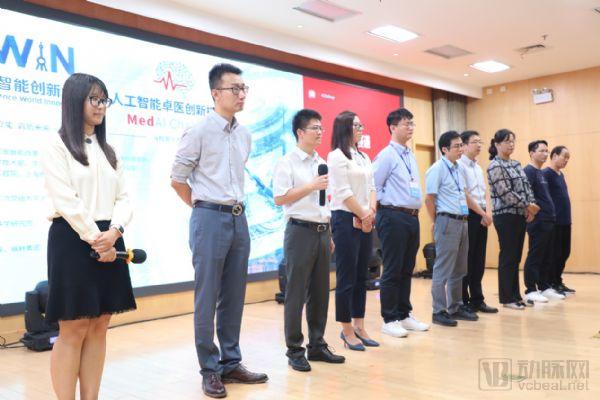
Figure: Q&A Session on the Pathology Track
In the field of ECG diagnosis, in applying artificial intelligence to improveHeartVasculardisease monitoring capabilities, enhance primary healthcare services in remote areas, and improve overall ECG diagnostic proficiency, ultimately achieving early detectionHeartVesselto reduce the risk of adverse cardiovascular events and lower mortality rates. This track focuses on mobile ECG monitors for monitoring adverse cardiovascular events, with an emphasis on intelligent ECG diagnosis, particularly the rapid intelligent identification and diagnosis of high-risk cardiovascular events.
The Xinweidu team has built an AI-assisted ECG diagnostic platform with a medical-led approach, partnering with Jialian Medical Technology’s long-term portable two-electrode full-lead ECG monitor to serve patients with chronic cardiovascular diseases and healthcare professionals, ultimately aiming to reduce cardiovascular mortality. Shuchuang Medical’s AlphaECG project combines a real-time dynamic remote monitoring system with an AI-based ECG algorithm-assisted diagnostic system, providing the general public with easy-to-use, low-cost, clinical-grade ECG monitoring services. Xinsheng Medical employs deep learning algorithms to focus on the research and development of its AI ECG analysis engine, “AI ECG Physician,” offering fast and accurate ECG analysis and diagnostic services to partner institutions, including healthcare facilities, medical device manufacturers, wearable device companies, and ECG monitoring service providers.
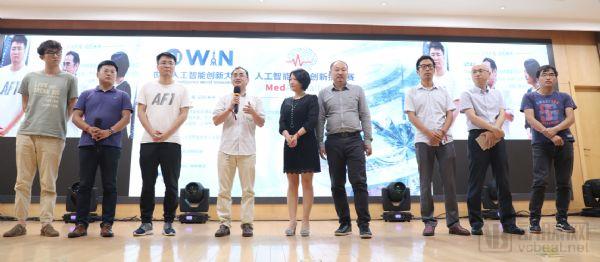
Figure: Q&A Session in the ECG Track
For diabetic retinopathy, early diagnosis and treatment, along with long-term monitoring, are critical measures to prevent severe outcomes such as blindness. However, current awareness and treatment rates for diabetes itself remain low. More than 50% of patients with diabetes fail to undergo timely screening for ocular complications. Therefore, leveraging advanced technologies to enable one-stop management of diabetes and its ocular complications; empowering endocrinologists with AI to enhance their capacity for long-term patient management and improve the efficiency of diagnosing ocular complications; and implementing automated follow-up for patients at different stages to monitor complication risks and adjust treatment plans in a timely manner, can effectively address these pain points.
The teams in the diabetic retinopathy sector provided detailed on-site presentations of their innovative medical solutions. While the clinical significance of these innovations was highly praised by the judges, certain projects require further improvement in areas such as profitability models, market research, and clinical trials.
The four finalist teams each possess distinct characteristics. Voxel Technology has developed a highly sensitive AI solution for comprehensive screening of all fundus diseases, leveraging 4 million high-quality fundus images, and demonstrated its integrated hardware-software screening system on-site. Yiwei Technology’s founding team brings five years of accumulated technical and industry experience, with its products validated and piloted in top-tier medical institutions across China. Zhiyuan Huitu provides an end-to-end AI-assisted diagnostic solution for fundus diseases, capable of connecting to fundus cameras of various brands and delivering cloud-based AI services; its products have been deployed for trial use in dozens of medical institutions. The New Vision team’s product is characterized by low sample requirements for training, absence of equipment dependency, avoidance of training overfitting, as well as innovations in small-sample transfer algorithms and multi-task learning algorithms.
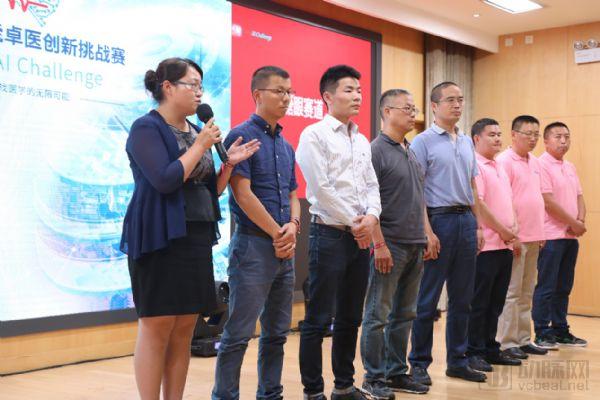
Figure: Q&A Session for the Diabetic Eye Care Track
After a day of intense competition, the judges carefully evaluated each entry and selected one winner for the Innovation Challenge Award and one for the Best Popularity Award. The Di Xiaojiao (Diyingjia) team from the Pathology Track received the “Innovation Challenge Award,” while the Xin Weidu team from the ECG Track won the “Best Popularity Award.”
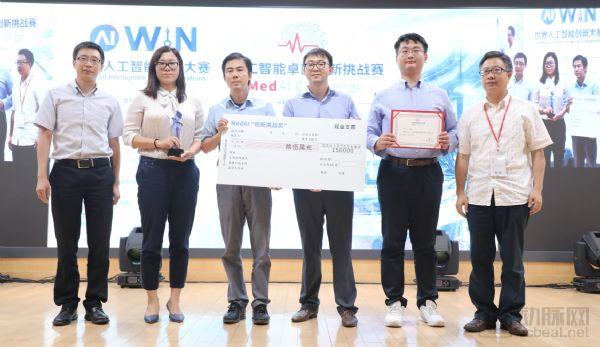
Figure: Innovation Challenge Award
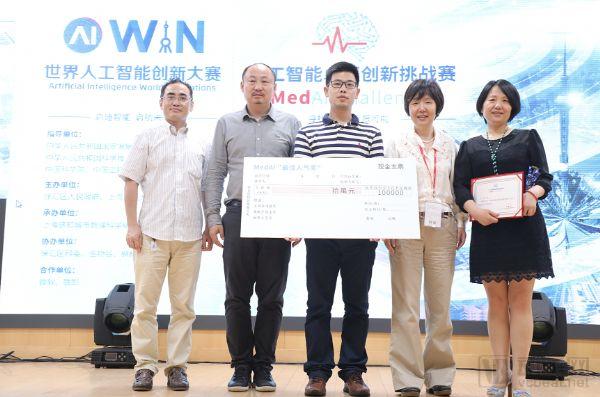
Figure: Best Popularity Award
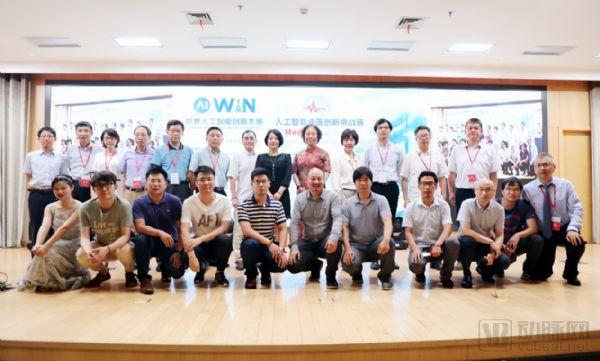
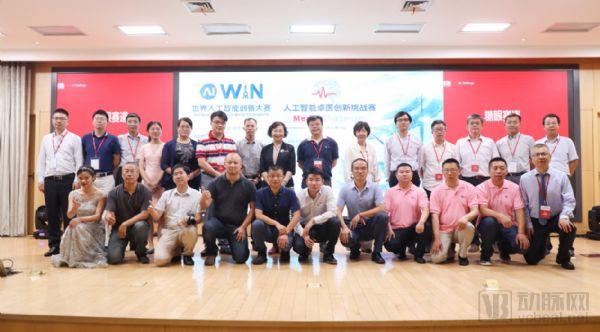
Figure: Group photo of contestants and guests