

CureFit: Revolutionizing India's Health and Wellness Industry with $180M Funding and Four Strategic Acquisitions in Two Years
Cure.fit
Health Management Platform
Nowadays, a standard figure and a healthy body have become the focus of people's attention.
Fitness and health management first emerged in the United States in the 1970s, and the industry has since reached a relatively mature stage of development in the country. According to a report by Zhiyan Consulting, there are currently 35,000 fitness clubs in the United States, with the fitness industry valued at $25.8 billion.
When India is mentioned, yoga is often the first fitness activity that comes to mind. In fact, beyond fitness, India’s health management industry has been quietly emerging in recent years.
Cure.fit is an Indian health and fitness company that combines engagement, guidance, and delivery through online and offline channels to provide consumers with end-to-end proactive health management. Since its establishment in 2016, the company has completed a Series C financing round, raising nearly $180 million in total, and has acquired four food and fitness enterprises. In the 2016-2017 fiscal year, Cure.fit reported sales of ₹300 million in just six months, shocking the industry.
In the birthplace of yoga, VCBeat (WeChat ID: vcbeat) seeks to uncover the secrets behind Cure.fit’s rapid growth.

Cure.fit Founders Ankit Nagori (left) and Mukesh Bansal (right)
Source: YourStory
Cure.fit founder Mukesh Bansal is a 40-year-old entrepreneur. After graduating from university in 1999, he worked as an analyst at Deloitte, one of the Big Four consulting firms. He subsequently held positions at two internet companies and two computer software companies. In 2007, he founded Myntra, an Indian e-commerce platform, which he sold to Flipkart, a major online shopping website, for $300 million after eight years of operation.
Mukesh Bansal and his co-founder Ankit Nagori first met during this acquisition. At the time, Ankit Nagori served as Chief Business Officer at Flipkart, while Mukesh Bansal was Head of Commerce. Their close collaboration in these roles paved the way for their next “entrepreneurial journey.”
Before founding Cure.fit, Mukesh Bansal was a fitness enthusiast who typically woke up early to exercise five to six times a week. Beyond his personal passion, Bansal identified a widespread demand for health and wellness services through market research, leading to the creation of Cure.fit. The company aims to empower consumers to proactively manage their health by leveraging technology and data.
“Currently, a variety of service products are offered in a fragmented manner on the market, but none of them enable users to manage their health needs in an end-to-end fashion.Cure.fit: A Solution from Product to User“, enabling users to take full control of their health status, improve quality of life, and reduce long-term healthcare costs,” said Ankit Nagori.
Cure.fit, as an integrated platform, comprehensively engages in health management through four segments: Cult.fit for physical fitness, Eat.fit for guidance on healthy and nutritious food intake, Mind.fit for mental wellness products, and Care.fit focused on providing primary healthcare.
Cure.fit is committed to building a community of health enthusiasts who share the same goal of leading a healthy lifestyle, by offering a range of workouts from yoga to boxing, nutritious diets, and primary healthcare, all while ensuring customer autonomy.
Cult.fit
Cult.fit focuses on physical fitness. Cult.fit believes that exercise is a core component of a healthy lifestyle, offering specialized training programs through non-traditional fitness facilities. Cult.fit primarily operates offline physical centers, providing equipment-free workout solutions, including strength and conditioning, cycling, boxing, mixed martial arts, Zumba, and yoga.
Cult.fit focuses on proper form and posture to prevent common workout injuries, aiming to provide a balanced mix of training programs. Before joining Cult.fit, customers must first download the Cult.fit mobile app or visit the official website to book classes. Each class lasts 50 minutes, and failure to attend after booking will result in a penalty.
Eat.fit
Eat.fit provides guidance on healthy and nutritious food intake. Eat.fit believes that a healthy diet plays a key role in an individual’s overall health and fitness journey. Eat.fit offers freshly prepared, low-calorie, and balanced meals, helping customers develop healthy eating habits without compromising on taste.
Eat.fit offers two meal subscription options based on customer needs: a weekly plan (7 meals) and a monthly plan (30 meals). Subscribers can cancel or swap meals according to their preferences, with refunds automatically issued for any canceled meals.
Mind.fit
Mind.fit provides mental health training, with a focus on holistic meditation.
Baidu Baike defines meditation as follows: "Meditation is a technique and pathway in yoga for achieving samadhi, involving the complete focus of mind, intention, and spirit on the primordial origin; its ultimate aim is to guide individuals toward the state of liberation."
Mind.fit offers tailored programs for different clients, requiring less than 15 minutes a day to help them better manage stress, reduce anxiety, improve sleep quality, and alleviate worries.
Care.fit
Cure.fit focuses on providing primary healthcare, assigning a private physician to each client to reasonably plan their lifestyle through phone or video consultations, and delivering preventive healthcare solutions.
Cure.fit, launched in April 2018, has opened its first offline center in Bengaluru and will subsequently expand across India.
Since its establishment in 2016, the company has undergone five acquisitions and three major rounds of financing, raising a total of nearly $180 million. It has now become a sizable startup in India’s health management sector.
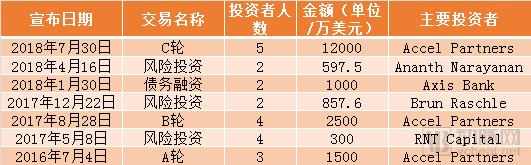
Cure.fit Financing and Investment (Source: Crunchbase)
In July 2016, Cure.fit raised $15 million in Series A funding from Accel Partners, IDG Ventures, and Kalaari Capital to launch the company, a sum that was regarded as one of the largest Series A rounds in the Indian startup ecosystem at the time.
In 2017, it secured two rounds of venture capital financing, raising $25 million in Series B funding from Accel Partners, IDG Ventures, Kalaari Capital, and UC-RNT Fund.
In 2018, Cure.fit secured one debt financing round and one venture capital investment. In July, it raised $120 million in its Series C round—the second-largest Series C funding amount for an Indian company to date—with investors including DG Ventures, Kalaari Capital, Accel Partners, Oaktree Capital, and Chiratae Ventures.
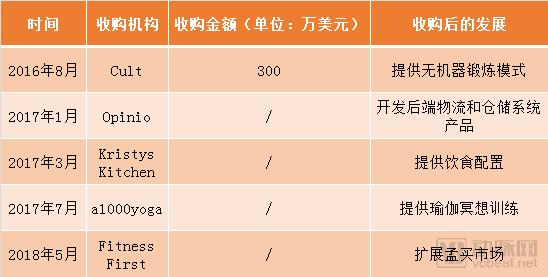
Cure.fit M&A Event (Source: Crunchbase, compiled by VCBeat)
One month after securing Series A funding, Cure.fit invested $3 million in August 2016 to acquire a majority stake in Cult, a Bangalore-based fitness startup. “I like Cult’s unique equipment-free workout model, which is something I want to scale,” said Mukesh.
In 2017, Cure.fit acquired three companies in succession and subsequently launched the Cure.fit app.
In May 2018, Cure.fit acquired the Indian branch of Fitness First, a gym chain under Oaktree, with the intention of expanding into the Mumbai market. After the acquisition, Fitness First would become a wholly-owned subsidiary of Cult.fit.
Unlike traditional fitness companies, Cure.fit primarily serves individual consumers (B2C) and has a relatively small base of large enterprise clients (B2B). Therefore, enhancing service quality to drive customer acquisition is its primary path to profitability.
As of now, Cure.fit operates 30 Cult.fit centers (30 in the Bengaluru region and 6 in the National Capital Region), five Mind.fit centers, five Eat.fit centers, and one newly launched Care.fit center.
As its business scope expanded, Cure.fit recognized the need for a larger platform. Mukesh Bansal stated, “The overarching goal of this platform is to deliver comprehensive health management, which requires integrating all aspects—including nutrition, mental health, fitness, and primary care—and employing a unified assessment framework to identify the most suitable plan for each customer.”
To become a one-stop healthcare platform for its customers, Cure.fit plans to launch AI-generated content to help customers manage diseases and improve their health conditions. The company creates a healthcare database by setting up search networks, purchasing data, and analyzing customer data on its own platform.
The project is led by Ankit Gupta, a former engineer at Walmart Labs and Google. “Our biggest initiative this year is objective management. Rather than simply having users purchase Cult.fit memberships or food subscriptions, we leverage AI to automatically generate personalized health management plans that bundle all of Cure.fit’s services, delivering these plans to customers within seconds.”
“Cure.fit also plans to add in-app features that allow users to schedule appointments or chat with doctors and other healthcare professionals,” said Mukesh Bansal. “This is a unique product, one that doesn’t even exist in the United States or China.”
Based on its targets, Cure.fit expects to launch 50 Care.fit centers, 500 Cult.fit centers, 100 Mind.fit centers, and over 100 Eat.fit kitchens within the next five years.
In recent years, China’s fitness industry has rapidly emerged and become widespread across the country. Health management is often closely linked with fitness, leading to the rise of platforms that help users manage their physique while also providing preliminary health management services. VCBeat highlights three representative companies for analysis.
KEEP
KEEP was founded in September 2014 and is headquartered in Beijing. KEEP is an internet-based fitness app with built-in social features. Users can leverage fragmented time to select suitable video workout courses anytime, anywhere, engage in live synchronized training, and connect with like-minded individuals in the community to document their fitness journeys together.
In addition to training and social features, KEEP has added a sports e-commerce store selling athletic products, as well as a healthy eating section that provides dietary guidelines, diverse recipes, and a food database, enabling personalized meal planning and calorie tracking for users.
Earlier this year, Keep launched offline business operations to expand its revenue streams. In March, the company held its first strategic press conference since its establishment three years ago, unveiling Keepland, an offline fitness space targeting urban scenarios; KeepKit, a smart hardware brand designed for home use; and KeepUp, a trendy sportswear brand.
FEEL
FEEL was founded in February 2014 and is headquartered in Beijing. FEEL advocates that everyone should continuously improve their health status, address deficiencies and bad habits, and maintain a positive and healthy attitude toward life.
Leveraging big data on human health and artificial intelligence (AI) algorithms, and under the guidance and ongoing support of industry experts across various fields, this app has tailored more than 50,000 health management services to over 45 million users, covering ten major health categories to help customers achieve their healthy-living goals.
Gudong
Codoon was founded in October 2009 and is headquartered in Chengdu. It is dedicated to encouraging people to develop healthy exercise habits and lifestyles through gamified, social, and fragmented approaches, thereby promoting physical well-being.
Codoon is a fitness-focused social networking mobile application with GPS functionality. It enables users to track their workout routes, connect with fellow fitness enthusiasts, discover sports news and interesting stories, and stream live videos online to share exercise insights and enhance their athletic performance.
In summary, a comparison with Cure.fit offers the following insights for Chinese health management companies that use fitness as an entry point:
1. Upon user acquisition, establish a proprietary standardized database to facilitate the use of AI technology for customizing patient exercise rehabilitation plans once sufficient data has been accumulated;
2. Develop a health management industry chain, integrating exercise, diet, primary healthcare, and yoga meditation into a unified model;
3. Enterprises that use fitness as an entry point to provide health management services mainly target the consumer market (C-end). While this approach may achieve high sales volume, it also incurs high customer acquisition costs, particularly for internet-based companies. These enterprises can draw lessons from the B2B2C model adopted by pure-play health management firms.
4. Platform-based enterprises may launch offline operations after accumulating a substantial user base, integrating online and offline services. However, they must prioritize personalized development to differentiate themselves from existing gyms in the market. They should also leverage their established online brand advantages, as exemplified by Keep’s KEEPLAND.