

Pediatric Post-Clinic Follow-up Platform [Probe Capital - Industry Research] Files IPO Prospectus
Follow-up, also known as post-discharge monitoring, refers to the practice whereby hospitals maintain contact with patients after diagnosis and treatment through correspondence or other means, or require patients to return for regular re-examinations. This process aims to regularly assess changes in the patient’s condition, provide guidance on rehabilitation, and continuously track and observe therapeutic outcomes and disease progression. The resulting primary data are then subjected to statistical analysis to accumulate clinical experience and support medical care, scientific research, and teaching objectives.
Follow-up can be categorized in three ways: by the level of implementation, by the content covered, and by the presence or absence of specific topics.
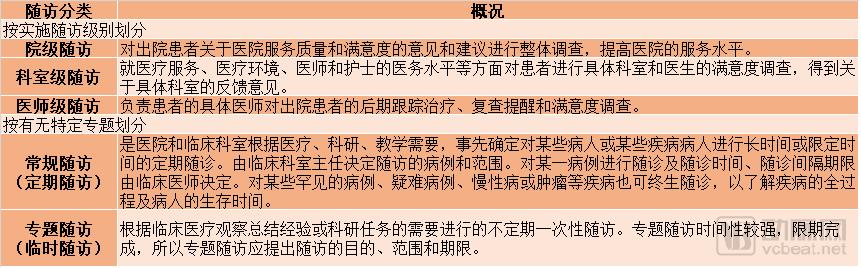
Follow-up models can be divided into traditional follow-up and internet-based follow-up. The former mainly includes letter-based, telephone-based, home visit-based, and outpatient clinic-based follow-ups.
Traditional Follow-up Model
Letter-Based Follow-Up
Letter-based follow-up is the earliest method of patient follow-up, primarily conducted through mailed correspondence. This approach is suitable for rural and remote areas due to its cost-effectiveness; however, it involves complex procedures, a heavy workload, and poor interactivity. Consequently, with the widespread adoption of telephones and the internet, this method has been gradually phased out.
Telephone Follow-up
Telephone follow-up is currently the primary method of follow-up, yielding a high follow-up rate. Upon admission, patients or their guardians provide mobile phone numbers or home telephone contacts. After discharge, follow-up personnel communicate directly with patients or their guardians via telephone.Its advantages include direct communication with patients to assess their recovery status and provide guidance, offering strong interactivity while allowing healthcare providers to receive the most authentic and objective feedback on the hospital and department. Telephone follow-up can significantly improve follow-up rates, and the data obtained are relatively accurate and reliable. Its disadvantages include communication difficulties arising from frequent changes in patients’ and their families’ phone numbers or language barriers.
Home Visit Follow-up
When letters and telephone follow-ups prove ineffective, home visits become an alternative approach for communicating with patients. Home visit follow-ups are primarily used for patients with chronic diseases or advanced-stage cancer. The advantages include the ability to engage in face-to-face communication, provide psychological support, and offer specific, correct guidance on treatment and nursing care. However, this method is limited by human and material resources and is currently more commonly implemented in community health service centers.
Outpatient Follow-up
Outpatient follow-up refers to patients returning to the outpatient clinic for reevaluation. This mode of follow-up is primarily limited to patients with specific or chronic conditions, such as those requiring imaging studies, laboratory tests, or those with nephrotic syndrome and postoperative congenital heart disease. The advantage of outpatient follow-up is that it yields the most reliable and comprehensive clinical data; however, this approach poses certain difficulties for patients seeking medical care away from home or those residing in remote areas.
Emerging Internet-Based Follow-Up Models
The rise of mobile internet has given birth to the “Internet + Medical Follow-up” model. “Internet + Medical Follow-up” refers to a mode in which hospitals or doctors use software systems or mobile apps to connect with patients after their visits or discharge, facilitating doctor-patient interaction. Through these systems or apps, physicians provide services such as responding to patient inquiries, addressing concerns, managing patient groups, and storing clinical records.
For physicians, this not only saves time and improves efficiency but also enables the accumulation of extensive patient data for scientific research. Patients can communicate and consult with doctors via the internet, upload medical records including images and text, and provide objective evaluations of their physicians. Minor ailments can be managed through remote consultations, eliminating the need for in-person hospital visits. This approach saves both time and money while avoiding the hassles associated with traditional healthcare visits, such as cumbersome procedures and long waiting lines.
For hospitals, follow-up is an integral component of medical records management and a critical element of clinical, educational, and research activities. Hospitals have established clear regulations regarding follow-up care, aiming to enhance the quality of such services to provide patients with more comprehensive rehabilitation guidance, improve patient satisfaction, and advance the informatization of post-discharge services. By scientifically, comprehensively, effectively, and systematically collecting, organizing, and analyzing post-discharge patient data, hospitals seek to reduce instances of misdiagnosis, missed diagnosis, and omitted treatment.
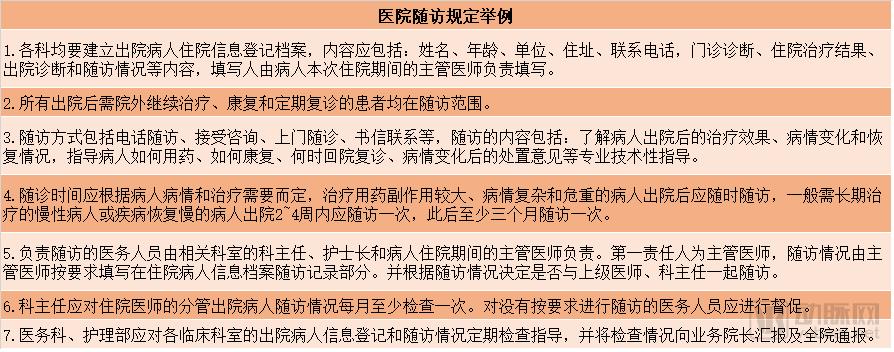
Source: Compiled from public information
Furthermore, China currently implements a global budget prepayment system for public hospitals’ medical insurance coverage. Any utilization exceeding the designated quota must be borne by the hospitals themselves. Moreover, under the advance-payment mechanism, hospitals only receive reimbursements three to six months after submitting their claims. In light of these policy constraints, public hospitals need to explore alternative avenues to generate additional revenue and adjust their revenue models. Beyond generating income for physicians through remote consultations and follow-up visits, novel internet-based follow-up platforms offer other business models—such as partnerships with commercial insurance providers—that can help hospitals restructure their revenue streams.
Meanwhile, internet-based follow-up can also provide more comprehensive data support for hospitals’ clinical diagnosis and treatment as well as scientific research. Currently, China’s medical big data landscape is plagued by information silos, with electronic medical records (EMRs) not yet fully integrated across 95% of domestic hospitals. To deepen the application of AI-assisted diagnosis and treatment, it is essential to coordinate diverse big data sources, including EMRs, laboratory test results, and physicians’ notes. In this context, a follow-up platform capable of integrating complete data from the pre-diagnosis, intra-diagnosis, and post-diagnosis phases is needed to provide such support.
Currently, the landscape of post-consultation follow-up in China is characterized by a scarcity of high-quality medical resources. Although physicians are concerned about patients’ post-visit conditions, they often lack the capacity to provide adequate attention. In practice, follow-up care is primarily conducted through physician instructions and voluntary, periodic outpatient revisit by patients. Physicians require more convenient and time-efficient methods to monitor patients’ post-consultation recovery, thereby enhancing the efficiency and quality of diagnosis and treatment. Additionally, physicians need to collect clinical treatment data to support clinical research. Furthermore, internet-based post-consultation follow-up products, which offer online remote consultation and follow-up visits, can generate additional income for physicians.
From the patient’s perspective, post-discharge follow-up enables long-term communication between doctors and patients, ensuring timely management of emerging issues and facilitating continuous disease treatment. Meanwhile, active engagement with physicians outside the hospital setting supports more effective health management.
However, due to the aforementioned lack of physician capacity for follow-up, most hospital-based follow-ups are conducted by nurses or specially hired assistants. Some hospitals also outsource follow-up services. The primary content of these follow-ups typically includes basic information such as patients’ recovery status, dietary and activity levels, and health education guidance. For some patients, post-treatment care requires more professional, in-depth, and personalized follow-up. Due to limitations in professional expertise, the quality of the aforementioned follow-up methods is suboptimal, failing to provide better personalized health management for patients. These various factors contribute to low patient adherence.
Post-Consultation Follow-Up APP: Establishes a convenient communication channel between doctors and patients, eliminating the need for manual entry of patient profiles and medical records by physicians, while enabling patients to complete follow-ups from home, thereby enhancing their engagement.
Currently, one of the major pain points in health insurance is the lack of long-term incidence data and data on the efficacy and evaluation of different treatment regimens, leading to unscientific product design and resulting in losses for health insurance companies.
According to the Financial Times, health insurance companies are almost universally operating at a loss. More than 80% of these insurers have loss ratios exceeding 80%, approximately 40% have loss ratios surpassing 100%, and some even exceed 200%. Comprehensive, continuous, and real-time post-discharge follow-up data from patients hold immense value. By effectively collecting and conducting in-depth analysis of such data, insurers can achieve effective risk control and precise pricing.
From the payer’s perspective, the value and significance of follow-up care are mainly reflected in two aspects:
(1) It extends its reach into specialized healthcare scenarios to capture upstream traffic, users, and data, which in turn feeds back into actuarial and design models, enabling the provision of more cost-effective products to a broader user base.
(2) It extends its reach to out-of-hospital medical care, integrating in-hospital and out-of-hospital medical data to better monitor and educate patients on their out-of-hospital behaviors, thereby reducing the claims ratio.
Pediatric diseases entail a substantial need for follow-up care. Chronic, severe, and genetic conditions in particular require long-term post-diagnosis monitoring. Physicians can address only 20% of a child’s healthcare needs within the hospital setting; the remaining 80% depends on parental education and home-based care.
Therefore, it is crucial to establish an integrated mechanism for disease course intervention and management of chronic diseases across the pre-consultation, intra-consultation, and post-consultation phases, ultimately aiming to enhance disease control, prevent deterioration, and manage overall healthcare costs. Follow-up care constitutes a critical component of chronic disease management.
In 2012, 10%–20% of children in China suffered from chronic diseases, with 2%–4% affected by severe chronic conditions. According to projections, the prevalence of chronic diseases among children was expected to reach 29.4 per 1,000 by 2020, corresponding to a total of 11.1 million children. Common pediatric chronic diseases in China primarily include asthma; kidney diseases (such as chronic glomerulonephritis and nephrotic syndrome); hematologic disorders (such as leukemia and thalassemia); and endocrine disorders (such as diabetes mellitus and hypothyroidism). These conditions are characterized by prolonged disease courses, recurrent episodes, and the need for long-term or even lifelong treatment.
According to data from the National Cancer Registration Center in 2013, the incidence of childhood cancer in China has been increasing at an annual rate of 2.8%, while the mortality rate has been slowly declining at an annual rate of 1.1%. The incidence of congenital heart disease in China is 7‰–9‰, with approximately 150,000 children born with congenital heart disease each year.
Over the past decade, the surgical rates for complex congenital heart disease in children and for neonatal cardiac surgery in China have risen significantly, while mortality rates have declined markedly. Many infants with severe or complex cardiovascular malformations have survived thanks to interventions performed during infancy or even the neonatal period; however, their growth and development face numerous challenges. Since most chronic diseases can lead to abnormal growth and development in children, regular follow-up, assessment, and management of therapeutic outcomes and health indicators such as growth and development have become particularly important.
There are approximately 2,985 types of major and chronic pediatric diseases requiring follow-up care, characterized by their wide distribution across various specialized departments. Meanwhile, the diagnosis and treatment of these conditions exhibit a pattern of regional patient concentration. Due to the unique and specialized nature of pediatric healthcare, most general Grade IIIA hospitals lack sufficient pediatric resources to manage major and chronic pediatric diseases, making provincial-level Grade IIIA children’s hospitals the primary choice for such care.
Taking Beijing Children’s Hospital as an example, out-of-town patients account for 60% of outpatient visits and 70% of hospitalizations. The leukemia specialty group within the Hematology and Oncology Center admits nearly 1,000 newly diagnosed pediatric and adolescent leukemia patients from across China each year. Given that the annual number of new pediatric leukemia cases in China ranges from 6,000 to 8,000, this single tertiary children’s hospital alone serves nearly 20% of all newly diagnosed pediatric leukemia patients. If internet-based follow-up services could cover 20–30 provincial-level children’s hospitals, they would reach more than 90% of pediatric patients with major or chronic diseases nationwide, demonstrating strong network effects.
According to World Bank data, children accounted for 17.68% of China’s total population in 2017, resulting in a current child population of 245 million. Meanwhile, the per capita total health expenditure in China was RMB 3,712.2 in 2017, with out-of-pocket payments comprising 28.8%, which translates to an average out-of-pocket health expenditure of RMB 1,069 per person.
Among these per capita costs, considering factors such as children’s age and lower medication usage, their out-of-pocket expenses may be subject to certain discounts. Therefore, we calculate based on only 30% of the per capita cost, amounting to RMB 320.7. The final calculated market size is RMB 78.57 billion.
Most companies offering follow-up services in the market essentially provide healthcare information systems without backend operational capabilities. They merely serve as outsourced vendors for hospitals, focusing on hospital-based patient relationship management (CRM) rather than specializing in disease-specific medical follow-up, and they do not differentiate by disease type.
Therefore, such enterprise medical information systems do not fall within the scope of “Internet+” follow-up care. They function primarily as hospital modules for managing doctor-patient relationships, with an emphasis on statistical analysis from the hospital’s perspective. Although there may be some overlap with Internet-based follow-up products in terms of certain features and presentation, only a brief introduction is provided here.

Currently, the emerging internet-based follow-up industry mainly includes Yi Suifang, Qiannuo Doctor, San'ai Medical, Maidou Follow-up, Shanghai Ronghan, and Qianhe Medical.
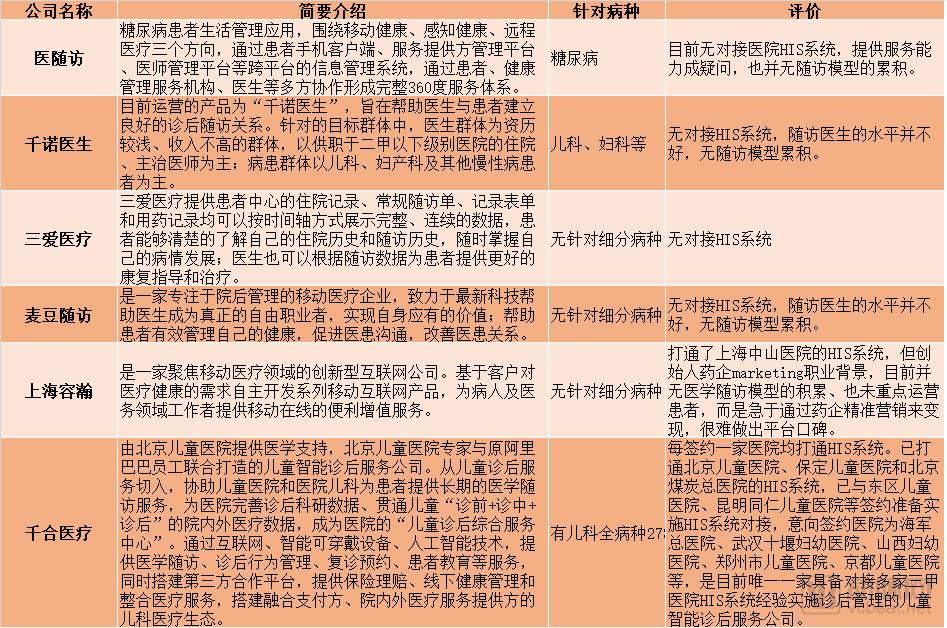
Through the comparison of the above follow-up platforms, most of the current follow-up platforms with medical attributes have the following problems:
(1) Lack of capability to interface with Hospital Information Systems (HIS): The HIS is the core system of a hospital, storing vast amounts of critical patient data. Due to privacy and confidentiality concerns, most hospitals are reluctant to open up interfaces. Without connectivity to HIS data, physicians must manually enter basic patient information and medical records. In practice, physicians are already heavily burdened with clinical duties, leaving them with limited capacity for patient follow-up. Requiring manual entry of such information would significantly increase their workload, thereby reducing their willingness to adopt the system.
(2) Lack of accumulated follow-up models for specific disease subtypes: An excellent medically-oriented follow-up platform should have expert physicians summarize medical tracking indicators to establish databases and follow-up templates, thereby enabling intelligent statistical analysis to rapidly identify abnormal patient indicators.
(3) The average competency of follow-up physicians is relatively low: Although the national policy promotes multi-site practice, core hospital experts are not permitted to provide services on third-party platforms, resulting in subpar physician quality on general follow-up platforms.
Qianhe Medical’s “Super Follow-up” platform is the only post-discharge follow-up platform in its niche that integrates with the Hospital Information System (HIS) for every contracted hospital, features robust disease-specific medical follow-up models, and collaborates with top-tier experts.
As an internet-based entry point, the follow-up platform has the potential to evolve into a hospital’s post-diagnosis service center. Since hospitals are willing to adopt it for management purposes, a wide range of tasks—including patient communication, patient education, and the delivery of future medical service packages—can be efficiently handled through this platform. Meanwhile, as physicians adapt to internet-enabled follow-up care, they have improved their operational efficiency and reduced the risks associated with misdiagnosis.
Internet-based follow-up platforms can also serve as tools for physicians to manage patients and conduct scientific research. By connecting healthcare providers and patients via the internet, follow-up solutions bridge the gap between them, enabling physicians to accurately reach patients and obtain continuously updated clinical data. Post-consultation data are of significant value for assisting physicians in diagnostic decisions during follow-up visits and for supporting medical research. Timely feedback from patients helps physicians enhance their clinical expertise and promotes the development and advancement of related disciplines. Under this model, hospitals are the payers, covering the costs of the follow-up systems provided by follow-up service companies.
Meanwhile, as a patient management platform, the follow-up company can develop business-to-consumer (B2C) business models to support hospitals in operating remote outpatient clinics and follow-up visits, enabling physicians to issue electronic prescriptions and linking with pharmaceutical companies for medication delivery. It can also collaborate with merchants selling disease-specific products, such as those for pediatric oncology and pediatric endocrine disorders, to offer these products on its comprehensive follow-up platform and provide chronic disease management services. Under this model, patients are the payers, primarily covering online consultation fees, while the follow-up company can engage in various revenue-sharing arrangements with hospitals, physicians, and merchants.
As potential payers, insurance institutions have been actively exploring and innovating to tap into the vast potential patient market, leveraging actuarial techniques, big data analytics, and genetic testing during the development of follow-up care services.
Currently, insurance institutions primarily offer health insurance and single-disease complication insurance. Health insurance is offered as a rider to life insurance policies, with chronic disease management services included as an ancillary benefit to help manage the “three highs” (hypertension, hyperglycemia, and hyperlipidemia). In contrast, chronic disease complication insurance targets patients with already diagnosed chronic conditions, providing coverage for future complications. Furthermore, taking the collaboration model between insurance institutions and hypertension chronic disease management service providers as an example, both parties are innovating chronic disease management service models by adjusting patients’ medication reimbursement limits and complication insurance coverage.
In the future, as patient data becomes increasingly abundant and technologies for precise data analysis advance, user-need-based personalized insurance products will become a key model of collaboration between insurance institutions and chronic disease follow-up organizations. By converting previously unstructured offline data into structured online formats and accumulating relevant follow-up models, insurers and other institutions will be better positioned to develop products tailored to different disease conditions.
The primary obstacle for insurance companies in designing segmented commercial health insurance products is the lack of comprehensive post-diagnosis data. Internet-based follow-up services can effectively address this issue, while also participating in the bundled product design and sales of insurance offerings. Furthermore, internet-based follow-up can serve as a tool for patient follow-up and health management for insured individuals, while helping insurance companies monitor and standardize post-diagnosis behaviors to reduce claim rates. The payer for this model is commercial insurance companies.
Follow-up services benefit hospitals, physicians, and patients by fostering mutual trust and enhancing user stickiness. In the future, follow-up service companies can leverage their platforms to connect patients with various healthcare providers, thereby reducing customer acquisition costs for these institutions. Collaborating partners of the follow-up platform may include overseas medical treatment facilitators, health examination centers, private children’s hospitals and pediatric clinics, adolescent mental health centers, and specialized rehabilitation institutions for specific diseases. Acting as an entry point, the follow-up platform directs patient flow to these partners and charges corresponding fees. Under this model, the paying parties are the healthcare service partners.