

Chengtian Technology Secures Tens of Millions in Pre-A Funding to Advance Intention-Detecting Exoskeleton Robots for Rehabilitation
VCBeat (WeChat ID: vcbeat) has learned that Hangzhou Chengtian Technology Development Co., Ltd. recently announced the completion of its tens-of-millions-level Pre-A financing round. The round was led by Beijing Naton Technology Group, and the funds will be primarily used to expand Chengtian’s exoskeleton robot market and support the research and development of related products.
Chengtian Technology, located in Hangzhou’s Future Sci-Tech City, was established in January 2017 as a technology-driven enterprise integrating research and development, production, and sales. Previously known as Harbin Chengtian Technology Development Co., Ltd., the company currently operates with its headquarters in Hangzhou and a branch in Harbin. Chengtian Technology is dedicated to the development of exoskeleton robotics, intelligent medical devices, specialized robotics, and intelligent systems. Its Harbin branch was recognized as a National High-Tech Enterprise in 2015. Built on years of technological accumulation, Chengtian Technology has successfully completed numerous scientific research and industrialization projects, filed over 100 independent intellectual property rights, and received more than 20 awards across various fields, establishing itself as a robotics company driven primarily by technological innovation.
China’s rehabilitation medical industry remains in its early stages of development, with a severe mismatch between the vast and urgent market demand and the current realities of limited capital investment, a small number of rehabilitation institutions with modest scales, and lagging equipment research and development. According to the “2018 China Robotics Industry Analysis Report” by the Zhongzhi Technology Evaluation and Research Center, the market size of service robots in China reached RMB 12.2 billion in 2017, with medical service robots accounting for only 24%.
In accordance with the requirements set forth in Document No. 31 (2011) of the Ministry of Health, titled “Guidelines for the Construction and Management of Rehabilitation Medicine Departments in General Hospitals,” it is stipulated that “general hospitals at Level II and above (including Level II, hereinafter referred to as such) shall establish independent departments to provide rehabilitation medical services, and the department name shall be uniformly designated as the Department of Rehabilitation Medicine.” A total of 9,684 national general hospitals at Level II and above, as well as military hospitals, meet these criteria.
There are approximately 20 million patients with paraplegia and hemiplegia in China. After completing treatment and returning to their communities, these patients still require rehabilitation training to prevent complications such as pressure ulcers, deep vein thrombosis of the lower extremities, urinary tract infections, muscle atrophy, decreased bone mineral density, cardiopulmonary failure, and digestive system failure, as well as to improve their psychological well-being. If each patient requires two rehabilitation sessions per day, the daily demand would reach 40 million sessions. Assuming that each exoskeleton robot can serve 20 patients per day, community hospitals across the country would have a demand for 2 million units.
Both rehabilitation institutions and individual patients have an urgent need for a rehabilitation robot system that can achieve effective recovery through scientific and intelligent means, and Chengtian has entered the robotics market with this as its focal point.
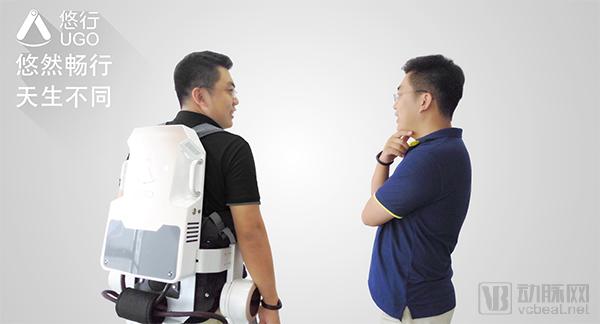
Chengtian Technology targets rehabilitation medical service institutions as its core user base. Its UGO exoskeleton robot assists patients with paraplegia and hemiplegia (those lacking sensation and strength below the navel) in walking. During ambulation, the exoskeleton requires no manual button operation by the patient; all movements are triggered by the patient’s intent to walk. This exoskeleton robot can be integrated with rehabilitation therapies at rehabilitation centers to assist hemiplegic patients in undergoing rehabilitative training and treatment.
For individual users, Chengtian Technology has also launched a personal version of this exoskeleton robot. Compared to the enterprise version, the personal version is designed for home environments. It assists patients with daily activities and provides rehabilitation training for walking, balance, and other functions, thereby meeting their mobility needs at home and bridging the gap in care after patients leave rehabilitation centers.
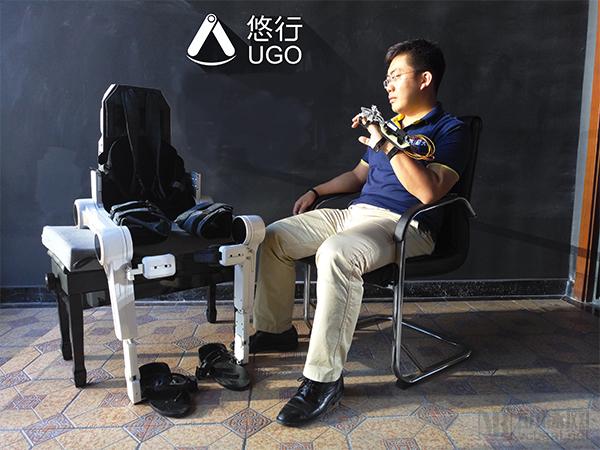
To achieve accurate intention-based communication between the exoskeleton robot and patients, Chengtian Technology has jointly developed the system with ten universities, including Harbin Engineering University, Harbin Institute of Technology, Zhejiang University, and Carleton University. It has also collaborated with Beijing Bo’ai Hospital, Zhejiang Provincial Rehabilitation Center for Persons with Disabilities, The Second Affiliated Hospital of Zhejiang University School of Medicine, and the Affiliated Hospital of Heilongjiang University of Chinese Medicine on data integration initiatives. Through training on extensive integrated datasets, the exoskeleton robot’s algorithm achieves 100% accuracy in recognizing patients’ walking intentions, with a detection rate of 98%.
Wang Tian, CEO of Chengtian Technology, graduated from Harbin Engineering University with a major in Pattern Recognition and Intelligent Systems. He completed postdoctoral research at both Carlton University and Harbin Engineering University. As a researcher in high-tech artificial intelligence fields such as exoskeleton technology and intelligent systems, he has over ten years of experience conducting research on exoskeletons, medical robots, rehabilitation ergonomics, and special-purpose robots. To date, Wang Tian has published 16 papers in domestic and international journals, holds 28 invention patents, 23 utility model patents, 5 design patents, and 23 software copyrights. He has served as a key researcher in multiple national-level projects, including the National High-Tech Research and Development Program (863 Program).
The partnership team comprises a sales head with extensive nationwide distributor and sales resources, core technical personnel with years of R&D experience, and a COO responsible for operations who is a former military officer. The overall structure is well-balanced, featuring high technological sophistication, clear division of labor, and strong execution capabilities.
We remain committed to deep specialization in the field of intelligent technology, enhancing product safety and advancement through technological innovation, and improving user experience through human-centric care. By continuously perfecting the exoskeleton technology industry chain, we aim to become a global leader in the exoskeleton sector. The age of artificial intelligence has arrived; the future will undoubtedly be an era of human-machine integration, where exoskeletons will inevitably become an auxiliary organ for humanity. A small step for Chengtian Exoskeleton is a giant leap for mankind.
Alongside securing this round of funding, Chengtian introduced industrial investors to assist with corporate management. The infusion of capital and resources has further accelerated the development of Chengtian Technology. All employees at Chengtian Technology uphold the corporate culture of “solving problems, trusting one another, and keeping pace with the times.” They are committed to expanding human perception and physical capabilities, meeting core demands for convenient mobility and a free lifestyle. Staying true to the company’s mission, they continuously advance their technology and strategic vision to maintain technological leadership and deliver superior robotic products.
About the Investor: Beijing Natong Technology Group
Beijing Natong Technology Group (hereinafter referred to as “Natong”) was founded in 1996. It is a healthcare industry group integrating independent R&D, industrialized production, large-scale marketing, and high-quality medical service applications. Natong has more than 100 subsidiaries and offices both domestically and internationally, including nine enterprises recognized as National High-Tech Enterprises, and currently employs over 3,300 people. Upholding its mission of “advancing medical technology, leading the development of the healthcare industry, and helping patients overcome diseases and restore health at minimal cost,” Natong is committed to providing society with high-quality medical products and technical services. Natong’s core businesses span medical implants, medical devices and equipment, and new materials, making it a domestic medical enterprise with outstanding innovation capabilities, well-established distribution channels, and robust production strength. Natong has maintained rapid growth and scaled development for many years, achieving a compound annual growth rate (CAGR) of 27% in revenue over the past decade. Since its establishment, Natong has actively responded to national policies and gained government recognition and strong support, being successively honored as a “Key Enterprise Cultivated under the ‘Ten, Hundred, Thousand’ Project,” an “Outstanding Contributor and Industry Leader in Beijing’s G20 Project for Leapfrog Development of the Biopharmaceutical Industry,” and a “Demonstration Enterprise for Industry-University-Research Collaborative Innovation in China.”