

AI Bone Age Doctor Celebrates Anniversary with Enthusiastic Reception in Wuhan; Files IPO Prospectus
VCBeat (WeChat ID: vcbeat) has learned that the 5th Asian Society for Inborn Errors of Metabolism Conference and the 17th Academic Conference on Endocrinology, Genetics, and Metabolism of the Chinese Pediatric Society were held at the Wuhan International Conference Center in Wuhan, Hubei Province, from August 24 to 26. Co-hosted by the Asian Society for Inborn Errors of Metabolism, the Group on Endocrinology, Genetics, and Metabolism and the Professional Committee on Adolescent Medicine under the Chinese Pediatric Society, the Chinese Medical Association Press, and the Editorial Board of the Chinese Journal of Pediatrics, the event brought together nearly 800 pediatric experts from China and abroad to exchange insights on the latest advancements in pediatric genetic, metabolic, and endocrine disorders.
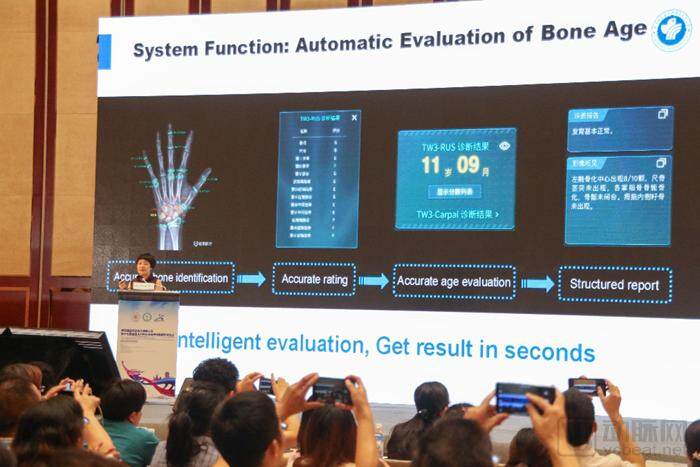
Professor Fu Junfen, Vice President of the Children's Hospital of Zhejiang University School of Medicine and Director of the Department of Endocrinology, delivered a keynote speech at the conference.
As one of the most significant breakthroughs in the medical field in recent years, the application of artificial intelligence in pediatrics has garnered considerable attention. At this conference, care.ai, developed by Yitu Healthcare,TMThe Intelligent Diagnostic System for Child Growth and Development has been enthusiastically embraced by more than 200 pediatric experts. The mini-game “Bone Age Assessment” created successive peaks of excitement, with dozens of experts queuing up to try it during every conference break, and many even requesting on-site partnership agreements. What kind of AI product could resonate so deeply with pediatric specialists?
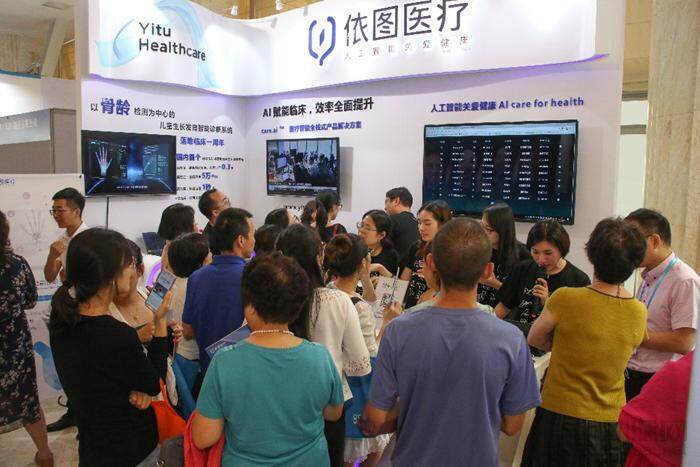
Yitu Healthcare Booth Draws Massive Crowds
As a crucial indicator for assessing children’s growth and development, bone age interpretation has become a major challenge in pediatric clinical practice. Factors such as the shortage of qualified physicians, prolonged interpretation time, and significant interpretation errors continue to hinder the effective implementation of clinical bone age assessment.
Currently, the most widely used method for bone age assessment in pediatric clinical practice in China is the Greulich-Pyle (GP) atlas method. Although it is user-friendly and allows for rapid interpretation, it relies on reference data from European white children collected two decades ago. In contrast, while the internationally recognized Tanner-Whitehouse 3 (TW3) method offers greater accuracy, its interpretation process is complex, requiring more than 15 minutes per case and demanding specific qualifications and experience from physicians.
As the living standards of the Chinese population continue to rise, parents are placing increasing emphasis on children’s growth and development. This has led to a steady increase in the volume of clinical tests, resulting in chronic overwork for radiologists responsible for image interpretation.Is there a bone age assessment method that can provide accurate and rapid bone age interpretation results?
“AI-based bone age assessment using the TW3 method has achieved precision to the month. Its performance is no less than that of professional pediatric endocrinologists, and may even slightly exceed that of some physicians, while demonstrating high consistency in interpretation results, thereby meeting the interchangeability requirements for clinical measurement methods,” stated Professor Fu Junfen, Vice President of Zhejiang University Children’s Hospital and Director of the Department of Endocrinology, during her keynote speech. “The AI system can serve as a powerful tool for clinical bone age interpretation and as a training aid for pediatricians, enhancing the overall consistency of image interpretation by radiologists through its integration.”
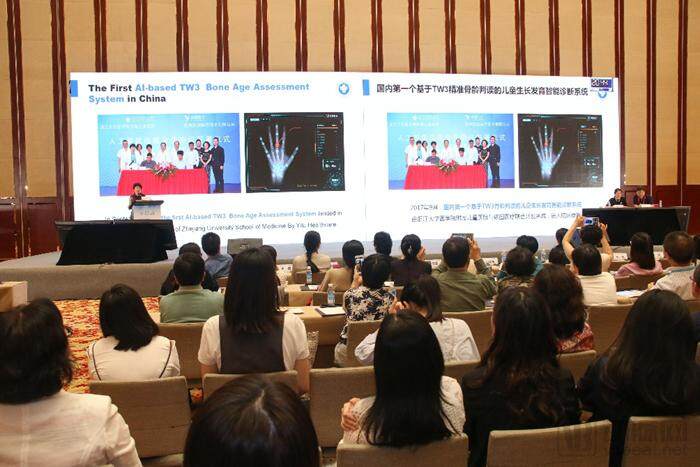
Professor Fu Junfen Presents the World’s First AI-Powered Diagnostic System for Pediatric Growth and Development Based on the TW3 Standard
Professor Fu Junfen revealed that China currently has 250 million children and adolescents aged 0–16, among whom 9.9% exhibit delayed development and 8.4% show signs of precocious puberty. The number of individuals with dwarfism exceeds 7 million, underscoring an urgent need for more scientific health examinations and medical interventions in this population. The introduction of artificial intelligence technology not only significantly reduces the workload of radiologists and improves the consistency of bone age assessment but also helps meet the rapidly growing clinical demand for growth and development evaluations, thereby promoting the widespread development of pediatric endocrinology.
As intelligent bone age interpretation systems continue to evolve, “AI doctors” are capable of performing an increasingly wide range of tasks.
“Current intelligent bone age interpretation systems have evolved beyond mere automated bone recognition and precise scoring to alleviate physicians’ workload in image review. The structured reports generated by AI systems can comprehensively monitor growth trends and evaluate clinical efficacy based on chronological age, bone age, height, and historical imaging data, which holds significant importance for the treatment of conditions such as precocious puberty and short stature,” stated Professor Fu Junfen. “This is particularly meaningful for primary care hospitals lacking expertise in bone age assessment. The widespread adoption of artificial intelligence facilitates the rapid decentralization of diagnostic and therapeutic capabilities from top-tier medical institutions to grassroots healthcare facilities through AI tools, thereby empowering primary healthcare providers.”