

Pharmaceutical Big Data White Paper: Reducing Data Management Costs to Accelerate Innovation
In the research and development of prescription drugs, leveraging big data analytics to reduce data management costs and accelerate innovation is of self-evident significance and is increasingly becoming the preferred strategy for pharmaceutical companies.
Recently,A Global Leader in Enterprise Cloud Data Management—Informatica Released a White Paper on Big Data in the Pharmaceutical Industry; VCBeat (WeChat: vcbeat) Compiled Key Content.
From research records to supply chain monitoring, pharmaceutical companies have been managing vast amounts of data, with the volume continuing to grow. New innovations and business models have led to increased diversity and complexity of data, as well as an explosive growth in data volume. Unfortunately, before any actual analysis can begin, approximately 70% of data projects still involve only basic data management tasks, including integration, transformation, and cleaning, resulting in inefficiencies and high costs. As the CEO of a pharmaceutical company’s R&D department stated, “We have been searching for ways to treat cancer, but remain powerless to do so.”
If pharmaceutical companies fail to reduce data management overhead, they risk being overwhelmed by excessive data. To remain competitive amid the rapid evolution of the pharmaceutical industry, enterprises must possess the ability to quickly locate relevant data, thereby informing new initiatives or driving innovative solutions and business models.
If pharmaceutical companies can spend less time preparing datasets for analysis and more time uncovering insights with commercial and clinical value, various departments will see the following benefits:
• More rapidly identify candidate subjects for clinical trials based on existing knowledge
• Conduct virtual trials to establish predictive models
• Cultivate deeper patient understanding through wearable and smart devices
• Design and launch beyond-the-pill services to improve treatment adherence
• Discovering New Uses for Approved Drugs
• Optimize the supply chain while ensuring supply continuity
• Gather opinions from social media and online communities
• Leverage real-world evidence to achieve better outcomes
Pharmaceutical companies need to gain a deeper understanding of the impact of economic data, weather conditions, and other local and global trends to better plan demand, optimize supply, and develop forecasting scenarios. Furthermore, it is crucial to protect patient safety and brand assets by preventing product theft and counterfeiting, which requires closer monitoring of the supply chain through both internal and external data sources.
To unlock the power of big data in the pharmaceutical industry, technologies capable of flexibly integrating and managing new types of data and sources at scale are required. In this context, the scope extends beyond merely ingesting and analyzing data within IT systems; it also necessitates leveraging technology to help users discover and comprehend data. In other words, data management must be scalable in response to the volume and variety of data. If data management lacks scalability, pharmaceutical companies will inevitably suffer from inefficiencies, directly undermining their agility and competitiveness in a data-centric world.
Leveraging big data assets in the pharmaceutical industry can help develop next-generation successful therapies while addressing challenges related to medication adherence and globalization. To achieve this goal, pharmaceutical companies must ensure that all their data assets are accessible to relevant knowledge workers, including business users, analysts, statisticians, and data scientists.If professional scientists, analysts, and statisticians waste 70% of their time on repetitive data management, the value of big data cannot be realized at scale.
Informatica is committed to helping customers rapidly analyze data and generate value. For pharmaceutical companies, the direct impact of such data flexibility can improve lifestyles and even save lives. Informatica’s client, AmerisourceBergen, has launched an enterprise analytics platform that delivers rapid analytical and processing capabilities, yielding broad-ranging impacts including enhanced regulatory compliance, risk reduction, improved supply chain efficiency, and better communication with customers. Similarly, Adaptive Biotechnologies has leveraged Informatica to enhance visibility into large volumes of data, thereby advancing research in this fast-evolving industry. By accelerating collaboration, these corporate clients have saved daily work hours and increased revenue. These two cases demonstrate that when knowledge workers can quickly extract value from data, they drive significant impact for their enterprises.
Informatica’s products reduce the complexity of data management and unlock the power of big data. Its solutions deliver data to knowledge workers more quickly and enhance collaboration between business and IT through self-service capabilities. Informatica empowers IT departments to help enterprises rapidly discover, prepare, integrate, manage, and govern data. Powered by CLAIRE™ and metadata-driven artificial intelligence (AI) technologies, its big data management solutions guide researchers and data scientists in analyzing data and uncovering value more efficiently.
Compliance with various complex regulations and the protection of intellectual property are crucial. Informatica™’s Intelligent Data Cloud Platform integrates capabilities for data integration, discovery, profiling, governance, management, and protection to ensure rapid innovation and data security. This modular platform for data management helps reduce costs and minimize risks.
Informatica supports all aspects of data management—helping enterprise customers generate value by reducing the burden of data management.
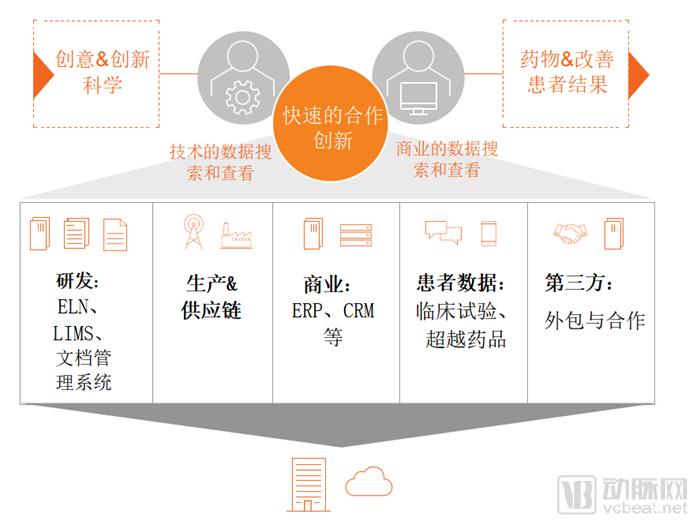
Large Volume of Heterogeneous Data
Pharmaceutical companies require technologies capable of transforming, parsing, and integrating vast amounts of data from multiple sources—including electronic health records, clinical trial data, smart medical devices and applications, real-world evidence, supply chain data, and internal data from LIMS (Laboratory Information Management Systems), ELN (Electronic Laboratory Notebooks), ERP (Enterprise Resource Planning) systems, and more. The Informatica Intelligent Data Cloud Platform can manage, replicate, and integrate large volumes of data at any time. It also extends data management capabilities by introducing secure, high-quality governance controls when needed.
Informatica’s technology ensures fast and reliable access to all data, sourced from both traditional and emerging data sources. It is also suitable for projects of varying scales, enabling companies to start with small, focused initiatives by adjusting pricing and capabilities. Informatica customers can easily scale their processing power as needed.
Benefiting from Cloud Computing
Many pharmaceutical companies seek to benefit from cloud computing infrastructure and the cloud economy. During migration to the cloud, connecting, synchronizing, and correlating structured and unstructured data from both cloud-based and on-premises applications can pose significant challenges. Accessing widely distributed, complex data anytime and anywhere remains difficult. However, when aiming to enhance the productivity of knowledge communities, access to and awareness of cloud data cannot be overlooked.
Informatica redefines cloud data management by delivering premier services for cloud data warehouses and data lakes, thereby enhancing performance, developer productivity, and connectivity with cloud environments.
Manage Data Quality and Data Lineage
The success of pharmaceutical companies hinges on their ability to promptly process complete and credible datasets. By enhancing the capacity to collect accurate and comprehensive datasets during clinical trials, monitoring data quality in research and development can directly contribute to accelerating drug approval. In commercial practice, high-quality data enables better planning and marketing through a deeper understanding of customers and patients. However, high-quality data alone may not be sufficient to satisfy regulatory authorities or adequately address their inquiries. Furthermore, ensuring data lineage—defined as the full traceability of data movement and transformation—can provide maximum data control, thereby improving compliance and communication with regulatory agencies.
Informatica provides machine learning-based data cataloging, which can automatically scan and catalog data assets across the entire enterprise. Combined with world-class data quality capabilities, Informatica delivers rapid insights into an organization’s data assets. This encompasses not only the data held by the enterprise but also how it functions within systems, as well as the data quality of any applications or databases.
Transforming Data Assets into Insights and Actions
To deliver the right treatment to patients at the right time and with appropriate cost efficiency, the pharmaceutical industry needs to measure and monitor metrics and trends across all data types faster than ever before. Big data provides the necessary foundation for gaining deeper insights in a shorter timeframe.
Informatica’s end-to-end solutions enable pharmaceutical companies to quickly locate data using Google-style search. CLAIRE helps reduce the manual burden of data management—ensuring that pharmaceutical companies spend more time generating insights and taking action, thereby providing fundamental assistance—and ultimately improving patient outcomes.
Pharmaceutical industry executives are increasingly recognizing the value of data in delivering competitive advantage, and thus need to actively manage this valuable asset. Big data offers the pharmaceutical industry unprecedented opportunities to optimize research and clinical trials, safeguard against counterfeiting and fraud, improve treatment outcomes, and precisely target physicians with timely, relevant information. Investing in data management will enable the industry to integrate real-time and historical data at the speed required by business operations.
As a global leader in enterprise cloud data management, Informatica’s Intelligent Data Platform is composed of best-in-class technologies that can be used independently or together to ensure seamless integration of big data assets with more traditional data assets.
•Integration: Enterprise data integration will coordinate all data managed by the enterprise, including unstructured data, and provide seamless support for service level agreements ranging from real-time data stream integration to batch processing.
•Cloud Technology: Integration Platform as a Service (iPaaS) solutions include processing within a cloud engine, along with out-of-the-box connectivity to cloud databases, data storage, and SaaS applications, enabling the migration of external data to the cloud for management while maintaining control over such data.
•Data Quality: Design and implement enterprise-wide rules to transform data into controlled vocabularies and common values.
•Data Mastery: Create all contexts and relationships required for analysis.
•Data Privacy and Protection: Identify cross-domain sensitive data, monitor access to such data, and implement data masking policies.
•AI-Assisted Cataloging: With the support of CLAIRE, creating and maintaining data catalogs has become a more manageable task, ensuring that data is delivered to knowledge workers more rapidly.
Pharmaceutical companies are established to improve people’s health and lives, not to manage data. However, with the global trend toward digitalization, mastery of data—more precisely, the actionable insights derived from data—has become a critical component in enhancing clinical outcomes. Unfortunately, in most companies, many knowledge workers spend excessive time on data management. By reducing the time and costs associated with data management, all employees at pharmaceutical companies can boost their productivity on high-priority tasks, thereby directly contributing to improved patient outcomes.
Informatica’s solutions are specifically designed to automate data management and reduce administrative burdens. Its customer base spans the pharmaceutical industry, including companies such as Sanofi, GSK, and Merck. These organizations have demonstrated that the solution delivers value across nearly every department by enhancing data visibility and reducing data management overhead. By leveraging Informatica’s world-class data management capabilities, scientists, researchers, and business users can devote more time to harnessing the growing volume and variety of data to deliver significant business value and gain a competitive edge.
About Informatica
Digital transformation has reshaped people’s expectations: better services, faster delivery, and lower costs. Enterprises must undergo transformation to keep pace with trends, with data being the key.
As a global leader in enterprise cloud data management, Informatica is poised to help customers achieve intelligent leadership across any domain, category, or market, enabling them to become more agile, drive new growth, or foster innovation. By providing comprehensive visibility into all data, Informatica delivers the versatility needed for success. Through its products and services, customers can unlock the power of data to fuel the next wave of intelligent disruption.