Chuangye Software Launches PICAD Platform to Address Data Quality and Standardization Challenges in Regional Healthcare Systems
Recently, B-Soft, a domestically listed healthcare enterprise, launched a major regional informatics product named the “Diagnostic and Therapeutic Empowerment Platform for Complex and Critical Diseases.”
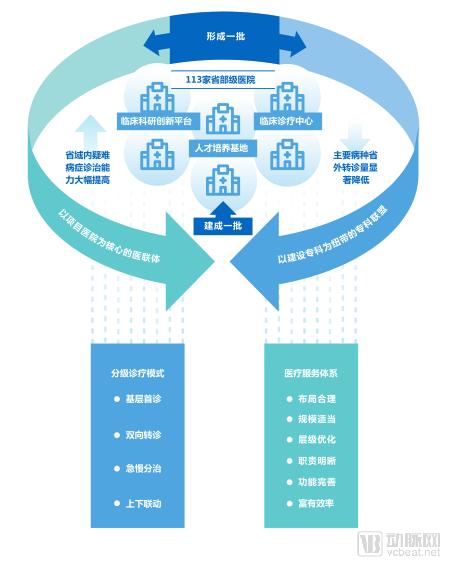
According to VCBeat (WeChat Official Account: vcbeat), the Platform for Improving Clinic Ability to Critical Diseases (PICAD) is a core business platform dedicated to enhancing the diagnosis and treatment capabilities for difficult and critical cases. Its core applications include integrated care for critically ill patients, multidisciplinary team (MDT) telemedicine, specialized disease prevention, treatment and prognosis management, as well as AI- and big data-driven healthcare applications.
Centered on patients with complex and critical conditions, this platform builds a cloud-based support system for the diagnosis and treatment of such cases, forming a provincial-level, full-process, multi-center integrated medical service system led by core hospitals with participation from multiple medical institutions.
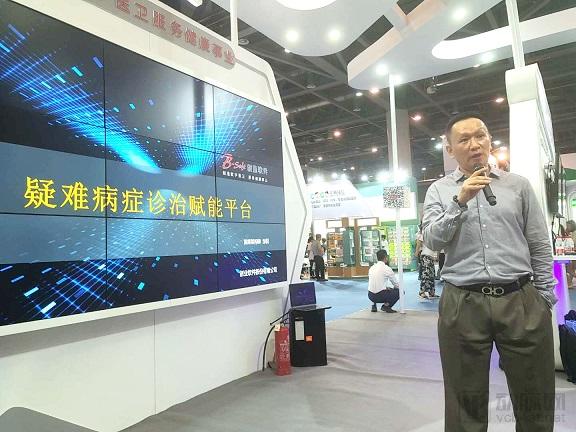
To enhance the comprehensive management and treatment capabilities of medical institutions for complex and refractory diseases, Zou Yue, Chief Architect at B-Soft, believes that five key measures must be implemented:
First, a multidisciplinary telemedicine collaborative service system is essential. Currently, most telemedicine services are based on single specialties, such as pathology, radiology, and laboratory medicine, with each specialty operating as a relatively isolated silo. Therefore, during the diagnosis and treatment process, clinicians require a comprehensive, integrated platform that consolidates these single-specialty remote consultations into a unified system to provide diagnostic services for patients.
Second, regarding platform rectification, it is essential to establish an integrated critical care system for critically ill patients, wherein diagnosis and treatment must be unified. In many hospitals, remote specialty diagnosis and treatment are not hosted on a single platform; therefore, these platforms require reconstruction, and their various collaborative service relationships need to be redesigned. This fragmentation has led to significant waste due to redundant construction, and more importantly, information has not been effectively shared. For instance, during the emergency care of critically ill patients, experts may sometimes need to provide remote guidance and intervention in rescue efforts to save patients' lives. Hence, establishing an integrated treatment system for critical and severe cases is of paramount importance.
Third, the remote medical education service system. Within the entire medical consortium and the national administrative tiered diagnosis and treatment system, it is necessary to leverage high-end hospitals and premium medical resources to provide remote medical education for primary care physicians and general practitioners. Therefore, the platform offers a comprehensive remote medical education service system.
Fourth, artificial intelligence and big data services. Replacing manual services with intelligent database services can enhance the overall quality of medical care and improve hospitals’ operational management capabilities.
Fifth, an application system for whole-process disease management. Beyond the treatment phase, early detection and health management are even more critical. In China, early detection, treatment, and rehabilitative care for patients are often fragmented across medical institutions. To address this issue, B-Soft has developed a whole-process patient disease management model, enabling effective tracking and treatment of any disease within the Medical Consortium.
According to Zou Yue, the diagnostic and therapeutic empowerment platform for complex and refractory diseases should target two types of clients: one is medical alliances and medical communities led by regional flagship hospitals; the other is administrative regions of local governments. Both types of areas can leverage this platform to empower general hospitals and primary care institutions.
The platform can facilitate data exchange among various types of medical institutions—including provincial and ministerial-level hospitals, municipal hospitals, primary healthcare facilities, emergency centers, and clinics—via the healthcare data exchange layer using quasi-real-time, scheduled, and real-time modes. This enables not only operational collaboration among medical institutions but also data synergy.
Four Major Components of the Platform
The overall architecture of the Diagnostic and Therapeutic Empowerment Platform for Complex and Refractory Diseases consists of four major components: the Data Exchange Layer, the Data Center, the Business Layer, and Knowledge Services.
The technical challenges of the data exchange layer mainly consist of three aspects:
First is the construction of a patient master index, which transforms logically distinct patient records into a single physical patient entity. Since each healthcare institution assigns its own unique identifier to patients, these individuals must be unified under a single identity within a centralized data repository to link their diagnostic and treatment processes and medical records across all institutions.
Second, data and exchange standards. Each hospital has its own coding system; to establish a unified health record repository or electronic medical record (EMR) database, standardized protocols are essential. Therefore, B-Soft provides unified data and exchange standards, converting disparate institutional codes into a standardized coding system.
Third, real-time technologies. These include real-time technologies corresponding to service buses and message queues, scheduled technologies for timed data extraction, and near-real-time technologies for proactive data scraping. By leveraging these four technologies, business process events and activities can be accurately delivered to the aforementioned platform in real time, near-real time, or on a scheduled basis.
Through the exchange layer, information from various hospitals can be exchanged and transmitted to the Data Center for Complex and Rare Diseases.
The upper-tier data center primarily comprises a patient demographic database, an electronic medical record (EMR) database structured around the treatment process, and a lifelong electronic health record repository organized according to the patient’s lifecycle. Additionally, it includes an imaging center, clinical research topic-specific databases, and patient self-management data.
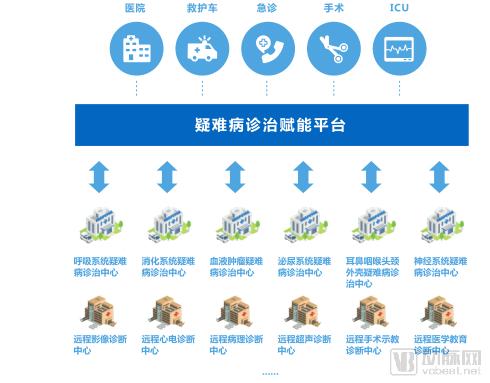
There are four categories of services built upon the data center, including the management of complex and refractory diseases, multidisciplinary remote consultation and education, integrated care for critically ill patients, and comprehensive disease management. These four service categories can all be delivered through a unified platform, rather than relying on four separate systems.
Further up the value chain are data and knowledge services for complex and refractory diseases, including an AI-powered clinical specialty research platform and a best-practice knowledge-sharing platform.
Practicality and Safety of the Platform
To ensure the platform's practicality and security, B-Soft provides front-end processor services at each data source end within the data exchange layer. This clarifies the relationship between internal systems and online systems, thereby safeguarding patient safety and privacy.
At the platform’s central hub, B-Soft has standardized its standardization and coding systems in accordance with national standards. From a service perspective, B-Soft has unified all messages into homogeneous services, enabling mutual access and interoperability among them.
In addition, B-Soft has established a data quality monitoring system to ensure that the data uploaded by hospitals meets standards and is usable.
Zou Yue appealed to the media, “We must not turn information engineering into a vanity project for political achievements; it must be a practical engineering endeavor. Therefore, ensuring data quality is the fundamental key to determining whether platform data can be utilized.”
# Returning to the Core of Diagnosing and Treating Complex and Refractory Diseases
In terms of business operations, B-Soft’s multidisciplinary teleconsultation system integrates electrocardiography (ECG), pathology, medical imaging, education, and ultrasound into a unified, all-in-one consultation platform that incorporates electronic medical records (EMRs) and personal health records. This enables physicians to view a patient’s comprehensive information across different screens within a single platform interface.
Furthermore, B-Soft delivers diagnostic-grade data through highly efficient network transmission. Even for dynamic imaging such as B-mode ultrasound, B-Soft ensures its diagnostic quality via core technologies. In terms of cross-platform compatibility, any hospital’s system can be integrated into the platform.
Taking emergency patient care as an example, B-Soft, in collaboration with hospital ambulance services, has established a comprehensive information system and deployed expert-led Multidisciplinary Team (MDT) capabilities directly into ambulances. Once a patient experiences a critical condition and calls the emergency hotline, medical resources on the ambulance can promptly collect vital sign data, compiling the patient’s health records and electronic medical record (EMR) data during transport. Through a remote multidisciplinary consultation platform, specialists from tertiary hospitals can provide frontline treatment and real-time guidance to patients in the ambulance. By the time the patient arrives at the hospital, all relevant information has been collected, allowing for immediate transfer to the intensive care unit for resuscitation.
Zou Yue stated, “The platform’s application directly addresses the most critical challenges currently facing public access to medical care: namely, the difficulty in accessing high-quality specialized care and renowned specialists. Simultaneously, it enables large hospitals to refocus on their core mission of diagnosing and treating complex and refractory diseases. On this basis, leading tertiary hospitals can drive the development of other healthcare institutions, thereby elevating the overall standard of care across the region. Tackling major diseases such as cancer, cardiovascular and cerebrovascular disorders, and respiratory conditions can no longer rely on individual hospitals working in isolation; instead, it requires a concentrated national and societal effort to leverage superior resources for breakthroughs. In particular, core hospitals should strive to lead globally in prevention, treatment, and rehabilitation, achieving early detection of major diseases. This approach not only reduces or prevents patients’ physical and psychological suffering and alleviates their substantial financial burden, but also eases the pressure on national health insurance payments, safeguards public health, and promotes sound economic and social development, thereby preventing serious social issues. In this way, patients with complex conditions can obtain optimal treatment plans and the most professional care at minimal cost, while experts can better identify patients with genuine needs, accumulate more clinical experience, and ultimately enhance the diagnostic and therapeutic standards for complex diseases.”
At the press conference, when asked by the media about the future development trends of B-Soft, Zou Yue stated that B-Soft is aligning with the major trend of domestic medical health informatization, actively engaging in the broader health industry, continuously innovating, and achieving steady growth. By establishing a medical framework based on residents’ electronic health recordsHealthThe operational platform achieves cross-industry interconnectivity with multiple sectors, including medical and elderly care services, pharmaceutical distribution, cashless payment, and commercial health insurance.Building a system supported by smart healthcare, regional health, and healthy citiesHolistic HealthIndustrial Chain。