

Wangli Tech Leverages Physiological Big Data and AI for Mental Disorder Diagnosis with 87% Accuracy, Files IPO Prospectus
8Month, VCBeat (WeChat ID:vcbeat) launched a special feature on “Mental Health,” comprehensively reviewing digital mental health products both domestically and internationally, and conducting case analyses of representative companies. We have identified numerous business opportunities in the mental health industry arising from market imbalances.
such as the imbalance between the large and rapidly growing population of individuals with mental health conditions and the insufficient supply of psychiatrists, the disparity between the high cost of mental illness treatment and inadequate health insurance coverage, and the gap between the actual number of people with mental disorders and those who are diagnosed.
For the first two types of imbalance, some companies have already attempted to establish auxiliary networks, develop digital diagnostic and therapeutic tools, and build2Bbusiness models and other approaches. This inevitably raises the question: Are there digital products applicable to the diagnostic phase of mental disorders? How do such digital products optimize the diagnostic process for mental disorders? In our search, we discovered Wangli Technology.
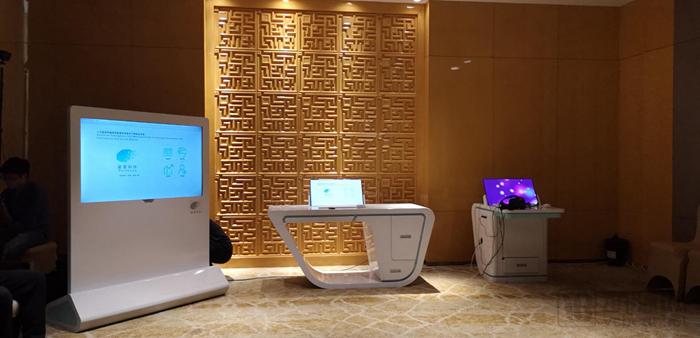
Wangli Tech Products. Image provided by Wangli Tech.
Wangli Technology’s first product is an AI-based system for assessing drug craving, leveraging physiological big data. It has been deployed in Sichuan Province, Shandong Province, Beijing, and other regions, achieving an accuracy rate of 87% in evaluating drug craving states.
Li Dai, founder of Wangli Technology, graduated from the Department of Psychology at Peking University and previously worked as a healthcare consultant at BCG (Boston Consulting Group). He later pursued an intrapreneurial venture within LeEco, serving as CEO of LeEco VR and building a team of 120 employees. In 2017, Li Dai established Wangli Technology. Its R&D team primarily comprises master’s and doctoral graduates from prestigious universities such as Peking University, the University of Science and Technology of China, Beijing Normal University, New York University, and the University of Pennsylvania, along with technical and engineering professionals from companies including Tencent, Alibaba, and LeEco.
What are the intersections between psychiatric diagnosis and artificial intelligence? How is data for machine learning acquired? What are the application prospects? Recently, VCBeat conducted an exclusive interview with Li Dai, who shared his insights on these questions.
Before entering university, Li Dai’s strength lay in mathematics. After graduating from high school, he was admitted to Peking University without taking the national college entrance examination, owing to his award-winning performance in mathematics competitions. There, he studied psychology and brain cognitive science, cultivating a habit of approaching problems through objective and quantitative analysis. Li Dai believes that traditional approaches to diagnosing and treating mental disorders lack precision. On one hand, psychiatrists largely rely on subjective judgment to reach diagnostic conclusions; on the other hand, there is a lack of suitable biomarkers to assess the therapeutic efficacy of treatments for mental health conditions.
From Li Dai’s perspective, physiological data—such as electroencephalogram (EEG), heart rate, galvanic skin response (GSR), and even changes in facial expressions—can provide a more objective representation of an individual’s psychiatric disorders and cognitive issues than patient self-reports alone. Wangli Technology’s products, which are independently developed by its team, primarily consist of an AI-based assessment system and biosignal acquisition devices. When assessing psychiatric disorders and cognitive problems, Wangli Technology’s solution employs technologies such as virtual reality (VR) to require patients to perform specific tasks. During this process, the system collects users’ physiological data, applies specialized artificial intelligence algorithms, and generates data analysis and determinations, thereby providing quantitative evidence to support diagnostic assessments.
In fact, Wangli Technology’s AI assessment system and biological data collection devices are not limited to a single disease category, nor do they support only one type of mental disorder or psychological issue. Instead, they have built a scalable algorithm platform. Based on this platform, Wangli Technology can develop algorithms for various mental disorders and cognitive issues, further resulting in diverse product offerings. It is known that the Wangli team has already developed an addiction craving assessment system on this platform and successfully leveraged the sameAIThe algorithm platform has expanded to assist in the diagnostic assessment of depression. The auxiliary diagnostic assessment for depression has also reached81%accuracy, which is continuously improving. According to the introduction, the system will continue to expand into research and product development for conditions such as autism, schizophrenia, Alzheimer’s disease, violent tendencies, and suicide crisis in the future.
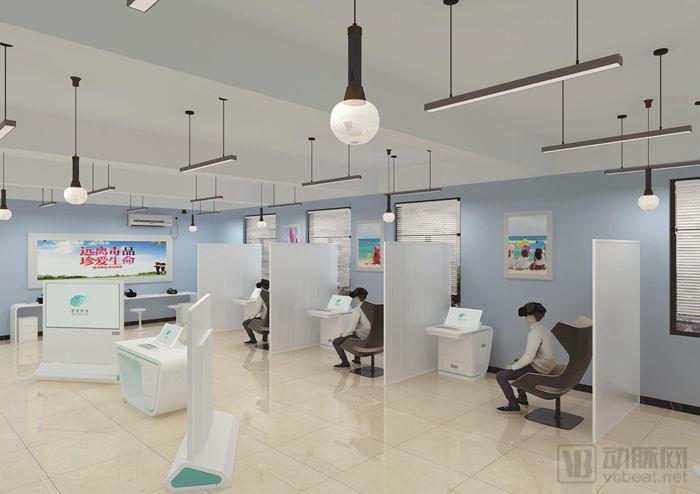
Wangli Technology Deployed at Sichuan Provincial Women's Compulsory Drug Rehabilitation Center. Photo provided by Wangli Technology.
Of course, different product lines adopt distinct technical approaches and task designs based on the specific nature of psychiatric disorders and cognitive issues. For instance, the task design for assessing drug craving is based on cue exposure therapy. By leveraging Virtual Reality (VR), patients are exposed to drugs, drug paraphernalia, or drug-use environments, simulating real-life scenarios and providing corresponding contextual cues. This allows for the measurement of drug craving levels in a safe and controlled setting. Patients with varying levels of drug craving exhibit different psychological responses when confronted with these scenarios. For example, patients with high craving levels may experience an intense desire to use methamphetamine when exposed to it; this craving manifests in neuronal activity, thereby producing measurable changes in electroencephalogram (EEG), heart rate, and galvanic skin response (GSR) data. In contrast, patients with lower craving levels may exhibit a weaker desire. By employing AI algorithms for in-depth data mining, individual-level differences can be identified, serving as an objective basis for assessing the degree of drug craving.
When discussing team building, Li Dai joked, “I just coaxed my classmates, teachers, and colleagues into joining me.” However, what truly brings team members together is a shared vision. In his previous entrepreneurial ventures, Li Dai focused more on adapting to the market and identifying emerging trends. Although he reaped the benefits of riding these waves, when founding Wangli Technology, his primary consideration was not market demand. “I wanted to pursue something I genuinely felt passionate about,” said Li Dai, who has an academic background in psychology and a strong interest in brain science and cognitive science. Fortunately, he found a group of like-minded experts who shared his passion.
Wangli Technology’s AI algorithm team is composed of a group of PhD holders, including distinguished talents such as a PhD in Physics from Stony Brook University at the State University of New York. The product and research team comprises outstanding professionals holding PhDs in Psychology from Peking University, in Cognitive Neuroscience from Beijing Normal University, as well as graduates from Nankai University and the University of Electronic Science and Technology of China. The operations team hails from the Guanghua School of Management at Peking University and Renmin University of China. The technical team primarily consists of professionals from leading internet companies.
In Li Dai’s vision, the diagnosis of mental health disorders and the assessment of treatment efficacy are phased deliverables for Wangli Technology, following a strategy that “starts with specificity and gradually progresses toward generality.” By “specificity,” Li Dai refers to psychological and mental states characterized by impairments or disorders, whereas “generality” encompasses the full spectrum of an individual’s daily psychological states.
Li Dai believes that physiological data contains a wealth of information. “In the ultimate application scenarios of our products, interpersonal communication may not require language; communication through physiological data could be more sincere.” While such scenarios may seem science-fictional, they are not without scientific basis. Li Dai is confident in gradually designing, validating, and realizing this vision.
Wangli Technology’s business model is primarily B2B-oriented, providing solutions to institutions such as drug rehabilitation centers, hospitals, schools, and communities. According to Li Dai, as the correlation between physiological data and psychological states is further explored, Wangli Technology will expand into the consumer market (B2C), enabling users to monitor and track their psychological status in real time, thereby safeguarding mental health.