

Interview with Cheng Guohua, Founder of Jianpei Tech: Six Years of AI in Healthcare and the Future of Openness and Integration

JIANPEI
Medical Imaging Big Data Analysis Technology Developer
Having just presided over the “West Lake Health Forum,” Cheng Guohua, one of the organizers, took no rest. Under Hangzhou’s cloudy Friday skies, he still had to prepare for his afternoon speech at the Zhejiang Provincial Hospital Conference. In this brief interval, Cheng Guohua gladly accepted an interview with VCBeat.
JIANPEI’s founder, Cheng Guohua, has always maintained a low profile, and the company itself reflects his consistent style. Apart from the annual West Lake Health Forum and the admirers drawn by its achievements, JIANPEI rarely appears in the media, remaining steadfastly committed to quiet, in-depth development in the field of artificial intelligence.
From 2012 to the present, more than six years have passed.
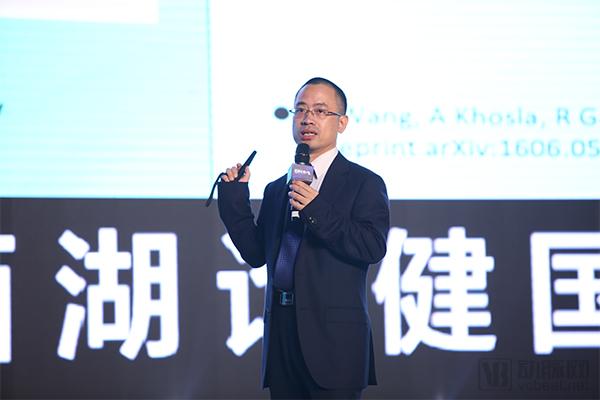
In 2012, when JIANPEI was first established, the convergence of “healthcare + artificial intelligence” was merely a faint glimmer observable from abroad. It was the dawn of the mobile internet era, with various “Internet+” products gradually emerging in the market. Faced with this rapidly changing landscape, the JIANPEI team found themselves at a crossroads: should they boldly embrace artificial intelligence as their core technology, or strive to secure a competitive advantage by riding the wave of the internet business model? Ultimately, Cheng Guohua made a decisive choice: to pursue artificial intelligence.
This decision reflected Cheng Guohua’s keen insight. In June 2012, a minor news item caught his attention: IBM Watson had signed its first collaboration agreement with the University of Texas MD Anderson Cancer Center, valued at approximately $2.4 million, to explore the use of artificial intelligence in analyzing big data to assist in the diagnosis of skin cancer.
This news made Cheng Guohua realize that medical AI could also be commercialized. This event marked a major breakthrough in the history of AI technology and changed the course of JIANPEI.
Reflecting on subsequent developments, Cheng Guohua revisited his decision-making process from those years: “Both internet and artificial intelligence technologies are crucial to healthcare, yet there are significant differences between them. My analysis at the time was as follows: The internet model primarily exerts an indirect influence in the healthcare sector. For instance, it enables patients to more quickly match with suitable physicians and identify better pathways for treating their conditions, thereby connecting patients and doctors across geographical barriers. However, at the current stage, the internet also has drawbacks, namely exacerbating the workload of already busy hospitals while leaving primary care institutions nearly empty, as people strive to access superior medical resources whenever possible.”
“By comparison, as a technological entity, artificial intelligence stands to benefit both top-tier hospitals and primary care institutions. This technology can effectively capture and consolidate the expert knowledge of leading hospitals, disseminating it to the grassroots level. It empowers primary care physicians to perform tasks previously beyond their capabilities, such as image interpretation and report generation, thereby significantly enhancing the medical standards of primary care facilities and facilitating the implementation of tiered diagnosis and treatment. Large hospitals benefit from the patient分流 (diversion) provided by primary care institutions, while also freeing physicians from tedious, repetitive tasks. This allows them to devote more energy to managing complex and special cases, which is beneficial for society as a whole.”
“We should do what is right, not what is fashionable,” summarized Cheng Guohua.
With clear goals in place, everything becomes much easier to navigate. The founders of JIANPEI are seasoned IT veterans, and Cheng Guohua himself graduated from Nanyang Technological University. For them, developing deep learning algorithms for data analysis was hardly a challenge. The real problem was that, despite having robust algorithms, they lacked the data needed for analysis. In 2013, hospitals were unfamiliar with artificial intelligence and certainly did not believe it could bring disruptive change to the healthcare industry. After reaching out to multiple hospitals, they found that doctors regarded their proposal as a scam rather than a legitimate technology, let alone a basis for collaboration.
After numerous setbacks, and with the help of friends, JIANPEI contacted a hospital in Zha'er County, Xinjiang, which agreed to provide data for clinical testing. Once the collaboration was confirmed, Cheng Guohua immediately carried several servers on his back and boarded a train alone heading to the desert region.
Over the following two months, Cheng Guohua spent his days consulting with physicians to understand radiology workflows, and at night, he accessed the hospital’s PACS to transmit de-identified data back to JIANPEI’s headquarters in Hangzhou, where the central team would build a database and annotate the images using algorithms.
This was a highly successful trial. Although the precision at that time could not compare with today’s standards, the physicians were still very satisfied. Nevertheless, when discussing the future of artificial intelligence, doctors remained skeptical, viewing it as too distant a prospect.
Over the next two years, JIANPEI expanded its efforts to include conditions such as pulmonary nodules and breast cancer. During clinical testing, JIANPEI identified a significant challenge: the availability of data for training algorithms. So, how could more data be acquired? Perhaps the first step was to increase public awareness of artificial intelligence—JIANPEI needed to cultivate this market.
After the plan was finalized in early 2015, JIANPEI devoted itself fully to conference preparations and named the event “West Lake Health Dialogue.”
This year’s “West Lake Health Forum” marked an excellent beginning, with participation from major companies such as IBM and Huawei, as well as six academicians from China. At the conference, numerous experts discussed issues, developments, and the future of “AI + Healthcare,” bringing artificial intelligence into the spotlight for more physicians.
The West Lake Health Forum merely offered a glimpse into the application of artificial intelligence in the medical field. What truly brought AI to global prominence was AlphaGo’s match against Lee Sedol in June 2016. While people enthusiastically discussed the outcome of the game and the future of AI in their daily conversations, Cheng Guohua focused on four words: “Human-Machine Showdown.”
In an interview, Cheng Guohua recalled the scene at that time: “When I saw this competition, what came to my mind was: Why did Google organize such a competition? Was it merely to showcase its achievements? No. It was to draw more people’s attention to artificial intelligence and promote its development through this approach.”
That year, “West Lake Health Forum” promptly added “Man-Machine Competition” to its conference theme, becoming the first forum in China to host a medical AI man-machine competition.
“As the first mover in China, I still vividly recall the bustling scenes of the ‘West Lake Health Forum’ over the past year. This forum pioneered two initiatives for the first time in China: one was the ‘Man-Machine Challenge,’ where we invited senior imaging diagnostic experts to compete head-to-head with AI-powered image-reading robots on-site, showcasing cutting-edge artificial intelligence technologies driven by big data; the other was a live cross-border MDT (Multidisciplinary Team) consultation linking China and the United States, bringing together world-class cancer treatment experts to demonstrate the latest advancements in various cancer therapies.”
In the same year, JIANPEI participated in the LUNA2016 (Lung Nodule Analysis 2016) Challenge. Its “Zhuo Yisheng” imaging interpretation robot outperformed numerous medical AI products worldwide and set a world record. The global recognition of Chinese teams’ AI technology in the healthcare sector demonstrates that domestic AI capabilities have gained the confidence to compete on par with international counterparts.
In August 2017, “Zhuo Yisheng” became the only medical artificial intelligence project selected for the CCTV-1 program “Super Brain.”
“This is a war without smoke,” Cheng Guohua remarked. “People only saw our product featured on CCTV-1, but they could not see the undercurrents behind it. In 2017, medical AI expanded explosively. Before the production team of ‘Genius Beyond’ approached us, they had already met with nearly one hundred medical AI companies across China, and in the end, it was we who stood on that stage.”
When asked about JIANPEI’s core competitiveness, Cheng Guohua summarized it in four words: “Down-to-earth.”
According to the data, JIANPEI has been in the Pre-A financing round since its establishment six years ago.
In contrast to the industry’s widespread reliance on fundraising, Cheng Guohua placed greater emphasis on achieving faster and earlier commercial implementation—fortunately, they succeeded.
In contrast to the industry’s widespread reliance on fundraising, Cheng Guohua places greater emphasis on the earlier and faster commercialization of products. Fortunately, they have succeeded. For a long time, JIANPEI has achieved profitability by providing hospitals with cloud computing, cloud storage, and other services. “We have always been exploring on the front lines, so we understand the needs of various hospital departments; this is our operational model. As an IT team, we can easily achieve profitability by developing systems and software. Meanwhile, our entire team is very cost-conscious, but we must ensure revenue, both corporate and individual. Therefore, without taking external funding while maintaining our operations and income, we have always been in a ‘burn our boats’ situation—either succeed or perish.”
“It is difficult for us to judge whether financing activities are good or bad, and slowing down expansion may not be a wise choice,” Cheng Guohua added. “If we can figure out a revenue model, we will accept investment.”
Guided by the principles of steadiness and prudence, JIANPEI has progressed step by step to its current position. Its products, including AI and CAD systems, have been deployed in nearly 600 hospitals, with negotiations underway at nearly 100 additional institutions.
Currently, JIANPEI’s product portfolio covers image-reading robots (Zhuo Yisheng), self-service cloud films, and intelligent imaging cloud systems, providing hospitals with comprehensive information technology services and assisted image-reading services.
The theme of this “West Lake Health Forum” is “Openness and Integration in Internet-Enabled Smart Healthcare.” Openness refers to the openness of hospitals, data, and ideas, while integration entails the seamless convergence of existing data, technologies, and other resources to foster new insights.
The meeting naturally addressed many concerns shared by participants in the artificial intelligence (AI) sector. The first issue concerned approval by the National Medical Products Administration (NMPA, formerly CFDA). Currently, a total of 30–40 products are undergoing inspection at the National Institutes for Food and Drug Control (NIFDC) across China. Cheng Guohua summarized the director’s speech at the conference into three key points: First, not all FDA-cleared products require clinical trials prior to market launch; datasets derived from real-world data can be used for both preclinical and clinical evaluations, with clinical assessments conducted through either prospective or retrospective studies. Second, the state imposes specific quality evaluation requirements on AI-based medical devices, including AI algorithms, medical devices, and software. These must comply with Standard YY/T 20551, which evaluates software quality based on eight characteristics, with particular emphasis on information security and compatibility for AI applications.
Secondly, the data annotation process must be strictly standardized, with particular attention paid to general clinical principles. Taking ophthalmic AI as an example, current consensus is derived from the clinical diagnosis and treatment guidelines issued by the Chinese Fundus Disease Group.
Finally, controlling data bias is critically important, particularly for retrospective data. To ensure effective control, physicians must establish universally accepted consensus, which is one of the key reasons for convening this forum.
“Setting aside regulatory approval factors, Cheng Guohua believes that regional policies also have a significant impact on the development of artificial intelligence enterprises: ‘Zhejiang has consistently been at the forefront of China in the internet sector, and its policy inclination is evident. The core of Zhejiang Province’s No. 1 Project is the digital economy.’”
In general, the field of artificial intelligence is thriving. To borrow the closing remarks by Cheng Guohua at the “West Lake Health Forum”: “The future is an era of openness and integration. We hope that the greatest openness will be that of human thought. I invite all the experts and colleagues present to join this tide of openness, so that we may usher in a better era.”