

A New Era for AI Talent Development? 'White Paper on Artificial Intelligence and China's Future Employment' Released in Beijing
On August 22, 2018, the China Development Research Foundation held a report launch and thematic seminar in Beijing titled “Investing in Human Capital, Embracing Artificial Intelligence: Challenges and Responses to Future Employment in China.” Long Guoqiang, Deputy Director of the Development Research Center of the State Council, and Zhang Yizhen, Vice Minister of Human Resources and Social Security, attended the event and delivered keynote addresses. Also present were Lü Wei, Member of the Standing Committee of the National People’s Congress and Member of its Financial and Economic Affairs Committee; Tang Min, Counselor of the State Council and Vice Chairman of the Youcheng Foundation; as well as leaders from ministries and commissions including the Ministry of Industry and Information Technology, the Ministry of Education, the Ministry of Science and Technology, and the Development Research Center of the State Council.
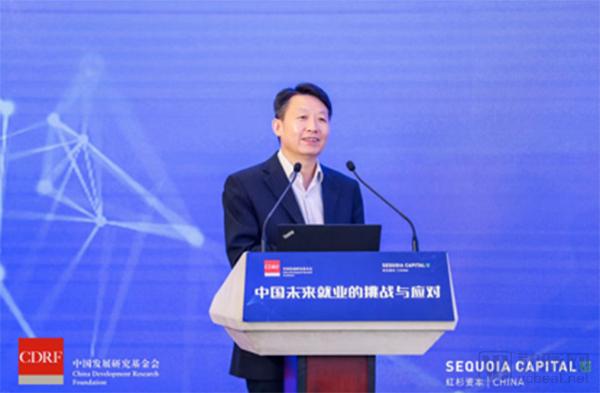
Long Guoqiang, Deputy Director of the Development Research Center of the State Council
Against the backdrop of the booming development of artificial intelligence technologies, it is crucial to conduct forward-looking research that not only explores how to leverage the advantages brought by technological advancements but also examines how to mitigate the risks and adverse effects associated with these technologies.
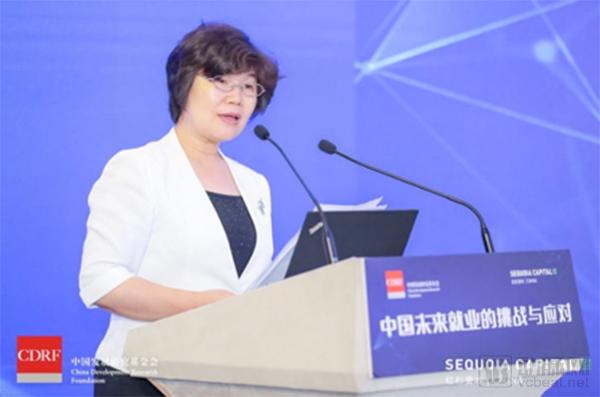
Zhang Yizhen, Vice Minister of the Ministry of Human Resources and Social Security
To address the challenges that artificial intelligence poses to employment, greater priority should be placed on stabilizing employment. With high-quality and more adequate employment as the starting point and focal area, we should seize the opportunities presented by AI development, foster mutual support and coordinated growth with AI, thereby promoting economic upgrading and improving people’s livelihoods, mitigating unemployment risks, and safeguarding the basic well-being of the population.
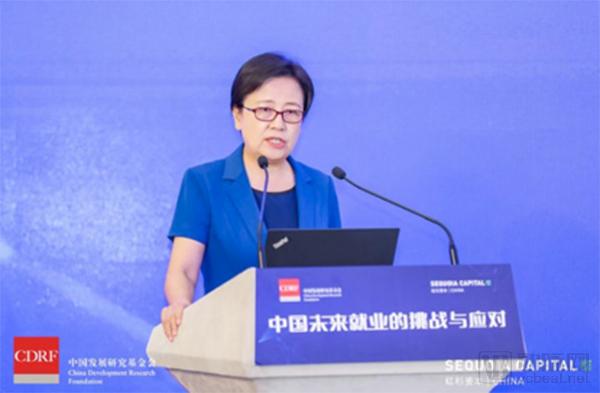
Lu Xin, Deputy Director of the Office of the Central Coordination Group for Xinjiang Work, and Former Vice Minister of Education
All departments and sectors, particularly policy-making bodies, should possess two key capabilities: forward-thinking mindset and proactive action. Only by integrating knowledge with practice can they better adapt to the booming development of artificial intelligence.
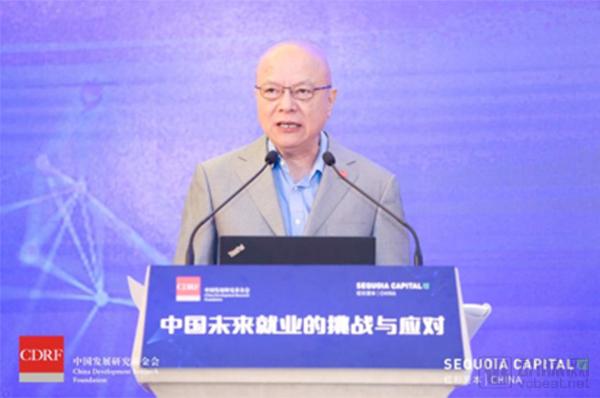
Lu Mai, Vice Chairman and Secretary-General of the China Development Research Foundation
China still has significant shortcomings in early childhood care and preschool education, and the quality of vocational education remains flawed, making it difficult to adapt to the employment landscape of the future artificial intelligence era. To address future challenges, we must increase investment in human capital as soon as possible.
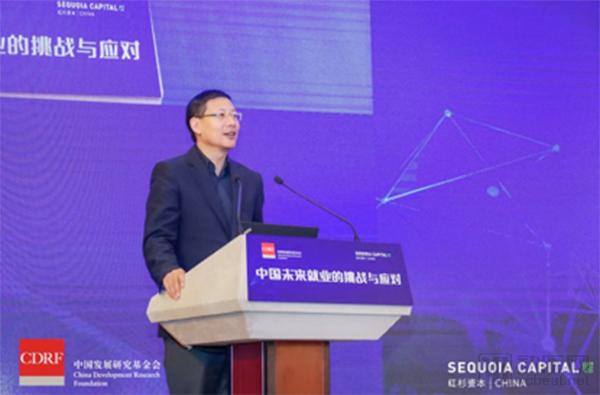
Neil Shen, Global Executive Partner of Sequoia Capital
China stands on the eve of a major AI-driven transformation. We must proactively embrace change, seize the substantial dividends created by artificial intelligence, and prepare in advance to address the challenges and difficulties it brings.
At this conference, the China Development Research Foundation released the White Paper on Artificial Intelligence and the Future of Employment in China, marking the first systematic policy research report in the country to focus specifically on the impact of artificial intelligence on China’s future job market and corresponding response strategies. The White Paper on Artificial Intelligence and the Future of Employment in China points out that “the rise of artificial intelligence coincides with the rapid adjustment of China’s economic and social structure, indicating that the next decade presents a golden window of opportunity for the development of AI in China. During this period, the service sector in China’s economy, though lagging behind, is undergoing rapid expansion, offering substantial capacity as an employment buffer. Moreover, as the demographic dividend based on sheer population size begins to wane, it will largely mitigate the employment shocks caused by the application of AI and the series of resulting issues.” Meanwhile, the White Paper also notes that “while fully leveraging the dividends of artificial intelligence, it is essential to properly address some of the negative social consequences arising from its application.”
Research teams from leading industry enterprises and institutions, including Huiyi Huiying, Microsoft, IBM, Alibaba Research Institute, Boston Consulting Group, and Tsinghua University, were deeply involved in the preparation of this report.
The Microsoft research team believes that “with technological innovations and breakthroughs, a future society driven jointly by human intelligence and artificial intelligence is imminent.” Addressing the potential social issues arising from artificial intelligence, the Microsoft research team holds that the design of AI systems must adhere to six fundamental ethical principles: fairness, inclusiveness, transparency, accountability, reliability and safety, and privacy and confidentiality. The rational application of artificial intelligence can help effectively address regional and global challenges worldwide, promote social progress, and create greater economic opportunities.
The research team at the IBM Institute for Business Value China points out that artificial intelligence (AI) technology can deliver multifaceted business value to enterprises. While companies seek to leverage AI more rapidly to generate returns, they face significant challenges in terms of technology and personnel. These challenges include formulating corporate strategies, implementing AI technologies appropriately, redefining employee roles and skills, and cultivating the talent required for AI adoption.
Experts from Alibaba Research Institute conducted a study on the application of artificial intelligence (AI) in the e-commerce industry and its impact on employment, focusing on merchants operating on Alibaba’s platforms (Tmall and Taobao). The study utilized merchant survey data and focus group interviews. The research team found that, amid continuous growth in merchant business volume, the adoption of intelligent tools affected approximately 1.8 million jobs across three categories: customer service, store design, and data analysis. Over 80% of merchants have already adopted AI tools provided by the platform. E-commerce businesses utilizing intelligent tools demonstrated significantly higher total sales, year-over-year sales growth rates, and per-capita sales compared to those not using such tools. The positive impact of AI technology on employment outweighed its negative disruptions. Furthermore, the application of AI technology has significantly increased the income of e-commerce practitioners.
The Boston Consulting Group (BCG) research team assessed the impact of artificial intelligence on the labor market in the financial sector. According to calculations based on its “BCG 2027 Model for the Impact of AI on Employment in the Financial Industry,” approximately 23% of jobs in China’s financial industry will be subject to disruptive effects from AI by 2027, manifesting as job reductions or transformations into new roles. Specifically, the projected job reduction rates are 22% in banking, 25% in insurance, and 16% in capital markets. Meanwhile, the remaining 77% of jobs will see working hours reduced by approximately 27% with AI support, equivalent to a 38% increase in efficiency.
As a partner of the China Development Research Foundation’s White Paper on Artificial Intelligence and the Future of Employment in China, Huiyi Huiying was responsible for drafting the section titled “Outlook on the Application of Artificial Intelligence Technology in Medical Imaging Services” (hereinafter referred to as the “Report”). The research team at Huiyi Huiying believes that artificial intelligence will bring profound transformations to the healthcare industry, primarily manifested in the following aspects:
1. AI in Healthcare Enhances Physician Efficiency and Addresses the Supply-Demand Imbalance of Medical Resources.
In China, there is a substantial and irreconcilable gap in the supply of radiologists. On one hand, radiologists are generally overworked; on the other, rates of missed and misdiagnoses remain persistently high. Furthermore, the training cycle for high-quality radiologists is lengthy and costly, meaning the supply-demand gap for radiologists is expected to widen further in the future. Leveraging AI imaging technology to significantly enhance the work efficiency of radiologists holds particular value in alleviating the shortage of radiologists in China. Taking Huiyi Huiying’s AI products as an example, they can improve radiologists’ image interpretation efficiency by 40%, achieve accuracy rates generally exceeding 90%, and have already been implemented in more than 700 hospitals.
2. Human-AI symbiosis will become the norm, and AI will not lead to job losses for physicians.
The application of artificial intelligence in the healthcare sector can replace mechanical and repetitive tasks, allowing physicians to focus on more valuable activities. However, physicians remain the core of healthcare, and their professional expertise and role continue to be irreplaceable. The most effective diagnostic and therapeutic practitioners of the future will be neither physicians alone nor AI systems alone, but rather human-AI collaborative entities, where physicians efficiently perform medical work with the assistance of artificial intelligence. Taking disease diagnosis as an example, AI systems can be used for initial disease screening; patients identified with potential issues are then referred to physicians for further confirmation. This approach significantly reduces physicians’ workload and achieves effective human-AI collaboration.
Furthermore, the Huiyi Huiying research team highlighted the critical role of high-caliber talent in advancing the medical AI industry, analyzed the current state of the medical AI workforce, and provided valuable recommendations for strengthening the cultivation of specialized professionals.
The research team believes that the development of AI medical imaging relies heavily on high-end talent, with the quality and quantity of such personnel determining the industry’s development level and potential. However, there is a global shortage of professionals in AI medical imaging, characterized by a talent structure where scientists bear the primary responsibility while the mid-level tier lacks sufficient succession. Furthermore, radiologists typically possess only a medical background, resulting in a relatively narrow knowledge base. Few have interdisciplinary training, and they notably lack expertise in data processing and engineering experience, which hinders the advancement of the medical AI industry.
In response to such challenges, the Huiyi Huiying research team believes that in the specialized field of medical imaging, application and platform developers must not only focus on artificial intelligence algorithms but also possess a deep understanding of medical image recognition. Professionals with interdisciplinary expertise in both AI and healthcare constitute one of the core competitive advantages for enterprises. Drawing on talent development experiences from countries such as the United States, the United Kingdom, and Canada, the team suggests that China can accelerate the cultivation of AI talent in medical imaging by focusing on the following areas:
First, medical schools should restructure their knowledge architecture, strengthen deep interdisciplinary integration, promote cross-disciplinary collaboration, and cultivate talent within a multidisciplinary ecosystem.
Second, strengthen the deep integration of industry, academia, research, and healthcare; encourage enterprises to establish research institutions, jointly build laboratories with universities, and collaboratively cultivate talent.
Third, medical AI companies leverage their productization experience, engineering capabilities, and marketing systems to help hospitals or universities accelerate the translation of scientific research achievements.
Fourth, actively attract overseas talent in related fields to return to China for innovation and entrepreneurship, jointly promoting breakthrough progress in China's artificial intelligence technology.
Finally, the research group believes that industrial upgrading and consumption upgrading entail employment upgrading, which will inevitably lead to the disappearance of certain “low-end” jobs—a necessary transitional process. To mitigate the impact of artificial intelligence on employment, it is imperative for the government to introduce corresponding policy measures to address potential social issues arising from AI-driven technological transformation. Such measures may include leveraging fiscal and tax policies to facilitate the redistribution of social wealth, establishing a unified social security system to adequately address the livelihood and reemployment challenges faced by workers displaced by AI, and strengthening the development of vocational education and reemployment training systems.