

Lin Feng, Founder of Bode Jialian: Raising $1.5B in a Year and Building a 'Medical Airport' for Doctor Groups
In the field of physician groups, Shenzhen Bodestar Physician Group (hereinafter referred to as “Bodestar”) has long been a highly regarded pioneer and leader.
On March 8, 2016, Bodjia Lian obtained China’s first business license bearing the trade name “Doctor Group,” ushering in the era of legal recognition for doctor groups in China.
On April 18, 2017, Bodjialian announced the introduction of a RMB 1 billion strategic investment from Hong Kong Xinxinfeng Medical Holdings Co., Ltd., becoming its largest shareholder. The magnitude of this deal left the industry astounded.
Recently, Bodajialian has once again found itself at the center of controversy after co-founder Xie Rushi announced his resignation on WeChat Moments, sparking concerns about the future direction and path to sustainable success for physician groups as an emerging business model.
So, how has Bode Jialian developed over the past two-plus years? What are its future plans? And what lessons can its pathways offer to physician groups?
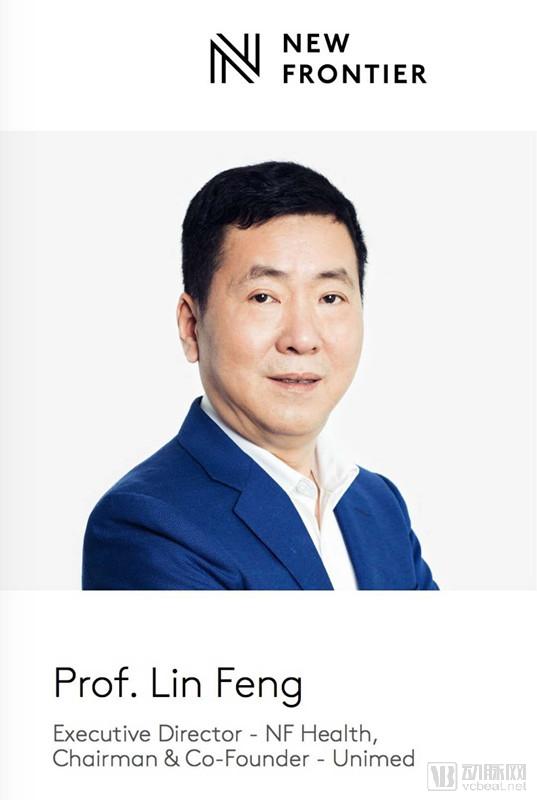
On September 2, a reporter from VCBeat (WeChat ID: vcbeat) visited the Guangzhou office of Bodajialian and met with its founder, Lin Feng. Through an in-depth five-hour interview, the reporter sought to unravel the development logic of the helmsman who was the first in China to venture into the physician group model.
As a physician by training, Lin Feng never imagined he would win the favor of capital and embark on an entrepreneurial path. Yet the Lingnan traits of integrity, kindness, and openness to new ideas are deeply ingrained in him, prompting him to establish a physician studio in partnership with iKang Guobin Health Checkup Center—the initial prototype of what he envisioned as a “Physician Group.”
At the time, he had not considered leaving the public healthcare system to establish a private physician studio, as doing so would mean forfeiting all benefits associated with public hospitals—a difficult trade-off. By then, Lin Feng was already serving as Director of the Department of General Surgery and Director of the Department of Gastrointestinal Surgery at the Sixth Affiliated Hospital of Sun Yat-sen University, enjoying a high reputation in China for his expertise in minimally invasive gastrointestinal and laparoscopic surgeries.
Why Is It Called a “Doctor’s Studio”? From the outset, Lin Feng distinguished his practice from that of an individual opening a private clinic. The Doctor’s Studio has always operated as a team, which has earned it high patient recognition.
The starting point determines whether the group’s development will be sustainable in the long term. Due to his frequent academic exchanges abroad, he is thoroughly familiar with foreign healthcare models. In other countries, physicians typically practice in three ways: as hospital employees, in private practice (operating their own clinics), or through multi-site practice (partnership arrangements). Among these, multi-site practice accounts for more than 80%. The world-renowned Mayo Clinic is a pioneer of physician group practice.
Having previously established his own physician studio, he aimed to introduce the physician group model to China. In March 2016, Bodajia Lian Physician Group was issued the first business license for a physician group in China by the Shenzhen municipal government. According to Lin Feng, this “first” status reflected governmental support for his pragmatic approach. “Previously, it was impossible to register terms such as ‘physician group’ with the industrial and commercial authorities.”
Thus, “Physician Groups” enable physicians to register directly with the group. Meanwhile, physician groups can legitimately charge patients directly for diagnostic and therapeutic services, and then pay platform usage fees to partner medical institutions. This signifies that physician groups have emerged as a new business model capable of operating independently.
Subsequently, on October 25, 2016, the State Council issued the “Outline of the ‘Healthy China 2030’ Plan.” Notably, the Outline explicitly states that it is necessary to “innovate models for the utilization, mobility, and service delivery of medical personnel, and actively explore physicians’ independent practice, contractual services between individual physicians and medical institutions, or the formation of physician groups.”
This is the first time that “private practice” has been included in a national-level document, and also the first time that “physician groups” have been included in a national-level document.
Physicians are the primary productive force in the development of the healthcare sector and the health industry. Promoting physicians’ freedom to practice helps enhance the value of medical talent, facilitate the decentralization of medical services, and strengthen the foundation of grassroots healthcare.
Shenzhen issued the first business license for a physician group, a breakthrough that not only invigorated the entire ecosystem of Shenzhen’s healthcare services and health industry but also drove Shenzhen’s healthcare reform—and even nationwide healthcare reform in China—through policy innovation, open division of labor, and cooperation, creating a localized “catfish effect.”
Since then, physician groups have officially been introduced in China. To date, media reports indicate that there are more than 960 physician groups in the country, with the national total approaching 1,000 and reaching as many as 960. Shenzhen, with its open policies, has taken the lead, hosting over 500 physician groups within two years. Meanwhile, inland cities have gradually increased their policy tolerance and openness toward physician groups; for instance, the number of physician groups in provinces such as Shaanxi, Henan, and Sichuan has grown significantly since 2018.
In recent months, provinces and municipalities such as Shanghai and Shandong have introduced new policies to encourage physicians to establish physician groups. For instance, Shanghai’s “50 Measures for the Health Service Industry,” issued by the Shanghai Municipal People’s Government to promote the city’s health service sector, emphasizes “renowned physicians and specialized techniques” as its core focus and encourages the development of various physician groups and specialty clinics. In Jinan, Shandong Province, the Municipal Health and Family Planning Commission, together with the Municipal Administration for Industry and Commerce and the Management Committee of the Jinan International Medical Science Center, jointly issued the “Notice on Issues Concerning the Practice Registration of Physician Groups,” which explicitly liberalizes business registration for physician groups. Driven by these policy openings, physician groups in these regions are expected to benefit significantly, with their numbers poised for substantial growth.
Among these physician groups, a significant proportion have attracted capital investment. As physicians constitute the most critical resource in the healthcare sector, controlling this talent pool appears to make profitability readily achievable.
In the face of capital, physician groups represented by Bodijia Lian seem to have consistently held the upper hand: as some of the earliest entrants, these groups are relatively few in number, comprise physicians with generally senior tenure, and boast strong proprietary brand equity, truly making them “high-quality investment targets.”
Lin Feng stated that after Bodjia Lian obtained its license, it did not yet have a handwritten business plan, but more than thirty investment firms expressed interest in investing. In selecting capital partners, his primary requirement was that the investors must understand the essence of healthcare and be genuinely committed to practicing medicine; secondly, regardless of the size of the capital, physicians must maintain a dominant role.
After multiple rounds of screening, Lin Feng selected Sinopharm Capital and Chongshan Yuanwei Investment Center for his first round of investment. Notably, Mr. Li Wei, the founder of Sinopharm Capital, is the son of renowned economist Li Yining. The investment amount reached tens of millions of yuan.
Soon, Lin Feng reached a cooperation agreement with New Frontier Health Group, founded by Antony Leung, former Financial Secretary of Hong Kong and current Chairman of the Board of Directors of Nan Fung Group. Positioned as a venture capital firm, the group has prior experience in several healthcare investments and stated that it would provide Bodajia Alliance with support starting at RMB 1 billion in the near future. The funds will be used to build new general hospitals in Guangdong Province and further enhance its surgical outpatient centers.

In fact, many physician groups have secured financing over the past two years. Examples include Huayi Xincheng, Dajia Yilian, Maidou Physician Group, Kairui Nephrology Physician Group, Capital Physician Group, and Zhang Qiang Physician Group. The funding rounds ranged from angel rounds to Pre-A and Series A rounds, with most physician groups raising substantial amounts.
“Before financing, a physician group is an organization where doctors come together based on the spirit of contract; after financing, the focus shifts to how to ‘generate profits’ and achieve monetization,” Lin Feng stated bluntly. He believes that it may not be advisable for physician groups to seek capital investment before they have clearly defined their business models.
At this juncture, physician groups need to consider: How can they establish a closed-loop business model? Should they introduce capital? And when is the optimal time to do so?
Regarding the development of Bodjia Lian, Lin Feng has used this self-questioning and self-answering approach to progressively refine its business pathway. He believes that to establish a complete diagnosis and treatment workflow, physicians require physical medical institutions (such as hospitals or clinics) as their professional workplaces to perform surgeries and consult patients. This represents the core value of physicians, whether they practice in public hospitals, private hospitals, or as part of a physician group. For physicians, excelling in this fundamental aspect ensures their "survival is remarkably easy."
If a physician group is merely a collection of doctors practicing independently, there is no need for financing. This asset-light model struggles to identify payers, making the PHP (Physician-Hospital Partnership) model a more suitable choice. However, if the goal is to further expand the value proposition of physicians and achieve additional objectives, introducing investment should be considered.
This also reflects the period after Bodexiaolian secured substantial financing, during which Lin Feng continuously mapped out the development trajectory for his physician group. His desk was piled high with thick stacks of draft paper, which he has preserved to this day. Whenever someone attempted to clean his study, he would insist, “Do not touch the draft papers on my desk. Many strategic pathways remain unresolved, and new solutions may suddenly emerge in the future. Once discarded, they can never be recovered.”
Similarly, this is also the reason why Bodjia Alliance has been able to continuously secure financing. Previously, Lu Dongcheng, Founding Executive Partner of Chongshan Capital, stated that the physician group model of medical service aligns with the current policy direction of national healthcare reform in China, and the development of physician groups in developed countries has fully demonstrated their feasibility and effectiveness. “We hope to leverage the power of capital to promote the development of China’s healthcare industry and support further exploration and practice of the physician group model.”
However, as an increasing number of investors join physician groups, some argue that while the development momentum of physician groups in China is currently strong, certain issues persist, such as a lack of offline resources and an unclear profit model.
Capital has also quickly cooled down. As Warren Buffett once said, “Only when the tide goes out do you discover who’s been swimming naked.” For physician groups, which are emerging rapidly like mushrooms after rain, winning investor favor naturally offers bright prospects. However, such cases remain few and far between. Physician groups in China are still in their infancy, with no mature or proven business model yet established. How many will survive after the initial surge remains uncertain, and the path forward will require continuous exploration.
If 2016 was the year of explosive growth for physician groups, then 2017 marked a turning point as they increasingly shifted toward offline operations, seemingly viewing this as a viable path to monetization.
Even so, there are multiple pathways for physician groups to expand into offline services, such as partnering with physical medical institutions, establishing clinics, or building hospitals. Lin Feng believes that, compared to the tens of millions of yuan required to build a clinic or the hundreds of millions needed for a physical hospital, collaborating with existing medical institutions is the most cost-effective option and remains one of the most common choices for physician groups today.
However, to collaborate with physical medical institutions, physician groups need to hire operational teams to handle non-clinical matters, such as expanding partnerships with hospitals, scheduling, and marketing. This is because patients in China tend to trust the institution rather than the individual physician. Once doctors leave public hospitals, they no longer enjoy a natural advantage in patient acquisition. Coupled with geographical limitations, a renowned specialist from Beijing may have lower visibility when practicing in a county-level city than some local physicians there.
There are two types of renowned physicians: those who are well-known in academic circles, and those who have a strong reputation among patients. However, Lin Feng argues that there is no necessary correlation between the two. This is precisely why it is difficult for physicians to build a personal brand after leaving public medical institutions.
Following its successful fundraising, Bode Jialian has chosen to build both hospitals and comprehensive outpatient clinics. Lin Feng aims to establish a tiered medical service network. “Our plan is to create China’s Kaiser Permanente. In addition to hospitals, we will further develop surgical outpatient centers and recruit more independently practicing physicians. The entire group will also expand into the insurance industry and further integrate its underlying medical resources,” stated Lin Feng. “In the future, we intend to build our own insurance system, with the goal of becoming the Kaiser Permanente of the United States.”
During its development, Bodellink has established a strong division of labor and synergy with capital partners. New Frontier Health is primarily responsible for building the physical medical institutions, while Bodellink manages the operations of the physician group. Currently, Bodellink has established two comprehensive outpatient clinics in Shenzhen and Huizhou, serving hundreds of outpatients daily. The construction and renovation of its physical hospital in Guangzhou will be completed in 19 days.
In the Luohu District of Shenzhen, an outpatient surgical center spanning over 1,000 square meters has been established. Positioned as a “specialty-focused, general-care supportive” facility, it encompasses departments such as general surgery, general internal medicine, and pediatrics, with comprehensive medical equipment and day-surgery operating rooms capable of performing various procedures. The establishment of the outpatient department and the day-surgery center has introduced significant innovations in both functionality and service processes. It not only boasts a professional and efficient team of full-time physicians but is also supported by more than 300 contracted experts from authoritative fields across 34 specialties. As one of the first bases to introduce physicians from Hong Kong, it plays a pivotal role in cultivating talent for new hospitals. In addition to providing 24-hour appointment-based medical services, it offers multilingual support in Mandarin Chinese, Cantonese, English, Japanese, and Spanish, creating an internationalized linguistic environment for patient care.
In contrast, the Huizhou facility is a comprehensive outpatient clinic focused on primary care for common conditions, with consultation fees amounting to only tens of yuan and coverage under China’s national medical insurance. However, it sees a relatively high proportion of surgical patients, which is closely tied to the clinical expertise of Bodcare Alliance’s physician team; Lin Feng himself is an expert in gastrointestinal surgery. Bodcare Alliance will also integrate more internet healthcare platforms to further enhance its brand influence.
In addition to public medical insurance, Bodé Jialian has also integrated commercial health insurance. Complementing this offering is its “Health Steward” product, which provides services including health record establishment, customized check-up plans, health management, and oral healthcare. Lin Feng aims to create a closed-loop business model of “customers + physician groups + commercial insurance,” akin to Kaiser Permanente in the United States.
In terms of talent, Lin Feng is not concerned about the difficulty of recruiting medical professionals. He told reporters that Bodajialian currently has a team of more than 300 medical experts, covering 34 clinical specialties. Among them, there are approximately 100 full-time physicians, and the nursing staff is allocated at a 1:1 ratio with physicians to ensure the quality of medical services.
However, Lin Feng’s ambitions extend far beyond this. He envisions the relationship between physician groups and doctors as analogous to that between airports and airlines: just as an airport contracts with multiple airlines, each airline determines its own pricing and service tiers. Major airlines can share passengers, select their respective routes, and create differentiated services, while also having the option to land at other suitable airports, depending primarily on the quality of ground handling services and hardware infrastructure. As a “flagship carrier,” the hospital that Bode Jialian aims to build in the future will serve as a home port welcoming other outstanding physician groups, functioning as “an open platform.”
In his vision, the goal is to build an ecosystem for physician groups and a broader healthcare ecosystem. Adopting the “carrier strike group” concept, the strategy begins with establishing smaller vessels such as “supply ships” and “destroyers,” each shouldering specialized clinical capabilities. Ultimately, an “aircraft carrier” will be built as a premier, cutting-edge integrated entity, enabling physicians and physician group teams to implement their services in physical settings and thereby drive personnel mobility.
He believes that this is perhaps the true “Medical Mall” and the essence of shared healthcare. The facility boasts comprehensive, high-quality hospital equipment capable of meeting the needs of any physician. Therefore, Lin Feng has consistently procured medical devices for the offline base in accordance with the standards of Grade A tertiary hospitals. The aim is to enable physicians to provide full-process diagnostic and treatment services to patients, thereby affording them ample scope to leverage their professional expertise.
“For people from the Chinese mainland, and even for mainland doctors, it may not be clear which hospital is Macau’s public hospital, as the most prestigious ones are all private,” said Lin Feng. “I believe this is precisely what private hospitals should aspire to achieve. Top-tier private institutions such as Chang Gung Memorial Hospital in Taiwan and the Cleveland Clinic in the United States were, in fact, founded by physicians. I am optimistic that we will certainly have our opportunity.”
Although the implementation process may encounter various challenges, it is essential to remain hopeful—after all, success might just be within reach. For Lin Feng, in addition to managing the physician group, he spearheads the separation of medical practice from management. The headquarters serves as the central management hub, coordinating all branch offices and hospitals/bases. He is committed to building a high-performing team that operates according to established processes and regulations, thereby realizing a mechanism where personnel are managed and constrained by institutional frameworks.
Meanwhile, he has established his own studio within every Bodajialian physical medical institution. “I am a physician; saving lives and healing the wounded is my fundamental duty. Only by staying true to our original aspiration can we achieve our ultimate goal. Entrepreneurship is merely another way for me to help more patients.”
As the interview drew to a close, Lin Feng responded to Xie Rushi of Bodjia Lian’s self-announced resignation on his WeChat Moments:
First, Bodé Jialian is a crucial component of Xinfeng Medical’s strategic layout. At the time of signing, there was no valuation adjustment mechanism (VAM) agreement in place, reflecting full respect for the development of the physician group.
At an internal meeting on August 21, Wu Qinan, CEO of New Frontier Health Corporation, announced the company’s Greater Bay Area strategy, emphasizing that Bodhi United is a crucial component of New Frontier Medical’s strategic layout. He stated that the company will fully support Bodhi United’s medical expansion in the Greater Bay Area and expressed strong confidence in its future prospects. In recent years, New Frontier Health Corporation has successively invested in physician groups, rehabilitation, and other healthcare sectors, extending its footprint across China’s entire healthcare industry chain.
Second, regarding Xie Rushi, the Company merely reassigned his position from CEO to Vice Chairman, and the transfer of his shares has not yet been completed. With respect to his voluntary announcement of resignation on WeChat Moments, neither I nor the Company’s Board of Directors will make any comment at this time.
Third, we have appointed Mr. Song Jun as the General Manager of Bodjia United Physician Group, where he will be fully responsible for the company’s operations. All employees will provide their full cooperation and support to Mr. Song. We are confident that under his leadership, the company will move together toward a brilliant future for the physician group.
Fourth, the core values of Better Doctor Alliance: Integrity, Gratitude, Pragmatism, and Dedication! As a pioneer in the industry, we are well aware of the twists and hardships on the path of development. Nevertheless, the Better Doctor Alliance team remains steadfast and confident, striving to bring a refreshing breeze and inject new vitality into the development of physician groups in China.