

Alibaba Health, Huawei, DXY, and WeDoctor Unite to Shape the Future of Smart Healthcare
The integration of healthcare and technology has evolved into a new phase: the convergence of the Internet and smart healthcare.
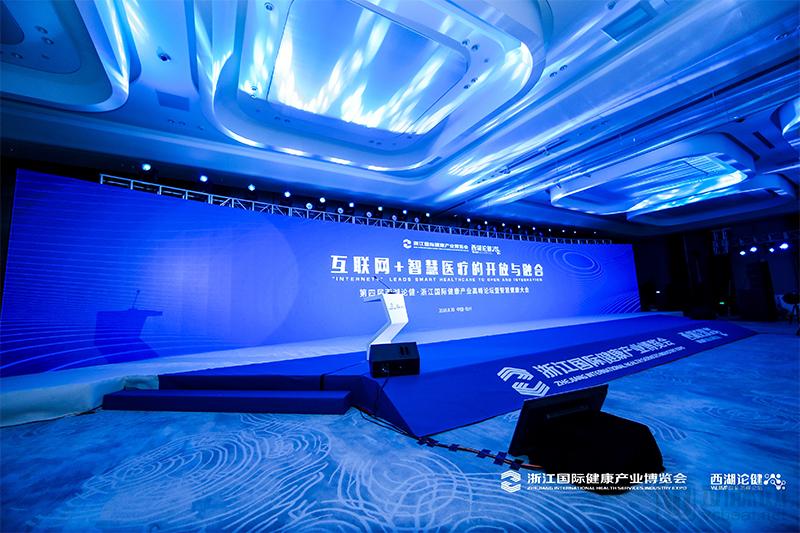
In the era of internet healthcare, hospitals have laid the foundation for digitalization but have yet to achieve deep integration between AI and medical care. Today, cloud computing, big data, and artificial intelligence are no longer novel concepts, and internet healthcare, driven by diverse technologies, has entered its second phase. Against this backdrop, the opening up and integration of “Internet + Smart Healthcare” became the theme of this year’s Zhejiang International Health Industry Summit.
At the conference, Alibaba Health, Huawei, DXY, and WeDoctor came together to share their perspectives on the theme of “Empowering Healthcare Transformation with Big Data in Health and Medicine.”
With the advancement of smart healthcare, the channels for generating health data have undergone a dramatic transformation. We no longer rely solely on data generated by hospitals; the proliferation of wearable devices and numerous third-party institutions has diversified the ways in which data is produced. To collect and integrate this extensive range of data, every enterprise is moving towards the era of the Internet of Everything.
Connecting everything to the internet also brings significant challenges. It is projected that by 2020, the volume of big data in healthcare will double every 73 days. To manage such vast amounts of data, traditional data analysis methods are unlikely to yield effective results; we may need AI to help streamline this process.
At the conference, Fan Yi, Director of the Alibaba Health AI Laboratory, delivered a speech titled “Artificial Intelligence in the Era of Health Big Data” to address the aforementioned issues.
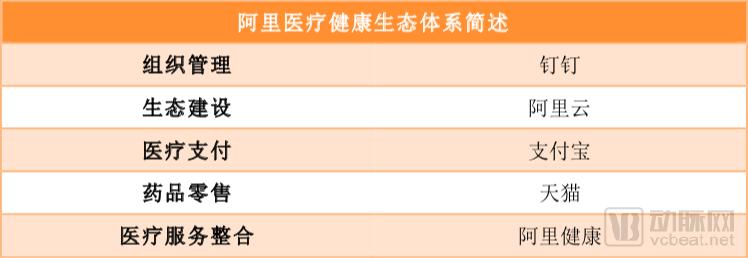
Fan Yi stated, “To avoid losing our way amid the massive volumes of data in the future, we must develop mature screening capabilities at an early stage. In the past, extensive image annotation work performed by physicians has laid a solid foundation for us.”
“We cannot develop AI solely for medical data; instead, we should focus on tangible challenges in healthcare. There are three most difficult issues in the medical field: first, the scarcity of high-quality physician resources; second, the uneven distribution of premium medical resources; and third, China’s aging population. AI can offer certain solutions to these three problems, and governments, enterprises, and hospitals should all contribute their efforts.”
From a policy perspective, the government primarily supports and steers technological development in big data and AI through indirect means by issuing a series of policy documents, whereas enterprises and hospitals address these issues directly.
For healthcare enterprises, it is imperative to consider what drives their participation in AI research and development, the essence of such involvement, and its future trajectory. AI empowerment in the healthcare industry essentially enhances supply-side capabilities, delivering these capabilities to a broader population via the internet, thereby establishing viable business models and closed-loop commercial ecosystems.
Nowadays, healthcare informatization is no longer limited to hospitals; out-of-hospital settings will also become an integral part of it. The future world will be one defined by “Internet + AI.”
As a leading technology company in China, Huawei has long established its presence in the healthcare sector. Huawei’s original intention in building a national health platform was simple: “To make medical care accessible, affordable, and guaranteed for all.”
In the informatization construction of top-tier hospitals, Huawei collaborated with West China Hospital to build a big data integration and application platform, and jointly planned and designed the top-level digital hospital architecture and its implementation for the new campus of West China Second University Hospital; worked with Beijing Tongren Hospital to establish an efficient and secure security assurance system; ensured the stable and reliable operation of business systems at Peking Union Medical College Hospital, Xiangya Hospital of Central South University, and Jiangsu Province People’s Hospital through advanced active-active solutions; and helped the Chinese PLA General Hospital and Nanjing Drum Tower Hospital, among others, build highly integrated and easily maintainable data centers using micro-module solutions.
Addressing the three major challenges in the healthcare sector, Huawei advocates for solutions driven by internet-based thinking, with its platform primarily focused on resource allocation and health management. Zhang Dayong, Chief Architect of Huawei’s Healthcare Industry Solutions, stated, “Huawei’s National Health Platform will be an ecosystem-encompassing platform.”
The ecosystem design of the “Platform + Ecosystem” model requires guarantees in three areas: first, infrastructure; second, the data layer; and third, the application layer. Huawei’s extensive internet business lines can ensure a sufficient supply of consumer-side (C-end) information sources; its self-developed cloud platform is capable of providing enterprises with high-quality database services and application development services. A mature “Ecosystem + Platform” can enable resource incubation and automation capabilities.
“During the platform’s opening process, the first issue we encountered concerned the development methodology. Under the traditional model, the software deployment cycle ranged from as little as half a month to as long as six months, making it extremely cumbersome. Secondly, going live required configuring development environments, and various testing procedures further consumed several days. Finally, there was the issue of elasticity: provisioning resources based on peak demand would result in significant waste, whereas failing to do so could lead to system response times ranging from 20 to 30 minutes.”
Therefore, Huawei is adopting "agile development," shortening development cycles from months to weeks. In terms of system configuration, Huawei leverages big data analytics to analyze fluctuations in system demand and allocate resources elastically.
The second issue pertains to data management. The National Health Platform supports a wide range of services, with varying database requirements across different functionalities. Some projects utilize multiple databases, often requiring both transactional and analytical databases simultaneously, which poses significant challenges for database administration.
In response, Zhang Dayong proposed addressing data issues through comprehensive virtualization: “While numerous virtualization management tools and mechanisms are already in place for infrastructure, they are insufficient. We need not only virtual storage but also virtual networking, leveraging cloud platforms to resolve these challenges.”
Similar to Huawei, WeDoctor has also built an open platform called WeDoctor Cloud, and established internet hospitals on this platform to achieve cloud-based diagnosis and treatment, resulting in lower investment and better outcomes.
The WeDoctor Cloud Platform facilitates the establishment of remote collaboration platforms for medical consortia and constructs a tiered diagnosis and treatment network. Its subsidiary prescription sharing platform, hospital-centric in design, enables synergy among healthcare providers, prescriptions, pharmaceuticals, and insurance coverage. Currently, over 100 internet-based medical consortia have been established on the WeDoctor Cloud Platform, with 19,000 retail pharmacies integrated into the prescription sharing platform.
To strengthen interoperability across the platform, WeDoctor has also joined the exploration of blockchain technology, launching the “WeDoctor Chain” blockchain system. By leveraging the traceable and tamper-proof characteristics of blockchain, it establishes a trusted foundation for data interconnectivity.
At the conference, Hu Hongxia, Senior Vice President and Chief Technology Officer of WeDoctor Group, delivered a speech titled “The Integration of Medical Big Data and Blockchain.” He stated, “Connectivity and cloud migration have broken down hospital walls, gradually enabling data, workforce, and resource collaboration, thereby bringing breakthrough capability enhancements to the entire healthcare industry.” Hu Hongxia noted that, through years of accumulation, WeDoctor Cloud has built a multi-dimensional intelligent computing system based on big data and a continuously optimized medical service system. Moving forward, WeDoctor will continue to open up its capabilities in big data, cloud computing, and artificial intelligence to the entire industry, providing infrastructure and computing engines for the healthcare sector.
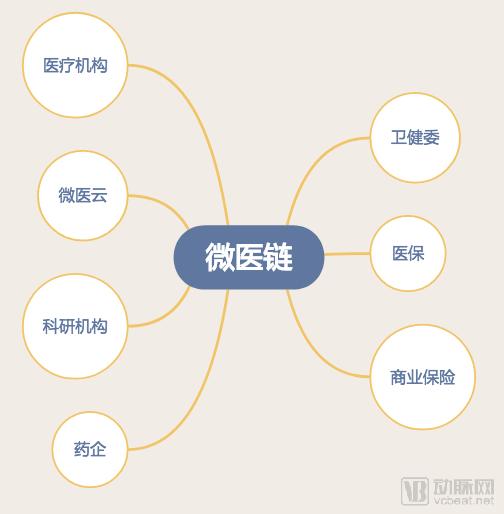
Specifically, WeDoctor Chain is a consortium blockchain that connects upstream and downstream stakeholders in the healthcare industry. Its nodes include WeDoctor Cloud, medical institutions, Health Commissions, basic medical insurance agencies, commercial insurers, pharmaceutical companies, and research institutions. WeDoctor Cloud leads the process of uploading data to the blockchain; medical institutions provide electronic medical records, laboratory and diagnostic test results, medical orders, and electronic prescriptions; Health Commissions conduct compliance supervision on-chain; basic medical insurance and commercial insurance systems enable automatic claims processing and settlement through smart contracts; and pharmaceutical companies can achieve drug traceability on the chain.
In addition to leveraging blockchain, WeDoctor Chain has also introduced the Digital Object Architecture (DOA) technology developed by Robert Kahn, known as the "Father of the Internet." As a key infrastructure for data resource management systems, DOA technology provides capabilities such as globally unique identification, information resolution, information management, and security control.
WeDoctor Chain is currently being piloted on the Heilongjiang Provincial Population Health Information Platform, providing regulatory authorities with traceability capabilities to prevent data misuse.
DXY’s mission is encapsulated in three statements: “Connect industry partners, build a data-driven service platform, and provide trustworthy healthcare services.” These three statements have guided DXY to where it is today.
Eighteen years ago, DXY was a forum for physicians. Today, it reaches more than 70% of doctors across China. DXY aims to provide physicians with the best knowledge and tools to support their clinical diagnosis and treatment. However, serving only physicians is insufficient for an enterprise; DXY must extend its coverage to all aspects of healthcare. To this end, DXY has added five characters to its vision statement and placed them first: “Enable More Health.” This marks DXY’s exploration of the patient side, driven by big data.
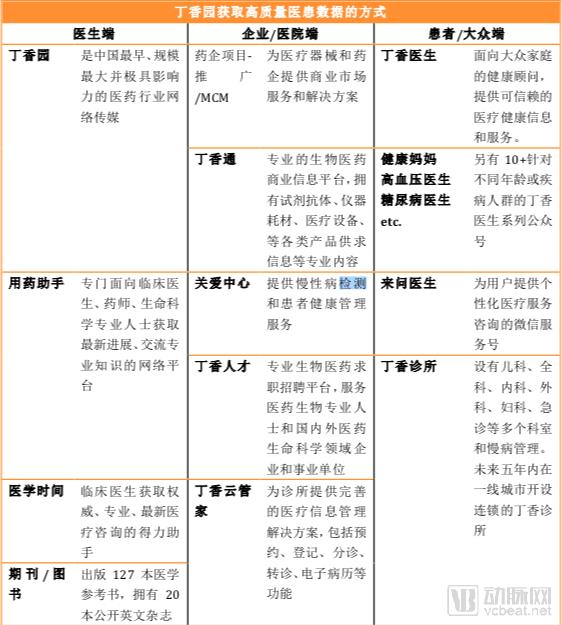
Dingxiang Yuan’s approach to acquiring high-quality physician-patient data stems from its services tailored to physicians, enterprises, and patients. The extensive interactions, knowledge sharing, and engagement on the Dingxiang Yuan Forum have generated a substantial volume of behavioral data from physicians. Building on this physician-centric foundation, Dingxiang Yuan has expanded to offer enterprise-level services to pharmaceutical companies, public hospitals, private hospitals, and other institutions. Services such as academic promotion and talent recruitment have enabled Dingxiang Yuan to accumulate significant B-side (business-to-business) data. In comparison, although Dingxiang Yuan’s consumer-facing (C-side) services have been operational for a shorter period, the platform has risen to become the leading provider of popular science content on WeChat since 2015 and currently ranks first on Douyin (the Chinese version of TikTok).
Li Tiantian, founder of DXY, stated at the conference: “What can data do? In simple terms, it comes down to three words: decision-making. Data serves many functions, including measurement, selection, and optimization. These processes help us improve our products, evaluate effectiveness, choose channels, screen physicians, and precisely target customers. With such data-driven decision-making, we can, to some extent, transform uncertainty into certainty. Services without data are traditional services, which are highly inefficient. Meanwhile, data without service lacks commercial value.”
To illustrate how data drives enterprise development, Li Tiantian shared five case studies:
When we ask doctors what kind of content they enjoy reading in their daily lives, they often cite the “Big Four” medical journals. But is this truly the case? Li Tiantian stated, “Many doctors share various journals and industry guidelines on their WeChat Moments, yet what they actually save are articles such as ‘Rational Use of Antibiotics’ and ‘Basic Surgical Techniques.’ Case studies suggest that survey-based data may be inaccurate; what doctors genuinely prefer is content closely aligned with clinical practice that helps them improve their clinical skills.”
Dingxiangyuan analyzes data collected from physicians’ software usage to help pharmaceutical companies identify target audiences and conduct online academic promotion. These promotional efforts are delivered during physicians’ preferred time slots and through their preferred channels.
Over the past three years, DXY has surged to the forefront of medical science popularization and education, keeping pace with emerging trends. Among more than 20 million original WeChat official accounts, DXY ranked 29th in 2017.
In this way, DXY can capture public reading behaviors, gain insights into consumer perceptions, and attempt to convert these insights into purchasing actions, while further advancing market analysis research.
Many platforms offer online Q&A features, but the vast majority of doctors in China lack the capability to provide effective online consultations. Li Tiantian argues, “Many people assume that since doctors see patients in their daily practice, they can simply do the same online. However, what I am addressing is not medical diagnosis and treatment, but service. Chinese doctors generally lack a service-oriented mindset. When it comes to paid consultations, doctors often respond by saying, ‘Your condition is quite complex; I have an outpatient clinic this Thursday morning—please come in.’ In such cases, patients receive no actual assistance through the online platform.”
“We model physician behavior data from DXY to identify top-tier doctors on the platform, with the aim of cultivating physicians capable of delivering high-quality online healthcare services, thereby driving industry development.”
Dingxiangyuan’s Guanjia Clinic Operations Management System covers thousands of clinics, enabling clear identification of which are truly value-driven clinics and which are “sham clinics.”
Value-based clinics adhere to evidence-based medicine, typically adopting a consultation fee model that prioritizes patient experience and does not rely on revenue from drug sales or intravenous infusions. In contrast, many “Sha-Huang Clinics” (so named because they are sandwiched between Shaxian Delicacies on the left and Braised Chicken Rice on the right) depend largely on profits from medication and IV drips, and even engage in unethical practices, to sustain their operations.
With the influx of private capital and the relaxation of regulations on physicians’ multi-site practice, an increasing number of value-based clinics—such as DXY Clinic—will emerge, leading to a growing prevalence of high-quality clinics.
Whenever traditional Chinese festivals approach, patients' blood glucose levels fluctuate dramatically. During the Dragon Boat Festival, Mid-Autumn Festival, and Spring Festival, these fluctuations are particularly pronounced in individuals with diabetes.
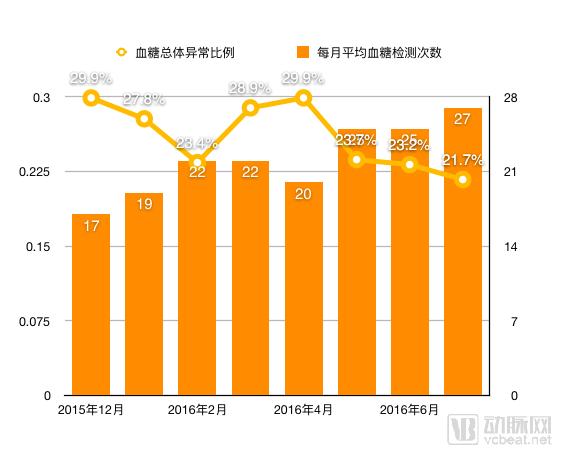
As indicated by the tabular data, the overall frequency of blood glucose monitoring shows an upward trend, while the overall prevalence of abnormal blood glucose levels exhibits a fluctuating pattern. DXY will leverage such data analytics to formulate personalized intervention strategies for patients, reminding them to monitor their blood glucose levels and maintain dietary control.
Overall, DXY’s experience demonstrates a dual-engine drive powered by data and services. Whether it involves user behavior data, operational business data, content data, Q&A data, or survey data, any high-quality data that DXY can collect and analyze helps enterprises deliver more precise services, identify suitable customer segments, and optimize product operations. High-quality data enables high-quality services, while high-quality services generate even more high-quality data; the two are mutually reinforcing and supportive.
Although the theme of this conference is “Big Data in Health and Healthcare Empowering Medical Transformation,” the progress of this transformation, as seen from the development of various enterprises, cannot be achieved without the impetus of artificial intelligence. As Fan Yi, Director of the Alibaba Health AI Lab, stated, the future belongs to “Healthcare + AI + Big Data.”
Amid emerging trends, data silos in the healthcare sector will gradually dissolve, and resource allocation challenges will steadily ease. In today’s era, enterprises must re-examine the healthcare industry through a lens of integration and openness. The foundation is now sufficiently solid, yet we still have a long and arduous journey ahead…