

Zhejiang Health Industry Soars Amid Innovation and Policy Support: Insights from the International Health Industry Expo
In 2017, Zhejiang Province’s health industry experienced robust growth, with continuous optimization of the development environment, further improvement in industrial structure, and more effective policy instruments and platforms. According to preliminary statistics, the total output of the province’s health industry reached RMB 648.3 billion in 2017, with a value-added of RMB 259.7 billion, accounting for 5.0% of its GDP.
Within these health industry structures, technological innovation has become the most dynamic and proactive factor of productivity, in addition to enhancing humanity’s understanding of life. Fortunately, in Zhejiang Province, not only are numerous traditional enterprises seeking new directions, but a growing number of entrepreneurs are also flocking to the sector. Underlying strategic thinking in the hottest fields—such as internet healthcare, artificial intelligence, big data, medical services, and new-type clinics—is beginning to enrich Zhejiang’s health industry structure, positioning it as a bellwether for the development of China’s health industry.
Recently, at the “4th Zhejiang International Health Industry Expo” held in Hangzhou, Zhu Yaochuan, President of the Zhejiang Health Service Promotion Association, pointed out that Zhejiang Province has designated the health industry as one of its most pivotal sectors for development. Covering an exhibition area of over 7,600 square meters—equivalent to approximately 200 standard booths—the event comprehensively showcased cutting-edge products and projects in today’s health industry. Exhibiting companies, many of them returning participants, invested greater effort into their booth designs, featuring more aesthetically appealing decorations and enhanced technological elements. They also integrated offerings from various platforms, such as Huadong Medicine’s Internet-enabled Smart Rehabilitation system, Intersun Pharmaceutical’s “Future Pharmacy,” and super clinics consolidating multiple specialty practices—all aimed at facilitating visitor engagement and hands-on experience.
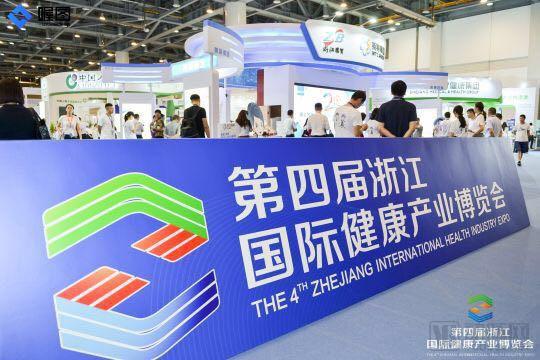
Zhu Yaochuan’s claim is not without basis. Xu Runlong, Deputy Director of the Zhejiang Provincial Health and Family Planning Commission, stated that the health industry is becoming a new function, new advantage, and new driving force for Zhejiang Province’s economic development.The Zhejiang International Health Industry Expo is a key exhibition platform in the province that integrates internationalization, specialization, market orientation, and public engagement, serving as both a bellwether for the development of Zhejiang’s health industry and a premier brand benchmark.Since 2015, nearly 30 countries, regions, and international organizations, more than 700 renowned domestic and foreign enterprises and institutions, and 37,000 merchants have participated in the conference and exhibition.
“Over the past three years, a total of 538 health industry investment projects across the province have been launched through the expo, with a total investment amounting to RMB 912.7 billion. The Health Industry Expo has become an important platform for investment promotion in our province. It has also created favorable opportunities for the mutually reinforcing development of the health industry and health services, while providing an excellent stage for dialogue and collaboration between entrepreneurs and scientists,” added Xu Runlong.
So, which health industry accounts for 5.0% of Zhejiang Province’s GDP? Perhaps the answer lies here:
First, the government attaches great importance to the development of the health industry. Xu Runlong stated that Zhejiang Province is an important birthplace of Xi Jinping Thought on Socialism with Chinese Characteristics for a New Era, with various reforms and developments leading the way nationwide. Since the 19th National Congress of the Communist Party of China, the entire province has unswervingly promoted the further deepening of the “Eight-Eight Strategy” and embarked on a new journey of reform and opening-up, focusing on high-quality development, competitiveness, and modernization. It has prioritized winning the three critical battles and implementing the Ten Action Plans for Enriching the People and Strengthening the Province, thereby accelerating high-quality development.
As one of the five key tasks under the Healthy China national strategy, the Zhejiang Provincial Party Committee and Provincial Government have attached great importance to and supported the development of the health industry, designating it as one of the eight key trillion-yuan-level industries. A series of policies have been successively introduced, including the Implementation Opinions on Promoting the Development of the Health Service Industry, the Zhejiang Province Health Industry Development Plan, the Action Outline for Healthy Zhejiang 2030, and the Action Plan for Deepening the “At Most One Visit” Reform in the Medical and Health Services Sector of Zhejiang Province. Furthermore, Zhejiang took the lead nationwide in releasing a provincial-level blue book on the health industry, hosting health industry expos, and fostering the creation of health-themed characteristic towns, thereby creating a favorable environment for the development of the health industry across the province.
Second, the frequent hosting of health conferences has driven industry development. Taking this year’s expo as an example, themed “Technology-Led, Health-Accelerated,” it showcased Zhejiang Province’s phased achievements in advancing the “Healthy Zhejiang” initiative and developing the health industry, with nearly 100 domestic and international institutions participating in the exhibitions. We hope that all regions, departments, medical institutions at every level, and enterprises will firmly establish new development concepts and make every effort to accelerate the growth of the health industry.
The key features of the conference are as follows: First, we must advance technological innovation. Key core technologies are vital national assets; therefore, we should focus on fields such as biopharmaceuticals, medical devices, gene technology, and precision medicine. Efforts should be directed toward the spatial translation of core technologies, with priority support given to a batch of collaborative innovation centers for health industry technologies, implementation of a series of high-end R&D projects in the health industry, and enhancement of technical standards within the health industry.
Second, we must accelerate industrial integration. By aligning with major strategic initiatives such as the “Four Major Constructions” under Zhejiang Province’s No. 1 Digital Economy Project and the Phoenix Action Plan, we should leverage the province’s strengths in agriculture, information technology, tourism, and other sectors. This will promote the integrated development of the health industry with related industries, including elderly care, tourism, internet, finance, and ecology, thereby achieving mutual integration and win-win outcomes between the health economy and other economic sectors, while continuously fostering new business models within the health industry.
Third, we must expand external exchanges, actively leverage local advantages, base ourselves in the Yangtze River Delta while keeping a global perspective, benchmark against international best practices and leading technologies, adhere to the Belt and Road Initiative as the overarching framework, and further expand and promote effective investment in major health industry projects through the development of platforms such as Pilot Free Trade Zones and the Greater Hangzhou Bay Area.
“Meanwhile, we will continue to advance the ‘At Most One Visit’ reform, constantly optimize the business environment, and deeply implement the strategy of promoting high-quality imports and exports. We are actively building a ten-pronged collaborative ecosystem for entrepreneurship and innovation, integrating industry, academia, research, application, finance, talent, government, intermediaries, media, and cloud services. Our goal is to establish the health industry as a key driver of Zhejiang’s economic transformation and development, strive to advance the construction of the ‘Two High Levels’ in the new era, and build a Healthy Zhejiang with high quality and high standards,” said Xu Runlong.
Technological advancements invariably drive epochal progress in healthcare. With the evolution of the Internet of Things (IoT), big data, and cloud computing, a new era has dawned—the era of “Smart+” Healthcare. Amidst this development, how do government officials, hospital administrators, researchers, and industry leaders perceive and approach these changes?
Mao Junfa, an academician of the Chinese Academy of Sciences, member of the Standing Committee of the Party Committee, and Vice President of Shanghai Jiao Tong University, believes that China possesses unique and favorable conditions for developing artificial intelligence (AI). First, in terms of algorithms, approximately 40% of AI-related papers published worldwide in recent years have been authored by Chinese researchers, surpassing the United States and accounting for more than one-third of the global total. This demonstrates the significant contribution of Chinese scholars to algorithmic research. However, it is regrettable that while there is a large volume of algorithmic publications, none of the most cutting-edge, core algorithms currently in use were invented by Chinese researchers; these have primarily been developed by American scientists. Of course, bridging this gap will require time and continued effort.
Second, China’s vast territory, abundant resources, and large population have resulted in a substantial number of medical cases and massive urban datasets, providing a solid foundation for the research and development of artificial intelligence.
Third, computing power. China’s supercomputers have ranked first globally for multiple consecutive cycles; although the United States has occasionally regained the lead, such shifts have followed a spiral pattern of overtaking.
Last year, the state also issued the "New Generation Artificial Intelligence Development Plan," which is rich in content. The goal is to form a core industry with a scale of 1 trillion yuan by 2030, driving related industries to reach a scale of 10 trillion yuan, building a system, grasping the trinity, strengthening four major supports, and so on.
This has set off a wave of artificial intelligence (AI) enthusiasm across China. Shanghai has placed great emphasis on the AI technology industry, with the goal of basically establishing itself as a national highland for AI development by 2020.
Cai Xiujun, President of Sir Run Run Shaw Hospital, Zhejiang University School of Medicine, believes thatThe Internet represents an economic model aimed at fully leveraging its advantages to achieve deep integration with traditional industries. The deeper the integration, the greater the benefits generated; therefore, it is not a simple case of 1+1=2, but rather a highly effective vehicle that can yield synergistic returns greater than the sum of its parts.
Globally, the adoption of “Internet + Healthcare” applications is distributed as follows: the United States accounts for 50%, Europe 20%, Latin America 15%, and the Asia-Pacific region 5%. This development has progressed through three stages: informatization, internetization, and intelligentization. Taking Spain’s public healthcare system as an example, data is collected from information centers in every community. In contrast, much of China’s medical data is currently non-standardized and lacks interoperability, which significantly hinders the development of artificial intelligence. China is currently transitioning from internetization to intelligentization. The realization of smart healthcare will facilitate more efficient management and enhance patients’ sense of gain.
Sir Run Run Shaw Hospital has implemented two changes: one is faster emergency care, and the other is smoother outpatient services.
In emergency care, once a patient is aboard an ambulance or emergency helicopter, their information is immediately transmitted to the hospital’s emergency department, enabling immediate resuscitation upon arrival. Secondly, a one-stop service system is provided for emergency care processes, including admission and payment.
In terms of outpatient services, we pioneered a mobile smart healthcare process integrated with medical insurance. After downloading the Sir Run Run Shaw Hospital app, patients can schedule appointments with specialists on their smartphones, and the system will remind them of their scheduled visit day. Following the consultation, patients can pay for laboratory tests, imaging examinations, and other fees on the go. Upon payment, the system guides them to the appropriate locations for these tests and notifies them when lab and examination results are available. Additionally, patients can evaluate the hospital, including physicians’ service processes, attitudes, and professional competence. This workflow was initially enabled through Alipay. After the integration of provincial-level medical insurance, the proportion of patients using this service increased from 13.2% to 60%. In the future, as all patients transition to mobile platforms, physical registration offices may become obsolete. The second initiative is a centralized appointment platform.
Xu Zhengping, Dean of the National Institute of Health and Medical Big Data at Zhejiang University, primarily focuses on the following areas: First, the collection and management of health and medical big data. Second, establishing norms for secure data usage, particularly addressing ethical safeguards when data significantly impacts individuals’ career development. Third, developing a management system for data interoperability. In terms of data mining, his work involves analytical statistics, machine learning, artificial intelligence, and data integration technologies, spanning from electronic health records, lifestyle factors, diet, and exercise to precision medicine.
In terms of applications, the areas include: 1) models and technologies for health assessment; 2) models and technologies for innovative drug discovery; 3) models and technologies for disease diagnosis; 4) models and technologies for disease treatment; 5) models and technologies for rehabilitation and prognosis; and 6) health policy and hospital management.
In terms of industrial development, the focus areas include: first, researching new business models in the health industry, such as health consultation rooms; second, health promotion products; third, adjuvant therapy products; and fourth, clinical treatment products, among others.
They are currently undertaking two key initiatives: one is to aggregate big data in health and medical care; for instance, Sir Run Run Shaw Hospital plans to provide 4 million electronic medical records to train their products. The other is a collaboration with WeDoctor AI, aiming to deploy modernized “barefoot doctors” equipped with computer-aided diagnostic systems to assist patients in remote areas in the near future.
Future plans include the development of three platforms. The first is a data management platform. Our health and medical big data require a robust infrastructure. A key aspect of this platform is to encourage data contribution, where data trading becomes a critical issue. We aim to innovate technologies or methodologies to scientifically and objectively assess the value of your data, thereby maximizing its utility while incentivizing you to share it with others.
Second, the data mining and AI platform: we aim to leverage AI technologies to enhance data mining capabilities. However, much of the mined data has yet to fully realize its value, underscoring the critical importance of a key data integration platform. Third, the association and integration platform.
Based on three platforms, six centers have been established: 1) the Big Data Correlation Technology Innovation Center; 2) the Medical Artificial Intelligence Research Center; 3) the Precision Medicine Big Data Research Center; 4) the Disease Surveillance and Contextual Big Data Research Center; 5) the Health Security and Demographic Big Data Research Center; and 6) the Holographic Digital Human Research Center.
“Zhejiang Province’s designation of the digital economy as its No. 1 priority project stems from the wave of informatization we have experienced over the past five to ten years,” stated Lan Jianping, Dean of the Zhejiang Provincial Institute of Industry and Information Technology. HeWe aim to restructure Zhejiang’s economic system through the digital economy, which fundamentally entails transforming its industrial framework and enabling enterprises to innovate in their products, services, and delivery models. How can this be achieved?
First, core technologies; for instance, artificial intelligence requires breakthroughs in chip technology to provide effective external support for internet-based translation.
Second, the development of the modern economy. The greatest difference between organizational and open economies and those of the past is that Zhejiang has done an excellent job in developing industrial clusters.
Third is the high-quality development of the real economy. Take the story of the digital thermometer as an example. Currently, all major hospitals affiliated with Zhejiang University use traditional thermometers; the emergence of digital thermometers will demonstrate how Zhejiang’s digital economy can achieve high-quality development.
Fourth, it serves as a new-type trade hub and an emerging financial center. For instance, during the G20 Hangzhou Summit, President Xi Jinping remarked that with a simple click of the mouse, Hangzhou connects to the entire world. Zhejiang is reshaping the trade landscape, including through its participation in the Belt and Road Initiative. Technological innovation and development in fintech have provided robust new momentum for the local economy.
5. Information technology infrastructure and strengthened cybersecurity safeguards. As hospital data and societal data become increasingly open, how can we ensure the security of each patient and their data?
Sixth, we must establish a new model of development driven by digitalization. In traditional economic development, factors such as land and labor are paramount. How should we view data in the future? Take ports as an example: they can be categorized into first-tier, second-tier, and third-tier ports. The distinction lies in their operational focus—first-tier ports process documentation, second-tier ports secure orders, and third-tier ports merely count containers. What is visible is the flow of logistics; what remains invisible is the flow of data and capital. This represents a significant differentiator in Zhejiang Province’s economic development compared to other regions.
Seventh, it is an open system. In the Yangtze River Delta’s sharing economy and collaborative consumption model, how can we effectively facilitate the sharing, openness, and collaboration of high-quality medical resources?
Eighth, institutional supply is crucial. The medical insurance cards in Hangzhou and at the provincial level have not yet been integrated. When I applied for a citizen card yesterday, I was asked whether I had provincial-level or municipal-level medical insurance. This situation needs to be changed.
Future Trends: Lu Chuncong, Director of the Policy and Economic Research Institute at the China Academy of Information and Communications Technology (CAICT), believes that connectivity is laying a new foundation. A wide array of smart medical devices are already available, and new terminals are rapidly converging. The new round of technological revolution and industrial transformation is not limited to the fields of industry and energy; it has also spurred numerous new technologies, industries, and models in the medical device sector, driving a fundamental shift in the form factor of end-user devices.
What new elements, models, and credible trends have emerged along the value chain in this process?
New data elements lay the foundation for data-driven intelligent analytics in the cloud-based transformation of healthcare information systems. The two primary models are private clouds and public clouds, with the future direction being hybrid clouds that leverage both. Currently, specialized clouds for applications such as electroencephalography (EEG) and ophthalmic imaging are being rapidly advanced, while many hospitals are concurrently pursuing hybrid cloud strategies to build their own distinctive service capabilities.
The utilization of big data analytics has fully unlocked the potential of healthcare services. Application scenarios for medical big data are abundant, with significant depth in exploration. The market size for medical big data has reached the hundred-billion-yuan level, particularly in areas such as drug R&D, gene sequencing, clinical decision support, public health regulation, and telemedicine management. Platforms for health and medical big data are being accelerated across various regions.
New models in healthcare applications—ranging from personal health maintenance, testing, and diagnostic needs to a series of in-hospital and post-service processes for patients, including appointment scheduling and consultations—have attracted the involvement of many companies, such as Baidu and Alibaba, across various segments of the healthcare industry chain. While some enterprises have established systems, their scale is not yet substantial; they are currently in a pre-unicorn stage of incubation and development. Capital investors remain highly optimistic about these diverse sectors.
The new model leverages virtual and augmented reality to facilitate biological modeling and psychotherapy. Within 5G systems and biomechanical therapeutics, it enables the development of interactive digital twins of human organs, utilizing digital technologies akin to advanced simulations. In many industries, manufacturing equipment typically requires prototyping and iterative modifications before production, a process that is both time-consuming and costly. Through digital simulation, however, physical prototyping becomes unnecessary; once the digital model is deemed satisfactory, production can commence directly. This represents a crucial aspect of modern advanced manufacturing. Medicine faces similar challenges, and the integration of simulation and augmented reality technologies is driving the adoption of various innovations in the medical field. Interactive, immersive symptom simulations are also being promoted for application across numerous domains.
A New Paradigm of Trust: Blockchain Builds a Trusted Environment for Internet+ Healthcare. Blockchain is a synchronized distributed ledger that, through technological innovation, represents a new paradigm in architectural design. Currently, blockchain applications are more prevalent in the financial sector, while its adoption in healthcare remains in the early stages, primarily focused on regional implementations. By leveraging blockchain technology to transform the technical architecture of regional healthcare consortia, it ensures security in regional diagnosis and treatment processes and offers a cost-effective solution to address information silos. This is particularly evident in specialized medical alliances, where hospitals across different regions are connected to facilitate trusted data sharing among core tertiary hospitals within specific specialized fields.
By analyzing, comparing, and conducting specialized research on information from big data platforms, we map out the pathways conducive to healthy family development. Leveraging data-driven approaches, we gain micro-level insights into family health management and healthcare-seeking behaviors, identify residents’ needs for health management, promote the practical application of health and medical big data, and effectively enhance residents’ health literacy.
Feng Wen, Chair of the Family Health Professional Committee under the Chinese Society for Health Information and Medical Big Data, stated that health and medical big data is a critical foundational strategic resource for the nation in the new era and serves as a vital pillar in the construction of a Healthy China. With the deep integration and application of big data technologies in health and medical services, new service models will emerge. High-quality medical resources will be better extended to grassroots and frontline levels through new service tools, enabling integrated health management services that cover prevention, treatment, rehabilitation, and health management across the entire life cycle. This will constitute a new paradigm in health and medical services. These changes and transformations will ultimately allow the public to enjoy higher-quality, more efficient, and more convenient health services, delivering tangible health benefits to the general population.
In accordance with the Guiding Opinions of the General Office of the State Council on Promoting and Standardizing the Application and Development of Health and Medical Big Data, I believe that in the development of emerging internet healthcare formats, the following key tasks should be prioritized in the current and forthcoming period: First, strengthen breakthroughs in key technologies such as storage, cleaning, analysis, and mining of massive health and medical data, as well as security and privacy protection.
Second, we will actively encourage non-governmental entities to drive innovation in the health and medical industry, promote deep integration of healthcare services with big data technologies, accelerate the development of a comprehensive health and medical big data industrial chain, and continuously advance the coordinated development of lifecycle services encompassing healthcare, maternal and infant care, domestic services, wellness, and elderly care.
Third, strengthen the construction of health informatics service systems, accelerate integration, and improve standardized norms. This requires all of us to align with our respective realities and identify precise breakthroughs and focal points for action.
With the implementation of the Healthy China strategy, the healthcare industry—centered on holistic health, comprehensive public health, and broad-based medicine—is projected to exceed a market size of RMB 10 trillion during the 13th Five-Year Plan period, positioning it as a driver of a new wave of economic development. The digitalization, mobilization, and big data integration of healthcare will unleash significant vitality, yielding profoundly positive implications for the nation, society, and individuals alike.