

AI Directly Addresses Clinical Pain Points: Xuanwu Hospital Elevates Stroke Quality Control to New Heights
In June this year, the Department of Neurology at Xuanwu Hospital of Capital Medical University launched an AI-based stroke quality control competition, integrating medical AI with quality control efforts to standardize diagnostic and treatment practices among junior physicians and visiting fellows, thereby ensuring clinical standardization and patient safety. The month-long competition saw active participation from over 60 physicians and graduate interns, raising the comprehensive compliance rate across 11 quality control indicators for running medical records from 70.19% to 93.85%.
“Medical AI conducts procedural checks on physicians’ subjective actions during diagnosis and treatment, providing real-time alerts to promptly correct omissions and errors. This improves guideline adherence and standardization among healthcare professionals, particularly junior doctors, thereby benefiting patients’ long-term prognosis,” said Song Haiqing, Deputy Director of the Department of Neurology at Xuanwu Hospital.
According to VCBeat (WeChat Official Account: vcbeat), the Department of Neurology at Xuanwu Hospital, as a national key discipline, has always prioritized patient safety and the enhancement of medical quality in its clinical operations. As a result, it was awarded the 2017 China Quality Award, marking the first time in the history of the three previous editions of this national quality award that it was presented to a medical team. Building on this achievement, the Department of Neurology at Xuanwu Hospital has further integrated the improvement of healthcare professionals’ fundamental skills with the application of information technology, thereby achieving continuous improvement in quality and safety. “Quality control is a top priority for both clinical practice and management. This project precisely addresses this critical focus, representing a successful case of collaboration between the information department and clinical units. It has achieved an effective integration of new technologies with clinical needs, bringing significant benefits and improvements to clinical care,” stated Li Jia, Deputy Secretary of the Party Committee and Secretary of the Commission for Discipline Inspection at Xuanwu Hospital.
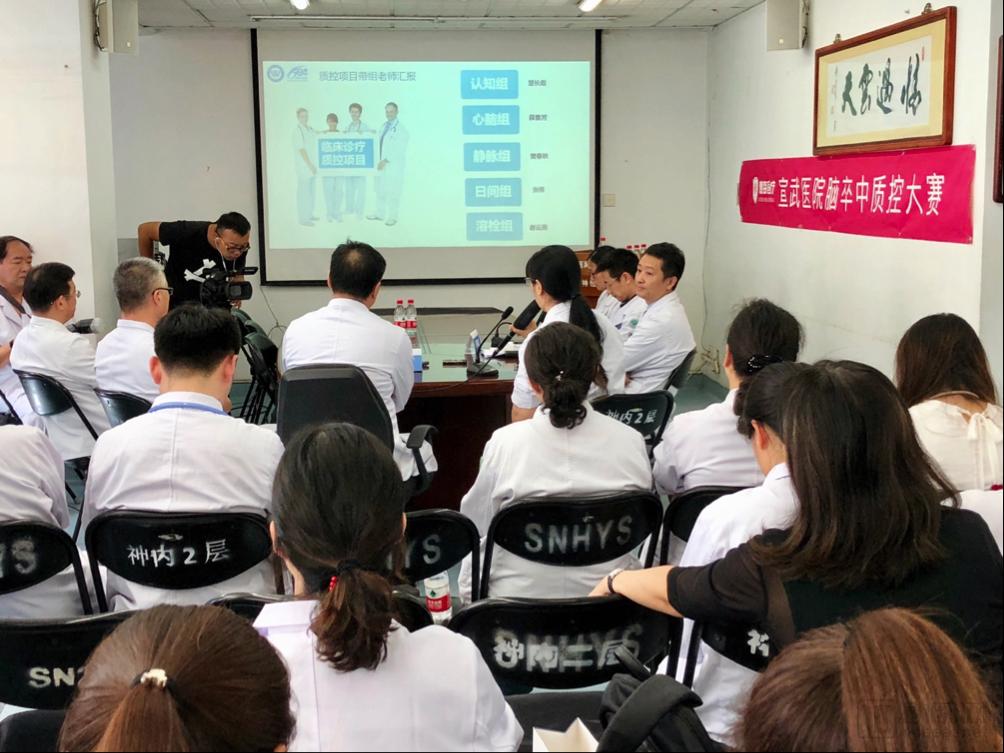
(Scene of the Phase I Summary Meeting for the Neurology Department Quality Control Competition at Xuanwu Hospital)
It is reported that stroke is the leading cause of death among the Chinese population. According to the latest global rankings on healthcare quality and accessibility published by The Lancet, China’s overall Healthcare Access and Quality (HAQ) Index stands at 78, while the HAQ Index for stroke is only 31. The first phase of the Neurology Department Quality Control Competition at Xuanwu Hospital selected cerebral infarction—which accounts for 60–80% of all stroke cases—as the pilot condition. Through a group-based competition format, the event evaluated the capability of AI in improving healthcare quality and operational efficiency.
“Xuanwu Hospital leads the nation in stroke diagnosis and treatment, yet certain metrics still leave room for improvement compared with developed countries such as the United States,” said Song Haiqing, Deputy Director of the Department of Neurology at Xuanwu Hospital. He noted that, with vigorous promotion of appropriate technologies, the quality and standardization of stroke care have been steadily improving, and medical AI could become a powerful tool for standardized management of clinical practice. The Huimei Medical AI solution, originating from Mayo Clinic, can intelligently and in real time identify latent deficiencies in physicians’ diagnostic and therapeutic quality embedded within patients’ clinical data (including medical records, laboratory and imaging results, and physician orders). When physicians work at electronic medical record (EMR) or other clinician workstations, the system automatically detects and alerts them to deficient care items (e.g., failure to prescribe a indicated medication or inadequate dosing) along with specific rationales; clinicians can complete the corresponding actions simply by clicking on the quality-control prompts.
Data from the first phase of the hospital’s quality control competition revealed that, in less than one month, the overall average adherence rate to standardized ischemic stroke treatment protocols among more than 60 physicians across five participating teams increased from 70.19% to 93.85%, representing a 33.7% improvement. The average compliance rate for the 11 quality control targets reached 93.85%, exceeding the national average.
Meanwhile, the system can visualize quality control-related data to enable real-time reporting and provide data-driven support for managers. Furthermore, building upon defect alerts, it leverages evidence-based knowledge rules to recommend diagnostic and treatment suggestions as well as intervention measures, thereby assisting clinical decision-making and ultimately improving healthcare quality.
To explore the clinical benefits of AI on a broader scale, Wang Yuping, Director of the Department of Neurology at Xuanwu Hospital, stated that the department will expand the range of conditions covered by expanding its applications to include quality control for cerebral hemorrhage and epilepsy. Wang told reporters, “The application of electronic medical records and the accumulation of big data have laid the foundation for artificial intelligence. In the future, AI will bring about profound transformations in the homogenization and accessibility of medical services, narrowing the gaps between physicians with different diagnostic and treatment levels and habits, as well as between large hospitals and primary care institutions, making clinical practice more homogeneous and standardized. More importantly, through the structured collection and mining of medical record data, it will facilitate the discovery of new disease patterns, thereby expanding perspectives for both clinical diagnosis and treatment and scientific research.”
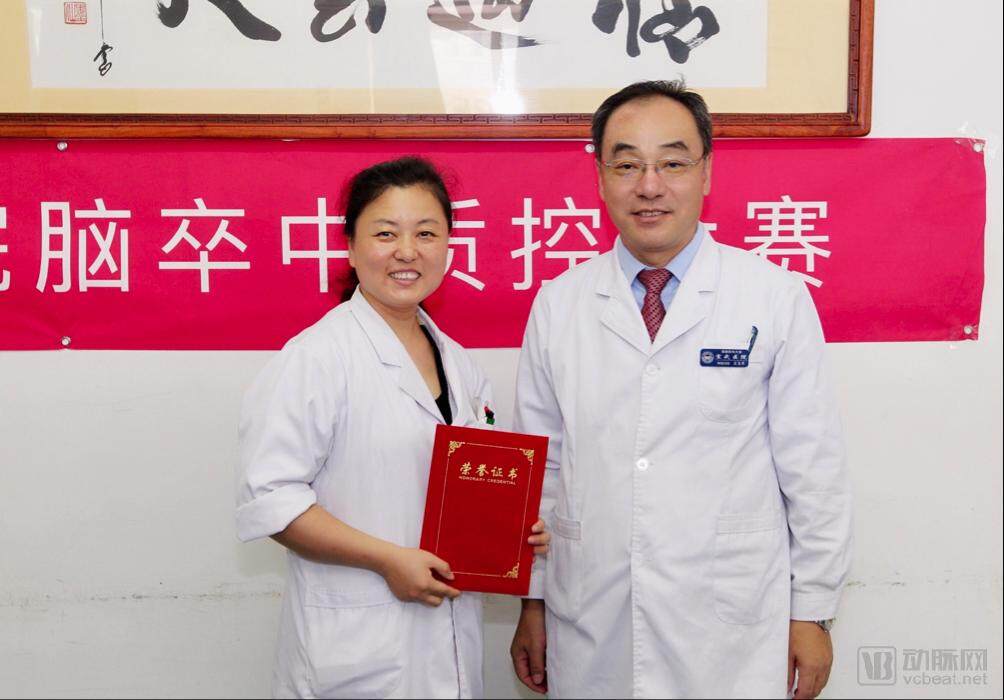
(Director Wang Yuping presents certificates to the award-winning physicians)