

Extendicare: How Canada's Leading Senior Care Provider Achieved $1.09 Billion in Revenue and Employs 23,700 Staff
In 2017, it achieved revenue of $1.09 billion and employed approximately 23,700 people. These figures come from a Canadian pension giant that has weathered half a century of change.
According to VCBeat (WeChat ID: vcbeat), Extendicare is a publicly listed company that integrates home care, nursing home care, and retirement community management. Users can select care plans as needed and switch them at any time according to their requirements.
This article will address the following issues regarding Extendicare:
What is the development history of Extendicare?
What is Extendicare’s business model, and how has each of its business segments performed?
What is the financial status of Extendicare?
Can Such Large-Scale Enterprises Rest Easy?
What is the current state of large-scale elderly care in China?
Extendicare was founded in 1968 in Markham, Canada, by Harold Livergant and John MacKay, with a commitment to improving the quality of care for seniors in Canada.
Since its acquisition of the first property in Ottawa in 1969, Extendicare has undergone six mergers and acquisitions, with its strategic focus shifting from Canada to the United States and then back to Canada. Listed on the Toronto Stock Exchange in December 2011 (ticker symbol: EXE.UN), the company has grown into Canada’s largest provider of long-term care and home care, playing a pivotal role in the overall market.
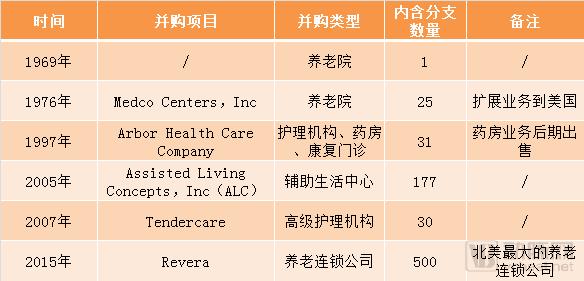
Extendicare’s M&A History
(Source: Official website; compiled by VCBeat)
(Source: Annual Reports; compiled by VCBeat)
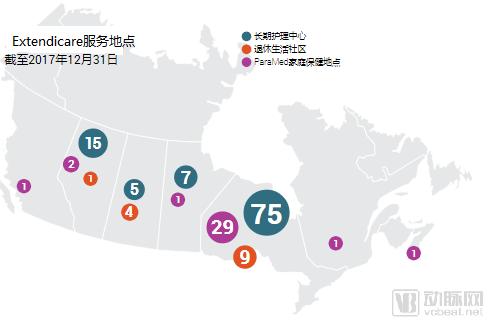
As of December 31, 2017, Extendicare employed approximately 23,700 staff members and achieved the following results:
58 long-term care (LTC) centers, growing into the largest operator of private long-term care centers in Canada;
Operating through its wholly owned subsidiary, ParaMed Inc., across 35 locations in six provinces and delivering approximately 113 million hours of home care services annually, it has become Canada’s largest private provider of home healthcare services;
Owns and operates eight retirement communities under the Esprit Lifestyle Communities brand;
Manages 116 senior care and living centers across four Canadian provinces through its Extendicare Assist division;
Provides group purchasing services to over 45,200 third-party clients through its SGP Group Purchasing Service.
(Source: Annual Reports; Compiled by VCBeat)
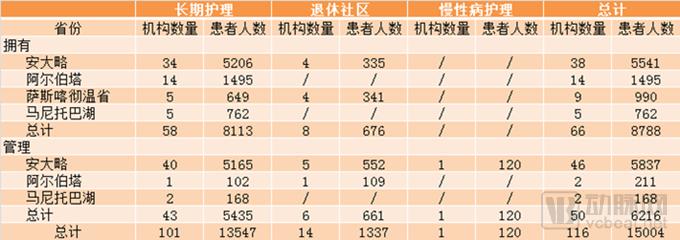
After 50 years of development, Extendicare has consistently upheld its commitment to high-quality service and established a comprehensive business model. Its operations are divided into four segments: long-term care, retirement living communities, home health care, and other businesses (covering management, consulting, and SGP procurement).
Long-Term Care (LTC)
Extendicare owns and operates 58 long-term care (LTC) centers with a capacity of 8,112 residents, including one Alberta-designated supportive living center (140 suites) and designated supportive living areas (60 suites), as well as two retirement living communities in Ontario (76 suites). In 2017, revenue from the long-term care business accounted for 56.2% of the total revenue from continuing operations (57.4% in 2016).
Long-term care is designed for individuals who cannot safely live independently at home but do not require hospitalization. Extendicare’s long-term care homes (i.e., nursing homes) provide 24/7 personal care, offering comprehensive support for activities of daily living. This includes assistance with daily living, medication management, restorative care, and specialized therapies, as well as social, recreational, and physical exercise programs tailored to meet residents’ needs.
In Canada, provincial legislation and regulations strictly control all aspects of the operation and funding of long-term care (LTC), including fee structures, subsidies, adequacy of supply, as well as standards for care, accommodation, equipment, and staffing. A significant portion of the long-term care costs paid to these service providers is covered by the government. However, in Ontario, operators have the opportunity to secure additional funding by charging residents higher rates for private and semi-private accommodations, subject to government-mandated maximum rate caps.

Average Occupancy Rate of LTC
(Source: Annual Report; compiled by VCBeat)
Extendicare’s occupancy rate in 2017 was 97.7%, a decline from 98.0% in 2016. The annual report noted that, based on quarterly forecasts for the full year, occupancy rates were expected to decrease slightly overall, while surging during the winter months, which could likely lead to admission freezes.
In Ontario, government funding is based on occupancy; however, once the average occupancy rate reaches 97% or higher, funding is provided at the level of 100% occupancy. In 2017, Extendicare achieved an average occupancy rate of 98.1% in Ontario, with all but two long-term care (LTC) facilities reaching occupancy rates of 97% or higher.
In addition, Extendicare’s long-term care (LTC) facilities in Ontario were granted preferential accommodation incentives. The average occupancy rate of private new LTC facilities increased from 96.8% in 2016 to 97.9% in 2017.
Continuing Care Retirement Community (CCRC)
Extendicare operates eight retirement communities (676 suites) through its subsidiary, Esprit Lifestyle. However, the text subsequently states that four of these are located in Saskatchewan (841 suites) and four in Ontario (335 suites). In October 2017, Esprit Lifestyle completed Phase I construction and opened its retirement community in Uxbridge, Ontario (103 suites), with an additional 47 suites scheduled for completion by the end of 2018. Furthermore, two retirement communities under development in Ontario (236 suites) are planned to open in 2018 and 2019, respectively.
Retirement living communities are designed for individuals who live independently after retirement and do not require round-the-clock nursing care or caregiver assistance. Extendicare’s retirement living communities are equipped with facilities that facilitate mobility and activity for seniors, enabling them to fully enjoy life while maintaining their established lifestyles. Residents have access to 24/7 services as needed, including daily personal care, medication reminders, housekeeping, and meal planning.
Extendicare’s retirement communities provide services to residents at market rates, with fees varying by geographic location and the resident’s chosen accommodation type, level of care, and service offerings. Residents may select options based on their personal preferences and needs, and may change them at any time as their needs evolve. In 2017, revenue from the retirement community business accounted for 1.9% of total continuing operations’ consolidated revenue (1.5% in 2016).
Of the eight retirement communities operated by Esprit Lifestyle, three (Empire, Stonebridge, and Riverbend) were acquired in 2015 and are now considered stable communities, while the remaining five continue to operate on a rental basis.

Esprit Lifestyle Retirement Community: Total Occupancy Rate (Source: Annual Report)
As of December 31, 2017, the occupancy rate of the three stabilized communities increased to 95.9% from 93.9% at the end of 2016; the decline observed in early 2017 was attributed to higher staff turnover during the winter season. The occupancy rate of the five leased communities rose to 68.6% as of December 31, 2017, from 41.5% at the end of 2016.

Esprit Lifestyle Retirement Community Average Occupancy Rate (Source: Annual Report)
As shown in the chart, Extendicare’s retirement communities and senior care centers exhibit similar patterns, with higher occupancy rates in the third and fourth quarters due to seasonal influences. The average occupancy rate increased significantly from 59.8% at the end of 2016 to 69.7%.
Home Healthcare Services
Extendicare provides comprehensive home care services through ParaMed Home Health Care, with its professionals and staff specializing in integrated complex care, physical and speech therapy, and assistance with activities of daily living for seniors. Revenue from these operations accounted for 39.7% of the total revenue from continuing operations in 2017 (39.1% in 2016).
In Canada, the cost of home healthcare services is primarily government-funded. In 2017, 98% of ParaMed’s revenue came from government sources (97% in 2016), with the remainder derived from private payments by clients. ParaMed operates across 35 locations in six Canadian provinces, delivering approximately 113 million hours of care annually. Of this volume, Ontario accounts for 83%, British Columbia for 12%, and Alberta for 4%, with the remaining services distributed across other regions.

Home Healthcare Service Hours (Unit: 10,000 Hours)
(Source: Annual Report; compiled by VCBeat)
Regarding the quarterly trends in 2017, declines in the third and fourth quarters were not uncommon due to seasonal factors. In terms of total service hours, the figure increased from 109.09 million hours in 2016 to 113.26 million hours, reflecting the government’s commitment to allocating additional funding to this segment of Canada’s healthcare system. ParaMed’s business is projected to continue growing in the coming year.
Management and Consulting Services
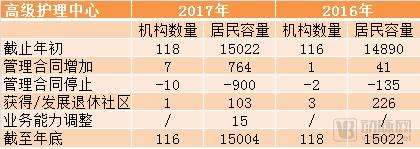
Extendicare leverages its expertise in operating advanced care centers to provide management and consulting services to third-party owners through its Extendicare Assist division. Extendicare Assist collaborates with both non-profit and for-profit organizations, typically offering services such as staff training, reimbursement assistance, and management.
(Source: Annual Reports; Compiled by VCBeat)
As of December 31, 2017, Extendicare Assist managed and operated 116 facilities with a capacity of 15,004 residents, essentially unchanged from 2016.
Group Procurement Services
Through SGP’s group purchasing operations, Extendicare provides procurement services to other senior care providers, covering food, equipment, furniture, cleaning and caregiving supplies, as well as office supplies. As of December 31, 2017, SGP had provided group purchasing services to 45,200 third-party clients (compared with 40,900 in 2016).
According to the latest annual report, as of December 31, 2017, 6% of the revenue from Canadian operations was derived from long-term care services, approximately 40% from home healthcare services, and approximately 2% from retirement communities. The remaining balance came from management, consulting, and SGP group purchasing services.
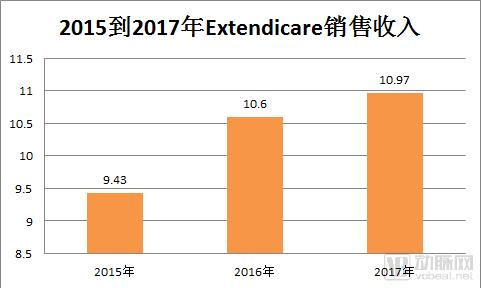
Note: Unit is USD 100 million
Source: Annual Report
An examination of sales revenue over the past three years reveals a trend of consecutive annual growth. The acquisition of Revera in 2015 was also a necessary condition for the breakthrough in revenue achieved in 2016. Meanwhile, the annual report indicates that Extendicare expanded the operational scale of its retirement communities through acquisitions and development, while also increasing the size of its management services and group purchasing teams.
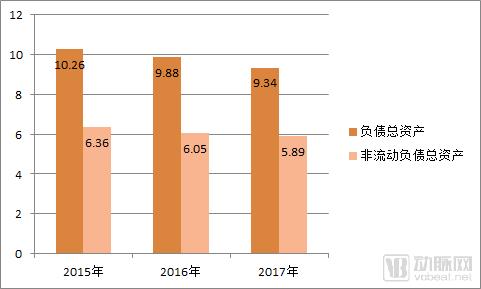
Note: Unit in USD 100 million
Source: Annual Report
A review of the financial assets over the past three years reveals a consistent downward trend. Since the end of 2015, Extendicare’s total assets and non-current liabilities have declined, primarily due to reductions in previously held self-insurance liabilities and related investments in the United States. From 2015 to 2017, total assets decreased by $38.3 million and $54.3 million, respectively; total non-current liabilities decreased by $31.4 million and $16.5 million over the same period.
In its current form, Extendicare’s CEO, Timothy, publicly stated that there are no immediate plans for expansion, with the priority being to stabilize its present market position. However, he indicated that the company would seize any emerging opportunities to drive growth should they arise.
In the fiercely competitive “red ocean” of elderly care, companies are pouring in human, material, and financial resources to secure their own foothold. While many overseas enterprises have already achieved considerable scale, can these large elderly-care companies truly rest easy? VCBeat has reviewed multiple sources and selected two contrasting case studies—one positive and one negative.
Brookdale
Brookdale Senior Living is one of the largest senior care service providers in the United States. Founded in 1978, it was listed on the NASDAQ stock exchange in the U.S. on May 2, 1997 (stock ticker: BKD). Currently, it operates more than 600 Brookdale communities and employs nearly 50,000 people.
The types of services operated by Brookdale primarily include independent living communities, assisted living communities, specialized care (Alzheimer’s care) communities, and continuing care retirement communities.

(Source: VCBeat article “Guide: The Secret Behind Brookdale Becoming the Largest Senior Care Company in China”)
After 40 years of development, Brookdale has become a highly recognizable brand in the North American senior care industry. In contrast, the UK’s Southern Cross Healthcare Group has not been so fortunate.
Southern Cross
Southern Cross was established in 1996. Within just six years by 2002, the company had expanded to 140 chain facilities, ranking as the largest nursing home group in the UK and the third largest in Europe.
In 2006, Southern Cross, which operated 578 chain nursing homes, successfully listed on the London Stock Exchange. After securing financing, the group continued to expand, with its valuation exceeding £1 billion by 2008.
The good times did not last. By early 2011, Southern Cross was severely insolvent and on the brink of bankruptcy. As the UK’s largest elderly care provider, operating 750 nursing homes, employing over 40,000 staff, and managing more than 47,000 beds, its market capitalization plummeted to £12 million—a 98% drop from its peak—ultimately failing to escape the fate of near-bankruptcy and being sold off.
In fact, a review of the overseas elderly care industry reveals that many enterprises follow a path toward branding, chain operations, scalability, and specialization, with numerous companies managing more than 200 facilities. For example, Four Seasons Health Care operates a chain of 500 facilities, Bupa operates 310, and HC-One operates 241.
In summary, the elderly care sector, characterized by intense “red ocean” competition, also carries significant risks, making market positioning and strategic choices critically important for enterprises. As previously mentioned, Extendicare aims to stabilize its existing market first; its current lack of expansion plans is driven by market instability and concerns that excessive scale could strain or even break its capital chain.
High investment inevitably entails high risk. How Extendicare can maintain its established position in a volatile market is an issue that warrants careful consideration.
In China, companies from various sectors entering the elderly care industry are predominantly real estate developers. Leveraging their relatively strong financial resources, they use senior living real estate as an entry point to develop corresponding elderly care services.
Evergrande
From tourism real estate to diversified business operations, Evergrande announced the launch of a new elderly care model, Evergrande Health Valley, in Guangzhou on December 14, 2017. This model will provide health and elderly care services to customers through a “rental, purchase, and travel” membership mechanism.
According to Shi Shouming, Chairman of Evergrande Health, Evergrande has integrated high-quality domestic and international resources, including hospitals, nursing homes, and wellness communities. It has also pioneered a new membership mechanism, enabling seniors to access medical care, health management, and wellness services at the Yangsheng Valley.
Rent: In accordance with clients’ residential needs, Yangsheng Valley offers lease products with varying terms. Upon completing the rental procedures, clients obtain the corresponding right of occupancy and enjoy membership benefits.
Purchase: Customers become members upon purchasing Yangsheng Valley products or membership cards, enjoying exclusive member benefits including health insurance, premium medical care, health management, wellness and rehabilitation services, and elderly care tourism.
Travel: Wellness Valley offers members cross-regional sojourn-based wellness living, allowing them to enjoy exclusive health management and wellness services during their stay.
Provide a “trinity” membership service system. Adhering to the innovative service concept that integrates health insurance with elderly care and medical services, we offer comprehensive, full-lifecycle health services to enhance members’ health management awareness and improve their health status. This approach ensures optimal medical services, reasonable medical expenditures, and effective control of insurance costs, thereby maximizing member benefits.
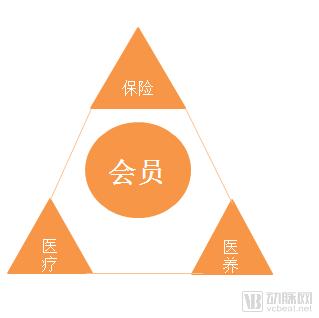
Source: Internet; Compiled by VCBeat
Vanke
Vanke is the real estate enterprise that entered the elderly care industry earliest and conducted the most in-depth research. Many of its projects have even become benchmarks for the industry. Vanke has ventured into multiple sectors of elderly care, simultaneously developing diverse business models, and has achieved notable success.
Regarding elderly care, at Vanke’s 2017 Annual General Meeting of Shareholders, President Yu Liang expressed his disagreement with Vanke engaging in “elderly care real estate.” He explicitly pointed out that Vanke is providing “elderly care services,” not real estate, and believed that applying a real estate approach to elderly care services would be compounding an error.
Vanke Elderly Care Center leverages the internet to extend its reach to numerous surrounding communities, with its service offerings continuously expanding. For instance, Vanke Happiness Home Zhizhe Apartment primarily provides 24-hour full-care services, day care, elderly care, and nutritional meal services. In addition, Happiness Home also offers home modification, in-home services, caregiving services, and age-friendly products.
Vanke has deployed 180 projects in its elderly care business, ranging from community-based nursing and integrated medical-care services to simple elder day-care centers and complex full-service continuing care retirement communities. However, Yu Liang frankly stated that the company is still exploring this business segment and has not yet identified a viable profit model, despite multifaceted attempts.
Based on the above comprehensive analysis, we recommend that Chinese enterprises make improvements in the following areas to expand their market:
1. Establish an elderly care service industry chain: Create a one-stop industrial chain model spanning home-based care, nursing home care, and senior living communities;
2. Enterprises must explore development paths suited to their specific circumstances, pursuing strategies centered on branding, chain operations, scaling, and specialization;
3. Provide users with a variety of choices and reduce restrictions between service models;
4. Stabilize the funding chain and provide humanized services;
5. Strengthen collaboration with third-party payers, such as government agencies and insurance institutions, to expand health insurance coverage and reduce the out-of-pocket payment ratio for the elderly.