

Zhejiang's 'At Most One Visit' Healthcare Reform Reduces Out-of-Pocket Health Expenditure to 27%, Says Ma Weihang, Deputy Director of Zhejiang Provincial Health Commission
Across China, Zhejiang Province has consistently served as a pioneer and trailblazer in healthcare reform, earning admiration for its bold and flexible reform measures.
Zhejiang, the first province to propose and advance the “At Most One Visit” initiative in government services, recently highlighted this reform at the 4th Zhejiang International Health Industry Expo held in Hangzhou. Ma Weihang, Deputy Director of the Zhejiang Provincial Health and Family Planning Commission, emphasized how the “At Most One Visit” reform has bolstered the medical industry, driven improvements in its substantive quality, and ultimately benefited both patients and healthcare providers.
The “At Most One Visit” reform achieves the administrative goal of requiring enterprises and the public to visit government agencies no more than once by innovating the service model of “one-window acceptance, integrated services, and one-time completion.”
At the end of 2016, the “At Most One Visit” reform was first proposed in Zhejiang Province. This self-revolution, characterized by its inward-focused and government-centric approach, has already demonstrated tangible results. For China as a whole, with Zhejiang serving as the model for the “At Most One Visit” reform, the broader implementation of this initiative remains a work in progress.
In recent years, Zhejiang Province has actively responded to the deepening healthcare reforms. Its reform initiatives have stood out nationwide; for instance, during the early phase of comprehensive healthcare reform, it took the lead in implementing zero-markup drug pricing as an entry point and pioneered the “Double Sinking, Two Improvements” strategy. Hospitals at all levels have established closely integrated medical consortia to streamline the entire healthcare service chain, and efforts have been made to develop a tiered diagnosis and treatment system, among other measures.
In this regard, Ma Weihang summarized: “This is the ‘trilogy and concerto’ that characterizes our province’s healthcare reform, and it also constitutes the overall framework of Zhejiang’s healthcare reform.”Meanwhile, his initiatives to guide patients in seeking medical care in an orderly manner were deployed before the nationwide implementation of the tiered diagnosis and treatment policy, coinciding with the comprehensive establishment of the tiered diagnosis and treatment system in Hangzhou. These three steps are closely interlinked. He stated, “This reform does not end upon the completion of a single task; all reforms are being continuously advanced, with problems identified and resolved throughout the process.”
In the field of primary healthcare, Zhejiang Province was also the first to restructure its primary care service system, a reform then known as the integration of county, township, and village levels, which is now referred to as community-based contracted services.
The concerto is reflected in the private healthcare sector. Due to Zhejiang Province’s abundant social capital and robust atmosphere for non-public medical practice, significant efforts have been made to promote the development of privately run medical institutions and the health services industry.
Although government health spending grew rapidly during the 12th Five-Year Plan period, individuals’ share of total health expenditure had already dropped to 27% by 2017. At the core of this achievement was Zhejiang Province’s application of its “At Most One Visit” reform initiative to the healthcare sector.
Ma Weihang stated that the “At Most One Visit” reform is closely integrated with the overall healthcare system reform in Zhejiang Province, aiming to achieve the province’s goal of building a high-quality, high-level medical environment. This is being accomplished through the coordinated linkage of medical care, health insurance, and pharmaceuticals (the “Three-Medical Linkage”) and the integrated planning of six key healthcare sectors, thereby implementing projects to optimize healthcare services.It also outlined five key initiatives for this year and the period beyond, deploying priority tasks. These include building a Healthy Zhejiang, advancing the coordinated reform of medical care, health insurance, and pharmaceuticals (the “three-medical” linkage), conducting pilot programs and promoting implementation at the “last mile,” and strengthening quality and safety."Especially in terms of quality, it is essential to strengthen the foundation at the primary care level while simultaneously establishing medical highlands and peaks of excellence in healthcare."
Furthermore, on the occasion of the 40th anniversary of China’s reform and opening-up, the “At Most One Visit” initiative has played a significant role in Zhejiang Province’s reforms. Initially launched to streamline government administrative procedures, this model has been integrated with efforts to decentralize authority, improve regulation, and upgrade public services, thereby accelerating the transformation toward a digital government. This year, the model received commendation from the Premier during the Two Sessions and has provided valuable experience for the rest of China. Consequently, Zhejiang’s top leaders are considering how and where to extend the “At Most One Visit” reform beyond its current scope as governmental reforms deepen. The answer lies in the healthcare sector. They aim to enhance the capacity and quality of medical and health services in Zhejiang Province, thereby increasing the public’s sense of gain in accessing healthcare.
Therefore, when the national “Internet + Healthcare” initiative was proposed, Zhejiang Province took the lead by effectively integrating healthcare reform with broader transformations of the healthcare system.
Furthermore, this reform has been elevated to the level of a key priority for the Zhejiang Provincial Committee of the Communist Party of China and the Zhejiang Provincial People’s Government. The provincial government first issued specific policy documents, followed by the Health Commission implementing concrete projects. This approach has drawn considerable envy from other provinces, demonstrating Zhejiang’s top-down commitment to improving healthcare services. Consequently, the various reforms have gained strong momentum, creating a powerful synergistic effect.
Ma Weihang stated that the decision to enter the healthcare industry was primarily based on four dimensions:
First, from the patient’s perspective, there are numerous pain points in healthcare services. During Zhejiang Province’s healthcare reform, although substantial efforts were made, did these measures truly address the public’s needs? To answer this question, a simulated survey was conducted, which revealed that the reforms were insufficient and incomplete. Based on these comparative findings, targeted corrective measures were then implemented. He argued that only by identifying the pain points in medical consultations and addressing the specific issues criticized by the public can thorough reform be achieved.
Second, establish a comprehensive, full-cycle healthcare service delivery system. The reform of medical and health services in Zhejiang Province is not limited to appointment registration but encompasses the entire spectrum of healthcare services. In addition to competition, hospitals should engage in greater collaboration. This approach allows cities, regions, and specialized fields to leverage their respective strengths, thereby enabling residents to access higher-quality healthcare services closer to home.
Third, in terms of technical quality, they are promoting the healthcare industry through the “At Most One Visit” reform, with a particular focus on the “Internet + Healthcare” initiative proposed by the central government.
Fourth, leverage the reforms of the “three medicals” (medical care, health insurance, and pharmaceuticals), closely centering on health to conceptualize the “At Most One Visit” reform. Build a Healthy Zhejiang from the ground up and across all sectors. For instance, minor pain points experienced by the public when seeking medical care can reflect underlying issues within the healthcare system; addressing these can improve the overall quality of medical services, thereby advancing healthcare reform throughout Zhejiang Province and contributing to the realization of a Healthy Zhejiang.
Therefore, it can be seen that Zhejiang Province’s healthcare reform has been well integrated with the key reforms and priority tasks of the Provincial Party Committee and Provincial People’s Government. Rather than acting in isolation, the initiative has involved coordinated participation from relevant departments, thereby streamlining many processes. Examples include the involvement of medical insurance, third-party payments, fiscal integration of electronic invoicing, vertical coordination mechanisms, and pharmaceutical distribution.
So, in Zhejiang Province’s “At Most One Visit” initiative applied to the healthcare sector, what were the key areas of reform?
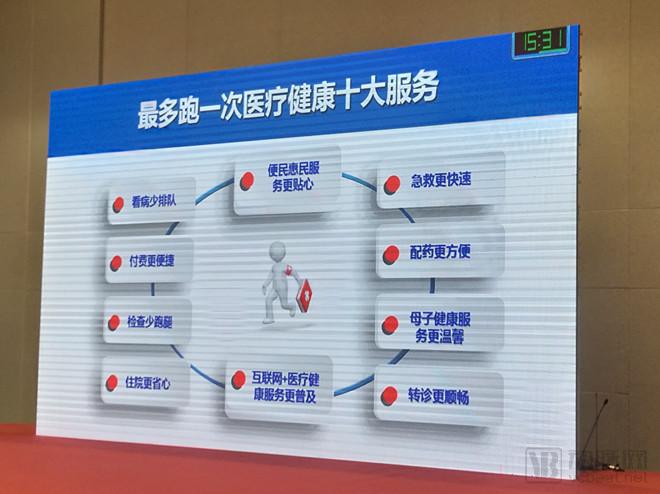
“We have proposed services in ten areas. Not only is it challenging to deliver on all ten, but they also bring significant business opportunities to the health industry,” added Ma Weihang.
To this end, Ma Weihang has developed a detailed work implementation schedule to identify and address any gaps in accordance with the operational guidelines. The goal is for the public to see tangible results by the end of June this year, with provincial and municipal hospitals achieving their work targets. By the end of December, at least one hospital in each county should meet its objectives. This initiative emphasizes both speed and quality, aiming to resolve fundamental issues—namely, strengthening internal capabilities and advancing informatization within the healthcare services sector.
Certainly, at the hospital level, a leadership group is also required, typically led by the top executive, such as the Party Secretary or the Hospital Director. In accordance with the detailed implementation rules of Zhejiang Province’s documents, hospitals should proactively identify shortcomings, develop schedules and task lists, and establish an internal performance assessment mechanism. At the administrative level, systems for performance evaluation, inspection, and notification should be established to unify standards, highlight key priorities, improve measures, and strengthen supervision. Municipal Health and Family Planning Commissions shall formulate detailed implementation rules based on local conditions and conduct assessments of hospitals. The Provincial Health and Family Planning Commission will initiate a weekly reporting system on work progress, and the provincial government has included this initiative in its planned supervisory and inspection activities for 2018.
This work is divided into three phases for implementation. The first phase primarily focuses on identifying issues at a broad level.
The second phase focuses on identifying issues from a professional perspective. By the end of September this year, experience reports addressing ten key areas will be returned to all localities for the 11 prefecture-level cities in Zhejiang Province and 17 provincial hospitals, with each administrative division responsible for its own report. Local authorities will then use these reports to identify problems and implement further corrective measures. In some areas, student volunteers and media representatives have been involved in the process. Thus, this simulated “fault-finding” exercise differs from previous covert inspections: while covert inspections were conducted with an administrative enforcement focus, the simulation is centered on patient experience.
Phase III: In-depth problem identification. This involves assessing whether surface-level issues have been adequately rectified, whether breakthroughs have been achieved in key areas, and whether substantive improvements have yielded tangible results.
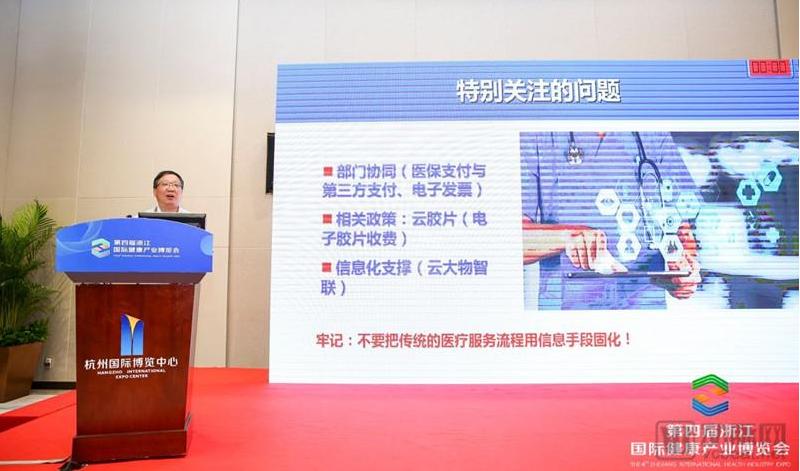
During this process, Ma Weihang specifically highlighted the key issues that require close attention:
First, outpatient and emergency services. The primary focus is on achieving seamless integration for appointment registration, a feature that has already been implemented in most hospitals.
Second, centralized appointment scheduling for examinations. Currently, there are two approaches: one involves centralizing personnel, while the other entails centralizing information with decentralized implementation at various points. During the on-site meeting held at Sir Run Run Shaw Hospital in Zhejiang Province, it was observed during the initial visit that the centralized service desk still operated on a model where each window had one staff member handling one specific service item. This approach was deemed inadequate, and it was proposed to implement a truly centralized service desk model.
Therefore, the appointment platform launched in Zhejiang Province in 2012 had a simple objective: to eliminate the need for patients in China to queue in person for medical consultations. Over the years, with advances in information technology, this initiative has gained widespread recognition. It has not only resolved the issue of patients having to rise early to wait in line but also curbed the problem of ticket scalping.
Third, online credit payment after leaving the hospital enables a payment-free experience for outpatient and emergency services. He hoped that by the time he retired in 2020, Zhejiang Province would be the first in China to implement cardless payment throughout the entire outpatient process, with all payments settled in a single transaction, similar to the dining industry where you pay the bill after finishing your meal. In other words, there would be no need for settlement at the doctor’s consultation room.
Fourth, one-stop service at the Integrated Service Center.
Fifth, facial recognition and other identification methods for the elderly.
He believes that people go to hospitals for medical care, not to stand in line; therefore, any step involving queuing is unreasonable. Although some steps cannot be eliminated at present, those that can be must be removed. This is the essence of the “At Most One Visit” policy.
During the patient’s medical visit, several issues drew particular attention, with wheelchair accessibility being the primary concern. During field research at Hangzhou First People’s Hospital, Ma Weihang accompanied a middle-aged patient in a wheelchair throughout the entire care journey to experience the process firsthand. This observation revealed two key problems: first, there were long queues for hospital elevators; second, wheelchairs required a deposit—400 RMB for outpatient services and 500 RMB for inpatient wards—and the overall wheelchair rental and return process was also problematic.
Ma Weihang expressed a desire for wheelchair rental services with a charitable focus. Subsequently, a company specialized in this service by integrating wheelchairs with Alipay. Currently, many hospitals utilize this company’s wheelchairs. The pricing structure is highly transparent, clearly outlining fees for exceeding the allotted usage time and daily rates for home use. As a result, patients have benefited from these affordable and clear-cut terms.
Second is the service for admission and discharge. If a bed is shown as available on the computer system when an inpatient admission order is issued in the outpatient department, why should patients still wait in line? Admission and discharge procedures can be handled directly at the bedside. But what if no beds are available? Therefore, the hospital has streamlined its bed resource management, which not only enhances the hospital’s service capacity but also improves the accessibility of electronic medical records. It even establishes linkage with community hospitals for post-discharge care coordination and follow-up, providing patients with convenient and continuous services.
Third is the enhancement of hospitals' intrinsic capabilities. This includes the standardized operation of five major centers, such as stroke centers; information connectivity with pre-hospital emergency care; the variety and volume of day surgeries; the provision of convenient and effective referral services in collaboration with primary care hospitals; and the breadth and depth of "Internet + Healthcare" services.
In addition, there are several issues of particular concern, such as inter-departmental collaboration, medical insurance payments, third-party payments, electronic invoicing, fees for digital film images, and IT infrastructure support.
Finally, Ma Weihang hopes that everyone will not forget the three essential things:
First, a modern, high-quality hospital must have its own service brand; therefore, excellent service is of paramount importance.
Second, the core essence of hospital development must lie in technology, quality, and safety. Therefore, the “At Most One Visit” reform must be centered around technology, quality, and safety.
Third, under modern technological conditions, informatization must be interconnected. No matter how well a hospital performs on its own, if it fails to achieve interconnectivity with others through the “At Most One Visit” initiative, it will ultimately be eliminated. Therefore, interconnectivity is essential.
“It can be said that in the past few years, every healthcare reform initiative implemented in Zhejiang Province was like an individual tree; now that all components have matured, these trees have grown into a forest. ‘We aspire for it to become an ecological forest,’ ” said Ma Weihang.