

Tencent Youtu Lab Upgraded to Tencent Computer Vision R&D Center to Accelerate 'AI+Healthcare' and Other Strategic Initiatives
According to VCBeat (WeChat official account: vcbeat), the inaugural Computer Vision Summit, co-hosted by Tencent Youtu and the Science family of journals—the official publications of the American Association for the Advancement of Science (AAAS)—was held in Shanghai on September 6, 2018. At the event, Tang Daosheng, Senior Executive Vice President of Tencent, announced that Tencent Youtu Lab would be upgraded to the Tencent Computer Vision R&D Center, with a focus on strengthening investments in the field of computer vision. Meanwhile, Tencent Youtu Lab officially announced a strategic partnership with Science journals, aiming to integrate global scientific research resources and engage in extensive collaboration in frontier areas of artificial intelligence through various initiatives, including academic grants and industry-academia-research exchanges.
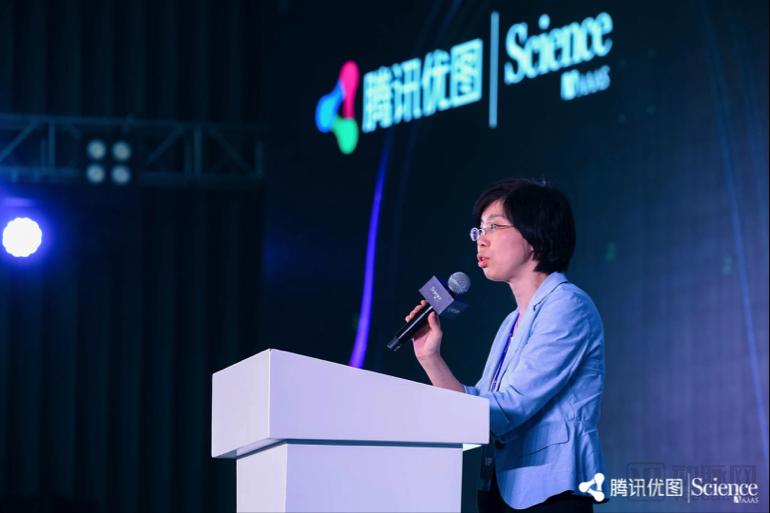
Zhang Ying, Chief Engineer of the Shanghai Municipal Commission of Economy and Informatization, was invited to attend the summit. She stated, “As China’s largest economic hub, Shanghai is fully committed to building itself into ‘four centers’ and a globally influential science and technology innovation center. In this process, artificial intelligence holds great promise. We hope that Tencent, leveraging its Youtu Lab as a key platform, will fully engage in establishing Shanghai as a highland for the AI industry, promoting the widespread adoption of technological applications and ensuring that technological advancements benefit the general public.”
Tencent Continues to Increase Investment in Computer Vision, Without Setting KPIs
Computer vision is one of the most important branches of artificial intelligence (AI), while healthcare represents a key area for the application of AI technologies, playing a pivotal role in AI’s development. Tang Daosheng, Senior Executive Vice President of Tencent, believes that significant breakthroughs in computer vision could drive a qualitative leap in artificial intelligence.
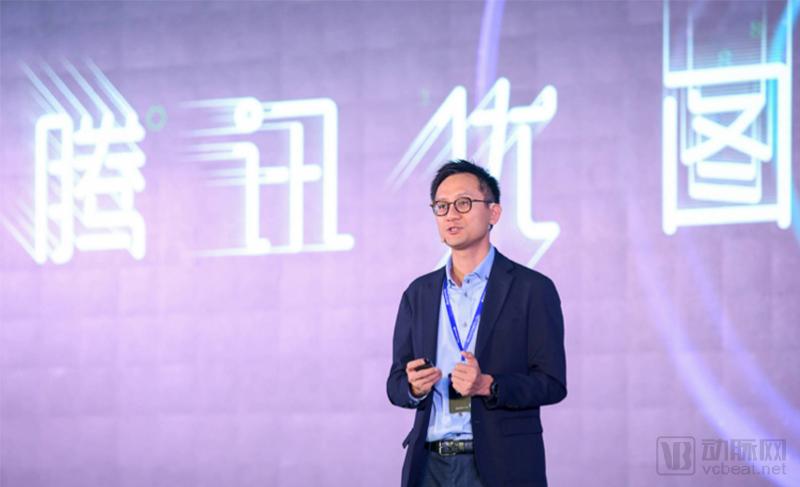
At the summit, Tang Daosheng announced the upgrade of Youtu Lab to the Tencent Computer Vision R&D Center, signaling a sustained increase in R&D investment in computer vision technologies. The center will maintain long-term patience in fundamental technical research without imposing KPIs. In the future, Tencent will further collaborate with global industry, academic, and research institutions to continuously advance the development of computer vision technologies. Meanwhile, technological achievements from Youtu Lab will be made accessible to upstream and downstream partners via the Tencent Cloud platform.
Tang Daosheng stated that Tencent is a beneficiary of the development of internet technology. Its continuous investment in technology and ongoing exploration in the tech sector are not only necessary for its own long-term development but also represent the responsibility that an internet technology company should undertake.
At the summit, Jia Jiaya, Distinguished Scientist at Tencent Youtu Lab, outlined the lab’s core strategic direction for future development: centering on computer vision, focusing on four key pillars—social entertainment, industrial production, social progress, and frontier exploration—and deeply integrating into specific applications across ten major sectors, including healthcare, autonomous driving, industry, retail, office solutions, culture, and public welfare. This approach aims to accelerate the translation of research outcomes into practical applications, ensuring that technology benefits society at large.
Tencent Youtu Lab, established in 2012, is one of Tencent’s three major artificial intelligence laboratories. Since its inception, Tencent Youtu has adhered to the development philosophy of “deep integration of technology and scenarios.” In addition to being deployed across dozens of Tencent’s own product lines, such as QQ and Qzone, it has successfully exported AI capabilities to WeBank, Fujian Provincial Public Security Department, SF Express, China Unicom, Missfresh, CSOT, and China Southern Power Grid. Currently, Tencent Youtu’s technologies are widely applied in fields including healthcare, retail, industry, and culture.
In the healthcare sector, as one of the core technology providers for Tencent Miying, Tencent Youtu has been deeply engaged in research, development, and application exploration in medical image recognition, continuously advancing the technical capabilities of medical AI. It has made significant progress in early screening for lung cancer and diabetic retinopathy, entering large-scale clinical pilot trials. At the conference, Youtu Lab and Tencent Miying also revealed that they are collaborating with Professor Qiao Youlin from the Department of Epidemiology at the National Cancer Center/Cancer Hospital of the Chinese Academy of Medical Sciences to advance research on an AI system for early cervical cancer screening. They aim to develop an intelligent detection and screening tool for cervical cancer to assist gynecologists in rapidly identifying precancerous lesions and pinpointing cancerous areas, thereby facilitating the formulation of corresponding biopsy and treatment plans.
In the retail sector, Tencent has partnered with numerous offline merchants to implement facial recognition payment, significantly enhancing customers’ in-store shopping experience. Recently, Tencent Youtu, in collaboration with Tencent Cloud and Missfresh, launched a new smart cabinet solution. Leveraging commodity recognition technology from its research center, this solution enables automatic order generation and checkout upon closing the cabinet door after item retrieval, delivering a seamless “grab-and-go” shopping experience with an accuracy rate exceeding 99%.
In the industrial sector, Youtu Lab has leveraged computer vision (CV) to assist CSOT in over 100 industrial quality inspection processes, establishing a replicable automated industrial defect detection system for intelligent panel quality control. Meanwhile, in collaboration with China Southern Power Grid, Youtu Lab has implemented intelligent power grid inspections, where drones equipped with image recognition technology automatically locate key components and identify and label equipment defects, achieving a threefold increase in efficiency compared to traditional manual inspections.
At the conference, Liang Zhu, Vice President of Tencent, and other representatives signed a strategic cooperation agreement on behalf of Tencent Youtu with the Science family of journals, the official publications of the American Association for the Advancement of Science (AAAS). The two parties will establish a long-term strategic partnership to share resources and information in the field of computer vision, and jointly promote the development of computer vision technology through seamless collaboration among industry, academia, and research institutions.
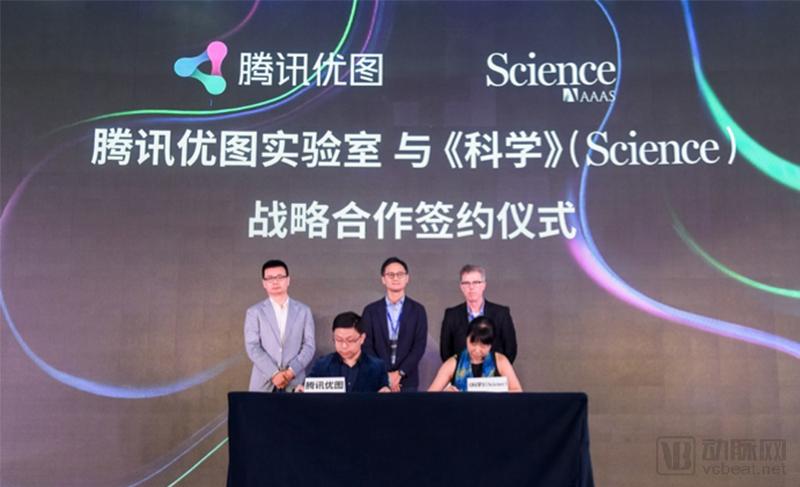
Seated in the front row, from left to right, are: Jia Jiaya, General Manager of Tencent Youtu Lab and Distinguished Scientist; and Chu Xiaoying, Head of the Asia Office of the Science Family of Journals, published by the American Association for the Advancement of Science (AAAS). Standing in the back row, the guest in the center is Tang Daosheng, Senior Executive Vice President of Tencent; to his left is Liang Zhu, Vice President of Tencent; and to his right is Bill Moran, Publisher of the Science Family of Journals.
Bill Moran, Publisher of the Science family of journals, stated, “The American Association for the Advancement of Science and its flagship journal, Science, seek partners who share our mission and vision. We believe that through collective efforts, we can advance science and innovation to benefit people worldwide. As our partner in the field of computer vision, Tencent Youtu shares this vision. We will collaborate to organize conferences, establish awards, and develop multimedia communication channels to foster exchange and innovation in this cutting-edge field. Our shared goal is to bring together thought leaders in computer vision to create an open forum for all. We hope these initiatives will serve as platforms to drive innovation, translating it into practical applications and policies that benefit society.”
In addition to co-hosting professional conferences, both parties will focus on computer vision in the future, exploring various forms such as academic grants and industry-academia-research exchanges to integrate global scientific research resources and carry out extensive cooperation in frontier artificial intelligence research fields. This includes, but is not limited to, jointly organizing webinars themed “Medical AI,” establishing global computer vision awards and academic grants, among other initiatives.
Tencent Youtu Lab will continue to invest in AI technologies, collaborate with top-tier global partners, and work together with academia, government, and industry to advance the development and application of computer vision technologies as well as promote the popularization of scientific knowledge, enabling computer vision capabilities to help us “see further” into the future.