

Xingyang Health Cloud: A Regional Medical Data Integration Platform for Innovative Chronic Disease Prevention and Control
According to data from the Qianzhan Industry Research Institute, China's total health expenditure has shown a rapid growth trend in recent years, rising from RMB 1.998 trillion in 2010 to RMB 4.6345 trillion in 2016, with a compound annual growth rate (CAGR) of 15% during the period from 2010 to 2016. Among this, expenditure on chronic diseases accounts for approximately 70% of the total health expenditure, amounting to about RMB 3.24415 trillion in 2016, a substantial figure.
Chronic disease prevention and management are of great significance for improving public health, reducing overall healthcare expenditures, and enhancing residents' quality of healthy life. In chronic disease management, data integration serves as the foundation, and novel models for efficient chronic disease management have become a key focus for regions exploring effective prevention and control strategies.
VCBeat (WeChat: vcbeat) learned that on September 6, 2018, the launch event for “Xingyang Health Cloud” was held in Xingyang, Henan Province. Under the guidance of the Xingyang Municipal Committee of the Communist Party of China and the Xingyang Municipal People’s Government, the Xingyang Municipal Health and Family Planning Commission collaborated with Yixuntong to jointly build the Xingyang Health Cloud.
Health Cloud leverages advanced technologies such as blockchain to achieve regional integration of medical data. Built on a foundation of big healthcare data and empowered by mobile and telemedicine, it collaborates with major hospitals, township health centers, and family doctor teams in Xingyang City to establish a three-tier closed-loop service system. This approach systematically standardizes chronic disease management services and innovates Xingyang’s chronic disease prevention and control model in a structured manner. It is reported that Phase I of the Health Cloud project was completed at the end of August, achieving citywide integration of medical and health data.
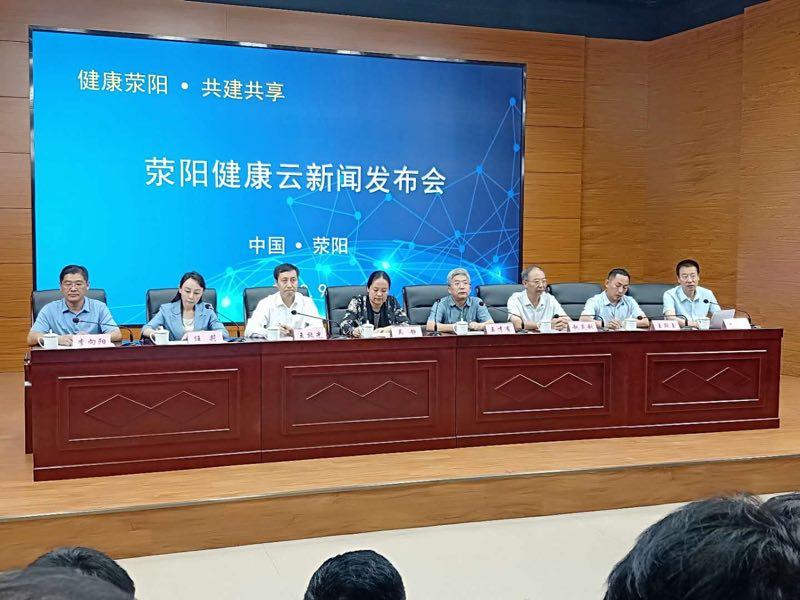
“Xingyang Health Cloud” leverages data integration to create precise patient-centric disease profiles and collaborates with the 120 Emergency Center to promote the effective application of personal health records in accurate triage and referral. By connecting the three-tier medical service network at the county, township, and village levels, it implements comprehensive chronic disease management, establishing sustainable, end-to-end management standards and processes for high-risk populations and patients with chronic conditions. Furthermore, by appropriately incorporating standards from the American Nurses Association, it has launched innovative discharge planning initiatives, achieving homogenization and continuity between in-hospital treatment and out-of-hospital management, thereby supporting post-enrollment services for family doctor contracts. Ultimately, prioritizing education in chronic disease management, Xingyang is committed to building a healthy ecological environment.
Xingyang’s chronic disease prevention and control efforts, built upon the development of the Xingyang Health Cloud, have innovated the models and systems for chronic disease management, thereby identifying new pathways for the implementation of family doctor contract services.
Since its establishment as a provincial-level demonstration zone for comprehensive prevention and control of chronic diseases in 2015, Xingyang City, Henan Province, has set up 314 health education rooms and fitness venues for chronic diseases, achieving a 100% coverage rate. Two health-themed parks, Liu Yuxi Park and Botanical Garden Park, have been built, and seven health trails have been established. The coverage rate of workplace exercise programs among 322 government agencies, public institutions, and large and medium-sized enterprises in the city reached 82.79%.
Established five health communities, including Huaixi in Yulong Town; five health units, including the Transportation Bureau; five health canteens, including those under the Health and Family Planning Commission; and five healthy restaurants, including Mr. Xie’s Restaurant. Improved systems for identifying high-risk populations, managing patients with chronic diseases, and promoting patient self-management. Established 145 chronic disease self-management groups, each conducting six activities annually. Actively responded to the initiative by the National Center for Chronic and Noncommunicable Disease Control and Prevention of the Chinese Center for Disease Control and Prevention to hold the second and third “10,000 Steps Challenge” Walking Competition for Occupational Populations, organizing participation from 24 municipal government agencies and 31 representative teams.
After three years, a popularized, multi-dimensional, and multi-layered prevention and control framework has taken initial shape, with health emerging as the central theme of Xingyang’s future development.
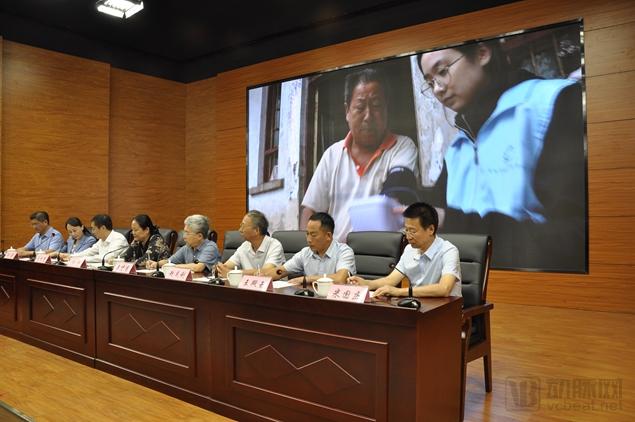
"Following deliberations by the Municipal Party Committee and the Municipal People’s Government, Xingyang City will intensify efforts in 2018 to advance the development of a National Comprehensive Demonstration Zone for Chronic Disease Prevention and Control. Collaborating with third-party institutions and leveraging family doctor contracting and follow-up services as a platform to promote the establishment of a socialized primary healthcare service system, thereby achieving effective mechanisms for chronic disease prevention, control, and management, constitutes the distinctive approach of Xingyang City in creating its National Chronic Disease Prevention and Control Demonstration Zone."Xingyang Health Cloud "Main contents include:
1) Achieved the integration of medical and health data;
2) Promote data sharing among medical institutions;
3) Achieved integration of self-service testing devices with residents' health data;
4) Establish personal health records for residents of Xingyang;
5) Establish personalized and precise disease profiles for patients;
6) Leveraging big data to facilitate precise dispatch of emergency medical services (120).
In this year’s chronic disease prevention and control efforts, the Xingyang Chronic Disease Management Service Center collaborated with Xingyang People’s Hospital, Xingyang Traditional Chinese Medicine Hospital, the 120 Emergency Command Center, township health centers, and family doctor teams to implement a comprehensive management project for hypertension and diabetes in pilot villages of Gaocun, Wangcun, and Guangwu. This initiative established integrated management standards and operational procedures. Additionally, discharge planning services were introduced for patients with hypertension, diabetes, and stroke, thereby bridging the gap between in-hospital treatment and out-of-hospital management and creating a new pathway for post-enrollment services under the family doctor contract system.
In the establishment of chronic disease demonstration zones, the principle of “health management, education first” is followed. Community and social forces are extensively mobilized to integrate health education into the aforementioned activities, stimulate the enthusiasm of all stakeholders, and jointly build a healthy ecological environment.
Based on the data integration and application of the Xingyang Health Cloud, Xingyang City primarily promotes chronic disease prevention and control in a comprehensive, specialized, and systematic manner. Overall, the current chronic disease management approach in Xingyang City has the following three characteristics:
Feature 1: Use of comprehensive chronic disease prevention and control measures
While promoting healthy lifestyles among the public, we extensively leverage technologies such as the Internet, advanced high-tech solutions, portable devices, and molecular diagnostics to organically integrate in-hospital treatment with out-of-hospital management. Under the guidance of the Chronic Disease Division specially established by the Municipal Health and Family Planning Commission, and with the Xingyang City Chronic Disease Management Service Center—jointly built with the Municipal People’s Hospital and Yixuntong—as the core, we are implementing a pilot project for the offline creation of a National-Level Chronic Disease Prevention and Control Demonstration Zone.
Feature 2: Establish a Professional Chronic Disease Management Service Model
Integrating offline services with internet technologies such as mobile apps, and leveraging the family doctor service system, personal health management system, high-end physician micro-clinics, and chronic disease management service platforms, we provide residents with full-cycle services ranging from health education dissemination, disease screening, and health interventions to comprehensive management and exercise promotion. This approach combines refined online management with attentive offline care, establishing a holistic service management model.
Feature 3: Establishing a Systematic Chronic Disease Management Framework
Chronic disease prevention and control is a systematic project that requires concerted efforts across multiple departments, as well as the participation of stakeholders from academia, industry, and other sectors, to jointly address challenges such as information fragmentation, service sustainability, and affordability.
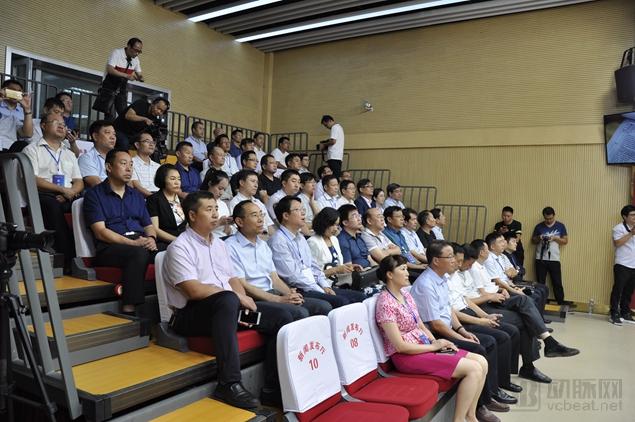
At the press conference, national, provincial, and municipal experts and leaders engaged in in-depth discussions on Xingyang Health Cloud and its development. Chronic disease prevention and management hold significant importance for improving public health levels, reducing overall healthcare expenditures, and enhancing residents' quality of healthy life. Building upon the Xingyang Health Cloud platform, Xingyang has innovated its chronic disease prevention and control models and systems, thereby identifying new pathways for the implementation of family doctor contracted services.
Long-Term Objectives for the Construction of the Xingyang Health Cloud Platform: First, to actively provide online services for the follow-up consultations and management of common and chronic diseases through the "Internet + Healthcare" model, thereby addressing healthcare security issues for rural residents and urban elderly populations. Second, to offer online services such as time-slot appointment scheduling, intelligent triage and guidance, waiting reminders, and query of laboratory and examination results, minimizing patients’ waiting times and unnecessary visits. Third, to explore mobile nursing, online vital signs monitoring, and home monitoring services, while promoting the application of intelligent medical imaging recognition, multidisciplinary consultations, and intelligent voice technologies in various healthcare scenarios, thus reducing hospital operational costs and improving the efficiency of medical services. Fourth, to establish an educational platform that provides multi-level training courses for healthcare professionals, continuously enhancing their service capabilities and standards.