

Exclusive: AKang Health Secures Tens of Millions in Series A Funding, Building an Integrated 'Medicine + Disease + Drug + Insurance' Ecosystem Through Supply Chain Services
On September 8, the National Finals of the China Health and Medical Big Data Industry Innovation Competition concluded in Beijing. After fierce competition, Guangdong Akang Health won the Second Prize in the Rising Star Category.
VCBeat has also learned that, as an emerging player in China’s healthcare sector, A-Kang Health secured tens of millions of yuan in Series A financing in the first half of this year, led by GF Xinde.
Wang Lijue, Chairman of Akang Health, told VCBeat that the company has launched its Series A+ financing round, aiming to introduce more resource-rich strategic investors. By joining forces with strong partners, Akang Health seeks to position itself for the future pharmaceutical market and jointly build a closed-loop ecosystem integrating “medical care, disease management, pharmaceuticals, and insurance” amid the trend of prescription drug outflow from hospitals.
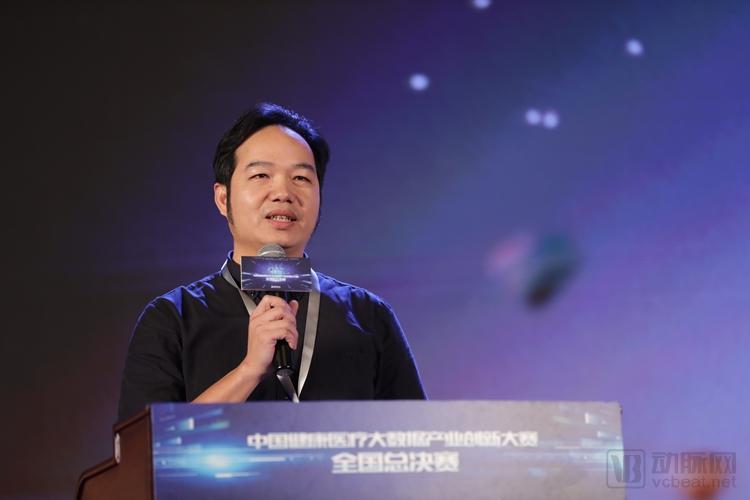
Wang Lijue, Chairman of Akang Health, Delivers a Presentation at the Competition
Founded in 2005, Akang Health has built a solid foundation of over 13 years in prescription drug operations. By closely aligning with national policies and maintaining an industry-leading position, the company has continuously innovated and expanded its business footprint. Its scope has evolved from the initial in-hospital prescription drug market to encompass out-of-hospital and direct-to-consumer (2C) markets. Operationally, it has progressed from a B2B pharmaceutical model to an integrated supply chain system centered on disease-specific management, combining DTP (Direct-to-Patient) and CDC services, integrating B2B and 2C channels, and merging online with offline operations. This strategic evolution aims to establish a closed-loop ecosystem encompassing “healthcare + disease management + pharmaceuticals + insurance.”
Currently, Akang Health is exploring the central prescription dispensing pharmacy model. Under the initiatives to strengthen primary care, shift focus downward, and implement policies at the grassroots level, more patients are returning to primary care settings. By leveraging social resources, Akang Health is empowering three core capabilities at the grassroots level: enhancing diagnostic and treatment capabilities—including third-party imaging, laboratory testing, and point-of-care testing (POCT)—to assist physicians in making better clinical judgments; expanding medication availability by improving the formulary for primary care institutions to effectively address drug shortages; and strengthening logistical support through medical consortia, IT backend systems, and hospital infrastructure development, thereby integrating grassroots healthcare data.
Amid the trillion-yuan market for outpatient prescription drug dispensing, numerous innovative models have emerged. In the view of Wang Lijue, Chairman of Akang Health, “the greatest future opportunity in outpatient prescription dispensing lies with the small-scale business entities closest to patients—including pharmacies, primary healthcare institutions, and online pharmaceutical companies. By integrating supply chains, these entities can ensure that outpatient prescriptions are ‘successfully dispensed, effectively received, well managed, capable of driving growth, and data-enabled.’”
In terms of product selection, Aikang Health believes that the outflow of prescription drugs should begin with medications for chronic diseases, severe conditions, and rare diseases, thereby addressing the most critical and unmet needs in this sector and ensuring that small-scale healthcare providers no longer struggle to source necessary medications.
As of August 2018, leveraging its advantages in prescription drug supply chain resources, Akang Health has established solutions across 17 medical departments, covering treatment plans for over 1,300 diseases. Its cloud pharmacy inventory encompasses 12,000 items actually stocked in accordance with the medication catalogs of all hospitals in China. The product portfolio includes offerings from more than 2,500 domestic and international pharmaceutical manufacturers, with direct collaborations involving over 1,200 industrial enterprises and more than 300 regional commercial distributors. The platform serves 300,000 B-end clients and over 1 million C-end patients with chronic diseases.
In recent years, prescription outflow has been one of the most discussed topics in the pharmaceutical industry. Influenced by policies promoting the separation of prescribing and dispensing, as well as shifting patient demands, out-of-hospital prescription dispensing has become an irreversible trend. Drug supply and pharmaceutical care services, previously shouldered by hospital pharmacies, are gradually being transferred to other drug distribution channels, primarily retail pharmacies, to ensure patients’ medication needs are met.
Based on research data from Guosen Securities, China Merchants Securities, Orient Securities, and other firms, the scale of prescription outflow is projected to exceed RMB 100 billion in 2018 and reach RMB 1 trillion within the next three to five years. This trend will drive changes in the pharmaceutical distribution and retail landscape, reshaping the industry.
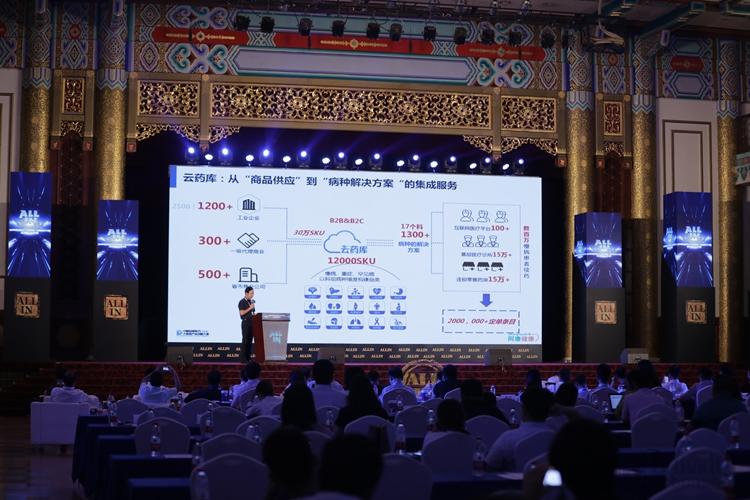
A-Kang Health aims to aggregate the medication demands for “out-of-hospital, chronic disease, and long-tail” scenarios. It connects upstream with pharmaceutical manufacturers and distributors, while empowering downstream small “B” end-users—such as community pharmacies and clinics—through pharmacist training and disease-specific management services, thereby enabling out-of-hospital terminals to meet patients’ medication needs outside of hospital settings.
“For prescription outflow to be realized, the primary consideration is whether the terminal endpoints can handle it. Primary care facilities suffer most from shortages of medical resources and medications; many drugs are unavailable as they are not part of their standard formulary. Our task is to enhance the drug supply capacity at these terminals, ensuring that every ‘B-end’ partner has access to medications, with outpatient offerings matching those available in hospitals, thereby achieving a hospital-level drug supply standard,” said Wang Lijue. He stated that Akang Health’s goal is to establish a drug supply assurance system comparable to that of “top-tier tertiary” (Grade 3A) hospitals. This aims, on one hand, to ensure no medication is unfindable in the outpatient market, and on the other, to strengthen outpatient prescription drug service capabilities through disease-specific management, thereby eliminating concerns regarding medication use outside hospital settings.
Aikang Health believes that achieving the transition of prescription drug distribution from in-hospital to out-of-hospital settings primarily involves a three-step approach.
The first step is to integrate the prescription drug supply chain and build an intelligent supply chain system. Aikang Health’s services reach medication dispensing endpoints by integrating with SaaS, ERP, and other systems, enabling the aggregation of endpoint demand and upward matching to provide integrated supply chain services. Currently, Aikang Health’s “Customer-Order Medication” system achieves delivery to medication endpoints within two days, helping these endpoints better retain patients.
Step two focuses on disease types, leveraging rational drug use as a key driver to build a Pharmacy Benefit Management (PBM) system for chronic and critical care. This approach goes beyond merely selling medications; it emphasizes providing pharmaceutical care services, strengthening end-to-end pharmaceutical service capabilities, and ultimately accumulating comprehensive medication data categorized by disease type. Building on this data foundation, the system initially explores providing rational drug use and cost-control services to both public medical insurance and commercial health insurance providers.
The third step is to implement refined healthcare service management and disease management, creating a closed-loop service model of “healthcare + disease types + pharmaceuticals + insurance.” This third step offers the greatest potential for innovation, as it incorporates features of models such as Pharmacy Benefit Management (PBM) and Health Maintenance Organizations (HMOs), enabling better control over healthcare expenditures while delivering an improved medical experience for patients.
In alignment with the “Three-Step” strategy, Akang Health has internally structured its group business operations into three major segments to empower end-users through enhanced supply chain capabilities and disease-specific management expertise:
Yun Yaoku: A B2B supply chain system specializing in terminal supply chain services for chronic diseases, critical illnesses, and rare diseases;
Cloud Pharmacy: B2C + O2O services, focusing on online and offline pharmacy services for the consumer (2C) segment;
Yunyao Technology: DTP Terminal Empowerment Services, specializing in disease solutions along clinical treatment pathways, academic promotion to physicians, pharmacist training, chronic patient data management, internet-based innovation, and software system development.
“Previously, the pharmaceutical distribution channel ran from pharmaceutical distributors to large hospitals, where patients completed their medication dispensing. With the outflow of prescriptions, the pathway has shifted toward pharmaceutical distributors serving smaller ‘B’-end clients, enabling patients to pick up their medications at nearby retail outlets. A-Kang Health positions itself as a new-type pharmaceutical distribution company built on the circulation of medications for chronic diseases, critical illnesses, and rare diseases, empowering the industry and facilitating prescription outflow and the separation of prescribing from dispensing,” said Wang Lijue.
A sound business model possesses inherent qualities of organic growth, a trait that is particularly pronounced in the healthcare industry. Companies seeking quick profits often collapse rapidly, whereas steady and patient firms that dive deep into the complex core of healthcare emerge as “unicorns” when they resurface.
A-Kang Health has pursued steady and sustainable growth, with its revenue doubling annually amid rapid business expansion. In the first half of this year, A-Kang Health secured tens of millions of RMB in financing from GF Xinde Medical Fund. This investment undoubtedly provides a solid foundation for A-Kang Health’s continued development during its high-growth phase.
But Wang Lijue has bigger dreams. He aims to help Akang grow into China’s equivalent of ESI. ESI Group, fully known as Express Scripts, is the largest independent PBM (Pharmacy Benefit Manager) in the United States. According to its 2016 financial report, it covered more than 95% of retail pharmacies nationwide, with annual revenue reaching $100.29 billion and net profit amounting to $3.4 billion.
PBMs provide cost-containment services to insurers and payers through drug utilization management, interventions in drug access methods, differentiated reimbursement rates, and chronic disease management, while also delivering medications directly to patients via retail pharmacy networks and mail-order services.
CVS Health Corporation is the most successful enterprise in synergizing PBM with pharmaceutical retail. It operates over 9,800 pharmacies, while its subsidiary, CVS Caremark, provides pharmacy benefit management (PBM) services. Driven by the dual engines of “retail pharmacies + PBM,” CVS Health achieved $210 billion in revenue in 2017, with PBM-related income reaching $130.6 billion. Since 2014, the compound annual growth rate (CAGR) of its PBM revenue has reached 13.9%.
Whether it is ESI or CVS Health, the core of their business lies in disease management capabilities. Particularly in the United States, where prescribing and dispensing are strictly separated, such capabilities have become key to controlling healthcare costs and promoting rational drug use. In the context of the Chinese market, the previous terminal landscape dominated by hospitals did not provide the conditions necessary for pharmaceutical-side control. However, once the separation of prescribing and dispensing is achieved, it will lay the foundation for the development of disease management and outpatient prescription management.
Key factors constraining the outflow of prescriptions from hospitals include prescription sources, medical insurance support, drug supply assurance, and pharmaceutical care service capabilities. The first two determine whether prescriptions can flow out, while the latter two determine whether they can be effectively received and managed. Aikang Health “empowers” the industry through integrated supply chain services, enabling prescriptions to “flow out smoothly and be securely received.” China’s ESI blueprint is within reach.
Although it has only recently emerged as a “star enterprise,” Aikang Health has accumulated over a decade of industry experience. Wang Lijue told VCBeat that Aikang Health’s business originated in 2005 under the name Zhenkang Pharmaceutical, primarily supplying oncology medications in the Guangdong region. In 2008, Zhenkang established one of China’s earliest DTP (Direct-to-Patient) pharmacies. It soon expanded to operate five self-owned oncology-specialized pharmacies and more than 50 affiliated pharmacies, achieving an annual turnover of RMB 50 million.
In 2010, amid the surge in pharmaceutical e-commerce, Akang Health pioneered the launch of a renowned pharmaceutical e-commerce platform. The platform experienced rapid growth and once emerged as the industry leader, before being acquired by a listed company for hundreds of millions of yuan in 2014. Leveraging innovative business operational expertise from its prior e-commerce venture, Akang Health keenly identified the market opportunity in the out-of-hospital circulation of prescription drugs, and strategically refocused its core business on “building an integrated service platform for the out-of-hospital prescription drug supply chain.”
Meanwhile, Akang Health launched the “Cloud Pharmacy” brand, beginning to provide comprehensive and professional pharmaceutical supply chain services to various medical terminals. In 2015, Akang Health introduced the “Cloud Prescription” brand, strengthening its strategic layout in prescription outflow and grassroots empowerment. In 2016, Akang Health (Group) Co., Ltd. was formally established, marking the completion of its core organizational structure.
It is evident that throughout its 13-year development, Akang Health has consistently stayed ahead of the industry, whether in DTP (Direct-to-Patient) pharmacies, pharmaceutical e-commerce, or prescription outflow business models, demonstrating clear and accurate foresight into market trends.
Of course, over the course of thirteen years of development, the company’s sense of responsibility and core values have remained unchanged. “Healers possess benevolent hearts; pharmacists embody compassionate minds,” is a phrase Wang Lijue often repeats.
“Medicine is a science-based art. It is a profession, not a trade; it is a calling, not a business. In essence, it is a calling—a social mission—and an expression of benevolent humanity and fraternal affection.” — William Osler, the Father of Modern Medicine
This passage is also frequently quoted by Wang Lijue in public forums. He cautions employees never to say, “There are drugs that cannot be found,” because in many cases, medications represent patients’ lifelines. After the film *Dying to Survive* sparked widespread discussion within the industry, Aikang Health organized staff screenings of the movie. In an article, Wang Lijue wrote, “I am not a ‘drug god,’ but I strive to ensure that no one has difficulty finding the medicines they need.”
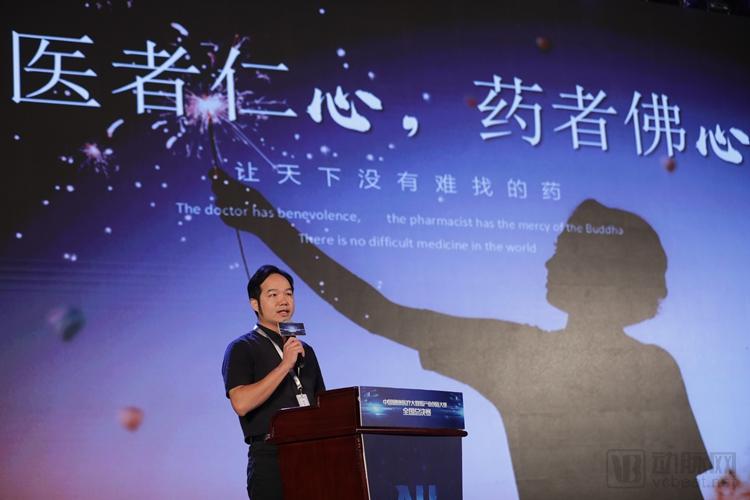
Wang Lijue stated that, historically, pharmaceutical transactions were predominantly characterized by their commodity-trading nature. The outflow of prescriptions has brought us closer to patients than at any other point in history. Akang Health aims to build a virtuous business model through integrated supply chain services, evolving from mere product offerings to disease-specific solutions, and ultimately to humanistic care, thereby clearly defining its people-centric identity.
Only by returning to the human-centric essence can we ignite the compassion of pharmacists, allowing pharmaceutical care to re-emerge with humanistic concern. We also hope to leverage the power of the internet to extend integrated supply chain services to the “last mile” at the grassroots level, enabling more patients with chronic diseases to achieve recovery within their local communities. Let data do the running, so that people need to run less.
“Healers possess benevolent hearts; pharmacists embody compassionate, Buddha-like hearts.” This so-called Buddha-like heart is also described as: offering convenience to others and instilling hope. Behind every rescue we perform lies not only a real family but also a vibrant life. It is imperative for practitioners to uphold sincerity and dedication, thereby fostering an orderly ethical framework within the pharmaceutical industry.