How to Easily Open a Clinic? Insights and Strategies from Industry Leaders at DXY Clinic, Strongson Medical, and More
On August 30, 2018, the DXY Clinic Management Roadshow Seminar kicked off in Chengdu. As a representative of China’s “new first-tier” cities, Chengdu boasts significant potential in the primary healthcare market, attracting numerous innovative clinic chains to establish their presence, including Johnson & Johnson Medical, Dr. Lv Chain Clinics, and Ander General Practice Clinic.
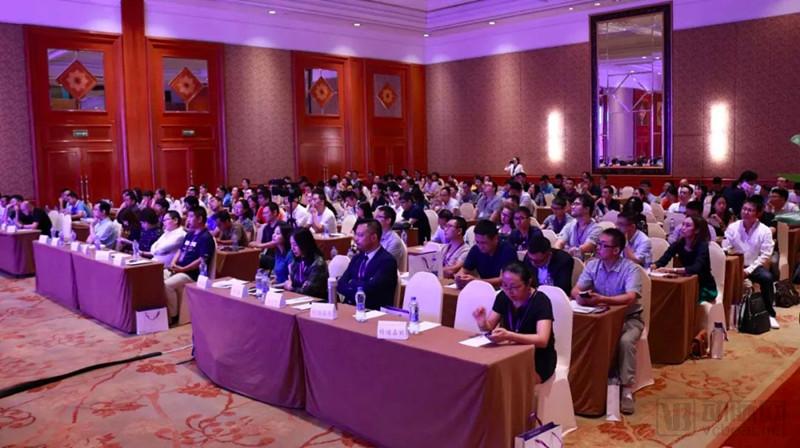
At this conference, nearly 180 primary healthcare practitioners attended, with industry leaders such as Wan Kun, Vice President of Johnson Medical; Yang Zefang, Head of DXY Clinic; and Zhang Yongqiang from Aishen Medical taking the stage to share their insights.
In fact, this is related to Chengdu’s policies. On July 11 this year, the Chengdu Municipal Committee of the Communist Party of China held a press conference themed “Actively Creating a High-Quality Life.” Jia Yong, a member of the Leadership Group and Deputy Director of the Chengdu Municipal Health and Family Planning Commission, stated that as early as 2016, the growth rate of outpatient services at primary healthcare institutions in Chengdu had surpassed that of hospitals, indicating a significant increase in public trust in primary healthcare facilities.
Next, they will further enhance the quality of primary healthcare services by strengthening both hardware and software infrastructure.First, vigorously advance the hardware upgrade project for primary healthcare institutions.“During the 13th Five-Year Plan period, a cumulative investment of RMB 2.995 billion will be made to complete the infrastructure improvement and renovation of primary healthcare institutions across the city, as well as the upgrading of diagnostic and treatment equipment, with plans to”By 2020, infrastructure upgrades and renovations were completed at 339 primary healthcare institutions, diagnostic and treatment equipment was upgraded at 384 facilities, and 2,890 village clinics achieved public ownership and standardized construction.
To date, infrastructure upgrading and renovation projects have been completed at 27 township health centers and community health service centers; diagnostic and treatment equipment has been upgraded at 108 facilities; and 506 village clinics have been standardized under public ownership. Moving forward, we will integrate the development of community healthcare institutions with the construction of community complexes, undertaking synchronized planning and renovation to provide citizens with convenient, high-quality primary care services.
Second, leverage the development of medical consortia to continuously enhance the primary diagnosis capabilities of grassroots medical institutions.Currently, the city has established 82 vertical and compact medical consortia, achieving full coverage of medical and health institutions at all levels across the city. Moving forward, efforts will focus on strengthening the substantive development of these consortia to facilitate the downward flow of high-quality medical resources. Additionally, measures such as intensifying talent recruitment and training, along with implementing the “county-level management and township-level utilization” model for village doctors, will be adopted to enhance the primary care capabilities of grassroots medical institutions, thereby enabling the public to access higher-quality and more convenient medical services.
Third, we will deepen the implementation of family doctor contract services.Currently, the city has established over 2,000 family doctor teams, with more than 6 million residents signed up for services. Through measures such as grid-based management by family doctor teams, priority coverage has been extended to key populations, including the elderly, patients with chronic diseases, individuals with severe mental disorders, pregnant and postpartum women, children, and persons with disabilities. This year, in collaboration with the Municipal Finance Bureau and the Municipal Human Resources and Social Security Bureau, we have released the “Standard Menu” of family doctor service packages for the first time, allowing residents to select service packages based on their specific needs. We will continue to improve service quality to increase the enrollment rate, ensuring that family doctors truly serve as the gatekeepers of residents’ health.
At this juncture, the DXY Clinic Development Alliance, officially launched by DXY in May of this year, offers five key benefits to all member clinics, according to Xu Kenan, Administrative Director at DXY. These benefits include: IT services (SaaS system), online and offline training courses, recruitment services, brand building, and third-party resource matchmaking. All these services will be continuously updated and iterated based on DXY’s big data platform.
In terms of information services, the clinic system is set to undergo a major upgrade, introducing many exciting new features. For instance, in medication guidance, the system will issue alerts if a physician prescribes an excessive dosage or if potential drug interactions exist between two medications, thereby assisting clinic physicians in maintaining high standards of medical quality control.
In addition, certain medical service products that have been validated in offline clinics have been integrated into the alliance’s service ecosystem. For instance, DXY Clinic’s flagship product, “Child Growth and Development Assessment,” has been successfully developed into an online mini-program. This enables clinics to generate growth and development reports for patients more conveniently, diversify their service offerings, and attract greater patient traffic.
“We will leverage DXY’s inherent data advantages to address challenges through digital solutions, thereby empowering more clinics,” stated Xu Kenan directly.
“If you’re launching a chain of clinics, replication becomes your instinct,” said Wan Kun, Vice President of Johnson Medical.
Since its first facility opened in August 2014, Johnson & Johnson Medical has established a network of 42 medical institutions to date. This network encompasses three operational models: community central hospitals (i.e., primary care hospitals), which span 1,000–2,500 square meters and include inpatient departments with 20–50 beds; comprehensive community outpatient clinics, requiring only 400–600 square meters; and community general practice clinics, ranging from 100–200 square meters, featuring one or two departments and providing basic health consultation and diagnostic and treatment services.
Over the years of development, Johnson Medical’s Wan Kun has summarized the following models: The first is to establish clinics in community vicinity, serving families, thereby reducing the physical distance between the clinic and patients, and gradually winning their trust.
Second is the general practice model that integrates prevention and treatment, achieving refined positioning of services and products, unlike the highly segmented and precise specialization seen in hospital departments;
Third is the integration with home-based elderly care. For individuals aged 60 to 75, the model primarily involves one caregiver supporting one elder, with a focus on rehabilitation. For those over 75, medical care substitutes for general caregiving, with a greater emphasis on medical interventions.
Fourth is the membership model combining family doctors with health management. As medical institutions across China have increased in number, the scope of management has expanded, necessitating the use of a standardized IT tool for effective administration.
In terms of standardization, first, the standardization of the consultation process, i.e., the user experience map.The healthcare journey is a relatively long chain, encompassing appointment registration, consultation, prescription issuance, and follow-up visits, ultimately forming a closed loop.
Second, the standardization of medical quality is the lifeline of healthcare institutions.Healthcare institutions differ significantly from other industries, such as clothing stores, hotels, and laundries, where services are delivered directly to consumers without intermediaries. In contrast, healthcare delivery involves physicians as intermediaries; they are the providers of professional services and the decision-makers responsible for delivering standardized diagnosis and treatment.
Physicians serve as the critical link between healthcare institutions and end-users, making their role particularly significant. However, physicians are not standardized industrial products, and achieving uniform standardization is challenging. As physicians are central to the standardization of medical quality, it is essential to establish supportive systems that facilitate multi-dimensional standardization, including credentialing, training, management, and effective evaluation frameworks.
The final step is site selection for the new store, which is critically important. Once the clinic’s location is determined, the surrounding catchment area is essentially fixed; in other words, the number of households and residents in the neighboring community will not change significantly. “Our preferred locations are in ‘new first-tier’ cities, national central cities, or developments by branded real estate developers,” said Wan Kun.
In fact, building a brand for medical services is indeed challenging, as earning trust is a relatively lengthy process. The purpose of standardization is to find the right path, facilitate easier replication of individual clinics, and ensure profitability; whereas branding is about breaking through market barriers, enhancing user preference, driving customer acquisition and value addition, and ultimately increasing the clinic’s valuation. This defines the relationship between standardization and branding.
Wan Kun believes that the essence of chain operations lies in brand-building, and the essence of a brand is trust. Brands attract traffic, while high-quality medical products retain customers. The key to this process is standardization, such as standardizing the consultation process, which we refer to as user experience. Therefore, how to design a user experience map that ensures customer satisfaction at certain touchpoints and delivers delightful surprises at others is a question every operator should consider.
So, how can specialty-focused clinics be established? For instance, how can a hemodialysis center be set up, and how can chronic kidney disease management be implemented within the community?
Zhang Yongqiang, founder of Aishen Medical, stated, “Over the next five years, the hemodialysis center landscape will gradually evolve into a system dominated by public institutions, with private entities serving as a supplement. At least 3,000 new centers will be added, and the vast majority of this growth will be driven by the private sector.”
Of course, this is inseparable from policy support. In 2017, the National Health and Family Planning Commission amended the Implementation Regulations on the Administration of Medical Institutions, adding several new categories of medical institutions, including hospice care centers, medical imaging diagnostic centers, nursing centers, and hemodialysis centers.
In the market, one in ten people has chronic kidney disease, but the awareness rate is particularly low, at only 12%, with significant differences in disease prevalence across different regions.
Private hemodialysis centers are not a new concept; in fact, they have been developing for seven years. “This sector has seen significant growth over the past two years. From 2016 to 2018, more than 300 centers were registered, with over 240 of them established in the most recent year alone.” The market for this niche segment is poised for continued expansion.
How to Establish a Hemodialysis Center? Taking Aishen Medical as an Example: Suppose We Plan to Open a Hemodialysis Center in a Northwestern Province.
First is site selection, which requires consideration of the following factors: First, medical insurance coverage. Hemodialysis centers are heavily reliant on medical insurance, with 80% of patients paying through this channel. Second, population size. Given the disease incidence and treatment rates, a small population base is certainly insufficient. Third, cultural factors. Patients need to visit three times per week, amounting to 120–150 visits annually, making cultural acceptance crucial. Fourth, government regulatory resources. The good news is that the approval for establishing medical institutions has been abolished, significantly reducing administrative burdens; however, practice licenses, environmental impact assessments, fire safety approvals, and other requirements still apply.
Next is the layout zoning, including channel processes and security management, with a core emphasis on professionalism and humanistic care.
In terms of operations, the costs of a hemodialysis center are roughly one-third rent, one-third personnel, and one-third other expenses, which is broadly similar to other medical institutions.
In addition to the aforementioned guest speakers, numerous primary care practitioners—including Yang Zefang, Head of DXY Clinic; Wang Yu, Founder of Dr. Yu; and Hao Xichun, Founder of CY Clinic—took the stage one by one to share their experiences and insights on innovative practices in primary healthcare.
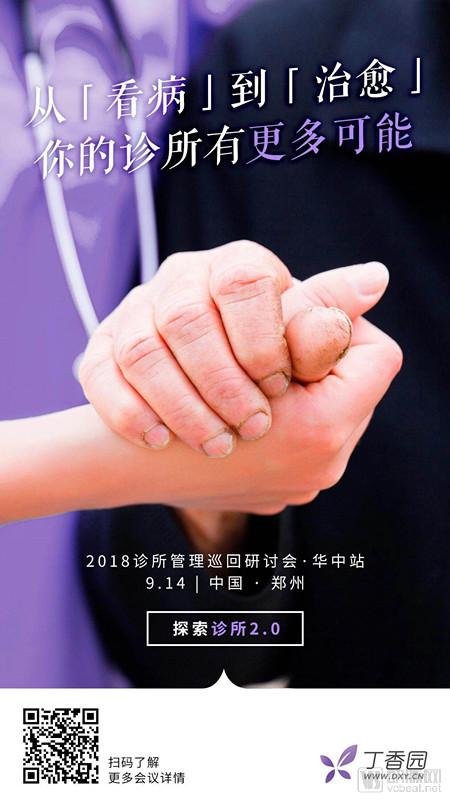
“2018 Clinic Management Roadshow Seminar” officially launched in Zhengzhou on September 14, signaling that clinics in second-tier cities should also explore greater possibilities, shifting from mere “medical consultation” to comprehensive “cure.”