

Qi Bio and Waters Launch Qi MetA: An Integrated Software Platform for Omics and Clinical Data Analysis
VCBeat (WeChat ID: vcbeat) has learned that the global launch event for Qi MetA software, co-hosted by Beijing Qiji Biotechnology Co., Ltd. (“Qiji Biotech”) and Waters Technologies (Shanghai) Co., Ltd. (“Waters”), was held in Beijing on September 9, 2018. More than 50 attendees from clinical, scientific research, investment, and other fields participated in the event.
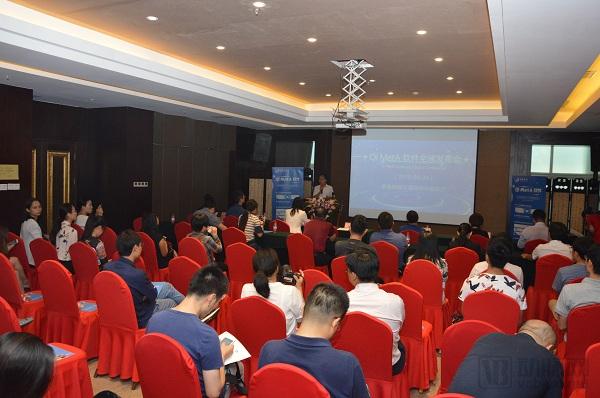
Press Conference Venue
With the advancement of multi-omics research, including metabolomics, high-throughput data collection has become feasible. However, similar to other omics disciplines, data analysis in metabolomics remains a significant challenge, particularly in interpreting the biological significance of the data. Consequently, data mining and context-specific analysis have emerged as the primary bottlenecks for researchers and users across various fields engaged in biological research, especially in metabolomics.
Building on this foundation, Qiji Bio, in collaboration with Waters, has spent three years developing Qi MetA, a one-stop software solution for omics and clinical data analysis. Reportedly, the software now features fully commercialized client applications and an analytics platform.
Strategic Partnership to Advance Mass Spectrometry Data Analysis
Qiji Biology is a leading national high-tech enterprise in China, with a core focus on metabolic disease research. The company operates two medical laboratories, one research center, and one big data center. Dedicated to leveraging modern biotechnology and machine learning, Qiji Biology addresses early detection and clinical diagnosis of metabolic diseases, discovers and validates clinical biomarkers and models, and conducts clinical testing, in vitro diagnostics, and big data analytics to enable precision medicine and shape the future of human health. The company has established collaborations with over 100 institutions, including Peking University, Tsinghua University, the Chinese Academy of Sciences, and Grade A tertiary hospitals, as well as deep partnerships with renowned companies both domestically and internationally.
As a global leader in chromatography and mass spectrometry, Waters Corporation has long been dedicated to developing and manufacturing advanced analytical and materials science technologies for laboratory-based institutions. Over the past 60 years, the company has developed a comprehensive portfolio of technologies spanning separation science, laboratory informatics, mass spectrometry, and thermal analysis. Waters provides tools for generating high-throughput data while also committing to the continuous advancement and innovation of data analysis and mining methodologies.
In this collaboration, Qiji Biology and Waters have joined forces to launch the Qi MetA software, aiming to serve a broader global user base and promote more efficient, accurate, and convenient mass spectrometry data analysis by establishing standardized data analysis workflows.
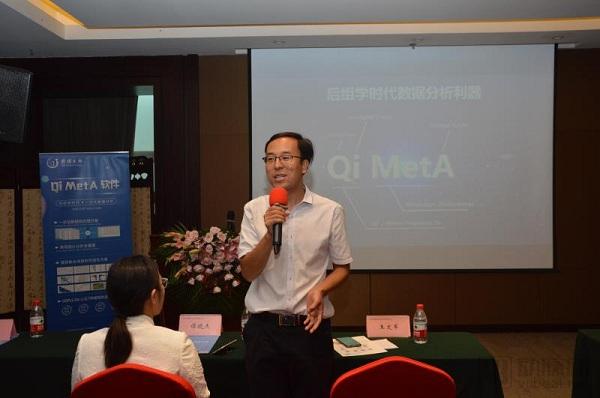
Wang Wenjun, Chairman of Qiji Biology
Wang Wenjun, Chairman of Qiji Biology, stated that he encountered numerous data analysis challenges in his work many years ago, yet no single product could address all of them. The Qi MetA software offers one-stop data analysis, a one-step data preprocessing solution, comprehensive coverage of common statistical analyses, and visualization tools tailored to specific scenarios. Qiji Biology has been in operation for over five years, evolving from research services to clinical services, and has currently established two medical diagnostic centers. In the future, Qiji Biology plans to further expand in this area by enhancing the software’s capabilities, conducting deeper and broader mining of the value within data, linking data with business operations, and ensuring that data truly serves human health.
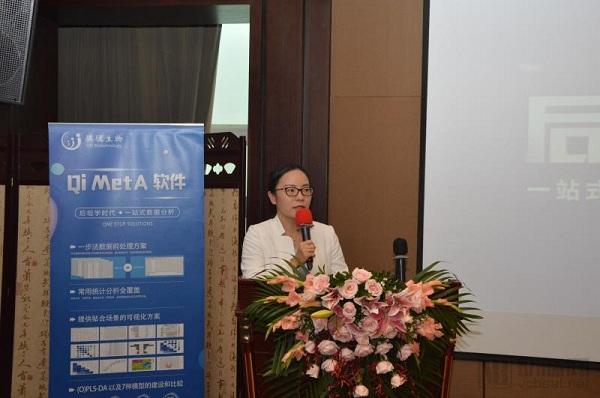
Waters Corporation, Senior Manager of Clinical Marketing Department, Tan Xiaojie
Tan Xiaojie, Senior Manager of the Clinical Marketing Department at Waters Corporation, also stated that Waters and Qiji Bio have been close partners for many years, having not only built a strong friendship but also accumulated extensive experience in collaboration and practical applications. With “Healthy China 2030” as a national priority, and as the country gradually transitions into an aging society, the population suffering from chronic diseases such as diabetes has reached 117 million, while those aged 60 and above number 270 million. Serious and chronic illnesses pose significant threats and challenges to the health of family members. Waters has long been committed to research in chromatography and mass spectrometry, with additional investments in software solutions. Relying on a single biomarker is far from sufficient for characterizing diseases. In the field of liquid chromatography–mass spectrometry (LC-MS), a single sample can generate tens of thousands of data points, making data interpretation increasingly complex.
During our collaboration with Qiji Biotech, the big data processing capabilities of the new Qi MetA software have been further enhanced. Building on its existing foundation, this product is now better tailored to localized scenarios. We are confident that as the software continues to iterate in the future, it will deliver more precise treatments and superior visualization, ultimately achieving outstanding results.
About Qi MetA Software
Dr. Chen Xianyang of Qiji Bio provided a detailed introduction to the new product—Qi MetA software. He stated that gene sequencing and mass spectrometry analysis, as two major tools capable of answering “what this is,” have permeated various fields of scientific research, particularly in biological studies. Qiji Bio’s data team, closely aligned with mass spectrometry application scenarios, studied the usage logic of mass spectrometry users and developed the Qi MetA data analysis software. This software not only meets the needs of biological analysts but also seamlessly integrates with Waters’ metabolomics workflows and Progenesis QI software, forming a one-stop analysis platform.
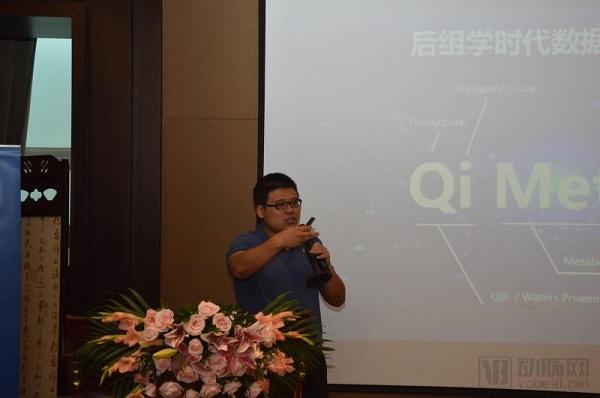
Qiji Biotech, Dr. Chen Xianyang
Qi MetA is a window-based data processing and analysis software applied to metabolomics and clinical data analysis, with its capabilities extendable to various aspects of biological data analysis and visualization. It is suitable for one-stop metabolomics analysis, clinical data analysis, and standalone biological project analysis. Its unique features and functions mainly include:
First, data exported from Waters Corporation's Progenesis QI software can be directly imported and processed to generate standardized data ready for analysis; it automatically performs QC-based data filtering, including zero-value filtering, CV filtering, and LOESS regression. It also automatically provides PCA plots for QC samples as well as combined PCA distributions for both study samples and QC samples;
Second, the software can not only obtain all statistical indicators for difference analysis between two groups under a single factor but also perform comparisons among n groups, yielding the overall p-value and pairwise p-values;
3., Qi MetA performs regression analysis on individual variables and enables batch R² screening across all variables; it utilizes the full HMDB and LipidMaps databases to classify identified compounds and analyze changes in their relative abundances;
FourthThe software enables rapid switching between single- and multi-group (Orthogonal) Partial Least Squares Discriminant Analysis [(O)PLS-DA]; (O)PLS-DA provides permutation test results and cross-validation functionality; potential biomarkers are identified in a single step by setting thresholds for VIP scores, p-values, fold change, and false discovery rate (FDR).
Fifth, the software enables rapid automated or manual construction of logistic regression, decision tree, random forest, Bagging, support vector machine (SVM), and gradient boosting machine (GBM) models; it automatically or manually generates ROC curves and model evaluation metrics for these models; it offers seven optional models for potential biomarker combinations and allows simultaneous ROC analysis and evaluation across four models.
Sixth, Qi MetA is designed for diverse scenarios, capable of processing not only omics data such as metabolomics and lipidomics but also clinical data and other biological data. Each analysis is categorized by project, enabling convenient historical record queries and seamless resumption from breakpoints. The transparent workflow of browsing and processing enhances the credibility of the results.
“The launch of Qi MetA software marks the first step in Qiji’s data analysis and utilization efforts, as well as the beginning of joint exploration and data value mining by Qiji and Waters. In the future, Qiji will develop more scenario-based applications on the Qi MetA data analytics platform to create medical software, further explore data value, and provide more effective data solutions, including expanding data pre-processing capabilities, providing in-depth elucidation of biological functions, and advancing research on biomedical knowledge graphs,” said Chen Xianyang.
Investors and experts are bullish
Additionally, at this press conference, investors and experts from Yuan Yi Capital, the Institute of Chinese Materia Medica of the China Academy of Chinese Medical Sciences, the Chinese Academy of Agricultural Sciences, the First Affiliated Hospital of Tsinghua University, and JD Health Cloud also shared their perspectives and raised questions.
Song Yiran, Vice President of Yuanyi Capital, introduced, Yuanyi Capital is an international venture capital fund focused on investing in early- and growth-stage enterprises in the healthcare and innovative financial technology sectors. The firm first engaged with Qiji Bio towards the end of last year and completed its investment by early this year. Qiji Bio has established a robust foundation in metabolomics technology, possesses innovative clinical development capabilities, and offers unique insights and extensive experience in data analysis. It is hoped that this collaboration will effectively help users address clinical challenges, ultimately serving human health.
Dr. Xu Jiang, Institute of Chinese Materia Medica, China Academy of Chinese Medical SciencesThe software is considered highly “flexible,” closely aligning with user needs and ensuring that data analysis no longer constitutes a bottleneck in workflow. When asked whether Qi MetA can be used for genomics research, the R&D team at Qiji Bio stated that the “Met” in Qi MetA refers not only to “Metabolism” but also to “Methodology.” Although Qi MetA was developed with metabolic research as its core application scenario, the team places significant emphasis on refining methodologies and expanding applicable scenarios. Currently, most of the software’s functionalities are equally applicable to genomics research, such as statistical differential analysis, visualization of data classification and clustering, and classification models.
Ma Ruize, JD Health Cloud DepartmentIt is pointed out that Qi MetA can indeed be used in pharmaceutical companies. The Qiji Biology team stated that while Qi MetA appears as a software interface on the front end, its back end is a functional project platform with a code repository of solutions. Meanwhile, through personalized design, we can push different solutions and analysis projects to different customers via the software’s front end. For pharmaceutical company clients, our software can personalize the delivery of automated “pharmacokinetics” analysis functions, among others, while retaining statistical analysis and visualization capabilities. In this way, our software platform can meet the needs of various scenarios in the medical field.
Finally, Wang Wenjun stated, “As a personalized data analysis and mining software, Qi MetA has received strong support from Waters Technologies (Shanghai) Co., Ltd., as well as assistance from peers, experts, and scholars. Their recognition and encouragement have given us the confidence to move forward. Through this data platform, we are confident in enhancing the level of metabolic disease analysis, enabling more effective early detection and clinical diagnosis of diseases, and ultimately becoming pioneers and trailblazers in precision medicine and intelligent diagnostics.”