

How a Startup Breaks into the Underpenetrated Nursing Informatics Market—Covering Only 20% of Hospitals
In 1978, the promotion and development of “Health Information Transmission Standards” as a strategic technology in the United States was initially intended to replace certain repetitive manual tasks with standardized processes to improve efficiency. However, it soon became evident that the continuous innovation of this revolutionary technology and the evolution of its entire ecosystem completely transformed hospital management workflows.
With the continuous implementation of LIS (Laboratory Information System), PACS (Picture Archiving and Communication System), and EMR (Electronic Medical Record system), the epoch-making HIS (Hospital Information System) has ultimately integrated all information systems, ushering traditional medical institutions into a new era of informatization.
In the current healthcare environment, the traditional health IT market has seen the emergence of a number of strong publicly listed companies, such as Neusoft and Winning Health Technology Group. The market is relatively saturated, and in-hospital health information system construction has become increasingly mature.
In hospitals, the aforementioned four major systems all serve the diagnosis and treatment processes, maintaining close integration with physicians; indeed, nearly every hospital has already implemented these four systems. However, in addition to doctors, there is another substantial group of healthcare professionals within hospitals—nurses.
Tideng Medical, founded in 2016 and dedicated to providing mobile nursing information systems, has seen its founder and CEO, Tan Zongwei, tell VCBeat (WeChat ID: vcbeat) that currently, only 20% of hospitals in China have implemented informatization solutions specifically for nursing care.
In this traditionally blue-ocean market, it is no easy feat for startups to gain the trust of hospitals. What is Tiding Medical’s strategy? During a nearly half-hour conversation, Tan Zongwei revealed only one secret: enhancing customer experience and leveraging endorsements from more prominent brands to introduce its services into hospitals.
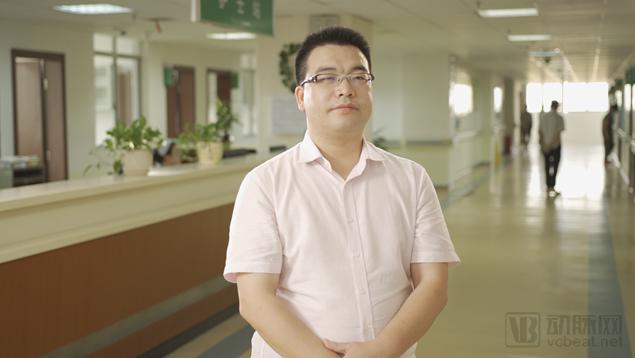
Tan Zongwei, Founder and CEO of Tideng Medical
In hospitals, the low nurse-to-bed ratio and the lack of standardized guidelines in clinical nursing practice often lead to omitted tasks. Inadequate tracking of the “Three Checks and Eight Verifications” protocol is not uncommon, which can easily result in adverse events and medical disputes.
In the era of paper-based office work, the entry of patients' basic information relied entirely on handwritten notes by medical staff. Documentation in obstetrics and intensive care units (ICUs) was also prepared manually, which was prone to errors and involved a heavy workload. Consequently, documentation was often created retroactively to meet inspection requirements, leading to extensive redundant data entry.
In terms of management, the lack of objective criteria for assessing nursing workload, which relies entirely on rough, subjective judgments, has adversely affected the management of the nursing team.
Nurses are the ones who execute medical orders. “Nursing staff may account for 60%–70% of the entire hospital’s workload,” Tan Zongwei told reporters. However, nursing departments, which are among the busiest in hospitals, largely rely on the nursing module of the Hospital Information System (HIS). There are still many shortcomings in the development of nursing informatics.
The reasons for this, apart from the sequence in which hospitals themselves invest in and construct infrastructure—prioritizing the development of information systems for clinical care processes—are also closely related to technological constraints.
Nursing is typically characterized by a heavy workload, numerous tasks, attention to detail, and diverse responsibilities. The requirements of bedside care mean that nurses’ work is often mobile in nature; therefore, information systems based on personal computers (PCs) cannot meet the needs of nursing practice.
“It is impossible for nurses to complete a task at the bedside and then return to the computer to enter the records.” This was the most significant pain point identified by Tan Zongwei. Therefore, high mobility is the key to the development of nursing information systems, and meeting this requirement relies on Internet of Things (IoT) technology.
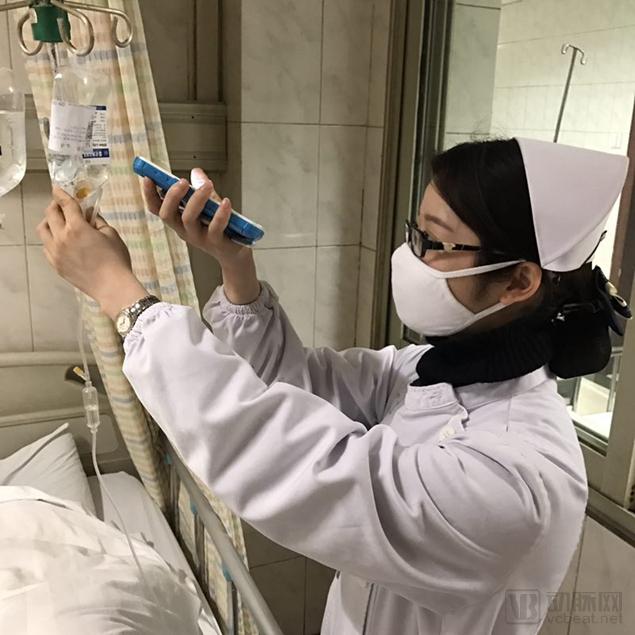
Nurses Use Handheld PDAs to Record Infusion Information
Massive IoT involves the Internet of Medical Things (IoMT) ecosystem, which will encompass millions or even billions of low-power, low-bit-rate medical health monitoring devices, clinical wearables, and remote sensors.
It is precisely based on this technology that nursing care, characterized by mobility and complex tasks, can achieve improved efficiency. This is also the primary focus of Tan Zongwei and his team.
Tideng Medical’s products primarily focus on integrated information systems that bridge in-hospital and out-of-hospital care. Guided by the design philosophy of holistic nursing and driven by a task-based model, the company has developed an integrated medical-nursing-patient care platform. Within hospitals, this platform enhances medical safety, standardizes nursing workflows, and delivers high-quality nursing services to patients. Additionally, it incorporates post-discharge follow-up mechanisms, enabling nurses to effectively carry out patient tracking tasks.
Tideng Medical’s products achieve integrated management of medical staff and patients by focusing on six core business areas: physician order execution, barcode scanning verification, treatment billing, nursing documentation, health education, and mobile ward rounds.
Taking the affiliated Hengyang Central Hospital as an example, it is the largest Grade A tertiary general hospital under the jurisdiction of Hengyang City, with 1,500 authorized beds and over 1,300 medical and nursing staff. A prominent pain point within the hospital was that information collection did not extend to the bedside, and efficiency was reduced by a large volume of tedious, manual handwriting and transcription tasks. Tiding Medical has equipped each department with 6–10 handheld PDAs, two tablets, two printers, and one electronic dashboard. Currently, all 35 departments in the hospital have been fully equipped. For the hospital, the most direct change has been the shift from “nurses seeking tasks” to “tasks finding nurses.”
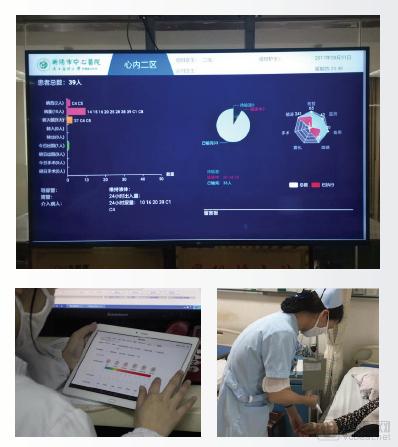
Introduction of Smart Terminals Such as Smartphones, Tablets, and Large-Screen TVs
From pre- to post-implementation, the solution primarily saves nursing time: medication preparation staffing was reduced from two nurses to one; the computer station no longer performs manual transcription of medical orders or prepares wristbands and bedside cards, thereby eliminating manual tasks such as paper-and-pen documentation; nursing care is delivered and documented at the bedside, with automatic generation of documentation and data sharing, which reduces duplicate data entry.
Secondly, it standardizes nursing workflows. By leveraging an information system, nursing tasks are strictly decomposed in accordance with medical orders, providing managers with daily statistics on task execution and enabling tracking of the implementation status of nursing tasks. During intravenous infusion, when an indwelling needle is selected, patient education materials regarding the indwelling needle are automatically pushed. Fees are charged upon task execution, thereby preventing omissions or refunds. Various intelligent reminders, such as alerts for scheduled nursing tasks, help avoid missed treatments.
In terms of nursing safety, medication preparation has shifted from manual verification of medical orders and execution sheets to a dual-person verification process. This includes barcode scanning for medication administration checks, dual-person verification for blood transfusions, and barcode scanning for the collection of laboratory specimens. A management monitoring platform is provided to enable real-time tracking of barcode verification compliance.
Currently, Tideng Medical has partnered with 14 Grade-A tertiary hospitals in provinces and municipalities including Hunan, Jiangxi, and Hebei. The number is expected to expand to 30 by 2018.
Although the company is still in its startup phase, “patient-centricity” and “enhancing user experience” are two phrases Tan Zongwei frequently emphasizes. He believes that Tideng Medical’s products have three major advantages:
First, in terms of operational model, whereas hospitals face pain points such as high investment, long implementation cycles, and difficult maintenance when building their own Wi-Fi infrastructure, Tideng Medical adopts an equipment leasing model to enter hospitals. Leveraging the existing infrastructure established by major telecom operators—China Mobile, China Unicom, and China Telecom—within hospitals, the operators charge the hospitals for the overall project construction, and Tideng Medical, in turn, charges the operators, thereby delivering services to hospitals and their respective departments.
Tan Zongwei presented a cost analysis to reporters, noting that large IT companies typically require a budget of approximately RMB 7–8 million to undertake the construction of hospital nursing information systems. This substantial financial commitment inadvertently prolongs the decision-making process for hospitals, with the implementation of such informatization projects usually taking two to three years.
By entering hospitals through telecom carriers, the solution not only meets hospitals’ requirements for vendor brand reputation in informatization construction but also significantly shortens the decision-making cycle thanks to flexible equipment leasing models. “Each hospital pays over 100,000 RMB per month, which greatly reduces the complexity of their decision-making process. As a result, business development proceeds much faster than with traditional project implementation.”
Second, in terms of product experience, the comprehensive mobile design enables medical staff to monitor patients’ conditions anytime and anywhere, while allowing nurses to complete relevant medical documentation concurrently with their clinical duties. The system’s most significant highlight lies in its design for post-discharge follow-up, which enhances doctor-patient communication and reduces disputes without increasing the workload of medical personnel. “The integrated mobile platform addresses the challenge of low follow-up compliance rates after patient discharge.”
Furthermore, Tideng Medical has innovatively constructed China’s first nursing-based knowledge graph—a structured knowledge base featuring key annotation, semantic retrieval, and knowledge reasoning. By endowing the software with a “thinking brain,” it serves as an intelligent assistant for nurses, providing options for information entry to minimize time-consuming manual input.
Hospital information systems emphasize branding, but place even greater emphasis on individual user experience. In addition to traditional HIS giants, the nursing informatics market has seen the emergence of companies such as YiHui Technology, which have focused on IoT-enabled smart ward construction since around 2007. After nearly a decade of development, these brands have gradually gained recognition in the market.
Although the market is far from saturated, capturing a share of it is no easy feat, particularly for startups, for whom the “hospital wall” separating in-hospital and out-of-hospital settings appears especially “high.”
The primary challenges in implementing nursing informatics systems in hospitals lie in aligning product architectures with mobile workflows and reconciling them with the lengthy decision-making cycles typical of traditional hospital IT infrastructure projects. Amidst competition from established health IT vendors such as Yiwei Technology and Jingyi Co., startups must increasingly focus on carving out their own niche in what was once a blue ocean market but now has emerging leaders.