

Gloryren Orthopedics Bridges the Gap Between Chinese and European Orthopedic Standards Through International Expert Collaboration
Orthopedic healthcare can be segmented, according to the sequence of value delivery, into an upstream sector dominated by physicians, medical devices, and pharmaceuticals; a midstream sector comprising hospitals and clinics; and a downstream sector centered on patients. The field of orthopedics covers a broad scope, with surgery as its focal point and specialists as its core assets. In this specialized discipline, the high volume of surgical procedures has driven strong technical and practical advancements, necessitating that orthopedic surgeons engage in lifelong learning without complacency to keep pace with the rapid development of the specialty.
VCBeat has learned that the 2018 Inaugural China-Europe International Orthopedics Summit (hereinafter referred to as “2018 SEOS”) was recently held in Guangzhou. The summit was hosted by Foshan Hospital of Traditional Chinese Medicine and Guangzhou Renyi Orthopedics Technology Co., Ltd., and co-organized by the EuroSpine, the German Spine Society, the European Society of Sports Traumatology, Knee Surgery and Arthroscopy, and the German Foot and Ankle Society.
Honorary Chairman: Professor Liu Zhongjun, Director of the Department of Orthopedics at Peking University Third Hospital, Director of the Institute of Spinal Surgery, and Member of the Academic Committee of Peking University Health Science Center.Conference Chairman: Professor Michael Mayer, Head of the Spine Center at Harlaching Orthopedic Hospital in Munich, Germany; Director of the FIFA Medical Centre of Excellence; one of the founders of the International Society for the Advancement of Spine Surgery; and Chief Strategic Advisor to Renyi Orthopedics.Executive Conference Chairman: Professor Liu Xiaofang, President of Foshan Hospital of Traditional Chinese Medicine.
In addition, top domestic orthopedic experts also participated in the summit, including Jiang Baoguo, Chief Scientist of the National 973 Program, President of Peking University People’s Hospital, Director of the Department of Orthopedics at Peking University Health Science Center, Director of the Peking University Trauma Medical Center, and Chairman of the China Trauma Care Alliance; Zhou Yue, Director of the Department of Orthopedics at Xinqiao Hospital of the Third Military Medical University, a pioneer and leader of modern minimally invasive spinal surgery techniques in China; and Chen Shiyi, Director of the Sports Medicine Center at Huashan Hospital Affiliated to Fudan University.
As the host of this summit, Renyi Orthopedics has gathered renowned orthopedic experts from around the world to establish an international group of orthopedic surgeons, linking physical hospitals globally through an asset-light model. The purpose of founding Renyi Orthopedics is to build an international orthopedic exchange platform centered in mainland China with a global reach, coordinating both domestic and international perspectives, adopting a global vision, actively promoting communication between Chinese orthopedics and the international community, strengthening academic exchanges with international organizations, and thereby expanding the global influence of China’s orthopedic field.
In an environment where orthopedic specialists are scarce, Renyi Orthopedics was founded by an internationally recognized authority in orthopedics. It has directly signed contracts with renowned international orthopedic surgeons, becoming their sole authorized partner in China, and serves as the only official strategic partner of prestigious international orthopedic hospitals.
At the 2018 SEOS, the summit focused on four key areas: spinal surgery, sports medicine and joint disorders, bone tumors, and foot and ankle surgery and trauma, with dedicated sub-forums established for each. The event attracted over a thousand orthopedic experts and scholars from both domestic and international communities, featuring cutting-edge technologies, novel and diverse perspectives, and in-depth discussions. Tailored to the individual learning needs of orthopedic specialists across various subspecialties, the summit aimed to substantially enhance clinical diagnostic and therapeutic capabilities. It provided grassroots physicians with valuable opportunities for close interaction, engagement, and learning alongside frontline orthopedic experts, thereby fostering closer communication between Chinese and international orthopedic communities and further advancing the development of orthopedics in China.
According to the classification in the "Chinese Journal of Surgery," the development of China's orthopedics industry can be roughly divided into five stages: the Enlightenment Period, the Development Period, the Observation Period, the Leapfrog Period, and the Period of Going Global.
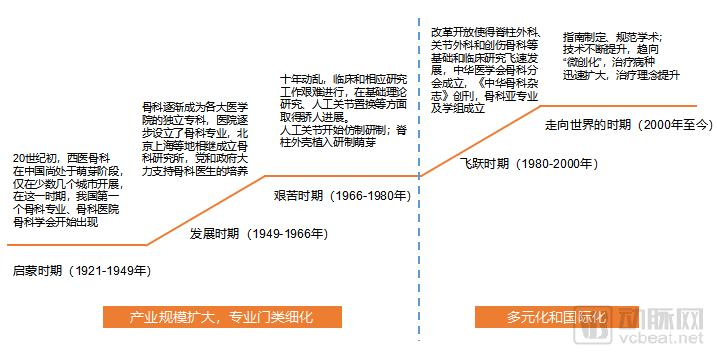
Source: "Chinese Journal of Surgery"
With the formulation of guidelines such as the Guidelines for Diagnosis and Treatment of Osteoarthritis, the Guidelines for Diagnosis and Treatment of Osteoporotic Fractures, and the Chinese Guidelines for Prevention of Venous Thromboembolism in Major Orthopedic Surgery, along with the establishment of academic standards and continuous advancements in digital orthopedic technologies, the development of orthopedics in China has entered a global integration phase from 2000 to the present.
The traditional concept in orthopedics, which was primarily based on the "biomedical model," has shifted to the "bio-psycho-social" medical model, advocating a "people-oriented" approach. Centered on this philosophy, efforts are made to preserve patients' functional mobility to the greatest extent possible, and surgical procedures that previously involved large postoperative wounds have increasingly trended toward minimally invasive techniques.
In the past, due to technological limitations, there were many "no-go zones" in orthopedics in China, leaving many patients without appropriate treatment. Today, from the spine to the extremities, such no-go zones have largely disappeared, and virtually all orthopedic conditions can be treated. Furthermore, auxiliary tools are becoming increasingly "intelligent," with navigation systems gradually becoming widespread.
At the session of the Spine Section, Professor Frank Kandziora, current President of the EuroSpine Association, Chairman of the Department of Spinal Surgery and Center for Neurotrauma at the German Berufsgenossenschaftliche Unfallkliniken (BG Clinics), and Consultant at the Center for Musculoskeletal Surgery, Charité – Universitätsmedizin Berlin, Humboldt University of Berlin, stated: “There are four key priorities that spine surgeons must always keep in mind: conferences, research, education and training, and quality control/quality assurance. At this conference, fellow physicians will have the opportunity to engage with leading experts, gain insights into the latest research findings, and explore the most trending research topics.”
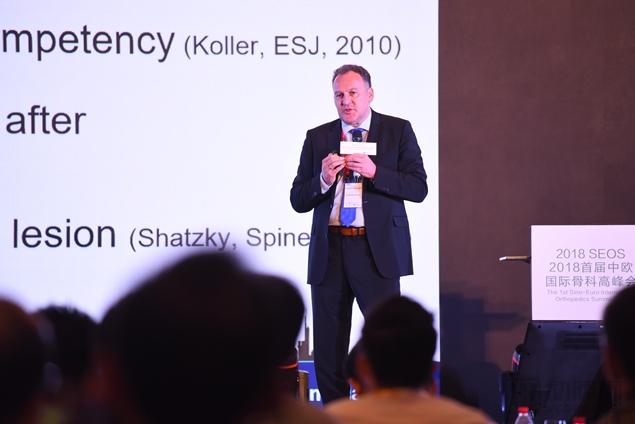
Current President of the EuroSpine, and Chairman of the Department of Spinal Surgery and Center for Neurotrauma at the German Berufsgenossenschaftliche Unfallkliniken (BGU)
Professor Frank Kandziora, Consultant at the Center for Musculoskeletal Surgery, Charité – Universitätsmedizin Berlin, Humboldt University of Berlin (Source: Provided by the company)
According to the National Health Services Survey, conducted every five years and recorded in the China Health and Family Planning Statistical Yearbook, the prevalence of musculoskeletal and connective tissue diseases among residents aged 15 and above in China reached 3.73% in 2013, up from 2.31% in 2003, showing a steady upward trend during this period. Conservatively estimated, the number of new orthopedic cases in China exceeds 2 million annually.
Although the demand is substantial, compared with countries such as Germany and the United States, which rank among the top globally in orthopedic diagnosis and treatment, China’s orthopedics industry as a whole exhibits the following characteristics:
First, there is significant variation in technical proficiency; patients requiring surgical care at primary-level hospitals often fail to receive adequate treatment, as the siphon effect of large hospitals has concentrated orthopedic expertise primarily in top-tier tertiary hospitals.
Second, the specialist physician training system has not been effectively established. In departments with a high proportion of surgical procedures, such as orthopedics, the tendency to prioritize academics over clinical practice remains significant in physician training;
In terms of technology, although China’s orthopedics discipline has made significant progress over the past 30 years, technological innovation has largely relied on the introduction of foreign techniques, with insufficient independent innovative capacity. Many research areas are still in their infancy, and treatment protocols have not yet been standardized. There is still a gap compared with European countries such as Germany, particularly in the fields of sports injuries and minimally invasive techniques.
Compared with international standards, there is still a gap in the application of new technologies, specifically in navigation-guided procedural techniques, due to the shorter development history of navigation technology in China and the high cost of equipment. In terms of non-navigation technologies, knee surgery techniques in joint surgery are comparable to international levels; however, gaps remain in other arthroscopic techniques, such as minimally invasive joint replacement. In spinal surgery, percutaneous surgical techniques are comparable to or even exceed international standards, while endoscopic techniques are comparable to or slightly below international levels. In trauma surgery, the level of minimally invasive techniques has approached international standards.
Technological innovation in orthopedics has long been a weak link in the development of this specialty in China. Compared with delicate neurosurgical procedures, orthopedic surgery may appear to involve greater trauma and offer ample operating space. However, since the primary goal of most orthopedic procedures is to restore patients’ original motor function, surgeons must reconstruct damaged structures to their pre-injury state, which is in fact a highly meticulous endeavor.
For instance, in joint replacement surgeries (such as knee, hip, and shoulder arthroplasty), the more precisely the prosthetic components are fitted to the prepared bone surfaces, the better the restoration of motor function. This demands that orthopedic surgeons not only possess robust practical skills but also stay abreast of cutting-edge advancements and embrace the application of digital technologies in clinical practice.
Overall, the penetration rate of China’s orthopedic implant industry remains low, with rates for trauma, joint, and spinal implants at 4.9%, 0.6%, and 1.5%, respectively. This represents a significant gap compared to developed countries in Europe and the United States, underscoring the substantial growth potential of China’s orthopedic implant sector.
As China’s orthopedics industry continues to develop, this vast market has become the most fertile ground for academic exchanges between Chinese and foreign scholars. The sheer size of China’s case database represents a resource highly sought after by international researchers; therefore, collaboration between Chinese and foreign experts in orthopedics is a measure that achieves mutual benefit.
In his address at the Sports Medicine and Joint Session, Professor Hermann Otto Mayr, Director of the Department of Knee, Hip, and Shoulder Surgery at Harlaching Orthopedic Hospital in Munich, Germany, stated, “This conference marks the beginning of fruitful cooperation between China and Europe. In the future, the Sino-European Orthopedic Science Association and associations focused on trauma will be established, making scientific exchanges between China and Europe even more productive.”
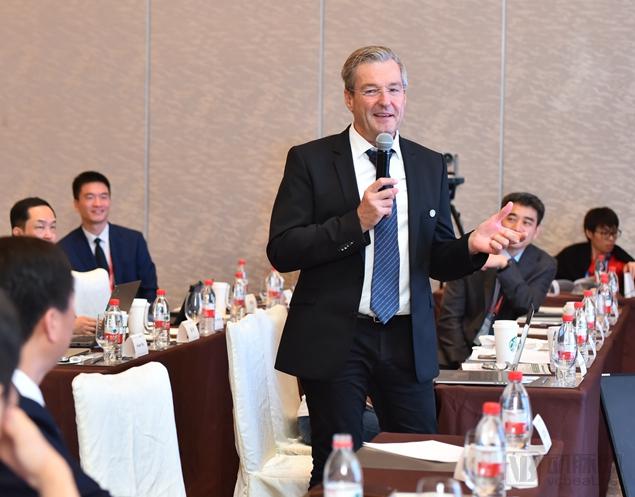
Professor Hermann Otto Mayr, Director of the Department of Knee, Hip, and Shoulder Surgery at the Orthopedic Hospital Munich-Harlaching, Germany (Source: Provided by the company)
Common treatment modalities for orthopedic conditions include conventional pharmacotherapy, physical therapy, as well as surgical interventions and medical device-based therapies. Orthopedic medical devices constitute one of the largest subsectors within the medical device industry, with orthopedic implants representing the most critical category among them. These are typically devices and materials that are partially or fully implanted into the human body during or after surgery to replace, support, position, or repair tissues such as bones, joints, and cartilage.
3D printing is a significant technology that emerged in the 1980s and has developed rapidly over the past three decades. Distinct from traditional subtractive manufacturing and casting techniques, 3D printing not only alters the physical structure of products but also enables customization based on individual needs, achieving a perfect match between materials and pathological sites. Furthermore, it facilitates in situ printing at bone defect sites by incorporating cells and bioactive microspheres. These characteristics underscore the broad application prospects of this technology in the biomedical field.
Professor Liu Zhongjun stated in his speech that 3D-printed prostheses play a better role in clinical practice, significantly enhancing spinal stability and facilitating early functional recovery in patients. He indicated that future in-depth research will further elevate their importance in defect repair.
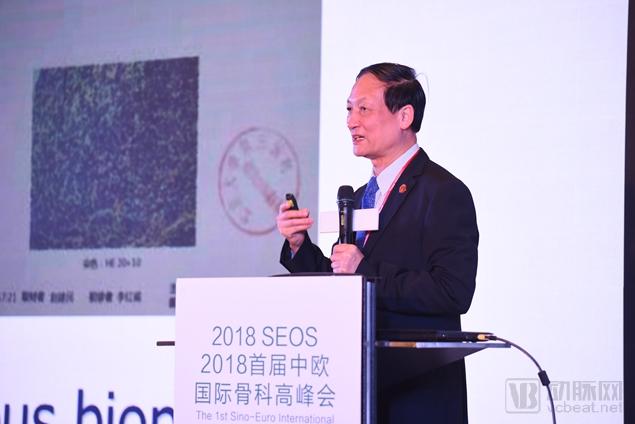
Director, Department of Orthopedics, Peking University Third Hospital; Director, Institute of Spinal Surgery
Professor Liu Zhongjun, Member of the Academic Committee of Peking University Health Science Center (Source: Provided by the enterprise)
In addition to 3D printing, the application of orthopedic robots in surgery should not be underestimated. Orthopedic surgical robots offer advantages such as minimal invasiveness, precision, reduced intraoperative fluoroscopy, and shortened operative time.
On the national ranking of orthopedics departments in China, Beijing Jishuitan Hospital firmly holds the top position. With an astonishing 45,000 surgeries performed throughout 2017, the hospital also secured its place as the single hospital with the highest volume of orthopedic surgeries worldwide.
Beijing Jishuitan Hospital is also at the forefront in the application of digital orthopedic technologies.On December 18, 2016, at the 18th Academic Conference of Orthopaedics of the Chinese Medical Association and the 11th COA International Academic Congress, experts from Beijing Jishuitan Hospital gave an on-site demonstration of “Tianji Robot,” the latest third-generation domestically produced orthopedic surgical robot.
“Tianji Robot” is a new-generation orthopedic surgical robot jointly developed over 15 years by Beijing Jishuitan Hospital, Beihang University, Tinavi Medical Technologies Co., Ltd., and the Shenzhen Institutes of Advanced Technology, Chinese Academy of Sciences. It is also the world’s only orthopedic robotic system capable of performing surgeries on fractures of the extremities and pelvis, as well as full-segment spinal procedures (cervical, thoracic, lumbar, and sacral spine).
Experts point out that, unlike surgery on superficial soft tissues, orthopedic procedures are more akin to operating within a rigid, enclosed space, thus requiring precise localization in deep three-dimensional space. Computer-assisted navigation technology can, to a certain extent, address the three major challenges in orthopedic surgery: poor visibility, inaccurate targeting, and unstable instrument handling.
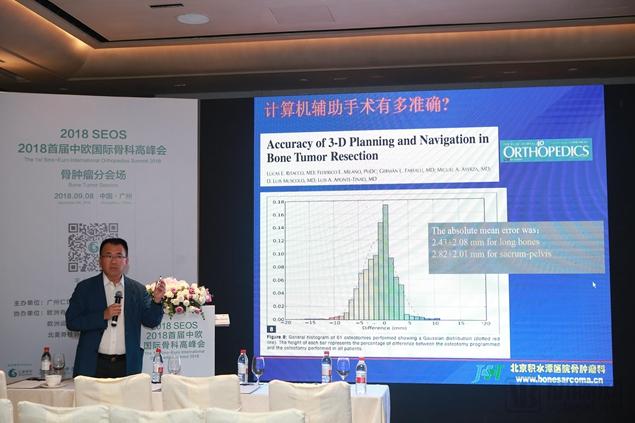
Niu Xiaohui, Chief Physician of the Department of Bone Oncology at Beijing Jishuitan Hospital (Source: Provided by the enterprise)
At the 2018 SEOS, Dr. Niu Xiaohui, Chief Physician of the Department of Bone Tumor Surgery at Beijing Jishuitan Hospital, also shared insights on the application of computer navigation technology in bone tumor surgery, proposing that navigation technology helps improve local tumor control and survival rates, as well as functional outcomes.
In a previous interview with VCBeat, Juin, founder of Renyi Orthopedics, stated that the medical field is evolving at a rapid pace, and advancements in medical technology compel physicians to keep abreast of the times while maintaining their passion and enthusiasm for learning. “Academic pursuit requires continuous learning; the more one learns and knows, the more rapidly their respective field will develop.”
By inviting the most influential experts from various orthopedic subspecialties worldwide to serve as visiting professors at domestic Grade A tertiary hospitals in need, Renyi Orthopedics provides comprehensive orthopedic solutions. These include facilitating overseas training for physicians, implementing customer satisfaction systems, introducing advanced foreign technologies and equipment, adopting international treatment standards, and establishing international rehabilitation protocols. Ultimately, this enhances hospital reputation, strengthens the overall technical capabilities of orthopedic departments, and aligns them with global standards of orthopedic care. Renyi Orthopedics plans to rapidly replicate this model across China within the year, aiming to exclusively sign at least 100 renowned orthopedic surgeons from Europe and America and secure contracts with 50 Chinese Grade A tertiary hospitals to appoint international visiting professors within five years.
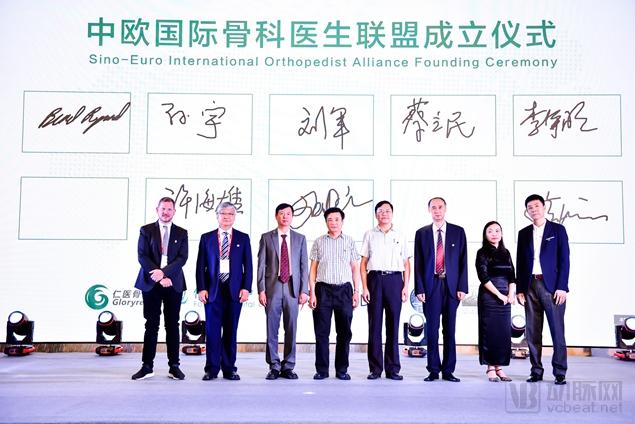
Inauguration Ceremony of the China-Europe International Orthopedic Surgeons Alliance (Source: Provided by the enterprise)
Against the backdrop of national multi-site practice and tiered diagnosis and treatment, the conference aims to facilitate the effective decentralization of high-quality domestic medical resources. By connecting top orthopedic experts both domestically and internationally and leveraging global medical advantages, it seeks to provide Chinese physicians with efficient, high-quality opportunities for learning and exchange. This enables them to engage directly with leading experts, gain exposure to cutting-edge technologies in orthopedics, and fulfill the shared aspiration of all stakeholders to advance the development of the orthopedic industry.
As Professor Michael Mayer, the Conference Chair, stated: “We have achieved our goal of bringing together renowned international orthopedic experts from China and multiple European countries.” Featuring cutting-edge lectures, high-quality scientific content, and vibrant discussions and exchanges of opinions, the conference ultimately aims to strengthen collaboration between Chinese and European orthopedic surgeons, introduce the latest European academic advancements to China, share them with Chinese physicians, and facilitate smoother international communication.