

International Experts Convene at Beijing Forum on Pediatric Genetic Disorders and Hematopoietic Stem Cell Transplantation, Showcasing Cutting-Edge Advances
When “hematopoietic stem cell transplantation” is mentioned, people often think of leukemia and other such conditions. However, with advances in modern medicine, the indications for hematopoietic stem cell transplantation have expanded to include certain congenital rare diseases caused by genetic disorders. Children who cannot be cured by conventional methods can gain a new lease on life through this technology. On September 8, the “Forum on Pediatric Genetic Diseases and Hematopoietic Stem Cell Transplantation,” co-hosted by the China Medical Education Association and Beijing Jingdu Children’s Hospital, was successfully held in Beijing. Experts, scholars, and clinical practitioners from both domestic and international fields gathered to jointly promote deeper research and broader dissemination of knowledge on pediatric genetic diseases and hematopoietic stem cell transplantation.
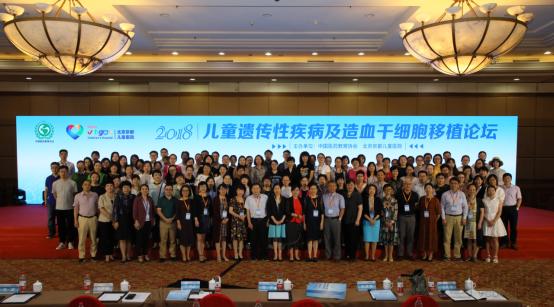
Group Photo of Attendees
The forum was co-chaired by Professor Sun Yuan, Vice President of Beijing Jingdu Children’s Hospital and Director of the Center for Hematology and Oncology, and Professor Wu Minyuan from the Center for Hematology and Oncology at Beijing Jingdu Children’s Hospital. Distinguished experts in pediatric genetic disorders and hematopoietic stem cell transplantation from China and abroad attended the event, including Professor Wang Xiaochuan, Director of the Department of Clinical Immunology at Children’s Hospital of Fudan University; Professor Longji Zhang from the College of Medicine, University of Florida, USA; Professor Kejian Zhang, Director of the Molecular Genetics Laboratory at Cincinnati Children’s Hospital Medical Center, USA; Professor Zhengde Xie, Director of the Virology Research Office at Beijing Pediatric Research Institute, Beijing Children’s Hospital; Professor Chen Jing, Director of the Center for Hematology and Oncology and Director of the Center for Diagnosis and Treatment of Rare Diseases at Shanghai Children’s Medical Center; and Professor Yu Jie, Director of the Department of General Pediatrics and Director of the Center for Hematology and Oncology at Children’s Hospital of Chongqing Medical University. These experts delivered academic lectures, discussed case studies, and provided expert commentary on the forum’s themes. Nearly 200 participants from medical institutions across China attended the event for academic exchange and training.
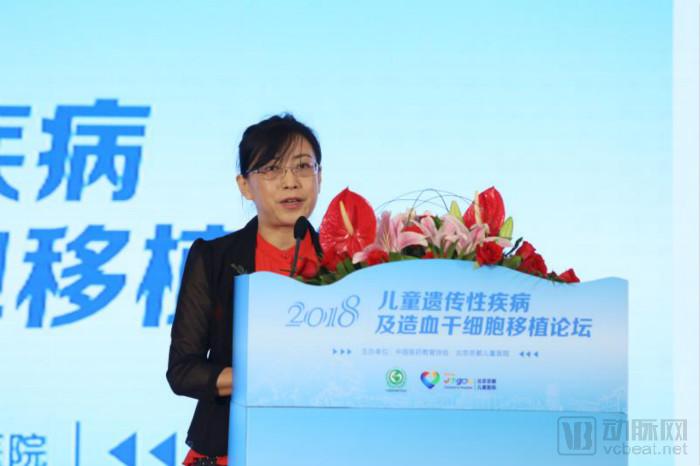
Professor Sun Yuan, Conference Chair, Vice President of Beijing Jingdu Children’s Hospital, and Director of the Center for Hematology and Oncology
Common pediatric genetic disorders include primary immunodeficiencies, inborn errors of metabolism, and inherited bone marrow failure syndromes. The effective control and management of these conditions serve as a hallmark of a nation’s economic development and social progress. In her opening remarks, Professor Wu Minyuan noted that in recent years, the diagnosis and treatment of such diseases in China have entered a phase of rapid development, with particularly encouraging achievements in hematopoietic stem cell transplantation. She also pointed out that due to uneven development in medical resources and capabilities across different regions, there remains a gap in meeting the substantial rehabilitation needs of the large patient population with pediatric genetic disorders. She expressed the hope that this forum would enhance professional exchange, strengthen collaboration among hospitals and regions, integrate resources, and provide more patients with the opportunity for a new lease on life, enabling them to live with quality and dignity.
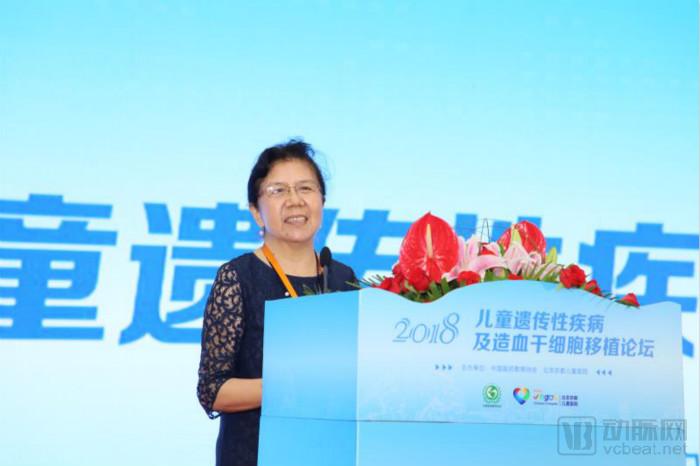
Professor Wu Minyuan, Chief Expert of the Hematology and Oncology Center at Beijing Jingdu Children's Hospital and Chair of the Conference
This forum balanced cutting-edge disciplinary advancements with clinical applications, bringing together Chinese and international experts and scholars to provide a systematic and comprehensive overview of information in the field of pediatric genetic diseases. While reviewing past progress, participants also envisioned future developments. Focusing on advances in the diagnosis and treatment of various pediatric genetic disorders, genetic diagnosis, gene therapy, and laboratory diagnosis of Epstein-Barr virus (EBV) infection, attending experts delivered academic lectures such as “Advances in the Diagnosis and Treatment of Hemophagocytic Lymphohistiocytosis,” “Diagnosis and Treatment of Primary Immunodeficiency Diseases,” and “Genetic Diagnosis of Hereditary Diseases.” These sessions provided attendees with frontier industry insights, clinical updates, and scientific research achievements. Thanks to advances in molecular and genetic diagnostic technologies, the etiologies of certain rare pediatric genetic diseases—such as hemophagocytic lymphohistiocytosis, congenital bone marrow failure, and primary immunodeficiencies—can now be clearly identified, enabling hematopoietic stem cell transplantation for their treatment.
Hematopoietic stem cell transplantation for the treatment of pediatric genetic disorders is one of the key topics of this forum. In the past, children suffering from such conditions were often considered untreatable, such as those with severe combined immunodeficiency (SCID). Due to congenital genetic defects, these patients lack immune function, primarily manifesting as severe and frequent infections, and often do not survive beyond one year of age. Currently, such diseases can be cured through hematopoietic stem cell transplantation. Moreover, hematopoietic stem cell transplantation may also benefit the treatment of certain other pediatric genetic disorders, including congenital hematologic diseases, immunodeficiencies, and inherited metabolic disorders.
Data show that in recent years, the efficacy of hematopoietic stem cell transplantation (HSCT) for treating these diseases has been continuously improving, with encouraging achievements made at multiple centers across China. As one of the organizers of this forum, the Hematology and Oncology Center of Beijing Jingdu Children's Hospital has performed nearly 200 HSCT procedures since its establishment. The transplant cases have included various pediatric hereditary diseases, such as chronic active Epstein-Barr virus (EBV) infection, primary hemophagocytic lymphohistiocytosis, congenital bone marrow failure, and congenital immunodeficiency disorders. This forum focused on new advances, technologies, and approaches in the field of HSCT for pediatric hereditary diseases. Several renowned clinical experts in China delivered in-depth lectures on topics including “HSCT for Congenital Immunodeficiency” and “HSCT for Hereditary Bone Marrow Failure.” During the case report session, representatives from various centers shared challenging and complex cases, which received insightful commentary from attending experts.
Professor Zhang Longji, a tenured professor at the University of Florida and a senior expert at the Moffitt Cancer Center, stated after the conference, “It is rare to have domestic and international experts of this caliber gather for exchange. All attending experts and physicians pooled and shared their accumulated experience, generating many valuable new insights and stimulating intellectual exchanges; participating in this forum has been highly rewarding. I particularly concur with the emphasis placed by Dr. Lu Wei from the General Hospital of the Chinese People’s Liberation Army Navy on the critical importance of post-transplant care, as highlighted in his case analysis titled ‘Case Analysis of Hematopoietic Stem Cell Transplantation for the Treatment of Primary Immunodeficiency.’”
Liu Zhouyang, Director of Ward 8 at the Hematology and Oncology Center of Beijing Jingdu Children’s Hospital, stated, “The experts attending this forum have reached a certain level of consensus on pediatric primary immunodeficiencies and the value of hematopoietic stem cell transplantation in the treatment of genetic disorders. Various transplant centers are also actively exploring novel gene therapy techniques. Today’s meeting was highly substantive, providing valuable insights for improving our hospital’s future treatment protocols. Furthermore, through this forum, we have observed that major transplant centers have significantly advanced in terms of both the range of cases accepted and the management strategies for complex and refractory conditions.”
Director Chen Jing from the Department of Hematology and Oncology at Shanghai Children’s Medical Center, Shanghai Jiao Tong University School of Medicine, delivered a widely noted presentation titled “HSCT for the Treatment of Mucopolysaccharidosis” at the forum. “This forum was rich in content and could truly be described as an ‘academic feast.’ Dr. Chen’s report was impressive. Based on her presentation, the team’s treatment protocols, as well as their post-transplant data management and follow-up efforts, were meticulously executed. The collection and organization of these data provide a reliable foundation for our future research. In the past, many children with genetic disorders did not receive timely diagnosis and treatment due to immature gene technologies, leading to unfortunate deaths from various complications. Now, with the advancement and widespread clinical application of genetic technologies, I am confident that the quality of life for these children will significantly improve in the future,” stated Director Xiao Juan from Ward 9 of the Hematology and Oncology Center at Beijing Jingdu Children’s Hospital after the conference.
This forum has contributed to advancing research on pediatric genetic disorders and hematopoietic stem cell transplantation (HSCT), providing a platform for clinicians in the field to learn, absorb new knowledge, innovate, and improve their skills. Many participants expressed that attending this forum gave them a more comprehensive understanding of the latest developments in pediatric genetic disorders and HSCT.Dr. Sun Yuan, Director of the Hospital, stated, “Children with genetic disorders have always been a group we focus on, and HSCT has long been an area we are committed to advancing. Although pediatric genetic disorders are considered rare diseases, their incidence in China is not particularly low, and there is a wide variety of such conditions. Many children face reduced quality of life or even life-threatening risks due to these diseases. Most of these children urgently require HSCT. With continuous improvements in medical technology, many children now have the opportunity for timely diagnosis and treatment. However, HSCT procedures are still not widely performed in China, causing many children to miss optimal opportunities for transplant therapy; some families are even unaware that such treatments exist. Therefore, we aim to use forums like this to promote scientific awareness across society and help medical staff at hospitals of all levels master cutting-edge knowledge in the discipline. Our goal is to identify better treatment opportunities for children with genetic disorders, enabling them to recover more quickly. I am delighted to see the active response from numerous colleagues in the industry, who have joined forces to advance research on pediatric genetic disorders and the development of HSCT technologies. The Hematology and Oncology Center of Beijing Jingdu Children’s Hospital will continue to deepen its expertise in this field, providing advanced, high-quality diagnostic and therapeutic services to help more children restart their journey toward a wonderful life.”
President Sun Yuan, representing one of the conference organizers, Beijing Jingdu Children’s Hospital, introduced the development of the hospital’s Hematology and Oncology Center to the attending experts and trainees. As a key department of the hospital, the Hematology and Oncology Center comprises ten functional areas, including three general hematology units, two stem cell therapy units, a hematology laboratory diagnostic room, a cell separation room, an outpatient hematology-oncology clinic, and a PICC (Peripherally Inserted Central Catheter) clinic. The center has 200 fixed beds, including 19 ISO Class 5 cleanrooms.With a focus on hematologic malignancies and hematopoietic stem cell transplantation, the center adheres to the service principle of “patient-centered care” and the philosophy of “creating a better tomorrow together with pediatric patients,” providing high-quality and efficient diagnostic and therapeutic services. Equipped with advanced technology and state-of-the-art facilities, the center is a comprehensive diagnostic and treatment hub integrating medical care, scientific research, and education. It successfully diagnoses and treats various benign and malignant pediatric hematologic disorders, including different types of anemia, hemorrhagic diseases, pediatric hematologic malignancies, and congenital immunodeficiency diseases. The center’s diagnostic and therapeutic capabilities for conditions such as hemophagocytic lymphohistiocytosis, leukemia, lymphoma, aplastic anemia, chronic active Epstein-Barr virus (EBV) infection, congenital immunodeficiencies, congenital bone marrow failure syndromes, myelodysplastic syndromes, and inherited metabolic disorders are at a leading level.