

Handed Down Prajna Files IPO Prospectus: Building Cloud Infrastructure for China's Pharmaceutical Supply Chain with $300M+ Valuation
“Compared with other industries, the pharmaceutical logistics industry is simply too ‘low-end,’ particularly in terms of its lagging informatization and intelligentization. What we aim to do is actually quite straightforward: to ‘empower’ the pharmaceutical logistics industry through informatization, serve as the industry’s infrastructure, facilitate its smart upgrading, and better meet the needs of society and the general public.” At the very beginning of the interview, Yang Xinpu gave a direct answer to the question about his original motivation for starting the business.
Yang Xinpu is the Chairman and CEO of Chuanshi Banruo. The company, founded by him, announced in May this year that it had secured tens of millions of RMB in Series A financing from the China Electronics Health Fund, a state-backed capital entity. Its post-money valuation exceeded RMB 200 million, which is uncommon among companies at the same funding stage.
Recently, Chuanshi Prajna officially launched its pharmaceutical transportation service platform—the Sifang Cloud Platform for Pharmaceuticals. VCBeat (WeChat: vcbeat) seized this opportunity to interview Yang Xinpu, who addressed questions regarding the origins of his venture, business operations, vision, and values.
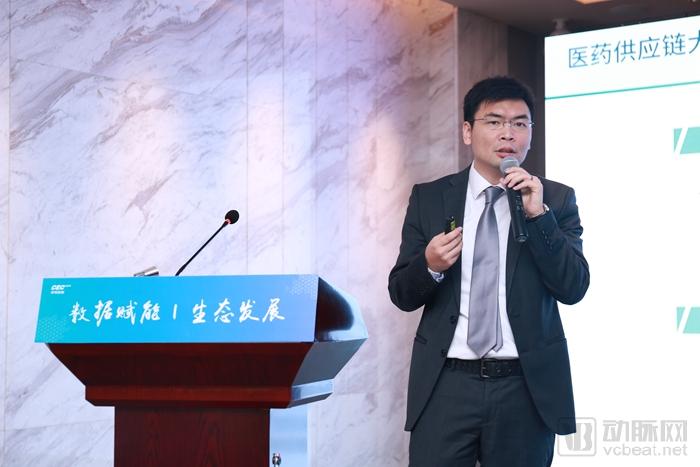
Yang Xinpu, Chairman and CEO of Chuanshi Banruo
Yang Xinpu boasts an impressive resume. A graduate of Peking University, he later worked at Mapletree Group in Singapore, served as Executive Director of the Real Estate Investment Department at Ping An Trust/Ping An Life Insurance, and was the inaugural Chief Financial Officer of Cainiao Network. He left his corporate role in 2014 to launch his own venture.
“The massive warehouse overflows in the express delivery sector during the November 11 shopping festival in 2012 prompted Alibaba to conceive the idea of building a ‘Sky Network’ and a ‘Ground Network’ to empower the logistics industry. In 2013, I joined Cainiao as its inaugural Chief Financial Officer, where I was responsible for strategic planning decisions such as land acquisition and warehouse location selection. This experience provided me with a systematic understanding of the ‘Internet Plus Logistics’ model,” said Yang Xinpu.
“In early 2015, I had a chat with a friend from Jointown Pharmaceutical Group. After just three minutes over coffee, I decided to enter the pharmaceutical industry. The reason was simple: it is an industry vital to national welfare and people’s livelihoods, yet its level of intelligent automation remains relatively low. Given my experience at Cainiao Network and some initiatives I wished to implement, I hoped to transplant these ideas into this sector, starting from the supply chain perspective, to address certain challenges within the industry,” said Yang Xinpu.
The company was registered in July 2015 under the name “Chuanshi Banruo.” “Banruo” is a Buddhist term meaning “wisdom.” Chuanshi Banruo reflects the company’s vision of leveraging technological innovation to bring wisdom to the pharmaceutical supply chain, thereby building an intelligent, efficient, and transparent pharmaceutical supply chain management platform.
“But as soon as we entered the industry, we realized that things were far more complex than we had imagined. The pharmaceutical industry is highly specialized with significant barriers to entry; many pain points cannot be resolved through cross-industry experience alone and require learning from the ground up. Our strategy remained firm: to focus on informatization and intelligence, build foundational infrastructure for the industry’s supply chain, and avoid disrupting existing industry rules.” The realities they encountered made Yang Xinpu understand that “disruption” in the pharmaceutical supply chain sector is no easy feat.
From the perspectives of policy trends and industry direction, there are significant opportunities for the intelligent upgrading and service innovation of pharmaceutical supply chains. The National Development Plan for the Pharmaceutical Circulation Industry (2016–2020) points out that support should be given to pharmaceutical distribution enterprises to strengthen supply chain management, improve integrated pharmaceutical supply chain systems, provide value-added services and comprehensive solutions—such as market development, price negotiation, online payment, and financial support—to upstream and downstream partners, and accelerate their transformation into pharmaceutical supply chain service providers.
By leveraging modern information technologies such as cloud computing and big data, we integrate data on pharmaceutical R&D and manufacturing, distribution and usage, shifts in disease spectra, and patient health needs and consumption patterns. Strengthening the management, analysis, and application of big data provides valuable data support for pharmaceutical R&D institutions and manufacturers to assess market trends and adjust product portfolios, as well as for healthcare institutions to optimize medication selection and promote rational drug use, thereby enhancing the operational efficiency of the entire pharmaceutical supply chain.
“Information fragmentation, scattered resource distribution, and low levels of intelligence are prevalent issues in the pharmaceutical supply chain sector. Following the implementation of policies such as the ‘Two-Invoice System’ and the ‘Zero Markup Policy,’ the operating environment for the pharmaceutical distribution industry has become more stringent, further accelerating the demand for supply chain upgrades.” In Yang Xinpu’s view, the intelligent upgrade of the pharmaceutical supply chain is driven by a combination of internal and external factors.
Chuanshi Banshi began with the professional development of information technology for pharmaceutical supply chains, gradually building a cloud-based supply chain infrastructure that integrates three core components: Chuanshi Cloud (full-chain digitalization), the Chuanshi Pharmaceutical Smart Logistics Network (an intelligent warehousing, trunk-line transportation, and distribution system), and a big data ecosystem for pharmaceutical supply chains. By sharing this infrastructure with the entire industry, Chuanshi Banshi provides more advanced comprehensive supply chain services to the sector.
Chuanshi Banruo provides three core services to the industry: supply chain informatization, supply chain operations, and supply chain data services. Its flagship offering in supply chain informatization is “Chuanshi Cloud,” which encompasses several cloud platforms—including “Yilian Cloud” (Medical Chain Cloud), “Yaolian Cloud” (Pharmaceutical Chain Cloud), and “Sifang Cloud” (Fourth-Party Cloud). These platforms cater to distinct client segments—medical institutions/hospitals, pharmaceutical companies (including manufacturers and distributors), and logistics resource providers, respectively—delivering differentiated supply chain SaaS solutions and intelligent logistics infrastructure services.
Supply chain operational services function more as a mechanism for mobilizing and sharing industry resources. Through the Chuanshi platform, pharmaceutical supply chain warehousing and distribution resources across the entire industry are integrated to enhance resource utilization efficiency. As of the first half of this year, Chuanshi’s integrated warehousing network has covered 20 provinces and 60 cities across China, with a total area of 1.2 million square meters, accounting for 10% of the nation’s total pharmaceutical logistics warehouse capacity. Its distribution network spans 29 provinces in China, comprising 1,527 routes, 326 outlets, and nearly 20,000 vehicles, serving over 5,000 terminal points.
“The industry actually has abundant physical resources; what we need to do is build a platform that enables more efficient resource allocation,” said Yang Xinpu. Guided by the logic of establishing platforms and setting standards, Chuanshi Banruo recently collaborated with the China Pharmaceutical Commerce Association to launch the “Pharmaceutical Transportation Service Platform—Sifang Cloud for Pharmaceuticals,” and issued an industry-wide initiative calling for the implementation of standards for pharmaceutical transportation.
The confidence to integrate resources stems from Chuanshi Borui’s position as the industry’s first pilot platform for pharmaceutical transportation. With the rapid development of third-party pharmaceutical logistics and the accelerated entry of social logistics enterprises into the pharmaceutical distribution sector, there is a pressing need for a platform to “set standards” and facilitate information connectivity. Leveraging blockchain technology, Chuanshi Borui has built a pilot platform for pharmaceutical transportation that has garnered significant attention within the industry. Relying on this platform, it pioneered the supply chain operation model and services of fourth-party logistics (4PL) with pharmaceutical-specific standards in the healthcare sector.
Supply chain informatization, supply chain operations, and supply chain data services exhibit a progressive relationship. By providing informatization services, companies can address the smart upgrade needs of the pharmaceutical supply chain industry and establish an independent third-party platform to integrate resources and facilitate their optimal allocation. Building on this foundation, substantial amounts of data—such as logistics and market data—are accumulated, forming the basis for data-driven services, particularly supply chain finance. Authentic and reliable data can provide credibility endorsement for platform enterprises, thereby alleviating risk management pressures.
“We devoted two years to the intensive development of our information systems, delivering tailored digital solutions to enterprises with diverse entities and business needs. Our product portfolio covers the entire pharmaceutical supply chain—from production and distribution to end-use—and is the most comprehensive in the industry. This breadth forms the foundation for our ability to operate as a third-party platform, establish standards, and provide data services,” said Yang Xinpu.
In May 2018, Chuanshi Banruo announced that it had secured tens of millions of RMB in Series A financing from the “national team” capital—CEC Health Fund. The post-money valuation exceeded RMB 200 million. This achievement is particularly remarkable for a company that has been in operation for just over three years and is still at the Series A stage.
China Electronics Data is the national team for the development of the health and medical big data industry, established under the guidance of the National Health Commission and led by China Electronics Corporation (CEC). CEC Data exerts efforts from multiple perspectives, including technology, platform construction, and industrial investment. As a key capital link in CEC Data’s ecosystem layout, the CEC Health Industry Fund focuses on investing in strongly related fields radiating from the health and medical data industry, such as Fintech, Biotech, artificial intelligence, and next-generation internet technologies. The CEC Health Fund has previously invested in star enterprises such as Medlinker, Senyi Intelligence, and Unisound. Gaining favor from CEC demonstrates that Chuanshi Prajna possesses unique value.
“The investment from CEC Health Fund was somewhat serendipitous. At the time, it screened over a dozen companies in the pharmaceutical distribution sector with the aim of facilitating the local implementation of data applications in Fuzhou. Chuanshi emerged as a favored candidate and secured the investment. The term sheet was finalized before the Chinese New Year, and the deal officially closed in May,” said Yang Xinpu.
With this investment, Chuanshi Banruo will become a key strategic component of China Electronics Data’s presence in the pharmaceutical distribution sector. The two parties will implement health and medical supply chain big data platforms in pilot cities, jointly build a national intelligent pharmaceutical supply chain backbone network, and establish a pharmaceutical supply chain finance service platform. Meanwhile, they will collaborate on data collection and intelligent analytics to develop supply chain big data service products tailored for government agencies, manufacturers, distributors, and healthcare institutions.
“CEC’s investment and partnership have brought us something different, broadening our horizons. It can be said to represent the main theme of ‘Internet + Healthcare,’ under which we can explore more business directions,” said Yang Xinpu. He added that Chuanshi Boruo will have more opportunities for cooperation with CEC in the future, jointly promoting the application of Internet and big data technologies in pharmaceutical distribution and medical services.
“The two major national visions for the healthcare industry are ‘Healthcare Big Data’ and ‘Internet Plus Healthcare.’ We believe these constitute the main theme of the industry’s future development. Not only will there be significant policy support and resource allocation, but the implementation of healthcare big data projects to realize ‘Internet Plus Healthcare’ also creates opportunities for many specialized new models and technologies to achieve leapfrog development. For instance, there is vast potential in areas such as infrastructure construction, internet application development, the establishment of big data systems, and big data applications,” said Yang Xinpu.
The most imaginative aspect of Chuanshi Banruo lies in its integration with three national-level platforms: the ecological collaboration within the supply chain platform under the National Health and Medical Big Data Pilot Project; the construction and operation of the pharmaceutical industry sub-platform for the National Electronic Invoice Public Service Platform; and China’s first pilot platform for pharmaceutical transportation, featuring the inaugural asset-light carrier operation model combined with blockchain technology application.
“Focusing on leveraging ‘Internet Plus’ and big data to build the first supply chain cloud infrastructure in the pharmaceutical sector that integrates socialized resources; and relying on this infrastructure to deliver more efficient, intelligent, and reliable comprehensive supply chain services across the entire industry.” Yang Xinpu concluded by stating that Chuan Shi Bo Ruo’s vision for the next three years is to collaborate with the National Health and Medical Big Data Project to establish an “Internet Plus” healthcare supply chain cloud infrastructure covering 500 million people, thereby ensuring that this infrastructure truly benefits the public, enterprises, and the government.