

AI Over Wine, Vision for the Future: Medical Innovators Converge at 'West Lake Health Forum'

JIANPEI
Medical Imaging Big Data Analysis Technology Developer
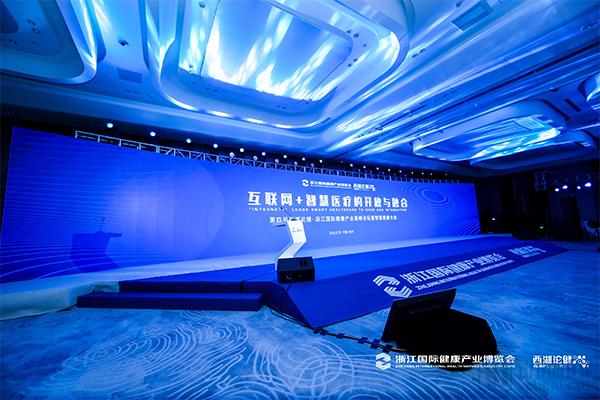
Recently, the 2018 4th West Lake Health Dialogue · Zhejiang International Health Industry Summit Forum and Smart Health Conference (WLIMF) was successfully held at the Hangzhou International Expo Center (G20 Summit Venue).
As a renowned brand for cross-sector healthcare exchange, West Lake Health Summit, founded by JIANPEI, highlights “six key features”: emerging policy trends, healthcare internationalization, elite expert forums, academic thought leadership, upgrades in internet healthcare, and Zhejiang Provincial Party Committee’s “No. 1 Project.” It provides the world with a dialogue platform between the healthcare and technology sectors, a conversation between the present and the future, and a technological exchange between China and the world.
The conference not only featured the participation of the China Academy of Information and Communications Technology, the Zhejiang Institute of Industry and Information Technology, and the National Institutes for Food and Drug Control, but also saw giants in the technology and healthcare sectors share their insights. VCBeat (WeChat Official Account: vcbeat) has extracted and summarized key highlights from the event.
Lu Chuncong, Director of the Policy and Economy Research Institute at the China Academy of Information and Communications Technology (CAICT), believes that internet healthcare has evolved through three distinct stages over the long term. The first stage was characterized by medical digitalization and informatization in foundational areas. This phase was primarily manifested in the interconnectivity of operational and management systems within hospitals, with a particular emphasis on the integration and sharing of information resources between hospitals and communities. As network infrastructure was not yet highly developed during this period, it represented only an initial stage of informatization.
The second phase of internet healthcare is the mobile internet era, particularly marked by the development of mobile internet after 2010. This phase is characterized by online patient guidance and consultation-based internet health services, primarily driven by advances in smart wearable device technology, cloud computing, big data, and the rapid expansion of 4G networks.
We are currently in a phase of advancing intelligence, characterized primarily by the deep integration of artificial intelligence (AI) and big data with comprehensive healthcare services. In terms of hardware, this involves technologies such as robotics, virtual reality (VR), and augmented reality (AR). With the imminent arrival of the 5G era, strong dynamic support and foundational guarantees are being provided for “Internet + Healthcare.” In particular, AI algorithms, image recognition, and natural language processing offer powerful tools for the development of “Internet + Healthcare.”
In the new phase, we are also confronted with new contradictions. To resolve these contradictions and promote the healthy development of the industry, the healthcare sector also requires supply-side reform.
From the demand side, public health and medical needs continue to rise. The elderly population exceeds 240 million, accounting for 17.3% of the total population. Additionally, the number of individuals with chronic diseases is gradually increasing, with over 300 million patients, rising by 8.7% annually. From the supply side, there is a shortage of licensed physicians, and high-quality medical resources are insufficient to cope with the daily 20 million outpatient visits.
To address this issue, it is essential for the state to take the lead, supported by technology enterprises.
On April 28 this year, the General Office of the State Council officially released the Guiding Opinions on Promoting the Development of “Internet Plus” Healthcare. These guidelines primarily address three key areas: First, establishing a robust service system by developing “Internet Plus” medical services, family doctor contract services, emergency guarantee mechanisms for drug supply, settlement systems, medical education, and popular science dissemination. Unicorn companies in the sharing economy centered around “Internet Plus” healthcare have been growing rapidly; our institute has been a major contributor to the formulation of these policies, particularly given the numerous unicorn enterprises in the healthcare sector. Second, improving the information system, including information sharing and convenient public services. Third, strengthening industry supervision and security safeguards.
Supported by policies and bolstered by technologies such as 5G, healthcare informatization, big data analytics, and artificial intelligence, current healthcare challenges are gradually being resolved.
Approval of AI-based products has long been a major concern within the industry. In her speech, Ren Haiping, Director of the Optical, Mechanical, and Electrical Medical Device Testing Laboratory at the National Institutes for Food and Drug Control (NIFDC), stated, “A distinctive aspect of our work involves research on platforms, testing methods, and evaluation criteria for new products—particularly those lacking national or industry standards.” The NIFDC has already received applications from across China for 30 to 40 AI-based products, and we have completed the preliminary preparations.
Director Ren Haiping’s views can be summarized in three aspects. First, not all products require clinical trials before market launch; datasets derived from real-world data can be used for both preclinical and clinical evaluations, with clinical evaluations encompassing both prospective and retrospective studies. The state imposes certain quality evaluation requirements on AI medical device products, including AI, medical devices, and software, which must comply with the YY/T 0664 standard (note: corrected from "20551" as YY/T 0664 is the relevant Chinese industry standard for medical device software quality). This standard evaluates software quality based on eight characteristics, with particular emphasis on information security and compatibility for AI-based systems.
Secondly, the data annotation process must be strictly standardized, with particular attention paid to general clinical principles. Taking ophthalmic AI as an example, current consensus is derived from the clinical diagnosis and treatment guidelines issued by the Chinese Fundus Disease Group.
Finally, offset control of data is critically important, particularly for retrospective data. To ensure effective control, physicians need to establish universally valid consensus, which is one of the reasons why West Lake Health Forum was convened.
As the host of this conference, Cheng Guohua, Chairman of JIANPEI, delivered the closing remarks. Mr. Cheng stated that every technological revolution brings about social change. In the realm of smart healthcare, there is a greater emphasis on and reliance on advancements in information technology; therefore, every progress in information technology will have a significant impact on healthcare.
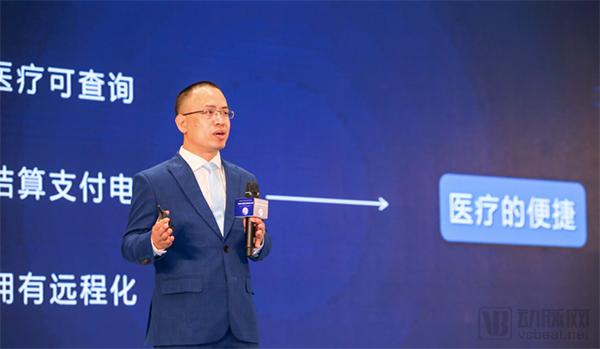
JIANPEI Chairman Cheng Guohua Delivers Speech on “Openness and Integration of ‘Internet+’ Smart Healthcare””
To address this transformation, JIANPEI launched the Zhuo Yisheng platform, enabling the integration and innovation of all AI products within our laboratory.
In terms of hospital collaborations, JIANPEI has partnered with the team from Wenzhou Medical University on ophthalmology projects, conducted analyses of occult fractures with Guizhou Provincial People’s Hospital, and performed stomatological analyses with hospitals in Suzhou, among others. All these cases are built upon JIANPEI’s comprehensive laboratory infrastructure, aiming to create a vertical chain and achieve openness and integration in the medical field in the new era.
“We have integrated an open platform within the medical AI value chain, achieving innovative convergence. However, this is insufficient; it merely represents the openness and integration of AI products. We advocate for broader openness, particularly from hospitals. Therefore, we hope to see greater openness at the hospital level and within the healthcare sector, specifically through more open medical consortia. We also encourage greater openness among physicians and hope that physician groups will share the fruits of their open collaboration. With such openness, the entire ecosystem will become open, unleashing immense power and revealing an exciting future for an open healthcare ecosystem.”
“We observe that medical devices are becoming invisible. The widespread adoption of wearable devices, coupled with the proliferation of third-party institutions, has diversified our approaches to data acquisition. As the general public perceives a gradual decentralization of these devices, their geographic attributes are being blurred, leading to their eventual invisibility. Devices become transparent to patients, enabling ubiquitous monitoring and seamless interface openness and integration. Regardless of the source or location of specific tests, the data forms a complete and holistic profile for each individual.”
“Hospital departments will disappear in the future. In the early days of the internet, each physician was limited to treating a narrow range of diseases. However, with the advent of ‘Internet + Artificial Intelligence,’ we are witnessing an acceleration in the training of general practitioners. Each physician will more easily acquire the skills to diagnose and treat other conditions. Through the use of AI technologies and tools, departmental boundaries will gradually blur and weaken.”
“Cancer will also disappear in the future. ‘Internet + Healthcare’ products can enable every patient to detect diseases at an early stage and initiate intervention and treatment. Subsequently, our internet-based and artificial intelligence tools will manage the entire disease progression, establishing a comprehensive chronic disease management system. Today, with the emergence of various novel oncology therapies and the rapid advancement of precision medicine, even mid- to late-stage cancers can be transitioned into chronic disease management. This is a new era.”
“The future is an era of openness and integration. We hope that the greatest openness lies in the openness of human minds. I invite all the experts and colleagues present to join this tide of openness, so that together we may usher in a better era.”