

Why Apple, the World-Changer, Still Struggles to Transform Healthcare
Apple Inc. has been in the spotlight over the past two months. In addition to its market capitalization surpassing Amazon’s a month earlier to break the unprecedented $1 trillion mark, the pre-launch buzz for its new product announcement on the 13th has already dominated headlines across major media outlets.
As a professional research-oriented media outlet in the healthcare sector,VCBeat (WeChat: vcbeat)After watching the entire press conference, the reporter found that in addition to the larger screen of the newly released iPhone, Apple, which has always been lukewarm in the medical field, surprisingly brought the public the first FDA-approved Apple Watch Series 4, equipped with a fall detection feature that can instantly alert emergency services.
Compared with the sluggish pace of earlier initiatives, securing FDA regulatory clearance appears to be a “major move.” However, after carefully examining recent perspectives on healthcare innovation startups in Silicon Valley and analyzing Apple’s previous forays into the healthcare sector, we find that—
1. Whether Apple can move beyond its superficial presence in the healthcare sector, characterized by a “hardware + app” model, remains an open question;
2. Achieving its repeatedly stated ambitious goals also faces many obstacles that are not easily overcome.
In the medical field, regulatory issues surrounding consumer-grade wearable devices have long been a topic of public discussion. It is no easy feat for a product to achieve both user satisfaction and physician endorsement. Take Apple’s newly released next-generation Apple Watch, announced yesterday, as an example: three health-related features are particularly noteworthy.
First, it identifies user falls and triggers emergency calls; second, it provides alerts for abnormal heart rates, urging timely medical consultation; third, the product’s most standout feature isECG Results, this is the world's first product that allows consumers to directly measure their own electrocardiogram (ECG), with all ECG records stored in the Health app for later sharing with healthcare professionals.
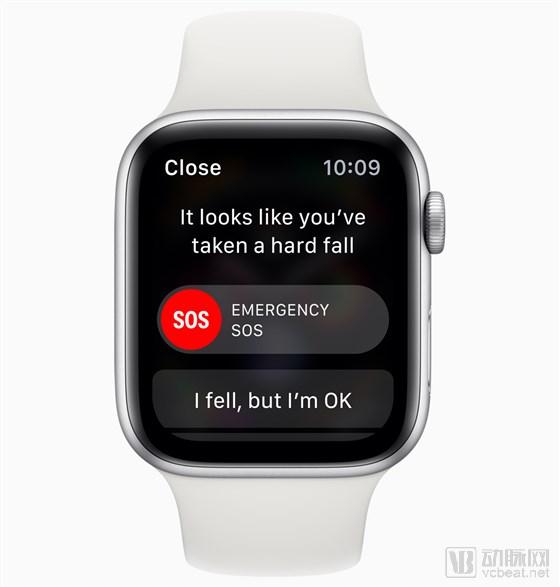
Apple Watch Series 4 (Source: NBC News)
Among similar products, many fitness trackers and smartwatches feature heart rate monitors, but their accuracy varies; a simple heart rate reading does not always convey substantial clinically useful information.Apple’s latest move indeed appears to be a “giant leap”。
Despite the endorsement of FDA clearance, the product’s certification still sparked skepticism among many media professionals and healthcare experts on Twitter, owing to Apple’s longstanding “consumer electronics” label.
Christina Farr, a reporter for CNBC’s Health and Tech section, tweeted that tech journalists should exercise caution when distinguishing between the FDA’s “Approved” and “Cleared” designations. Although both terms are often translated as “approval,” they carry different meanings. Apple received the lower-level “cleared” status, raising questions about its efficacy as a medical product. Below is an excerpt from her Twitter explanation for readers’ reference.
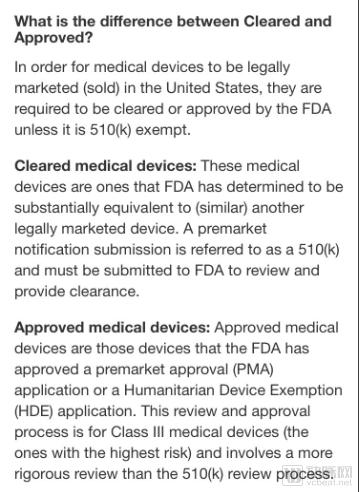
Source: Twitter
In online public discourse, most people’s questions center on: “What data did Apple submit to the FDA to obtain approval?” “What kind of usability monitoring did they conduct?” “What post-market surveillance do they plan to carry out, and what are the FDA’s requirements in this regard?”
However, the ultimate question remains: how did Apple silently secure FDA clearance? Clearly, the specific datasets Apple submitted to the FDA for certification have sparked widespread skepticism. Some even argue that if testing was conducted solely on young individuals, its accuracy should be called into question.
Compared with the Jobs era, Apple under Tim Cook seems to lack disruptive moves. In the face of a complex healthcare landscape and regulatory oversight, can Apple truly “make it work” in the healthcare arena by entering through its smartwatch?
In fact, the question of whether tech giants’ innovation strategies in medical technology are “effective” has long sparked discussion in foreign media.
Recently, CNBC published an article by Robin Goldstein, a former Apple employee of 22 years who previously served as Senior Manager of Special Health Projects at Apple, in which he publicly questioned medical technology innovation companies in Silicon Valley.
“The mindset that Silicon Valley instills in the tech innovation companies within its ecosystem is that a poor product or a subpar user experience has no repercussions beyond the specific product or experience itself, and that they can always wipe the slate clean and start anew.” In her view, this strategy, known as “fast fail,” does not work well in the digital health sector.
It must be said that in the healthcare sector, the turbulence stirred up by former employees over the past three months has been relentless. Meanwhile, this former Apple employee holds a pessimistic view on applying Silicon Valley’s traditional “fail fast” strategy—where products are rapidly improved following negative reviews—to the field of health technology innovation.
There are three reasons:
1. Unlike other consumer products, digital health products are a matter of life and death for users
Although we refer to them as “health” products, their current role is primarily focused on the diagnosis, screening, and management of diseases. The life-or-death stakes associated with digital health products fundamentally distinguish them from other types of products.
2. Digital health products require support from users and their healthcare providers
Merely using health-related devices or applications is insufficient; users must establish a closed-loop relationship with clinicians before any meaningful action can be taken. Therefore, if patients use digital health products but their healthcare providers do not accept and incorporate the results into their treatment, it constitutes a failure; likewise, if primary care physicians recommend a specific device but consumers fail to adopt it, that too is considered a failure.
3. In healthcare, first impressions are crucial
As the saying goes, “You never get a second chance to make a first impression.” This is especially true in healthcare. When adopting new technologies, the market employs a model that evaluates perceived benefits, perceived risks, costs, maturity, and historical performance. In the context of health, even a single adverse outcome can be truly catastrophic.
Considering these three factors, Goldstein points out that the risks for companies engaged in health technology are higher than ever before. In a nutshell, health products require slow and deliberate thinking, which also confirms the old saying: "If you don't know how to do medical work, losing money is a small matter; going to jail is a big deal."
The challenges faced by a large number of Silicon Valley healthcare startups may well be the very reasons why Apple has struggled to make significant headway in the healthcare sector.
Indeed, the market opportunities in the healthcare sector are immense, and Apple has made healthcare and wellness core components of its strategy for apps, services, and wearables. Apple now aims to become a personal health record platform for users, expanding into areas such as academic research and medical devices.
As Tim Cook has stated, the healthcare market makes the smartphone market look small. In fact, annual healthcare expenditures exceed $7 trillion, approaching 10% of global GDP. Compared with other companies, Apple enjoys a massive market opportunity; with over 80 million iPhone users in the United States alone, it dwarfs the customer base of any health insurance provider.
Since Apple launched its Health app and HealthKit in 2014, healthcare has become a central focus of nearly every product launch event, with the company undertaking various healthcare-related initiatives each year.
In March 2015, ResearchKit and the Apple Watch were released. Since then, Apple has undertaken a series of innovations centered on the Apple Watch, the world’s best-selling smart hardware device.
In 2016, Apple began establishing partnerships in the healthcare sector, initiating mergers and acquisitions (acquiring digital health companies Gliimpse and Beddit) and hiring executives from the medical field.
In 2017, with multiple health-related Apple Watch apps and feature updates, clinical studies, as well as various healthcare talent initiatives and acquisition plans, Apple continued to demonstrate its transition toward becoming a healthcare service provider.
In 2018, Apple was gradually building a clinical research ecosystem centered around the iPhone and Apple Watch, and established its own healthcare clinics for employees to provide better primary care services.
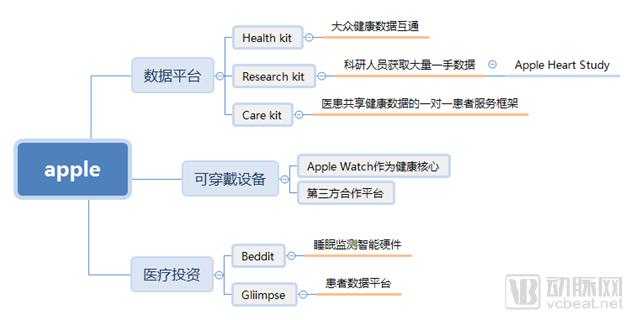
Based on the timeline above, Apple's initiatives in the healthcare sector can be primarily categorized into three areas:
1. Build an Interoperable Data Platform
Whether it is personal health data or electronic medical records, Apple enables interoperability between patients, healthcare institutions, and researchers through three Kit modules.
All “Kits” are data and application module tools designed for developers:
First, HealthKit, released with iOS 8 in 2014, represented Apple’s popularization of the concept of interoperable public health data. Its built-in health-related modules, such as physical metrics and nutritional intake tracking, form the foundation of today’s common health applications;
Second, ResearchKit, introduced at the spring 2015 launch event, enabled researchers to access large volumes of primary data for scientific studies, building on HealthKit’s achievement of data interoperability.
Third, CareKit, introduced at the Spring 2016 launch event, is a one-on-one patient service framework built on the foundation of the former two platforms, centered on patients and enabling shared health data between patients and providers.
In addition to the three kits, with regard to data sharing, CNBC reported in June 2017 that Apple was developing a secret plan to turn the iPhone into a personal hub for providing all medical information.
Even for a company as extraordinary as Apple, such an ambitious undertaking cannot be accomplished alone. Its medical team has been collaborating with a small startup called Health Gorilla. According to sources, Health Gorilla works exclusively with Apple, integrating diagnostic data (such as blood test results) into the iPhone by partnering with hospitals, laboratory testing companies like Quest and LabCorp (the two largest third-party lab service providers in the United States), and imaging centers.
With this move, Apple is seeking to address a major problem that has plagued the healthcare industry for decades. Hospitals often struggle to access critical patient data at the point of care, as such information is dispersed across third-party laboratories, primary care groups, and specialists. Numerous studies have found that these knowledge gaps frequently lead to missed diagnoses or unnecessary medical errors.
Apple is attempting to address this “interoperability” issue by placing patients at the center of care. The goal is to provide iPhone users with tools to query, store, and share their own medical information, including laboratory results, allergy lists, and more.
This task represents a slight departure from Apple’s previous health-focused initiatives, which primarily centered on aggregating basic physiological data such as step counts and sleep duration.
2. Apple Watch-Centric Metric Monitoring
Although supported by three kits, devices that rely on iPhones or other terminals for data acquisition still depend largely on third-party Health-category apps. Apple’s open Health section covers data analysis across four major domains—fitness (Gymfit), mental health, nutrition, and sleep—and is paired with corresponding applications.
Apple’s leadership has consistently discussed its involvement in the management of diabetes and heart disease, which are among the largest cost drivers in the U.S. healthcare sector. Apple is collaborating with Stanford University on a study to determine whether the sensors in the Apple Watch can detect cardiac abnormalities. Previously, there had been reports that Apple intended to invest efforts in non-invasive blood glucose monitoring, but this plan has not been substantially confirmed.
In addition to monitoring personal health data, the Apple Watch serves primarily as a platform for third-party applications, enabling real-time monitoring of certain medical conditions. For instance, Smart Monitor recently launched SmartWatch Inspyre™, an Apple Watch–compatible application for iOS that detects epileptic seizures and instantly sends alerts to family members and caregivers when an individual living alone experiences an episode.
3. Acquisition of Healthcare Startups
Although Apple has entered the healthcare space internally through services such as HealthKit, CareKit, and ResearchKit, it has made few investments in medical startups. Apple’s two acquisitions were: in August 2016, it acquired Gliimpse, a patient data platform; and in May 2017, it acquired Beddit, a sleep hardware company that developed a sleep monitor capable of tracking heart rate, respiration, blood oxygen saturation, and sleep quality.
In many respects, Apple Inc. remains a company shaped in the image of Steve Jobs: one that prioritizes unconventional and meticulously crafted products.
But today, Apple stands at a crossroads. Under the leadership of CEO Tim Cook, the company’s ability to capitalize on emerging technologies has raised many new questions. From its recent series of moves, we have observed the following characteristics:
1. “AI is Apple’s Achilles’ heel”
This statement does not represent VCBeat’s assessment. Research by CB Insights indicates that, although Apple has completed 12 AI-related acquisitions over the past five years, various signs suggest these companies have no direct connection to healthcare.
Among them, only Lattice Data is linked to healthcare in its business structure. Strictly speaking, Lattice is a dark data analytics company that is leveraging artificial intelligence to transform unstructured, unusable “dark data” into structured, actionable data.
In the healthcare sector, artificial intelligence has become a fiercely contested battleground for major tech giants. Google, most notably, established Gradient Ventures in July 2017, a new fund dedicated to investing in AI companies. Among China’s BAT (Baidu, Alibaba, and Tencent), Baidu has invested in two overseas enterprises involved in AI-driven drug research and development; Alibaba Cloud has emerged as a powerful intelligent engine in the healthcare field; and Tencent has deployed its “Tencent Miying” solution in the core area of diagnosis, partnering with nearly 100 medical institutions.
In the battlefield of tech giants, medical artificial intelligence has already kicked off, but Apple seems to be lagging behind.
2. Can Apple Bridge the Gap Between Regulation, Consumerism, and Healthcare?
In December 2017, the U.S. Food and Drug Administration (FDA) approved KardiaBand, the first FDA-cleared Apple Watch accessory. Compatible with Apple Watch Series 1, 2, and 3, this clearance allows the Apple Watch equipped with the KardiaBand to be marketed as a medical device.
Apple’s reliance on third-party accessories remains tied to the time-consuming FDA (U.S. Food and Drug Administration) clearance process. For instance, AliveCor, which provides ECG functionality for the Apple Watch, took a full two years to obtain FDA clearance. Judging by Apple’s various moves in the wearables sector, the FDA approval process has consistently been a major hurdle in its transition from consumer electronics to medical-grade devices.
According to CNBC, Cook’s stance had previously been that he “did not want the Apple Watch to go through the FDA process… because it would hinder our innovation.” But this time, he appears to have taken the opposite approach by releasing a device that has received FDA approval.
Coordination between consumer-grade and medical-grade products has long been a pervasive challenge.
Consumer-grade wearable device companies know how to manufacture devices that people want to wear daily, but they lack the infrastructure, processes, and experience required for medical-grade accuracy, clinical validation, and regulatory approval; while medical device companies possess the infrastructure, processes, and experience suitable for medical equipment, they lack an understanding of how to produce everyday wearable devices that consumers actually desire.
Whether the integration of the two can be seamlessly achieved by tech giant Apple remains to be further verified. Judging from the reactions of numerous doctors on social media platforms such as Twitter to Apple’s medical-grade devices, it is no easy task to change physicians’ behavioral preferences and earn their trust.
Moreover, in core areas of healthcare, such as the sales of medical devices and pharmaceuticals, Apple has little relevant experience and avoids these sectors due to its lack of expertise. However, this does not mean that Apple is uninterested in these fields; it was one of nine companies participating in the new Pre-Cert Program announced by the FDA in September 2017.
In summary, how to innovate and iterate future products while simultaneously addressing regulatory requirements for data accuracy, and securing FDA approval, is inevitably a hurdle that Apple must overcome.
3. How does Apple handle massive amounts of data?
Apple’s aspiration, or the dream of iPhone users, is for medical records to be managed by a digital hub, much like iTunes centrally manages music.
According to CNBC, in January 2018, Apple announced a new health records app and stated that it was collaborating with hospitals such as Cedars-Sinai, Johns Hopkins Medicine, and Penn Medicine, as well as electronic health record companies including Epic Systems, Cerner, and Athenahealth.
Apple is attempting to break down the barriers of fragmented medical data storage and has developed a set of standards, widely adopted by many large companies, to enable compatible data sharing across different systems.
Although some industry insiders consider Apple’s strategy of opening up its software and services—enabling developers to create apps for consumers while allowing consumers to push data back to developers—to be its most successful initiative to date, this model appears difficult to adopt in the healthcare sector.
The challenge of data sharing lies in the varying fees for medical records across different states. Patients can submit requests through various channels, including but not limited to in-person visits to hospitals, email, postal mail, fax, telephone, and dedicated online portals. Absolute privacy and security must be ensured at every step of this process.
An opinion piece published in a 2016 online journal titled “Outlook on Healthcare Data Management” argued that many healthcare institutions continue to use legacy systems. Although 78% of physicians had used these systems, one-third to two-thirds of those surveyed expressed significant dissatisfaction with the technology; nevertheless, this dissatisfaction did not deter physicians from continuing to use the old systems.
How to promote new products/technologies without altering physicians’ clinical practices is the most daunting challenge for all healthcare innovation companies.
In March’s news, Apple placed significant emphasis on protecting patient privacy data and the efforts required to achieve this goal. A physician raised a question with Apple: “People are now handing over all their data to you—of course, the more data, the better—but how do you synthesize these data?” He considered this an extremely tedious and monotonous task. “After all, this is not music, not books, nor apps.”
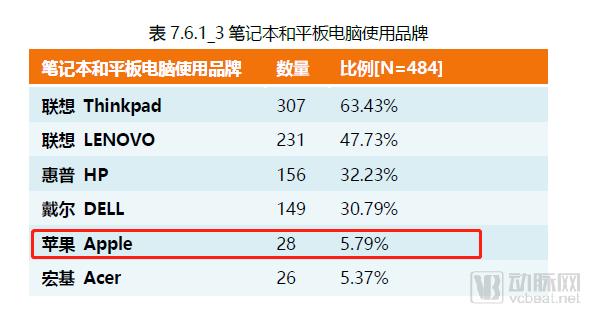
Data source: “Survey on the Informatization Status of Chinese Hospitals, 2017–2018”
According to the recently released "Survey Report on the Status of Hospital Informatization in China (2017–2018)," data across various metrics indicate that Lenovo ThinkPad is the most widely used brand of laptops and tablets in domestic informatization initiatives, followed by Lenovo. Apple ranks only fifth, adopted by just 28 out of the 484 surveyed hospitals, accounting for a 5.79% share.
We hypothesize that Apple’s low market share in China’s vast market is attributable not only to cost issues, but also to compatibility concerns with the iOS operating system and data security issues associated with the use of cross-border electronic devices in the healthcare sector.
According to CB Insights, Apple’s health-related patent portfolio is not as strong as those of other tech giants, and its innovation in the medical field has been less rapid.
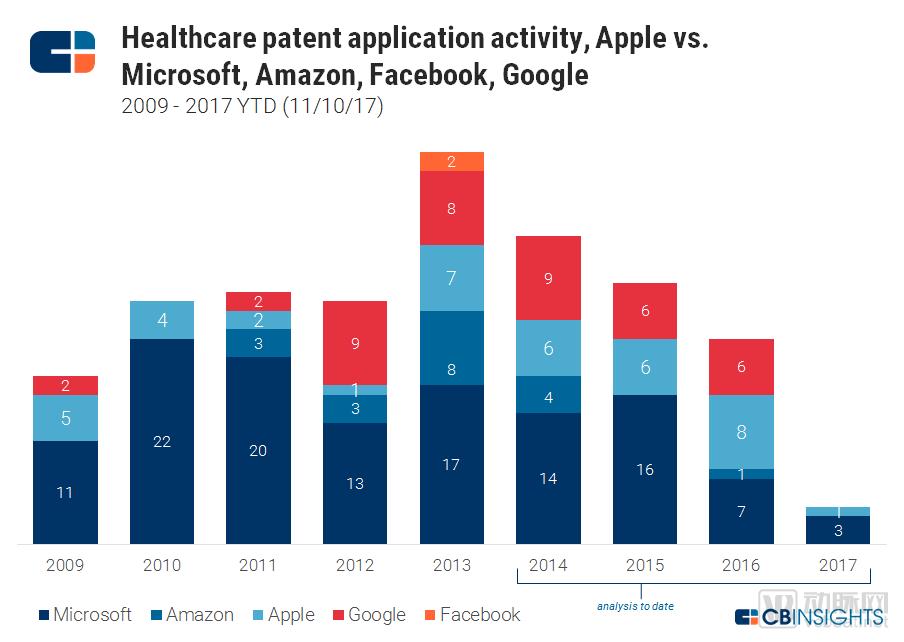
Number of Patents in the Health Sector Held by Apple, Microsoft, Amazon, Facebook, and Google
(Data source: CB Insights)
Even though Apple has made efforts in areas such as personal health data, electronic medical records, and even academic research, its entry into the core of healthcare—the diagnosis and treatment process—still appears to be too marginal.
Erik Gordon, a professor at the University of Michigan’s Ross School of Business, has stated that the challenges in healthcare are vast and complex, involving competing interests among various stakeholders, and cannot be resolved by industry companies alone. The critical mission for large technology companies is to cultivate deep insights into these complex medical issues. Many companies with strong technical capabilities and technological competitiveness have failed because they underestimated the complexity of problems within the healthcare industry.
Tech companies like Apple have long been renowned for creating superior product experiences, making it natural for them to apply their product strategies to the healthcare industry to deliver better medical experiences for patients. Apple is already actively designing new health-focused products and exploring novel applications for its existing lineup.
These companies’ products often suffer from sluggish growth and lack staying power. One critical issue aligns closely with one of the key factors highlighted by Goldstein, a former Apple employee mentioned earlier—It is not enough to merely create products that patients like; these products must also be adopted by physicians, nurses, and administrators.
If a product that enables the sharing of patients’ electronic medical records is launched on the market and is convenient for patients to use, but physicians and healthcare institutions refuse to integrate with it, even the best user experience will be rendered meaningless.
If Steve Jobs were still alive, he would surely recall that Sunday spent with John Sculley. At the time, having just led Apple to a successful IPO, Jobs said to Sculley, then CEO of PepsiCo: “Do you want to spend the rest of your life selling sugary drinks, or do you want to come with me and change the world?”
According to a CB Insights article, Steve Jobs’s daughter revealed that in the final days of his life, he was still sketching out plans for an iPad-based hospital unit from his sickbed, including blueprints for fluid monitors, X-ray equipment, and improved ward designs.
Of course, in an interview with Fortune magazine in the fall of 2016, Cook also cryptically told the reporter at the time, “Apple has many more moves in the health sector, but I can’t reveal too much. We are working hard on it; some initiatives are clearly commercial, while others are non-commercial. We are exploring all of them.”
For the entire healthcare market, Apple’s latest product launch should be inspiring, particularly for the wearable device sector and its applications, likely prompting more companies to engage in innovation within this field. Undoubtedly, any move made by the world’s largest consumer electronics company in the healthcare space is akin to a butterfly flapping its wings on the other side of the ocean; the resulting “butterfly effect” offers trend-setting guidance for global healthcare.
Stay hungry,Stay foolish。Although we have not yet seen Apple’s “thirst for knowledge” in the medical field, we still believe that “changing the world” is Apple’s dream, at least after launching an FDA-endorsed medical-grade device. We look forward to the day when Apple can drive technological innovation in healthcare more rapidly, akin to its disruptive innovation in the consumer electronics sector with the iPhone.
Otherwise, by constantly monitoring major tech and healthcare media outlets covering Apple, all we can do after each new move is lament: “Apple isn’t in a hurry, but we are.”
References:
https://www.nbcnews.com/health/health-news/new-apple-watch-has-heart-monitor-fda-approves-n908976
https://www.cbinsights.com/research/report/apple-strategy/
https://9to5mac.com/2018/09/06/slow-deliberate-health-tech-apple/