

Yitu Health Bridges the Gap Between Hundreds of Radiologists and Hundreds of Millions of Women in Need of Breast Cancer Screening with AI-Powered Mammography Solution
How Scarce Are China’s High-Quality Medical Resources? Before Engaging in the Research and Development of an Intelligent Mammography Diagnostic System, Lin Qiang, Medical Product Director at Yitu Healthcare, Had Never Felt This So Acutely.
Mammography is simple to perform, relatively inexpensive, well-tolerated, and offers high diagnostic accuracy, making it an effective measure for opportunistic screening and early detection of breast cancer. Multiple medical guidelines recommend that women at high risk for breast cancer undergo mammographic screening every 1–3 years starting at age 25, while the general population should be screened every 1–2 years from age 40 until age 75. Roughly estimated, hundreds of millions of women require mammographic screening, yet experienced radiologists for image interpretation remain in severe short supply year after year.
“There are currently only about 100 radiologists in China who specialize in interpreting mammograms, and among them, just over 50 are considered senior, highly experienced physicians,” revealed Professor Peng Weijun, Director of the Department of Radiological Diagnosis at Fudan University Shanghai Cancer Center, in an interview with the media. “The discrepancy in annotation results for the same imaging study between experienced senior radiologists and less-experienced junior radiologists can reach 30% or even higher. However, training a senior radiologist takes at least 5–10 years.”
So, how can we meet the potential demand for mammography screening among hundreds of millions of Chinese women? The only answer is artificial intelligence.
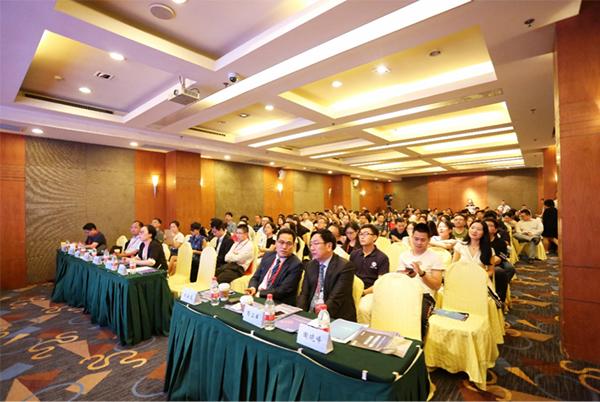
At this Oriental Congress of Radiology, Yitu Healthcare and Professor Peng Weijun’s team from the Department of Diagnostic Radiology at Fudan University Shanghai Cancer Center jointly presented an intelligent mammography diagnostic system.
This AI system is built upon the latest international guidelines for breast cancer diagnosis and treatment, as well as domestic expert consensus. It is trained on tens of thousands of cases with pathologically confirmed data from Fudan University Shanghai Cancer Center, undergoing rigorous multi-level review by professional physician annotation teams and authoritative experts. The system can perform glandular typing, detect suspicious lesions, identify imaging features, and provide intelligent BI-RADS categorization within seconds, while generating structured reports with a single click. This offers radiologists a one-stop solution. Its clinical performance approaches that of senior specialist mammographers, and it continues to be refined through real-world clinical application, with ongoing improvements in both sensitivity and specificity.
Why Are Skilled Professionals So Scarce for Mammography Interpretation, Which Appears Deceptively Simple?
“Compared to chest CT scans that often comprise 100 or 200 images, mammography yields only four images from two views: the mediolateral oblique (MLO) and craniocaudal (CC) projections. Reconstructing the 3D structural organization of breast tissue from these four 2D planar images requires radiologists not only to have a solid foundation in anatomy and disease knowledge but also to possess sufficient spatial imagination. They must mentally reconstruct the 3D breast architecture from 2D imaging findings, identify lesions within this 3D structure, and pinpoint their precise locations,” stated Professor Peng Weijun. “This learning curve is exceptionally long. The development of young physicians is no easy feat, as it indispensably requires extensive clinical experience, high-caliber mentors, and exposure to a sufficiently large volume of cases.”
Meanwhile, unlike women in Europe and the United States, who tend to have fatty breasts, more than 50% of Chinese women have dense breast tissue with less fat. To detect tiny masses, calcifications, or architectural distortions within dense imaging, radiologists must remain highly vigilant, repeatedly scrutinizing subtle images for faint abnormalities.
Beyond technical challenges, the physical burden and mental stress on radiologists are often overlooked.
“In Western countries, it is already impressive for a radiologist to interpret 20 mammograms per day. In China, however, this number is at least 50. It is common practice for associate professors responsible for reviewing and signing off on reports to interpret mammograms for 100 or even 150 patients daily. Under tight deadlines and heavy workloads, with no room for missing any lesions, physicians endure long-term physical and mental stress,” revealed Professor Peng Weijun. “Artificial intelligence systems are expected to significantly improve the speed and accuracy of lesion detection, freeing doctors from burdensome repetitive tasks so they can engage in work that truly fosters innovation.”
With the global rise of medical artificial intelligence, public datasets covering multiple fields such as breast imaging, chest CT, cervical cancer, and fundus diseases have become increasingly numerous and extensive. These resources encompass everything from imaging data and annotation structures to algorithms and AI models, making it relatively easy to adapt them for clinical use with minor modifications. Why, then, do domestically developed solutions with genuine clinical application value remain exceedingly rare in China?
Lin Qiang stated that the emergence of public datasets has, to some extent, fostered the prosperity of the medical AI industry. However, inherent limitations in these datasets—such as ethnic disparities, small sample sizes, poor image quality, and non-standardized annotations—restrict their clinical value. As a result, while AI models developed based on public datasets from Europe and the United States can achieve excellent performance in laboratory settings, reaching accuracy rates of 95% or even 99%, their practical value in clinical applications remains very limited.
To acquire the highest-quality mammography imaging data, Yitu Healthcare partnered with leading domestic medical institutions in the field of breast health from the outset. By leveraging tens of thousands of imaging datasets with confirmed pathological results to build AI models, its product performance is highly tailored to the characteristics of Chinese women’s breasts, enabling rapid clinical deployment and iterative upgrades.
Regarding the annotation process, Lin Qiang revealed that to ensure annotation quality, the R&D team devoted significant effort prior to the commencement of annotation to develop specialized annotation tools and a comprehensive quality management system. Every physician joining the annotation team must undergo multiple rounds of assessment. Each imaging dataset is subject to independent, blinded annotation by multiple experts under full-process supervision. Any contentious annotation points require personal review by authoritative experts. Furthermore, all annotation activities are conducted exclusively on 5-megapixel professional-grade monitors, reflecting an exceptionally high-standard infrastructure.
“It is fair to say that this AI-powered mammography system represents the highest level of similar domestic products,” said Professor Peng Weijun with considerable pride. “Its excellence is evident across all aspects, including clinical needs assessment, model development, and data annotation. Moreover, having undergone multi-center clinical trials and received approval from national regulatory authorities, its clinical value will be truly realized in practice.”