

National Health Commission Holds Press Conference to Interpret Three New Policies on Internet-Based Medical Services
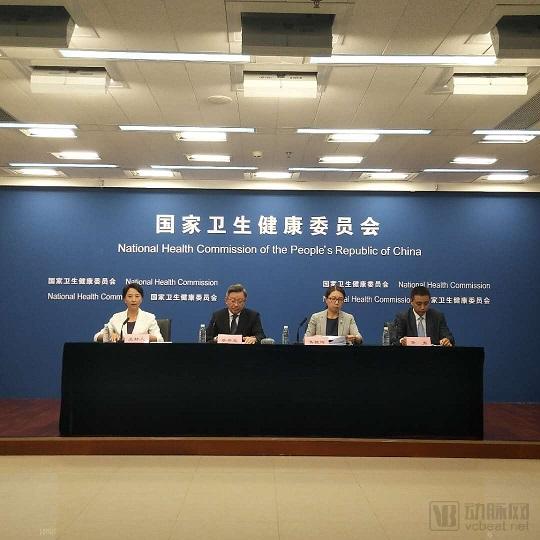
On September 14, at Building No. 2 of the National Health Commission, Song Shuli, Spokesperson of the National Health Commission and Deputy Director of the Department of Publicity, presided over a session in which Jiao Yahui, Deputy Director of the Bureau of Medical Administration; Huang Yong, Executive Vice President of West China Hospital of Sichuan University; and Cai Xiujun, President of Sir Run Run Shaw Hospital affiliated with Zhejiang University School of Medicine, provided interpretations of three documents, including the Administrative Measures for Internet-based Diagnosis and Treatment (Trial).
The following is a summary of the interpretation:
The CPC Central Committee and the State Council attach great importance to the work of “Internet + Healthcare.” General Secretary Xi Jinping pointed out that it is necessary to promote “Internet + Education,” “Internet + Healthcare,” and other initiatives, so that citizens need to make fewer trips while data does more of the running, continuously enhancing the equalization, inclusiveness, and convenience of public services. Premier Li Keqiang emphasized the need to accelerate the development of medical consortia and expand “Internet + Healthcare,” enabling the public to access high-quality medical services close to home.
On April 25, the “Opinions of the General Office of the State Council on Promoting the Development of ‘Internet + Healthcare’” were officially issued, encouraging medical institutions to leverage information technologies such as the internet to expand the scope and content of healthcare services, permitting the establishment of internet hospitals anchored by medical institutions, and setting forth explicit requirements for the development of telemedicine.
To implement the major decisions and deployments of the CPC Central Committee and the State Council, and in accordance with the relevant requirements of documents issued by the General Office of the State Council, the National Health Commission, on the basis of summarizing local experiences and fully soliciting opinions and suggestions from all parties, has studied and formulated the “Measures for the Administration of Internet-based Diagnosis and Treatment (Trial),” the “Measures for the Administration of Internet Hospitals (Trial),” and the “Specifications for the Management of Telemedicine Services (Trial).”
First, “Internet + Medical Services” are categorized into three types based on the users and service delivery models.
The first category is telemedicine., whereby medical institutions utilize their own registered medical personnel and leverage information technologies such as the internet to conduct remote consultations and remote diagnoses.
Category II: Internet-based Diagnosis and Treatment Activities, medical institutions use their registered medical personnel to leverage internet technology to directly provide patients with follow-up consultations for certain common and chronic diseases, as well as family doctor contract services.
The third category is internet hospitals., including internet hospitals that serve as secondary names for physical medical institutions, as well as independently established internet hospitals relying on physical medical institutions.
Internet hospitals may utilize physicians registered at their own institution or at other medical institutions to conduct online diagnosis and treatment activities. Internet hospitals can provide patients with follow-up consultations for certain common diseases and chronic conditions, as well as family doctor contract services. Furthermore, when a patient visits a physical medical institution, the attending physician may invite other physicians through the internet hospital for consultation; the consulting physicians may then issue diagnostic opinions and prescribe medications. Among these, the second and third categories both involve medical institutions directly providing services to patients via the internet.
Second, clarify the access procedures for internet hospitals and online diagnosis and treatment activities.As a type of medical institution, an internet hospital may apply for establishment in accordance with the procedures for setting up medical institutions, or it may serve as a secondary name of a physical medical institution, applied for by the physical medical institution and registered for practice in accordance with relevant regulations. For medical institutions that have already obtained a Medical Institution Practice License and intend to establish an internet hospital, the issuing authority shall handle the practice registration in accordance with the relevant provisions of the Regulations on the Administration of Medical Institutions and the Detailed Rules for the Implementation of the Regulations on the Administration of Medical Institutions.
3. Clarify the Legal Liability of Internet Hospitalsrelationship. Internet hospitals that have obtained the "Medical Institution Practice License" are the subjects of legal liability. All parties cooperating in an internet hospital shall bear corresponding legal liabilities in accordance with the cooperation agreement.
(I) The Administrative Measures for Internet Diagnosis and Treatment (Trial) consists of five parts: Part I, General Provisions.
Internet-based diagnosis and treatment explicitly refers to medical institutions utilizing physicians registered with their institution to conduct follow-up consultations for certain common and chronic diseases, as well as provide “Internet+” family doctor contract services, through information technologies such as the Internet. The State implements access management for internet-based diagnosis and treatment activities. Part II: Access to Internet-Based Diagnosis and Treatment Activities. It is specified that internet-based diagnosis and treatment activities shall be provided by medical institutions that have obtained a Medical Institution Practice License. Access procedures are separately stipulated for newly applied medical institutions and existing medical institutions intending to carry out internet-based diagnosis and treatment activities. Part III: Practice Rules. Regulations are established concerning technical requirements, personnel requirements, diagnostic and treatment requirements, electronic medical records, online prescriptions, information security, and patient privacy protection for medical institutions conducting internet-based diagnosis and treatment activities. Meanwhile, it is proposed that medical institutions conducting internet-based diagnosis and treatment activities shall comply with relevant regulations on tiered diagnosis and treatment and align with their functional positioning. Part IV: Supervision and Administration. Requirements are imposed on self-supervision and management by medical institutions and on industry supervision conducted by health administrative departments. Part V: Supplementary Provisions. A grace period is granted for medical institutions already engaged in internet-based diagnosis and treatment activities to reapply for practice registration.
(II) The "Administrative Measures for Internet Hospitals (Trial)" consists of five parts: Part I, General Provisions. This part clarifies the concept of internet hospitals, including those operating as a secondary name for physical medical institutions and those independently established in reliance on physical medical institutions. The state implements access management for internet hospitals. Part II, Access to Internet Hospitals. This part specifies the access procedures for applying to establish an internet hospital and for physical medical institutions intending to use an internet hospital as their secondary name. Part III, Practice Rules. This part regulates the practice activities of internet hospitals in terms of departmental setup, personnel requirements, technical requirements, diagnosis and treatment behaviors, electronic medical records, online prescriptions, information security, and patient privacy protection. Part IV, Supervision and Administration. Internet hospitals shall strictly strengthen internal management in accordance with national laws and regulations. Meanwhile, requirements are imposed on health administrative departments to conduct industry supervision. Part V, Supplementary Provisions. This part allows a grace period for already approved internet hospitals to reapply for establishment and practice registration.
Meanwhile, the Basic Standards for Internet Hospitals (Trial) were formulated, setting forth basic requirements for internet hospitals in terms of diagnostic and therapeutic specialties, departmental structure, personnel, premises and equipment, as well as rules and regulations.
(III) The “Administrative Specifications for Telemedicine Services (Trial)” consists of five parts. Part I defines the scope of administration, clarifying two scenarios of telemedicine services and their regulatory relationship with internet hospitals. Part II outlines the basic conditions for providing telemedicine services, specifying the fundamental requirements for medical institutions, personnel, and equipment/facilities.
Part III: Telemedicine Service Procedures and Related Requirements. It clarifies the key components of the cooperation agreement, specifies requirements for informed consent and data retention, and defines the boundaries and service workflows for remote consultations and remote diagnoses. Part IV: Management Requirements. This section outlines management requirements from three aspects: institutions participating in telemedicine, personnel, and medical quality. Part V: Strengthening Supervision. This section clarifies the supervisory responsibilities of health administrative departments and the allocation of liability in the event of medical disputes arising from telemedicine services.
Next, the National Health Commission will work with local authorities to implement three documents, including the Administrative Measures for Internet-Based Diagnosis and Treatment (Trial), strengthen market access and regulatory oversight of new internet-based medical service models, foster a policy environment conducive to the healthy development of internet-based medical services, and safeguard the health rights and interests of the public.