

On-Site Report | Huang Yong, Executive Vice President of West China Hospital, Sichuan University: Practices and Innovations in Telemedicine and Internet Healthcare
On September 14, at Building No. 2 of the National Health Commission (NHC), Song Shuli, NHC Spokesperson and Deputy Director of the Department of Publicity, presided over a briefing in which Jiao Yahui, Deputy Director of the Bureau of Medical Administration and Medical Services; Huang Yong, Executive Vice President of West China Hospital, Sichuan University; and Cai Xiujun, President of Sir Run Run Shaw Hospital, Zhejiang University School of Medicine, provided interpretations of three documents, including the Administrative Measures for Internet-based Diagnosis and Treatment (Trial).
At the event, Huang Yong introduced the practical outcomes achieved by West China Hospital of Sichuan University (hereinafter referred to as “the Hospital”) in internet healthcare and telemedicine in recent years.
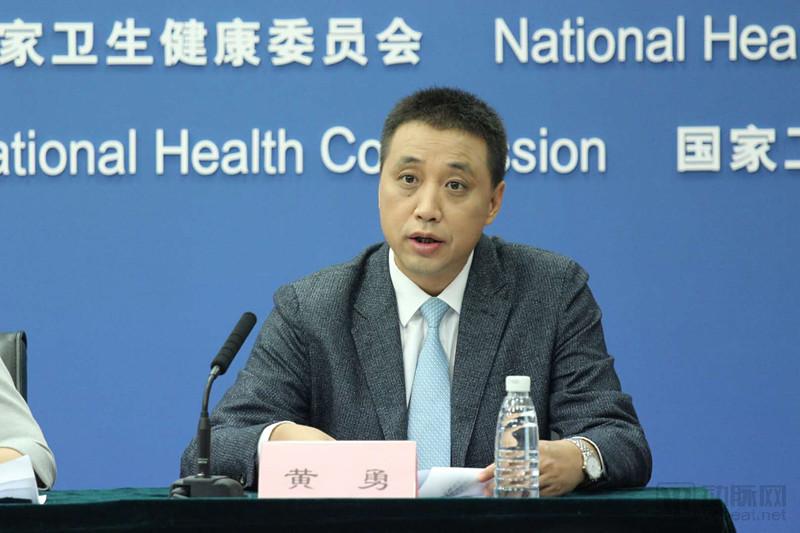
As a national-level center for the diagnosis and treatment of complex, critical, and severe conditions deployed in western China, we have consistently adhered to the core principle that “tiered diagnosis and treatment is the central component of deepening healthcare system reform, while the construction of medical consortia is a key mechanism for achieving the orderly development of tiered diagnosis and treatment.” Leveraging the leading and radiating role of high-quality medical resources, and building upon the West China Hospital Telemedicine Network Platform, we have actively constructed a shared and mutually beneficial telemedicine ecosystem around the sixteen-character guideline of “primary care at the grassroots level, two-way referrals, separate management of acute and chronic conditions, and coordination between upper- and lower-level institutions.” We have explored five models of medical consortia—group-based consortia, hospital-led consortia, specialty alliances, urban regional alliances, and telemedicine collaboration networks—to promote the homogenization of medical services, enabling residents in western regions to access medical care comparable to that available in the developed eastern coastal areas. Regardless of the specific model, telemedicine remains an integral component and core pillar of every medical consortium.
In western China, the insufficiency and uneven distribution of high-quality medical resources have resulted in primary healthcare services failing to meet the public’s demand for quality care within the region. There is an overall shortage of medical personnel in western China, with a particular scarcity of medical specialists. Primary care physicians have limited opportunities for continuing medical education and external advanced training, and they also lack other channels to timely acquire new knowledge and technologies. These factors severely hinder the improvement of primary healthcare service capacity.
To fully leverage the radiating effect of the hospital’s advantageous resources in Western China, enhance primary healthcare service capacity in the region, improve the accessibility of high-quality medical resources, and boost the overall efficiency of medical services, the hospital has been exploring the West China telemedicine model featuring “One Network, Dual Modes” since 2001. (“One Network” refers to the West China Telemedicine Network; “Dual Modes” refers to a talent training model combining online and on-site instruction.)
After 17 years of development, the West China Telemedicine Network has covered 650 medical institutions across 23 provinces, municipalities, and autonomous regions nationwide, primarily in western China, including 88 prefecture-level hospitals, 388 county- and district-level hospitals, and 174 township health centers, benefiting a population of 300 million.
Over the past 17 years, the hospital has collaborated with medical institutions at all levels to cultivate talent and deliver regional coordinated medical services through various modalities, including remote consultations, remote education, service appointments and referrals, advanced training programs, and on-site guidance. To date, it has provided 6,300 hours of remote teaching and training to network hospitals, cumulatively training more than 4.39 million healthcare professionals from primary and secondary medical institutions across all tiers, and delivering over 30,000 remote consultation cases for complex and difficult diseases to primary care facilities. Currently, the hospital conducts remote training for 500,000 healthcare professionals annually and performs 5,000 remote consultations for complex cases per year, significantly improving the accessibility of high-quality medical resources and driving the continuous enhancement of clinical service capabilities among grassroots healthcare providers.
(1) Relying on professional technical management institutions to ensure the quality and safety of telemedicine.
In 2002, the hospital established a dedicated department for medical quality and safety management, staffed with full-time personnel responsible for the quality management and control of telemedicine services. Focusing on three core modules—management, technology, and clinical practice—the hospital formulated the “Technical Requirements for Remote Consultations in West China Network Alliance Hospitals” to standardize remote diagnosis and treatment activities within its network hospitals. Additionally, it issued the “Management Specifications for Remote Consultations at West China Hospital, Sichuan University” and the “Management Specifications for Remote Continuing Medical Education at West China Hospital, Sichuan University” to regulate the telemedicine practices of medical staff. By leveraging institutional mechanisms as an entry point and adopting multiple measures, the hospital ensures the quality of remote technologies and the reliability of telemedicine services.
Establishing telemedicine standards not only helps address the diagnosis and treatment of complex cases, but more importantly, ensures that expert remote guidance permeates the entire cycle of teleconsultation—“preparation, implementation, and record retention.” This approach aids in cultivating primary care physicians’ ability to develop comprehensive and accurate clinical reasoning and to master standardized and effective diagnostic and therapeutic techniques, thereby enhancing the quality of primary healthcare services and turning every telemedicine encounter into an exemplary case-based teaching opportunity.
(II) Leveraging remote consultations for complex and critical cases as a link to promote the decentralization of high-quality medical resources.
Based on the clinical needs of its network-affiliated hospitals, the hospital has leveraged the West China Telemedicine Network Platform to provide a variety of consultation services, including scheduled consultations, emergency consultations, and multidisciplinary consultations. It conducts 24/7, comprehensive video-based interactive discussions on complex and difficult cases to promptly address clinical challenges encountered by primary healthcare institutions. In 2017, cases identified as complex and critical by West China experts accounted for 63% of the total consultation volume.
To earnestly implement the national policy on tiered diagnosis and treatment and improve the utilization rate of high-quality medical resources, the hospital added a referral function to its telemedicine system in 2014 based on the actual needs of hospitals in the West China Hospital Network Alliance. This function was fully opened to all member hospitals of the alliance to facilitate orderly two-way referrals supported by the remote network information platform. Patients with complex or critical conditions can be referred for non-emergency care through the telemedicine platform once their need for transfer is confirmed by specialist consultations at the hospital. This has effectively realized the goal of managing common and frequently occurring diseases at the primary care level while transferring critical and severe cases to West China Hospital, thereby establishing a mechanism for vertical collaboration and division of labor between West China Hospital and primary care institutions. More importantly, it enables patients to access high-quality healthcare services close to home, reducing their medical costs and enhancing their sense of gain and well-being during the healthcare process.
(3) Leveraging the West China Remote Sub-center as a platform to innovate the tiered and collaborative medical service model.
To further advance the development of the West China Medical Consortium, the hospital has begun exploring a tiered collaborative medical service model comprising the “West China Telemedicine Center–West China Telemedicine Subcenter–Remote Stations at Primary Healthcare Institutions.” In 2014, the Ganzi Tibetan Autonomous Prefecture People’s Hospital was officially designated as a West China Telemedicine Subcenter, marking the increasing maturity of a tiered collaborative medical service system linked by telemedicine and information technology. This system encompasses one leading consortium institution (West China Hospital), one core consortium institution (Ganzi Tibetan Autonomous Prefecture People’s Hospital), 28 county-level hospitals, and 84 primary healthcare institutions.
Within this system, West China Hospital is responsible for providing remote consultation services for difficult, critical, and severe cases to the Ganzi Prefecture People’s Hospital, managing referred patient treatment, conducting continuing education and training for medical staff, developing guidelines for disease diagnosis and treatment as well as standardized clinical pathways, and carrying out medical scientific research. As a regional sub-center of West China Hospital’s remote medical network, the Ganzi Prefecture People’s Hospital serves as a crucial hub linking higher-level and grassroots institutions. Its functions include providing remote consultations for common and frequently occurring diseases to county-level hospitals and primary healthcare institutions, delivering continuing medical education, and initiating three-party remote consultations with West China Hospital for complex, critical, and severe cases that exceed its capacity. County-level hospitals and primary healthcare institutions are primarily responsible for diagnosing and treating local common and frequently occurring diseases, while also providing public health services such as health education, disease prevention, and healthcare maintenance to local residents.
Within the “West China Telemedicine Center–West China Telemedicine Sub-center–Grassroots Medical Institution Remote Station” framework, in addition to routine real-time interactive teleconsultations, services include real-time interactive three-party teleconsultations, remote imaging consultations, remote pathology consultations, remote electrocardiogram (ECG) consultations, and online joint outpatient clinics. For example, from 2014 to 2017, West China Hospital provided approximately 1,200 teleconsultation cases to the Ganzi Prefecture People’s Hospital, which in turn delivered over 800 teleconsultation services to county-level and township health centers within the prefecture.
(4) Focus on remote prevention and control guidance to enhance regional capacity for the treatment of major diseases.
In accordance with the requirements for health-focused poverty alleviation, and targeting remote, impoverished, and ethnic minority regions, this initiative prioritizes major specialized diseases. Leveraging the West China Remote Medical Network, it provides online remote guidance in medical technology, clinical teaching, and research supervision, with a focus on prevention, diagnosis, and treatment. Furthermore, it aims to streamline the two-way referral mechanism and establish an online multidisciplinary team (MDT) guidance group.
Taking the "West China–Tibetan Regions" Remote Prevention and Control Guidance for Echinococcosis as an Example. Since 2014, the hospital has established a multidisciplinary collaborative team for hepatic echinococcosis and launched a series of online instructional courses on its prevention and control, including "Surgical Treatment of Hepatic Echinococcosis," "Advances in New Techniques for Open Liver Resection," "Progress in Surgical Techniques for Liver Surgery," and "Key Points and Video Demonstrations of Laparoscopic Liver Resection." Statistics show that each course attracted an average of over 700 online participants, with the platform enabling real-time questions and interactions. Meanwhile, through "remote consultations + discussions of complex cases," the program integrated medical care with teaching and training, providing "face-to-face" and "hands-on" clinical training to continuously support grassroots-level diagnosis and treatment of hepatic echinococcosis. Over three years, remote consultation guidance was provided for 816 complex cases of hepatic echinococcosis, cultivating a group of medical personnel with basic diagnostic capabilities, six outstanding liver surgeons from Tibetan regions, and two excellent teams. This effort resulted in 90% of patients with hepatic echinococcosis receiving treatment at prefectural hospitals, significantly enhancing the regional capacity for managing major diseases.
In addition to the “Hepatic Echinococcosis Prevention and Control Training Program,” the hospital has also introduced specialized services such as remote prescription reviews and surgical demonstrations, tailored to the practical needs of primary-care physicians in western China. Through West China Hospital’s telemedicine platform, these initiatives provide targeted support to strengthen endogenous capacity.
(5) Taking remote emergency response as a challenge, demonstrating the responsibility and commitment of the “National Medical Team.”
Having responded to emergency disasters such as the 2003 SARS outbreak, the 2008 Wenchuan earthquake, the 2013 Ya’an Lushan earthquake, and the 2017 Jiuzhaigou earthquake, the hospital has provided timely backup support for on-site rescue operations and served as a robust guarantee for the regional health maintenance network.
Following the 2008 Wenchuan earthquake, radiological equipment in medical institutions within the hardest-hit areas suffered severe damage and was in critically short supply, failing to meet the diagnostic and treatment needs of the injured. In response, the West China Telemedicine Center provided 24-hour teleconsultation services to casualties in the disaster zone, completing 543 teleconsultations and 597 imaging diagnoses. Additionally, it conducted over 580 remote lectures for healthcare workers in the affected areas, with more than 300,000 participant attendances. These efforts ensured timely and effective management of patients, reduced subsequent complications, and significantly lowered mortality rates among critically injured survivors.