

Field Report: How Zhejiang University School of Medicine Affiliated Sir Run Run Shaw Hospital Builds an 'Internet + Healthcare' Platform
On September 14, at Building No. 2 of the National Health Commission (NHC), Song Shuli, NHC Spokesperson and Deputy Director of the Department of Publicity, presided over a session in which Jiao Yahui, Deputy Director of the Bureau of Medical Administration; Huang Yong, Executive Vice President of West China Hospital, Sichuan University; and Cai Xiujun, President of Sir Run Run Shaw Hospital, Zhejiang University School of Medicine, provided interpretations of three documents, including the Administrative Measures for Internet-Based Diagnosis and Treatment (Trial).
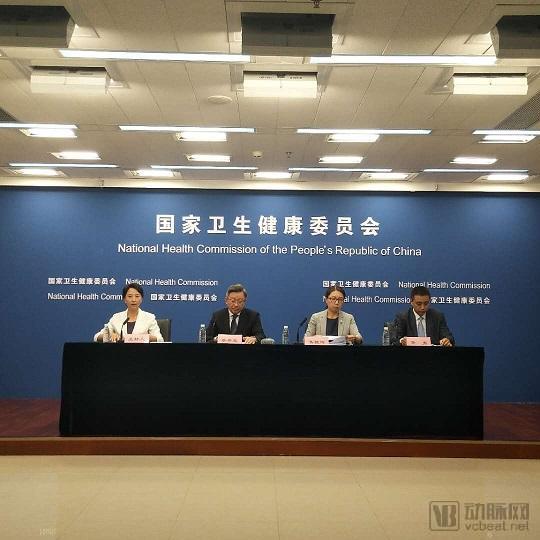
On-site, Cai Xiujun introduced the practical outcomes achieved by Sir Run Run Shaw Hospital, Zhejiang University School of Medicine, in the fields of internet healthcare and telemedicine over the years.
Sir Run Run Shaw Hospital, Zhejiang University School of Medicine, as a public comprehensive Grade A tertiary hospital, has always taken it as its mission to fulfill the responsibilities and commitments of public hospitals. By innovatively exploring the “Internet + Healthcare” model, the hospital has effectively enhanced the general public’s sense of health accessibility, well-being, and security. As early as May 2013, Sir Run Run Shaw Hospital leveraged 4G technology to conduct China’s first live broadcast of remote surgical consultations via mobile devices, pioneering the hospital’s earliest explorations in the field of “Internet + Medical Health.” On December 13, 2014, President Xi Jinping, during his inspection at the Shiyue Town Health Center in Zhenjiang, pointed out that effective solutions must be found to address the issue of large hospitals operating under “wartime conditions.”
In the same year, Sir Run Run Shaw Hospital launched the “Future Hospital” initiative, focusing closely on the bottlenecks, pain points, and challenges patients face in accessing medical care. Building on its distinction as the first hospital in China to have both of its campuses simultaneously achieve HIMSS Stage 7—the highest level of international healthcare information technology certification—and pass Joint Commission International (JCI) accreditation, the hospital pioneered a comprehensive overhaul of the entire medical service process nationwide. It established China’s first smart healthcare cloud platform and became the first in the country to pilot mobile payments for medical insurance. These efforts fully embody President Xi Jinping’s important concept of leveraging informatization to “let data do more running so that people need to run less,” effectively addressing the difficulties and frustrations associated with seeking medical care. Through internet-based healthcare services, the hospital has helped retain more patients at the primary care level, continuously enhancing their healthcare experience and strengthening their sense of gain.
First, the concept of “letting data do the running so patients don’t have to” is integrated throughout the pre-hospital, in-hospital, and post-hospital phases, with a series of innovative, convenient, and patient-friendly measures based on “Internet + Healthcare” implemented during the diagnosis and treatment process. Second, by establishing remote healthcare platforms, we enable patients at the grassroots level to consult renowned specialists near their homes and allow primary care physicians to acquire advanced clinical skills locally, thereby striving to enhance the equalization of regional medical services.
“Internet+” Covers Pre-hospital, In-hospital, and Post-hospital Care, Making Medical Access More Convenient for Patients.
Faster Emergency Care: Implementing an Integrated Comprehensive Emergency Model. The hospital has comprehensively explored a faster “Internet+” emergency care model, pioneering the interconnectivity of pre-hospital emergency information. By establishing an information exchange platform with the Hangzhou Emergency Medical Center (120), real-time transmission of patient condition data from pre-hospital settings to in-hospital systems has been achieved. Emergency department medical staff can obtain and assess various information regarding patients transported by 120 ambulances and rescue helicopters in advance. This allows emergency teams and relevant departments to make comprehensive emergency preparations before the patient’s arrival. Furthermore, dedicated Digital Subtraction Angiography (DSA) suites and operating rooms have been set up within the emergency area, saving critical time and improving resuscitation success rates. Coupled with specialized centers such as the Stroke Center, Chest Pain Center, and Trauma Center, green channels are provided for patients, ensuring more rapid and standardized emergency care.
The Xiasha Campus of the hospital features the largest emergency helicopter helipad in East China. Located merely 20 meters from the campus’s Emergency Center, which boasts nationally top-tier hardware and software capabilities, the helipad enables a transfer time of just 47 seconds from aerial landing to the center. This streamlined and short-distance rescue process ensures that the “Golden Hour” emergency network effectively covers the Yangtze River Delta region.
Pioneering the “One-Stop” Service Model in Emergency Care: Leveraging Hospital Information Systems to Provide Single-Payment Settlement for Patients Under Emergency Observation and Resuscitation, Ensuring That Patients and Their Families Need Only “Enter One Door” from Emergency Admission to Discharge.
Outpatient services are more streamlined, enabling patients to experience zero wait times. In 2014, the hospital pioneered the “Future Hospital” initiative, directly addressing key healthcare reform challenges such as difficult appointment scheduling and cumbersome medical visits. It became the first in China to implement comprehensive mobile-based smart transformation across the entire medical service process, creating the country’s first fully mobile-enabled smart healthcare service system. This has established a “palm-top” healthcare matrix centered on the Shaoyi Health WeChat Official Account, Sir Run Run Shaw Hospital Official WeChat Account, Sir Run Run Shaw Hospital Alipay Service Account, and the YiKuaiFu mobile payment app for medical insurance. The system supports online appointment scheduling, waiting notifications, in-hospital navigation, service evaluations, health consultations, surgical status inquiries, and physical examination bookings. It integrates multiple payment methods, including citizen cards, bank-hospital connectivity services, WeChat Pay, Alipay, and major bank payment channels.
In 2016, it piloted the first mobile payment system for provincial medical insurance in China, successfully resolving the settlement and payment challenges for the core user group of mobile payments—patients covered by medical insurance. The coverage of full-process mobile smart healthcare services reached 100%, enabling patients to complete their entire medical journey with zero wait times.
The outpatient hall features a comprehensive service center, with centralized appointment scheduling for all ancillary examinations, including imaging and endoscopy. By leveraging big data analytics to calculate each physician’s average consultation time over the past three years, the system optimizes appointment intervals, enabling precise scheduling of both outpatient visits and diagnostic examinations down to the minute. These multifaceted measures have transformed the hospital’s previously chaotic “wartime” operations, reducing patients’ total outpatient visit duration from 4–5 hours to 1.7 hours and achieving a patient satisfaction rate exceeding 95%.
“One-stop” services make hospitalization more worry-free and discharge more convenient. In 2007, the hospital established the first Pre-admission Center in China to ensure the optimal utilization of limited bed resources. With an average length of stay (ALOS) of 6.31 days, it has the shortest ALOS among tertiary Grade-A hospitals in China. Patients can complete all pre-admission tests and examinations, as well as preoperative anesthesia consultations, at the Pre-admission Center in a one-stop manner, effectively reducing both preoperative waiting time for beds and the average length of stay. Completing preoperative examinations on the day of admission also facilitates the smooth implementation of day surgery. The proportion of day surgeries at the hospital has reached 21.63%, with 65 common elective procedures available as day surgeries. Consequently, the hospital has been designated as a national pilot site for day surgery by the National Health Commission and the Ministry of Human Resources and Social Security.
More Convenient Discharge: Hospitals Enable Bedside Discharge ProcessingInpatients can complete discharge billing procedures directly in the ward via mobile settlement carts. Discharge medications are delivered straight from the pharmacy to the patient’s bedside through a logistics track system. After settlement, patients receive their discharge invoice, itemized fee statement, and medical insurance settlement statement at the bedside, with any remaining deposit refunded directly to their bank card.
Faster coordination, more convenient referrals. The hospital pioneered the construction of China’s first smart healthcare cloud platform, centered on tiered diagnosis and treatment and anchored by physical hospitals. This platform has extended its services to 34 affiliated hospitals and three hospitals in Xinjiang, enabling online consultations, multidisciplinary consultations, payments, two-way referrals, collaborative testing and laboratory services, internet-based prescriptions, third-party medication delivery, remote joint outpatient clinics, remote education, as well as remote surgical consultations and technical guidance.
Leveraging “Internet + Healthcare” for Poverty Alleviation to Effectively Enhance the Equalization of Regional Medical Services. Currently, among the 34 hospitals in China with which Sir Run Run Shaw Hospital has established assistance partnerships, three are under intensive support programs and are located in counties designated as “accelerated development counties” in Zhejiang Province, where medical standards are relatively lagging. The hospital fully leverages the platform and advantages of “Internet +” to create a distinctive assistance model that combines online and offline approaches. The seamless cloud-based connectivity between the main hospital and the assisted hospitals breaks down information silos between provincial-level and grassroots hospitals. Patients from grassroots institutions under assistance can be referred via the cloud platform; after completing hospitalization appointments online, they can be admitted directly, thereby bridging the “last mile” in serving grassroots patients.
Triage is more feasible, and follow-up visits are more convenient. The “Cloud Outpatient” service on the platform has been integrated with nearly 100 community hospitals, providing video-based consultation services to 20,000 residents in grassroots communities. This effectively establishes a closed-loop triage system characterized by “initial diagnosis at the community level, treatment of serious conditions at hospitals, and rehabilitation back in the community.” The “Cloud Follow-up” service enables patients to undergo follow-up consultations from home. Physicians issue electronic prescriptions on the platform, which are reviewed online by pharmacists before third-party drug delivery services directly deliver the medications to patients.
“The people’s aspiration for a better life is our goal.” In alignment with the national policies on holistic health and the guidelines for the development of “Internet + Healthcare,” and in strict accordance with the requirements set forth in three key documents, including the Administrative Measures for Internet-based Diagnosis and Treatment, the hospital will accelerate the implementation of “Internet + Healthcare” initiatives. We strive to serve as a model and benchmark, guided by the multi-level and diversified healthcare needs of the public. We are committed to continuously improving the “Internet + Healthcare” service platform and enhancing the level of modern hospital management. Through practical innovation and overcoming challenges, we aim to explore an “Internet + Healthcare” model and development path suited to China’s national conditions and our institutional context. By consistently advancing “Internet + Healthcare,” we contribute to the realization of the Healthy China initiative.