

CWI and Miao Health Launch Health Management 2.0: Integrating Big Data with Offline Centers
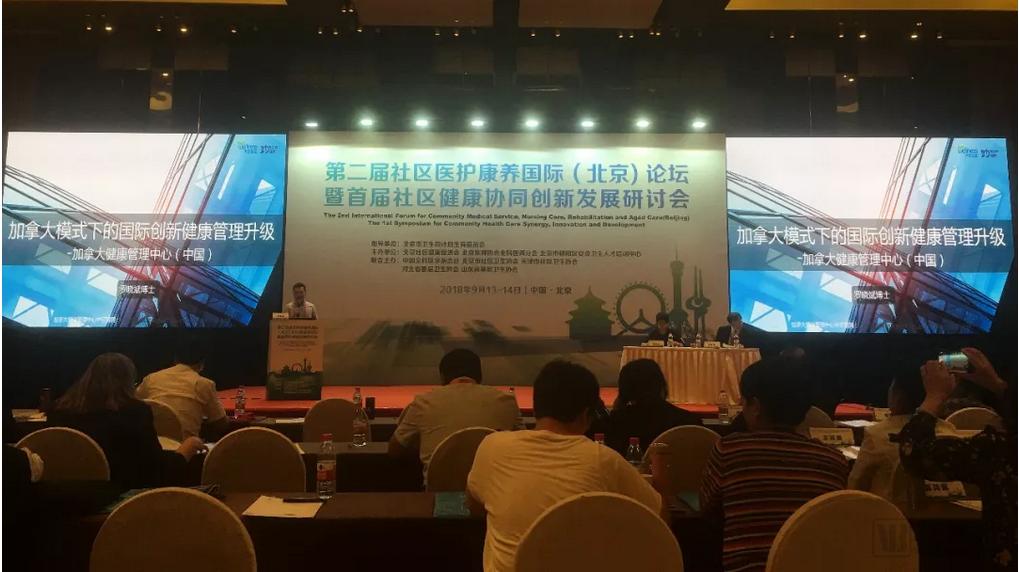
On September 13, the 2nd “International Forum on Community Medical Care, Nursing, Rehabilitation, and Elderly Care” and the 1st Symposium on Collaborative Innovation in Community Health opened in Beijing. More than a thousand experts, scholars, and frontline practitioners from relevant fields around the world gathered to discuss the development of the broader health industry under new trends. Dr. Luo Xiaobin, Chief Operating Officer of Canada Health Management Center (China), stated in his keynote speech that Health Management 2.0 will facilitate the upgrading of community-based medical, nursing, rehabilitation, and elderly care services.
Data released by the World Health Organization indicates that 80% of the top ten leading causes of death are attributable to unhealthy lifestyles, including tobacco use, unhealthy diet, physical inactivity, excessive alcohol consumption, overuse of antimicrobial agents, and exposure to toxic substances.
“China currently has over 300 million smokers, 270 million people with hypertension, 200 million individuals who are overweight or obese, 100 million patients with diabetes, and 400 million with prediabetes, as well as approximately 100 million patients with chronic obstructive pulmonary disease (COPD). If left uncontrolled in the future, these numbers will continue to rise,” said Luo Xiaobin. He added that with effective interventions, these figures can be reduced.
Currently, there are six key issues and pain points encountered in the health management market or by institutions implementing health management services:
First, unhealthy behavioral habits. There is already substantial evidence proving that certain habits are harmful, yet they remain widespread in the population.
Second, people do not have a clear understanding of their physical condition; many individuals do not even undergo basic health checkups, and in most cases, they lack effective means of health data monitoring to track their physical health in a timely manner.
Third, there is a lack of professional guidance and targeted health intervention plans.
Fourth, there is a lack of timely guidance. The prerequisite for such guidance is the tracking of health data. Currently, technological innovations, more devices, and advanced real-time diagnostic technologies are still needed to enable timely monitoring of health status and early warning systems.
Fifth, post-examination management is severely lacking.
Sixth, treatment costs are prohibitively high. Both public medical insurance and commercial health insurance are facing deficits and struggling with cost containment. Therefore, innovation in insurance models is essential to effectively reduce treatment expenses.
Canada Health Management Center(hereinafter referred to as “CWI”) was established in 1997. Leveraging advanced medical fitness facilities and a professional medical team, it develops personalized treatment plans based on clinical evidence-based medicine. It has served over 6 million patient visits, prevented nearly 10,000 cardiac incidents, and achieved a total weight loss of 120,000 pounds among the population. In the area of chronic kidney disease alone, it has saved the Manitoba provincial government nearly CAD 400 million in healthcare expenditures. Its outstanding therapeutic management outcomes have earned global acclaim.
Luo Xiaobin stated, “Miao Health has accumulated over4000“After accumulating tens of thousands of users and a vast amount of big data on health behaviors, we took our next step this year by beginning to explore offline services. Following a global screening process that evaluated locations in Germany, Japan, Israel, North America, and other regions, we ultimately identified the Canadian Health Management Center in Canada. Their philosophy regarding offline health management aligns closely with ours, also employing lifestyle interventions as the core approach to health management.”
In March this year, CWI and Miao Health jointly established the Canadian Wellness Institute (China) through a joint venture. “The joint venture is not simply about replicating another CWI; rather, it aims to combine CWI’s extensive offline clinical expertise with Miao Health’s advanced internet-based health management solutions, integrating big data on health and health behaviors with artificial intelligence to explore a new ‘Health Management 2.0’ model in the context of emerging technologies,” said Luo Xiaobin. Over the next three years, CWI plans to open more than 100 health management centers in core cities across China through various cooperation models.