MIIT Announces List of Artificial Intelligence Innovation Projects; Shanghai Jiao Tong University and China-Japan Friendship Hospital Among Selected Participants, Approval Process Expected to Accelerate
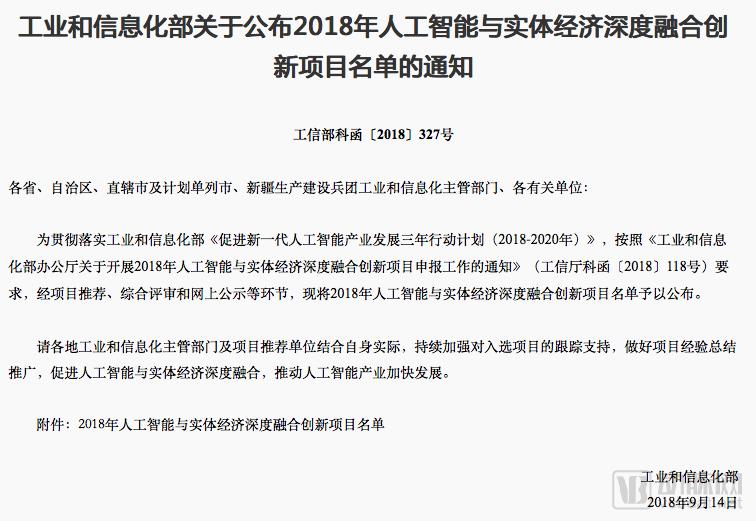
On September 14, the Ministry of Industry and Information Technology issued the “Notice of the Ministry of Industry and Information Technology on Publishing the List of Innovative Projects for the Deep Integration of Artificial Intelligence with the Real Economy in 2018.”
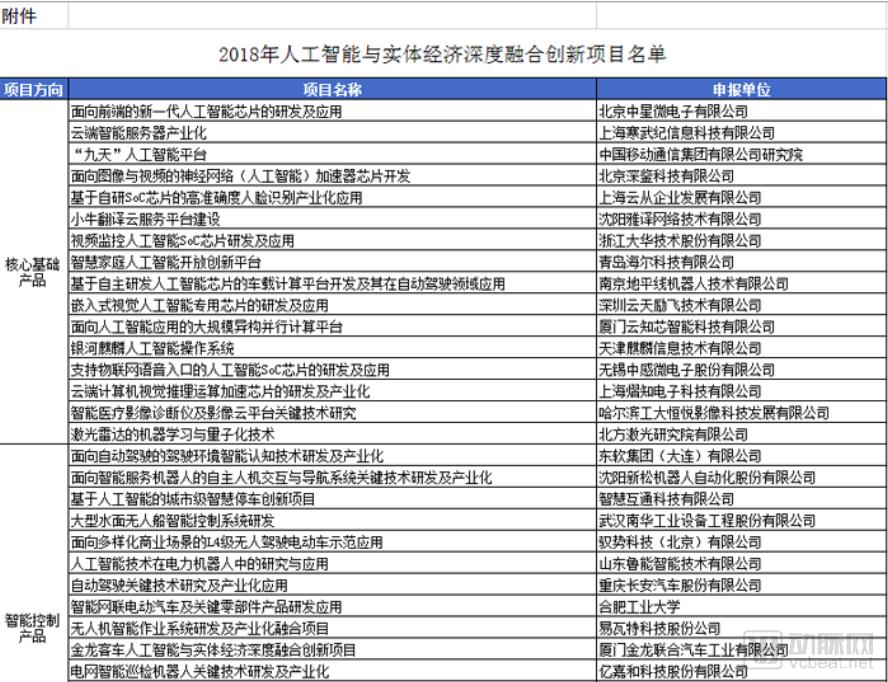
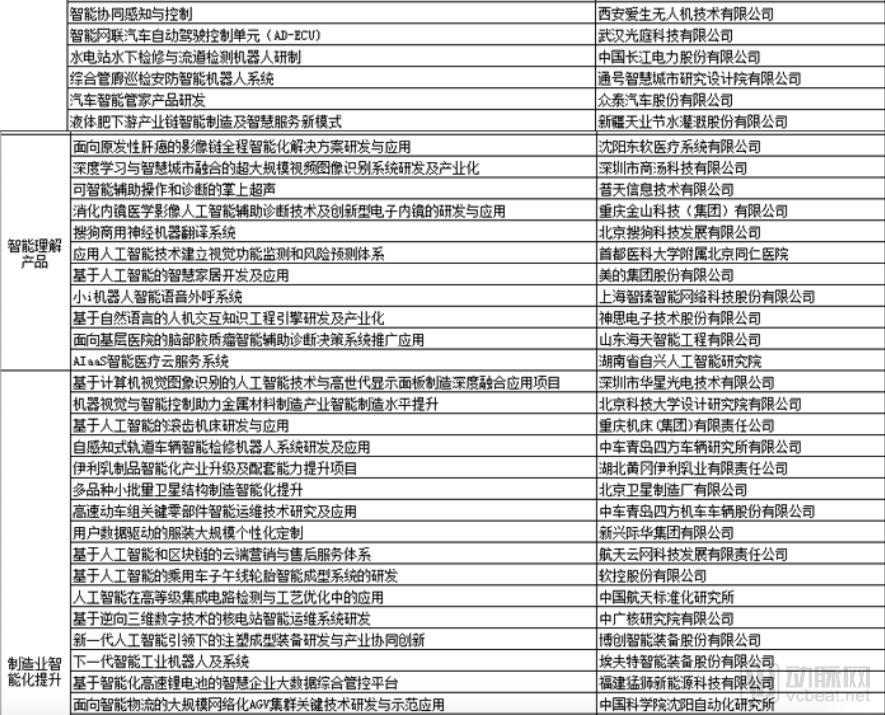
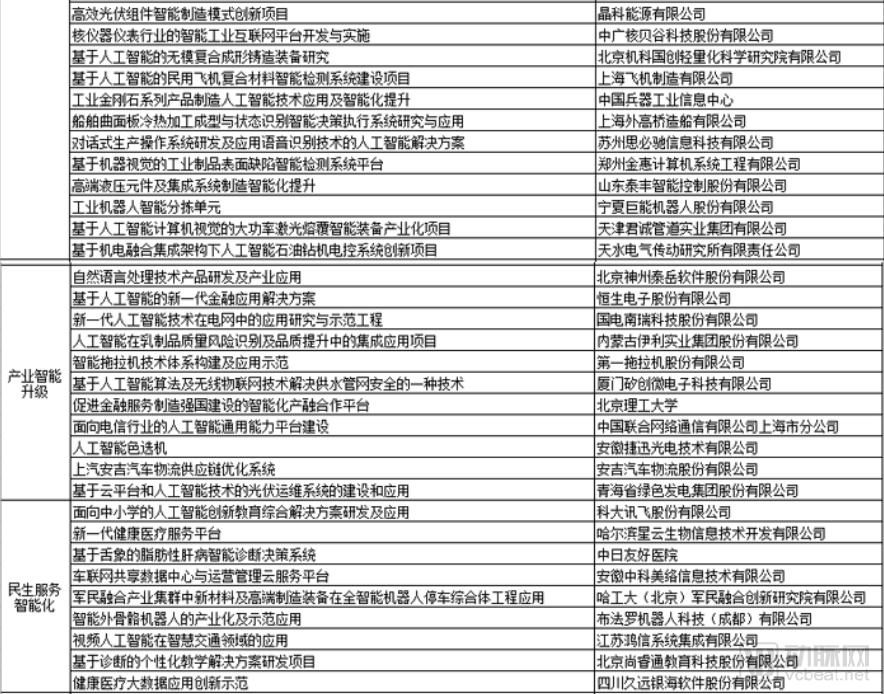
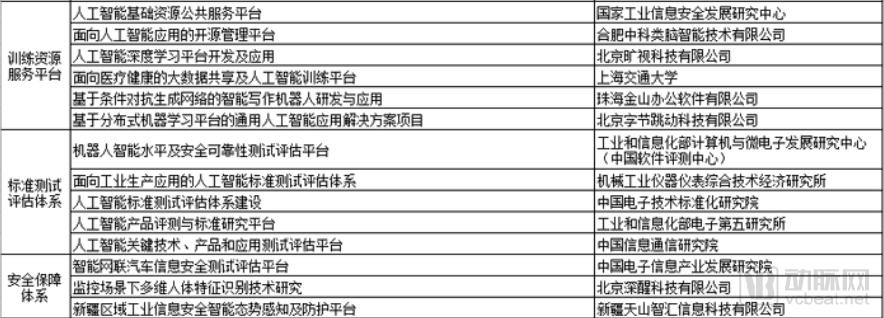
The following is a screenshot of the original document:
The appendix of this document showcases successfully declared AI-related projects. These projects fall into nine major categories: Core Fundamental Products, Intelligent Control Products, Intelligent Understanding Products, Intelligent Enhancement of Manufacturing, Industrial Intelligent Upgrading, Intelligent Livelihood Services, Training Resource Service Platforms, Standard Testing and Evaluation Systems, and Security Assurance Systems. The selected projects cover areas such as computer vision, the Internet of Things (IoT), platform development, NLP, blockchain, various hardware types, auxiliary diagnosis, education, and speech technology. VCBeat (WeChat Official Account: Vcbeat) has compiled the healthcare-related projects in the table below:
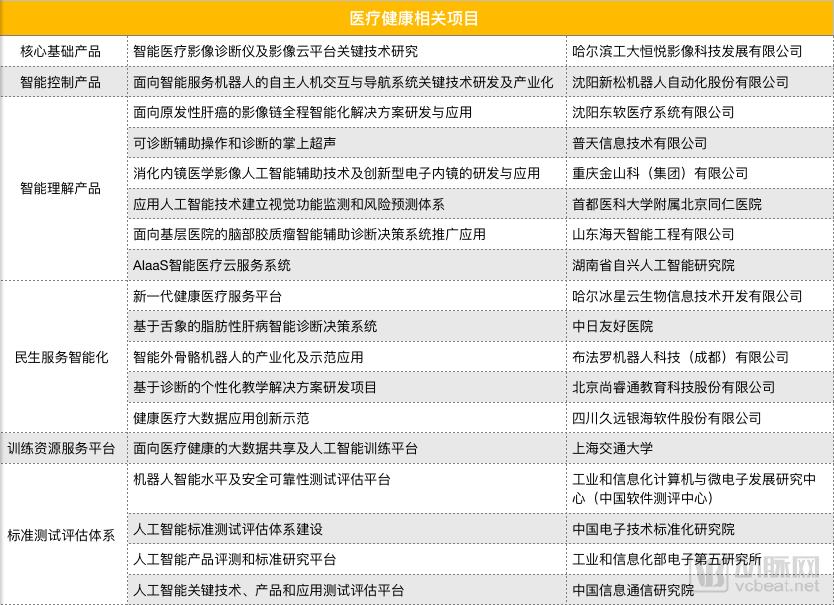
As shown in the table, healthcare-related projects are concentrated in two major categories: intelligent understanding products and the intelligentization of public livelihood services, which is attributable to the inherent service-oriented nature of the healthcare sector.
As shown in the table, only one device, the handheld ultrasound system, was included in the list, indicating that “AI+” products remain predominantly focused on industrial applications.
The final section of the form lists projects submitted by national institutions such as the Ministry of Industry and Information Technology (MIIT) and the China Academy of Information and Communications Technology (CAICT). These projects encompass the development of a standard evaluation system for AI products, platforms for product assessment and standards research, and related technology and product testing and evaluation platforms. The inclusion of these projects is expected to accelerate the construction of various critical-disease databases and may lead to the establishment of nationally unified case data and product standards for AI research in the near future. This development is poised to accelerate the commercialization of AI products.
Attachment: Screenshot of the file attachment.