

2008-2018: A Decade of Rare Diseases — Greater Public Attention Needed for This Vulnerable Population
Rare diseases are conditions with very low prevalence that are uncommon, typically chronic and severe, and often life-threatening. There are over 7,000 internationally recognized rare diseases, accounting for approximately 10% of all human diseases, with about 80% of them caused by genetic defects.
There is a vast population of patients with rare diseases in China. “Improving the comprehensive support system for rare diseases is an urgent necessity to safeguard patients’ rights to health and survival, and an inevitable requirement for implementing the Healthy China Strategy.”
On the afternoon of September 14, the 7th China Rare Disease Summit, co-hosted by Shanghai Clover Rare Disease Family Care Center (also known as the Center for Rare Diseases Development, CORD) and Children’s Hospital of Fudan University (National Children’s Medical Center), opened in Shanghai.
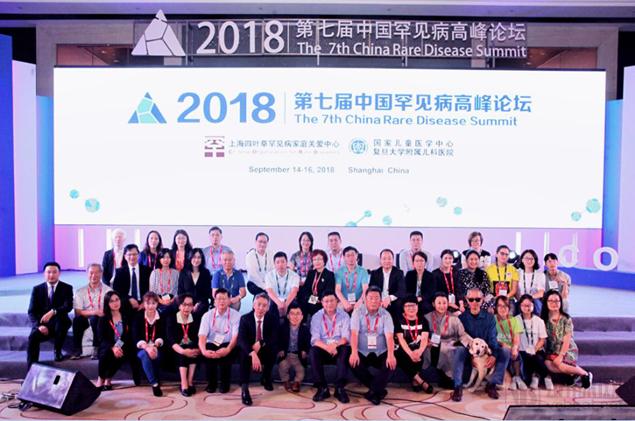
Group Photo of On-Site Guests
More than 500 domestic and international attendees, including experts and scholars from medical research institutions, the pharmaceutical industry, public welfare organizations, and mainstream media, as well as patients with rare diseases, their families, and caring members of society, gathered together to offer insights and recommendations for advancing rare disease medical research, drug development, and social care in China.
Since its inception in 2012, the China Rare Disease Summit has entered its seventh year, remaining committed to advancing the cause of rare diseases. It has now grown into the largest comprehensive forum in the field of rare diseases in China.
This year’s theme is “Collaboration and Innovation—Making Love Not Rare,” highlighting the significance of multi-stakeholder collaboration among the government, society, industry, and patient communities, as well as innovative models for rare disease research and drug development.
Mr. Huang Rufang, Founder and Director of the Shanghai Clover Rare Disease Family Care Center (CORD), and Professor Zhou Wenhao, Vice President of the Children’s Hospital of Fudan University (National Center for Children’s Health), delivered opening remarks on behalf of the organizers. Dr. Liu Senwang, Head of Medical Affairs, Asia-Pacific, at Shire, a rare disease R&D enterprise, and Dr. Sun Lele, Executive Director of BGI Genomics, also spoke in succession, expressing their commitment to and support for research and development as well as public welfare initiatives in the field of rare diseases.
“Patients have their medications; medicine is hardly something palatable, yet it is simply unavailable.” This statement, made by Huang Rufang, Founder and Director of the Shanghai Clover Rare Disease Development Center (CORD), during a speech, raises a thought-provoking question.

Mr. Huang Rufang, Founder and Director of the Shanghai Clover Rare Disease Family Care Center (CORD)
Data from a set of sources reveals that the survival status of patients with rare diseases in China is facing significant challenges:
China has over 16 million patients with rare diseases. Among treatment options for these conditions, only 5% of rare diseases have available therapeutic drugs, which are not necessarily highly effective specific treatments. Currently, there are 621 orphan drugs approved by the U.S. Food and Drug Administration (FDA), whereas only 282 orphan drugs have been approved by the China Food and Drug Administration (CFDA) for entry into the Chinese market, and they remain prohibitively expensive.
The confirmed diagnostic rate for rare disease patients in China is less than 40%, meaning that over 60% of rare disease patients have not yet received a scientific and accurate diagnosis. These patients may be undergoing incorrect treatments or enduring their conditions while awaiting proper diagnosis.
“It takes an average of five years to diagnose each patient, and I believe this is similar worldwide. The first hurdle faced by patients with rare diseases is diagnosis, which involves a lengthy diagnostic journey.”
Over the past decade, CORD has identified more than 80 patient organizations in China, covering over 60 disease types. Unfortunately, the vast majority of these organizations are concentrated in Beijing, Shanghai, and Guangzhou. This limitation implies that their future outreach capacity may not fully extend to patients in remote areas.
“For families with conditions such as SMA, DMD, or hemophilia, diagnosis in first- and second-tier cities is actually very rapid. However, in remote areas, there is a lack of data; we may not even know where these patients are located.” This is a harsh reality.
In his keynote address, Director Huang Rufang reviewed the development of the rare disease field in China over the past decade. From the initial advocacy by the medical community and patient groups, to rare diseases gradually becoming a social issue garnering greater attention from the public and government departments, and further to the accelerated review and approval of rare disease drugs and the release of the first National List of Rare Diseases in recent years, the continuous progress in the rare disease field has been inseparable from the collaborative efforts of government agencies, medical and research institutions, pharmaceutical companies, and patient communities.
From 2008 to 2018, Director Huang Rufang, who has been driving the advancement of rare disease initiatives for a decade, put forward his advocacy and expectations for the development of China’s rare disease sector in the coming ten years: enhance the level of diagnosis and treatment for rare diseases, accelerate the establishment and improvement of rare disease diagnosis and treatment networks; build a “patient-centered” clinical service system for rare diseases; strengthen government-society collaboration and increase investment in scientific research on rare diseases; and improve the social security and support systems for the rare disease community.
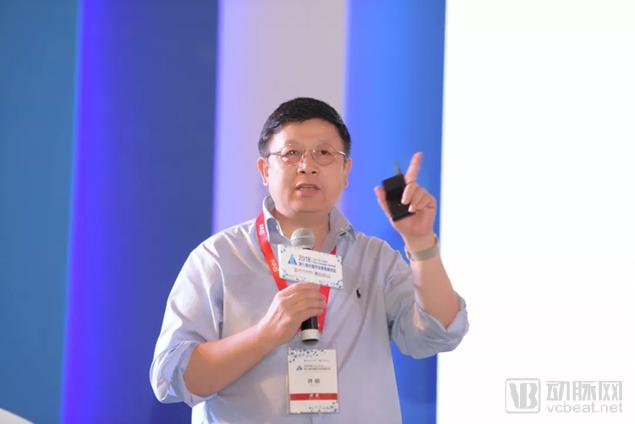
Professor Xu Tian, Vice President of Westlake University
“There is no such thing as a ‘rare’ disease or a ‘common’ disease; from the perspective of each patient, the experience is the same. Every patient has the right to receive care and treatment,” said Professor Xu Tian, Vice President of Westlake University.
In the face of rare diseases, innovative technological approaches such as genomics, precision medicine, and artificial intelligence provide scientists and clinicians with powerful methods and tools to enhance their understanding and awareness of these conditions, and to develop novel diagnostic and therapeutic solutions.
Professor Xu Tian shared multiple innovative drugs for rare diseases currently under development by his research team, while also expressing the aspirations and vision of Westlake University as a new type of private research university, encouraging more scientists and researchers to dedicate themselves to the cause of rare disease research.
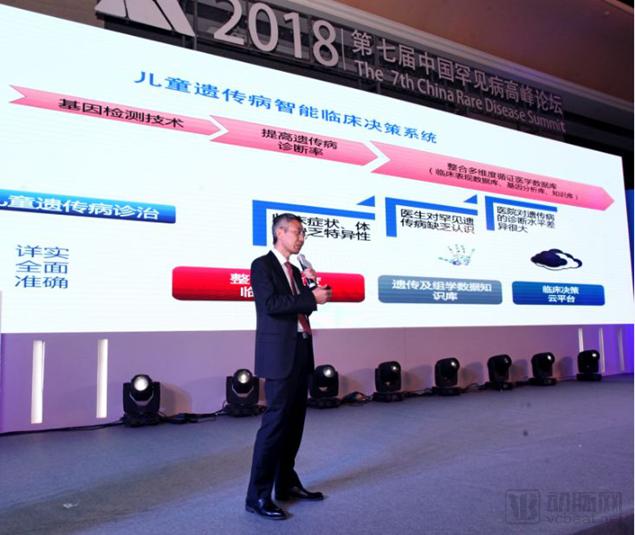
Professor Zhou Wenhao, Vice President of the Children's Hospital of Fudan University
Professor Zhou Wenhao, Vice President of the Children’s Hospital of Fudan University, provided a systematic overview of the rapid advancements in genomics in recent years. He highlighted the critical role of genomics in enhancing diagnostic capabilities and facilitating early diagnosis and treatment for pediatric rare diseases. Professor Zhou shared the innovative work conducted by the clinical and research teams at the Children’s Hospital of Fudan University on the Genomic Project for Neonatal Rare Diseases, expressing the hope that future clinical applications of genomics will benefit more children with rare diseases and their families.
Professor Zhou Wenhao stated that within hospitals, it is difficult to rely solely on internal resources for laboratory development, genetic disease diagnosis, and precision medicine interventions; instead, greater support and assistance from patients are essential. Furthermore, and more importantly, specialized laboratories provide high-quality data, enabling experts and physicians to collaboratively discuss and analyze findings, thereby minimizing potential errors as much as possible.
“Over the past three years, we have collaborated closely with Mingma Biotechnology in such laboratories, significantly expanding our operational scale, assisting a large number of patients, and achieving substantial returns.”
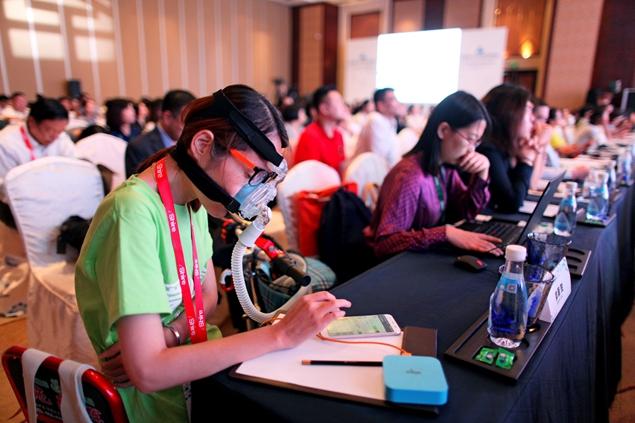
Conference Venue
Rare diseases represent a shared medical and social challenge facing the global community in the 21st century. Addressing the urgent need to alleviate patient suffering, improve quality of life, and leverage China’s abundant case resources to advance rare disease research is a critical priority.
Compared with the mature pathways for addressing rare diseases in developed countries in Europe and the United States, China still lags significantly behind in clinical diagnosis, drug development, medical security, and social support. However, in recent years, the government has steadily increased its support for rare disease prevention and control. In particular, the release of the First Batch of Rare Diseases Catalogue by five ministries and commissions, including the National Health Commission and the National Medical Products Administration, this May has sparked significant reactions within the industry. Society’s attention to rare diseases has deepened, and a growing number of experts and industry professionals recognize that resolving rare disease challenges requires strengthened collaboration and communication among all relevant stakeholders. This is precisely the core purpose and significance of this conference.
This congress has invited over one hundred guest speakers from the field of rare diseases to gather together. Leveraging the comprehensive platform established by the event, it enables full participation from diverse stakeholders and facilitates a holistic exploration of pathways to address rare disease challenges. The congress features more than twenty thematic forums and over one hundred keynote presentations, focusing on advances in the diagnosis and treatment of pediatric rare diseases, the construction of clinical service networks for rare diseases, accelerating rare disease drug research and development, policy developments in rare diseases and orphan drugs, explorations of health insurance payment systems for rare diseases, newborn genomic programs, and global progress in the rare disease field. Closely aligned with the themes of collaboration and innovation, the event fosters in-depth interactive exchanges, striving to comprehensively showcase frontier trends and the latest achievements in the rare disease sector.
Numerous topics and a wealth of new achievements are inseparable from the core philosophy of “patient-centered care.” The patient community is not only central to the implementation of rare disease initiatives but also an indispensable force in the development of the rare disease sector, having become a vital component of the scientific research, diagnosis, treatment, and service systems for rare diseases. For the first time, this conference invited representatives from rare disease organizations in Hong Kong and Taiwan to engage in in-depth discussions and exchanges with their counterparts from mainland China. Together, they strive against these diseases while maintaining hope for the future, jointly advancing progress in the field of rare diseases.