

From Data Governance to Value Realization: The Story Behind LinkDoc’s Unicorn Journey
Following the completion of its RMB 1 billion Series D financing round in the first half of this year, led by “national team” capital China Investment Corporation, LinkDoc Technology has become the first “unicorn” enterprise in China’s medical big data and artificial intelligence sector.
From its founding in 2014 to achieving unicorn status, LinkDoc Technology’s growth spanned just over three years, with a pace akin to light speed. Starting with oncology big data, LinkDoc has built a medical data service platform that provides healthcare big data solutions to medical institutions, pharmaceutical companies, insurance organizations, and other stakeholders, thereby constructing an ecosystem for medical big data applications.
At the recently concluded “4th Chengdu International Forum on Precision Medicine,” VCBeat (WeChat: vcbeat) interviewed Ms. Li Liping, Chief Commercial Officer of LinkDoc Technology, offering an exclusive look into the story behind LinkDoc’s rise to unicorn status.
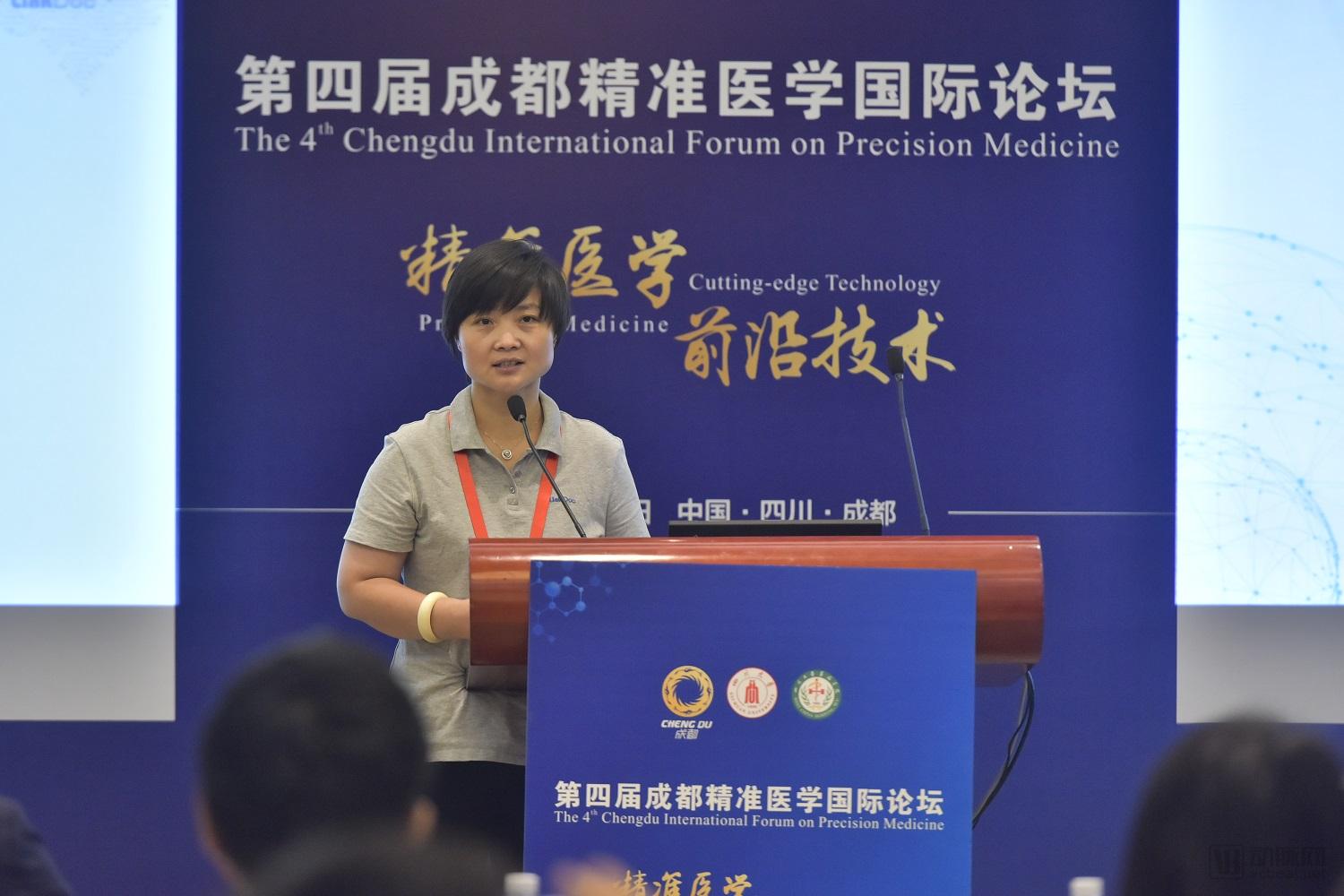
Li Liping, CCO of LinkDoc Technology. Photo provided by the company
In recent years, medical big data, or more specifically, health and medical big data, has become a hot topic. Many companies have established themselves in this field, aiming to mine the “data goldmine.” Approaches vary, ranging from health insurance and pharmaceuticals to clinical applications. LinkDoc Technology has taken a different path by focusing on oncology big data. Through collaborations with hospitals, it integrates, governs, and analyzes clinical data, thereby unlocking the value of previously dormant data.
There are two primary reasons for focusing on big data in oncology. First, oncology is a discipline with a relatively high degree of standardization and well-defined treatment pathways, enabling the acquisition of high-quality data. In China, premium medical resources are highly concentrated; leading departments at major Grade A tertiary hospitals and their department heads handle a vast number of cancer cases. Collaborating with these institutions allows for the rapid accumulation of substantial, high-quality datasets.
Secondly, the incidence and mortality rates of cancer have been rising year by year in recent years. This trend is particularly pronounced in remote, economically underdeveloped regions, where poverty caused or exacerbated by illness remains a recurring challenge. Even financially capable families often find themselves helpless against cancer. These realities impose higher demands on cancer prevention and control. Leveraging data to improve therapeutic methods, enhance treatment standards, or facilitate the discovery of valuable new drugs would yield benefits for multiple stakeholders.
Once the strategic direction was established, the focus shifted to execution. Zero Kr Tech’s approach involves collaborating with hospitals and physicians to build a big data platform that offers tools and services such as data integration, data structuring, post-discharge follow-up, data management and quality control, as well as data delivery and insights. In short, it assists physicians in acquiring, processing, analyzing, and applying clinical data.
Taking data integration as an example, a common phenomenon in clinical practice is that due to the lack of unified industry standards, there are inevitably variations in the wording of medical records across different hospitals, which poses challenges for data entry and analysis. To obtain high-quality data, it is essential to establish standardized guidelines and norms for medical record documentation, thereby ensuring the authenticity and accuracy of data at the source.
“High-quality data is the foundation of scientific research. In the field of oncology abroad, data from just dozens of patients can support the publication of papers in high-impact-factor journals. Another example is the currently booming field of medical artificial intelligence, which also relies on high-quality data. Centering on clinical data, LinkDoc Technology has completed the construction of its data platform,” said Li Liping.
By drawing analogies and applying knowledge across domains, Zero Crumb Technology has currently partnered with over 700 tertiary Grade A general and specialized hospitals, covering more than 900 departments. The company has processed nearly 3 million oncology research-grade medical records, helped integrate and clean over 10 million regional healthcare data entries, and processed more than 10 million medical imaging data sets. As of the first half of 2018, the penetration rate of its big data platform for single oncology diseases had reached 60%, surpassing that of the United States.
“Guided by high-quality data processing, we place the utmost importance on handling our data to the highest standards and quality. Our goal is to build a platform that provides end-to-end services, ensuring data quality from the source. This is what differentiates us from similar enterprises, and it can also be understood as the reason for our rapid growth,” said Li Liping.
According to Li Liping, healthcare institutions have two primary needs regarding the application of clinical data: first, the ability to process data by transforming medical records into usable data; and second, the need for follow-up capabilities that integrate both in-hospital and out-of-hospital processes.
Clinical medical records often take the form of lengthy text passages, which cannot be effectively analyzed in their raw format. They need to be converted into data “points” suitable for building disease diagnosis and treatment models. This issue exists in both paper-based and electronic medical records, necessitating an initial transformation step. Historically, medical records were difficult to utilize; however, once structured, they can be analyzed and mined, addressing a core requirement of clinical research.
The second aspect is patient management. In the realm of critical illnesses, particularly oncology, patients rarely receive continuous treatment at a single hospital. Instead, they often “migrate” among multiple hospitals in cities such as Beijing and Shanghai to obtain comprehensive diagnostic and therapeutic opinions or to seek novel therapies. From a physician’s perspective, there is a strong desire to continuously track the patient’s disease progression, evaluate the efficacy of subsequent treatments, and monitor treatment outcomes.
Currently, Zero Crisp Technology has established a professional follow-up team of over 100 members. With patients’ informed consent, the team proactively conducts patient follow-ups to track and consult on post-discharge care and rehabilitation progress. Comprehensive data have been accumulated across the entire patient journey—from hospital admission and in-hospital treatment to out-of-hospital treatment and rehabilitation. In-hospital and out-of-hospital data can be integrated to form a closed-loop data system, providing physicians with more robust references for treatment decisions.
“In the past, doctors lacked continuous follow-up with patients, making communication outside the clinic difficult. Follow-up services are a strong need for doctors and hospitals. Currently, many hospitals have entrusted us to conduct patient follow-ups, enabling the integration of in-hospital and out-of-hospital data while ensuring patient privacy,” emphasized Li Liping. She highlighted that LinkDoc Technology places great emphasis on patient privacy and has undertaken extensive efforts in this regard. First, informed consent is obtained from patients. Second, patient information remains confidential during communications; follow-up staff do not have access to patients’ personal identifiers, and the sharing of disease-related information is conducted only after de-identification. “The data belongs to the patients,” a principle that LinkDoc Technology has consistently underscored.
In addition to patient follow-up services, LinkDoc Technology has also expanded into DTP (Direct-to-Patient) pharmacies and internet hospitals to better provide comprehensive services for patients. In September 2017, LinkDoc Technology established a dedicated subsidiary responsible for the nationwide layout and operation of an integrated DTP pharmacy and clinical care model. Relying on LinkDoc’s in-depth collaborations with numerous major domestic and international pharmaceutical companies and top-tier hospitals, Linke Smart Pharmacy provides patients with integrated diagnosis, treatment, and medication management services. Currently, Linke Smart Pharmacy operates more than 20 stores, covering most provincial capital cities across China, and is expected to expand to 40 stores by 2018.
In July 2018, Yinchuan LinkDoc Internet Hospital, as one of the first institutions to obtain a national internet hospital license, signed agreements with the Yinchuan Municipal Health and Family Planning Commission and Yinchuan First People's Hospital on information technology infrastructure related to “Internet + Healthcare,” supporting Yinchuan’s development into a national hub for internet hospitals and a National Health and Medical Big Data Center.
The National Health Commission recently issued a notice requiring further advancement of information technology construction in medical institutions, with electronic medical records (EMR) at the core. It permits physicians to issue online prescriptions for certain common and chronic diseases after reviewing patients’ medical records, and allows pharmacists to conduct online prescription reviews and arrange medication delivery. This development is undoubtedly a significant boost to LinkDoc Technology’s “Internet Hospital + DTP Pharmacy” model.
“Integrating internet hospitals with DTP (Direct-to-Patient) pharmacies enables us to provide patients with enhanced diagnostic and treatment services as well as guaranteed medication supply. Meanwhile, we place great emphasis on patient education; our smart pharmacies are equipped with dedicated patient education areas where regular educational activities are conducted to ensure medication adherence,” said Li Liping. She further noted that the model combining in-hospital data, follow-up care, and medication management facilitates end-to-end data integration and achieves a closed-loop data system, which is highly beneficial for LinkDoc Technology in refining its data infrastructure.
ZeroKr Technology’s success is closely tied to the booming development of the health and medical big data industry. As a critical foundational strategic resource for the nation, health and medical big data are rapidly evolving into next-generation information technology and new forms of health and medical service industries.
Currently, big data in health and healthcare is primarily applied in public health and medical services, including scenarios such as clinical research analysis, patient consultation services, and assistance in new drug development. It is also gradually being extended to areas such as clinical pathway optimization, intelligent auxiliary diagnosis and treatment, and personalized precision medicine.
LinkDoc Technology’s product and service roadmap is also developing along the direction of applying healthcare big data. In addition to services for medical institutions and patients, LinkDoc Technology provides AI- and big data-based services to pharmaceutical companies and insurance providers. Currently, LinkDoc Technology’s product portfolio includes:
Big Data Solutions for Healthcare Institutions — Integrated Medical Big Data, Standardized Intelligent Follow-Up, Intelligent Diagnosis of Medical Imaging, and One-Stop Medical Research Services;
Big Data Solutions for Pharmaceutical Companies—Patient Recruitment, Real-World Studies, Data Insights, and Clinical Drug Research;
Big Data Solutions for Insurance Enterprises—Actuarial Science, Fraud Detection, and Pharmacoeconomics;
Out-of-Hospital Patient Services — Internet Hospital + DTP + Outpatient Model, Establishing a New Healthcare Model and a New Channel for Pharmaceutical Distribution.
“Our initial slogan at the time of our founding was ‘Focus on Data, Care for Life.’ After nearly four years of development, we now aspire to ‘activate data intelligence so that everyone can enjoy inclusive and precise medical services.’ To this end, all of our closed-loop operations are built upon data processing. Adopting the operational framework common among internet companies, we have structured our business into front-end, middle-end, and back-end components. The back-end provides technical capabilities; the middle-end assists hospitals with data governance and patient follow-up; and the front-end comprises our internet hospital and DTP (Direct-to-Patient) pharmacies. These components work in close coordination to build platforms and deliver solutions for the healthcare industry,” said Li Liping.
Regarding Lingke Technology’s future development plans, Li Liping stated, “Over the past few years, we have largely progressed in accordance with our established roadmap, as evidenced by the recognition we have gained from both the industry and investors. High-quality data and data processing capabilities will always remain at our core. Moving forward, we will continue to strengthen our technical expertise, explore new avenues, and deliver superior big data and artificial intelligence solutions to the industry.”