

INCOOL Showcases AI-Powered Precision Diagnosis at the 7th Westlake International Thoracic Oncology Forum
“The 7th International West Lake Forum on Thoracic Oncology” was grandly held in Hangzhou from September 14 to 17, 2018. INCOOL Technology (INCOOL) once again showcased its artificial intelligence solutions at this premier summit in thoracic surgery. More than 700 thoracic surgeons gathered for the event, which featured insightful presentations and discussions by over 40 renowned scholars from home and abroad, including representatives from Marmara University Hospital, Shanghai Pulmonary Hospital Affiliated to Tongji University, Copenhagen University Hospital, Queen Mary Hospital (Hong Kong), The First Affiliated Hospital of Zhejiang University School of Medicine, Sichuan Cancer Hospital, and West China Hospital of Sichuan University.
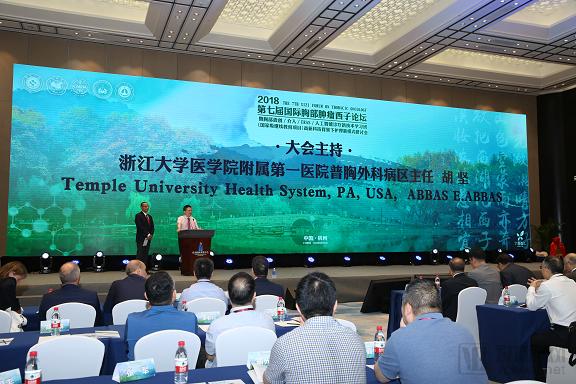
China has long been a region with a high incidence of lung cancer. According to 2017 data from the Chinese National Cancer Registry, there were 781,500 new cases of lung cancer in China that year, with 626,400 deaths. Experts at the conference discussed current advances in the standardized, individualized, and minimally invasive treatment of thoracic diseases both domestically and internationally, as well as progress in interventional therapy and new artificial intelligence–based diagnostic and therapeutic technologies. They shared their experiences, fostering lively discussions and a strong academic atmosphere at the venue.
Professor Liu Deruo from China-Japan Friendship Hospital in Beijing shared insights on the “Clinical Experimental Study of Intelligent Intraoperative Localization for Small Pulmonary Nodules Assisted by Three-Dimensional Reconstruction in Thoracoscopic Surgery.” In his report, Professor Liu pointed out that three-dimensional reconstructed digital visualization models serve as a map for intelligent intraoperative localization of small pulmonary nodules. This technology enables precise identification of nodule locations, clarifies potential anatomical variations during surgery, and more closely approximates actual intraoperative anatomy. Consequently, it facilitates modifications to sublobar resection techniques, enhances surgical speed, safety, and accuracy, and promotes a standardized and proceduralized surgical system that is easier to disseminate. Professor Liu emphasized that the advantage of 3D reconstruction lies in its ability to transform two-dimensional images into three-dimensional representations, providing a comprehensive, intuitive, precise, and objective depiction of small pulmonary nodules. As a safe, non-invasive, and cost-effective smart healthcare tool, it offers a solution to the traditional challenges associated with exploring, palpating, and confirming small pulmonary nodules.
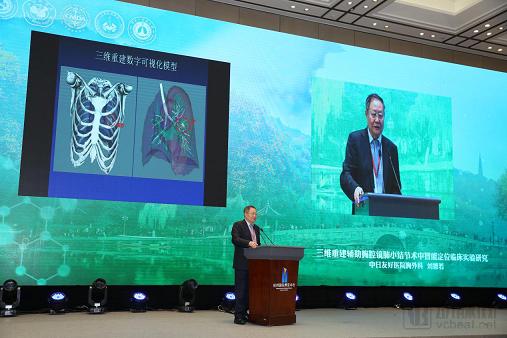
Professor Liu Deruo Introduces the Application of 3D Reconstruction Technology in the Localization of Small Pulmonary Nodules
In recent years, a large number of innovative technologies and software applications have entered the medical field, with clinical implementation of techniques such as three-dimensional reconstruction of medical images and artificial intelligence (AI)-based diagnosis of pulmonary nodules. At this conference, Professor Zhang Yongdong from the School of Information Science and Technology at the University of Science and Technology of China delivered a keynote address titled “Applications of Artificial Intelligence in Medical Imaging.” He shared insights on the development history of AI and typical achievements in intelligent analysis of medical images, and provided a detailed introduction to the application of AI in the detection of pulmonary nodules.
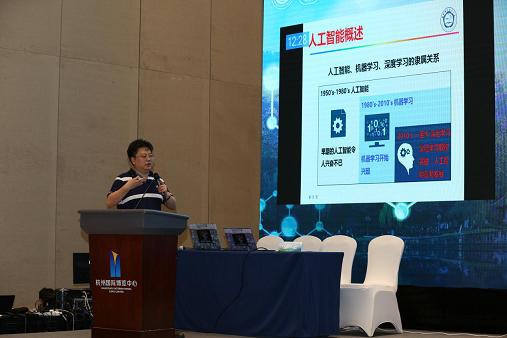
Professor Zhang Yongdong Introduces Applications of Artificial Intelligence in Medical Imaging
Centered on the theme of “Human-Machine Collaboration: Achieving New Heights in Precision Diagnosis and Treatment,” this conference featured a live human-machine collaborative image interpretation session to demonstrate the practical integration of artificial intelligence (AI) with clinical applications. On-site, four multidisciplinary team (MDT) groups from The First Affiliated Hospital, Zhejiang University School of Medicine; Taizhou Hospital of Zhejiang Province; Sun Yat-sen University Cancer Center; and The First Affiliated Hospital of Zhengzhou University collaborated with the AI team from Hangzhou INCOOL Technology Co., Ltd. (INCOOL) to conduct human-machine collaborative diagnosis and treatment using INCOOL’s AI-powered pulmonary diagnostic system.
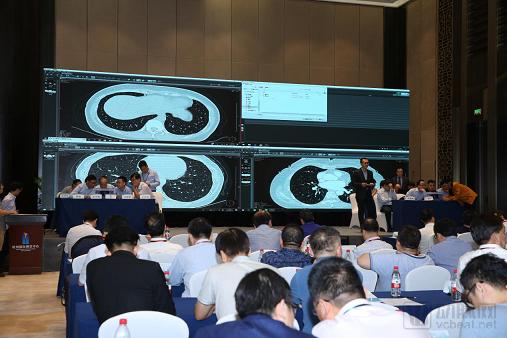
AI-Assisted MDT Teams in Identifying Small Pulmonary Nodules
Throughout the entire human-AI collaboration process, the integration of artificial intelligence technology with the MDT team’s workflow was seamless. Among the eight cases diagnosed on-site, assistance from INCOOL’s lung diagnosis system enabled the MDT team to identify additional lesions in four cases and detect more suspicious lesions in three cases. The results of this human-AI collaboration demonstrate that AI-assisted diagnosis plays a pivotal role in enhancing diagnostic precision. Experts present at the meeting noted that AI facilitates the identification of a greater number of lesions, highlights more suspicious nodules, and assists physicians in better detecting small pulmonary nodules.
Experts led by Professor Hu Jian, Director of the Department of Thoracic Surgery at The First Affiliated Hospital, Zhejiang University School of Medicine, have also emphasized the need to vigorously promote and strengthen research and application of artificial intelligence (AI) in healthcare. They advocate for organizing multidisciplinary experts from various fields to jointly discuss lung cancer screening and early diagnosis, while integrating intelligent robotic technologies to truly achieve precise diagnosis and treatment of small pulmonary nodules as well as preoperative surgical navigation and localization. Currently, China faces challenges such as uneven economic development across regions, disparate levels of development among medical institutions at different tiers, and varying clinical capabilities. Due to the specific characteristics of small pulmonary nodules, misdiagnosis and missed diagnosis are common. Leveraging AI technology enables rapid and efficient automated detection and recognition of small pulmonary nodules, which not only significantly reduces physicians’ workload but also effectively improves diagnostic accuracy for pulmonary nodules, thereby providing patients with standardized, high-quality, and precise diagnostic and therapeutic services.
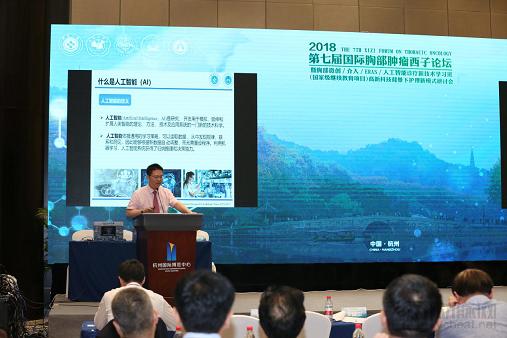
Professor Hu Jian Delivers a Speech on “Prospects for Surgical Diagnosis and Treatment in the Age of Artificial Intelligence”
At the conference, Dr. Zhu Chengchu, President of Taizhou Hospital in Zhejiang Province, pointed out that the true integration of artificial intelligence (AI) into smart healthcare—particularly in areas such as pulmonary nodule diagnosis and big data-driven diagnostics—is only just beginning. The convergence of AI, big data, and healthcare can promote standardization in clinical diagnosis and treatment. Meanwhile, it is crucial for domestic experts to contribute their expertise to the advancement of AI-enabled smart healthcare. China boasts a vast patient population, and its clinicians, radiologists, and pathologists possess extensive experience. By integrating physicians’ clinical expertise with INCOOL’s artificial intelligence technologies to enhance smart healthcare, China has the potential to develop its own unique body of experience and proprietary products. By fully leveraging its abundant patient resources and rich clinical treatment experience, China’s smart healthcare sector has the potential to lead the world.