

Huami Launches Smartwatch, Health Band, and Wearable AI Chip to Build an Integrated 'Hardware + Software + Services' Health Ecosystem
VCBeat (WeChat ID: vcbeat), September 17 — Huami Technology held its 2018 new product launch event in Beijing, unveiling three major products at once: the AMAZFIT smartwatch, the AMAZFIT Health Band 1S, and Huangshan-1, the world’s first artificial intelligence chip designed for the wearable device sector.Among them, the AMAZFIT smartwatch and the AMAZFIT Health Band 1S were simultaneously launched on JD.com, Tmall, and Pinduoduo on the same day, priced at RMB 799 and RMB 699, respectively.
The AMAZFIT brand has celebrated its third anniversary. Huang Wang, founder and CEO of Huami Technology, took the stage first to present a performance report. In Q2 2018, AMAZFIT accounted for 42% of Huami’s sales revenue.AMAZFIT has become the smart sports watch brand with the largest global shipment volume. In Q2 2018, the Amazfit Bip (Youth Edition) surpassed the Apple Watch Series 3 to become the third best-selling smartwatch worldwide.
Huang Wang, Founder and CEO of Huami Technology
Following its listing on the New York Stock Exchange in February this year, Huami Technology undertook a series of investments and mergers and acquisitions. It successively acquired PEI, the pioneer of precise sports heart rate monitoring under Adidas, and ZEPP, a world-leading sports sensor manufacturer. These acquisitions secured relevant patented technologies, product lines, and talent, enabling Huami to build a sports and health product matrix centered on smart sports watches. Furthermore, the company expanded its distribution channels by entering Xiaomi Home and Apple Store.
At the meeting, Huang WangCentering on the three major themes of “Intelligence, Health, and Future,” this article introduces Huami Technology’s strategic layout in its IoT ecosystem, medical health, and artificial intelligence.
AI in IoT: Building an IoT Ecosystem Centered on Sports and Health Smartwatches
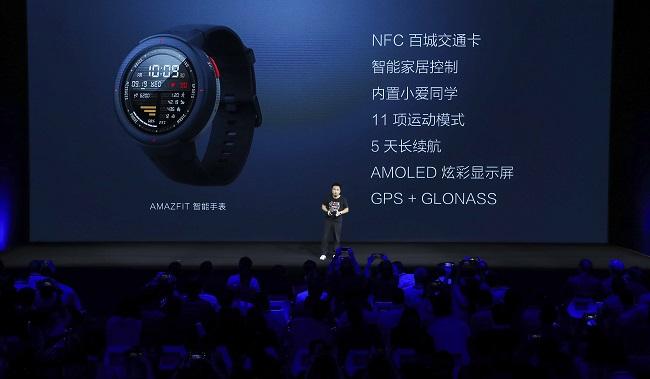
First, in terms of intelligence, the newly released Amazfit smartwatch has Xiao Ai built-in, enabling voice control. While serving as your personal assistant, it also conveniently controls Mi Home smart devices, such as receiving alarm notifications from Aqara sensors. This turns the watch into an always-online butler and a new gateway for the Internet of Everything, making it far more practical than Apple’s Siri and HomeKit.
As early as the beginning of this year, when the company went public, Huang Wang stated: “Huami Technology’s mission is to seamlessly connect human emotions and activities to the internet, thereby improving people’s lives. We aim to connect individuals to the internet through wearable devices, linking them to the entire smart home ecosystem and intelligent hardware, thus integrating people into the broader Internet of Things (IoT) world via wearables.”
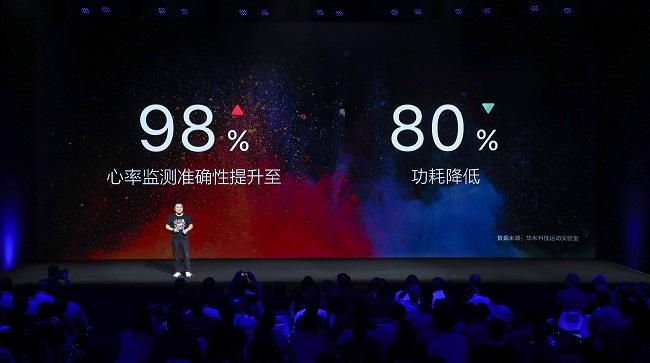
Another core feature of the Huami smartwatch lies in sports and health. It not only comes with 11 built-in sports modes but also incorporates a dual-satellite positioning system (GPS + GLONASS) to accurately track your exercise routes and calculate calories burned. Powered by Huami’s self-developed new-generation high-precision optical sensor and algorithms, it achieves 98% accuracy while reducing power consumption by 80%. With support for all-day heart rate monitoring and alerts for abnormal heart rates during exercise, it safeguards your sports and health wellness.
AI in Health: Hardware + Software + Services, Building a Closed-Loop Health Service Ecosystem
Secondly, Huami Technology has also achieved major breakthroughs in the field of medical health.
According to data from the "China Cardiovascular Disease Report 2017 (Summary)," the number of patients with cardiovascular diseases in China has reached approximately 290 million, and cardiovascular disease accounts for more than 40% of all disease-related deaths among Chinese residents. However, 80% of cardiovascular diseases can actually be prevented through screening and control measures.
Cardiovascular disease screening involves electrocardiogram (ECG) testing. While an ECG exam at a hospital typically takes only 30 seconds, patients often wait more than three hours in line. So, how can we achieve real-time monitoring of our heart health?
As early as April 25 last year, at Huami’s new product launch event, Huami Technology unveiled the AMAZFIT Health Band, which enables on-demand electrocardiogram (ECG) monitoring via an integrated ECG sensor. According to Huang Wang, by September, the device had collected and analyzed 5,175,722 ECG records, with over 14,489 cases of atrial fibrillation clinically confirmed by physicians.
Newly Upgraded Health Tracker
The newly launched Amazfit Mi Health Band 1S, unveiled at this press conference, retains the classic ECG sensor while incorporating Huami Technology’s self-developed next-generation high-precision optical PPG sensor for the first time. This new sensor offers higher accuracy and lower power consumption. Compared to its predecessor, heart rate monitoring accuracy has improved to 98%, and power consumption has been reduced by 80%. With an upgraded AI neural network, the device evolves from ECG-based measurements to PPG optical sensing, advancing from passive ECG recording to 24/7 automatic monitoring.
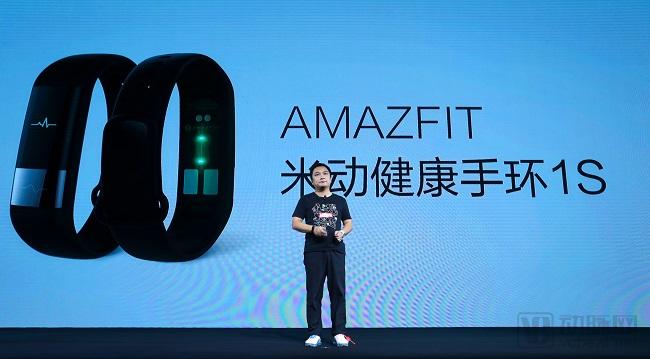
Powered by AI, the Amazfit Health Band 1S can automatically detect cardiac arrhythmias (including atrial fibrillation), issue immediate alerts, and measure and record real-time data for hospital reference, enabling proactive prevention. This represents a breakthrough advancement in the R&D of medical and general health within the smart wearable sector.
Arrhythmia is a common symptom of cardiovascular disease. Atrial fibrillation (AFib), as the name suggests, refers to the quivering or irregular beating of the atria and is a common type of malignant arrhythmia. Patients with AFib are prone to forming thrombi within the heart, and these clots can easily dislodge. When a dislodged thrombus travels through the bloodstream to the brain, it can readily cause an ischemic stroke. Since early-stage AFib is mostly paroxysmal, its onset signals are difficult to capture, making it highly likely that potential disease risks will be overlooked.
Now, the Amazfit Health Band 1S uses optical sensors to continuously monitor your heart 24 hours a day, providing early warnings and recording electrocardiogram (ECG) data at that time, thereby capturing more potential heart health risks.
“Hardware + Software + Services” Closed-Loop Health Service
However, Huang Wang stated that intelligent monitoring is not equivalent to a health product. A fitness tracker serves merely as the hardware foundation; a true health product must integrate hardware, software, and services to establish a complete closed-loop health service ecosystem. “We have intelligent hardware and cloud-based AI analytics, but we also require an authoritative medical team to provide professional judgments.”
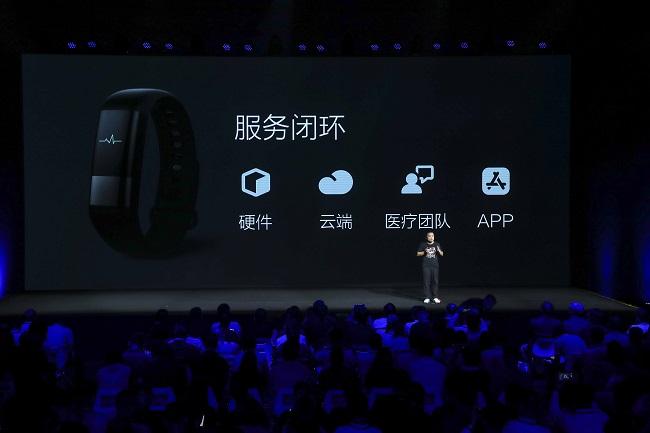
Therefore,The Amazfit Mi Health Band 1S integrates with the Mi Health app, offering a comprehensive suite of medical and health services. These include 24/7 free telephone consultations with medical experts, weekly health reports, and reminders for daily healthy habits such as medication intake, hydration, and reducing sedentary behavior. Additionally, it features a family health monitoring function, safeguarding the well-being of users and their loved ones.
Thus, it is evident that the entire closed-loop health service ecosystem encompasses hardware, cloud infrastructure, medical teams, and a mobile application. By spanning data monitoring, data analysis, and data-driven services, this model achieves a closed loop of data value, constituting a truly comprehensive health product.
Furthermore, regarding user privacy, Huang Wang stated that Huami Technology has attached great importance to the protection of users’ personal privacy, particularly their physical health data, since its inception. Huami Technology’s cloud services team has successfully complied with the General Data Protection Regulation (GDPR), the world’s most stringent data protection law.
AI in Chip: The World's First Artificial Intelligence Chip in the Wearable Sector
Finally, Huami Technology officially launched the world’s first artificial intelligence chip for the wearable sector, “Huangshan No. 1”.This chip is developed based on the RISC-V instruction set architecture and integrates an Always-On (AON) module controller and a neural network acceleration module.
The RISC-V instruction set architecture is a research project initiated by the University of California, Berkeley in 2010. It was developed by a research group based on their study of CPU instruction set architectures over the past three decades and their understanding of current and future software and application domains.
The RISC-V Foundation was established in 2016. Within just over two years, its membership exceeded 150, including many globally renowned technology companies. This reflects, to a certain extent, the tech industry’s enthusiasm for RISC-V as an open-source instruction set architecture (ISA). Compared with other architectures such as x86 and ARM, RISC-V offers high performance, low power consumption, small footprint, and ease of customization and extension. Moreover, being open and free of charge, it is particularly well-suited for tiny embedded systems and stands out as the most suitable processor architecture for the Internet of Things (IoT) era.
Regarding the launch of “Huangshan 1,” Professor Krste Asanovic, Chairman of the RISC-V Foundation, along with its members, enthusiastically commented that it is the world’s first wearable processor based on RISC-V, marking a significant step forward in expanding RISC-V application scenarios. They look forward to its impressive performance in the smart wearables sector.
Furthermore, Huangshan-1 integrates an Always-On (AON) module, which not only features low power consumption but also automatically transfers sensor data to the internal SRAM, enabling faster and more stable data storage performance. Even more commendable is thatIt integrates a neural network acceleration module, enabling on-device AI processing. Through four core engines—Heart Rate, ECG Engine, ECG Engine Pro, and Arrhythmias—it performs real-time monitoring and analysis of heart rate, electrocardiogram (ECG), and arrhythmias, making it widely applicable in various smart wearable devices.
According to IDC’s forecast, the global wearable device market will maintain a compound annual growth rate (CAGR) of 13.4% over the next five years, with shipments reaching 219.4 million units in 2020. Driven by the widespread adoption of artificial intelligence (AI) and deep integration into the medical and health sectors, the industry is poised for significant breakthroughs.From this press conference, it is evident that Huami Technology has taken the lead in strategic positioning and market placement, with promising prospects ahead!