

New Electronic Medical Record Policy Unlocks Two Billion-Yuan Markets in Healthcare IT: How Hospitals Should Choose Solutions to Meet Compliance Requirements
Recently, the Medical Administration and Hospital Administration Bureau of the National Health Commission issued the “Notice on Further Promoting the Construction of Information Systems in Medical Institutions with Electronic Medical Records at the Core” (hereinafter referred to as the “Notice”). As it involves core issues such as hospital accreditation and compliance, it has drawn significant attention from hospitals at all levels.
VCBeat (WeChat ID: VCBEAT) has found, after in-depth research, that the impact of this "Notice" on the medical informatization market will be extraordinary. The rigid demand driven by the policy will bring significant benefits to this market.
Meanwhile, VCBeat has also observed that this market features a wide variety of products, lacking unified standards in terms of naming and functionality, with significant price disparities. Hospitals undertaking informatization initiatives must carefully select solutions based on their specific needs to comply with the requirements set forth in the “Notice.”
Market Space for CDSS and Integration Platforms in Tertiary Hospitals
VCBeat estimates that the introduction of this new policy could activate two markets, each valued at RMB 10 billion.
For no other reason, the Notice specifies three predetermined time points:
First, by 2020, tertiary hospitals must achieve a level of 4 or higher in the hierarchical evaluation, which entails realizing hospital-wide information sharing and possessing clinical decision support capabilities. Second, by 2020, tertiary hospitals must achieve interconnectivity of information across all diagnosis and treatment processes within the hospital, reaching Level 4 maturity in the standardized assessment of hospital information interconnectivity. Third, by 2020, tertiary hospitals must achieve full coverage of electronic medical records (EMR) across all stages of informatized diagnosis and treatment services.
Although these three timeframes are all targets based on the current application of electronic medical records (EMRs) in tertiary hospitals, what is particularly noteworthy are the two areas of clinical decision support and the maturity assessment of interoperability.
Let's start with medical decision support:
It is well known that the adoption of Clinical Decision Support Systems (CDSS) by medical institutions in China is not solely driven by the goal of improving healthcare service quality, but also by other contributing factors. These primarily include two aspects: first, national policy initiatives promoting the development of primary healthcare; and second, the informatization rating requirements for large medical institutions (such as HIMSS and the Electronic Medical Record Grading Evaluation). This is clearly evident from the procurement announcement for a Clinical Decision Support System (CDSS) released by Jiangsu Province People’s Hospital on July 4, 2018:
1. Project Name: Procurement Project for the Clinical Decision Support System (CDSS) of Jiangsu Province Hospital
2. Project Overview: This project aims to enhance the hospital’s informatization capabilities, ensuring successful passage of the National Interconnectivity Maturity Assessment (Level 5 Grade B) and the Electronic Medical Record (EMR) Application Level Evaluation (Level 5). It involves constructing a hospital-wide, cross-specialty clinical knowledge base for diagnosis and treatment sharing, significantly improving medical quality and clinical efficiency. By strengthening the knowledge base’s support for clinical operations, the project will bolster the hospital’s core competitiveness, thereby delivering higher-quality medical services to patients.
In the "Evaluation Methods and Standards for Functional Application Levels of Electronic Medical Record Systems (2018 Revised Draft for Comments)," clear requirements are specified for Clinical Decision Support Systems (CDSS). Taking Level 5 as an example:
Level 5: Unified data management, intermediate-level clinical decision support.
1. Local Requirements: Each department shall leverage the hospital-wide unified integrated information and knowledge base to provide standardized resources—such as clinical diagnosis and treatment guidelines, rational drug use protocols, and clinical pathways—thereby enabling integrated data visualization and decision support functionalities for the department.
2. Overall Requirements:
(1) Data from all hospital systems can be integrated in accordance with a unified clinical data management mechanism, and cross-departmental integration display tools are provided.
(2) Equipped with comprehensive intelligent data collection tools that support the structured and intelligent documentation of medical records, reports, and other clinical documents.
(3) Leverage integrated patient information to deliver decision support services via a knowledge base, and provide data mining capabilities for clinical research.
In this regard, Peking University Third Hospital is undoubtedly at the forefront in China. After launching its Clinical Decision Support System (CDSS) this year, it has successfully passed the Level 5-Yi evaluation for interoperability and connectivity, becoming one of only five hospitals in China to date to achieve the highest assessment rating.
Within the HIMSS EMRAM evaluation criteria, Clinical Decision Support (CDS) is also one of the most core assessment points. Starting from Stage 2 of EMRAM, nearly every stage imposes requirements on CDS. The entire progression from Stage 0 to Stage 7 is essentially a process of incremental enhancement and continuous upgrading of CDS capabilities, culminating in comprehensive clinical decision support (full CDS) at Stage 7.
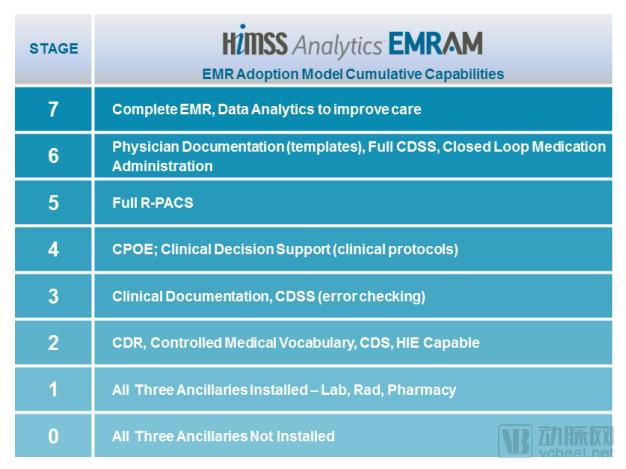
Source: HIMSS Analytics official website
Following the release of the “Notice,” the development of Clinical Decision Support Systems (CDSS) was also placed on the agenda of tertiary hospitals. This inevitably raises the question: how large will the market potential for CDSS actually be by 2020?
According to the data on the number of medical and health institutions nationwide as of the end of June 2018, released by the Statistical Information Center of the National Health Commission, there were 2,439 tertiary hospitals in China as of the end of June 2018, an increase of 153 from the 2,286 recorded at the end of June 2017. Assuming an annual increase of 160 hospitals, the number of tertiary hospitals in China is projected to reach approximately 2,606 by 2020.
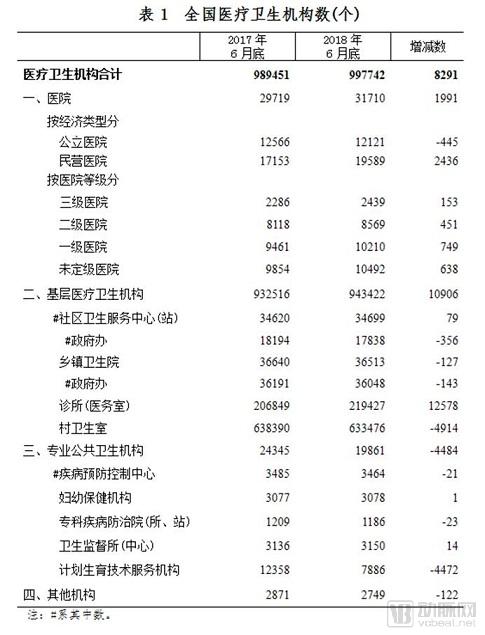
Data Source: Statistical Information Center of the National Health Commission
Based on tender data from the China Government Procurement Network, we identified the prices of Clinical Decision Support System (CDSS) products for certain hospitals between 2017 and 2018, as detailed in the figure below. Estimates indicate that the average unit price of CDSS in China is approximately RMB 450,000.
![O%%D`RCMC2Y%J]DNKM[AU17.png](https://cdn.vcbeat.top/upload/image/03/09/18/16/1537240565698563.png)
Data source: China Government Procurement Network
However, according to industry experts, many products currently on the market are not true Clinical Decision Support Systems (CDSS). Instead, they are annually subscribed evidence-based knowledge bases that provide access to digital library resources. These are fundamentally different from CDSS. In previous years, accreditation requirements for tertiary hospitals included mandates for clinical decision support. At that time, big data applications were not yet widespread, so knowledge bases were generally accepted as decision support tools by default. In essence, however, their core function is merely to serve as a literature search tool for physicians.
Therefore, according to industry insiders, there is a wide range in the actual pricing of Clinical Decision Support Systems (CDSS). Typically, prices range from RMB 500,000 to RMB 1 million, with some high-end products reaching approximately RMB 4 million. Furthermore, CDSS is sometimes bundled into larger projects and not sold separately. Consequently, after careful consideration, VCBeat estimates that the current average market price for CDSS is approximately RMB 750,000.
Based on the above information, VCBeat estimates that the market size for CDSS in tertiary hospitals was approximately RMB 1.9 billion in 2020.
At first glance, the market size does not appear to be substantial. However, if we consider companies’ horizontal expansion around clinical departments—such as offering value-added services based on Clinical Decision Support Systems (CDSS) and launching specialty-specific CDSS tailored to different clinical departments—the potential market size would be approximately ten times the original figure, reaching RMB 19 billion.
This is not impossible. The trend is evident in the emergency department clinical decision support system (CDSS) launched by Mijian, which is based on the emergency and critical care treatment system as well as emergency diagnosis and treatment standards and guidelines, and in the CDSS products introduced by Huimei Technology, which address the decision support needs across different levels of medical institutions and various stages of hospital diagnosis and treatment—specifically, inpatient and outpatient/emergency CDSS for large hospitals and primary care general practice CDSS for grassroots institutions. These scenario-specific CDSS solutions are all outcomes of companies’ horizontal market expansion.
Furthermore, the evidence-based medicine clinical decision support system launched by Jiahe Meikang, which is built on big data and artificial intelligence technologies, not only incorporates the aforementioned functionalities but also achieves precise prediction of rapid disease progression in specialized fields and specific diseases.
Similarly, we analyze the market opportunities and potential brought about by interoperability.
Based on the "National Medical and Health Information Hospital Information Interconnectivity Standardization Maturity Assessment Plan (2017 Edition)," the section on infrastructure construction within the assessment content states:
Standardization of Interconnectivity Construction is primarily targeted at hospital information platforms or information management systems based on electronic medical records (EMR). The assessment indicators for interconnectivity standardization encompass three aspects: technical architecture, interconnectivity service functions, and platform operational performance. Among these, the development of an integration platform is particularly critical to the functionality of interconnectivity services.
Similarly, we reviewed the bidding data on the China Government Procurement Network to examine the product prices of hospital integration platforms at selected hospitals in 2018, as shown in the figure below. We estimate that the average unit price of integration platforms in China is approximately RMB 5.4 million.
![M`ME5DUTMBTXQ9{Q1V7M}]R.png](https://cdn.vcbeat.top/upload/image/03/09/18/17/1537240658830944.png)
Data source: Chinese Government Bidding Network
Therefore, the approximate market size for the construction of integration platforms in tertiary hospitals in 2020 was estimated at around RMB 10.9 billion.
The Significance and Current Status of Electronic Medical Record (EMR) Systems and Interconnectivity Ratings in Hospitals
The National Medical Administration has issued new policies, with hospitals naturally bearing the brunt as the parties directly affected.
In this regard, Lu Huijing, Director of the Information Department at the Second Affiliated Hospital of Guangzhou Medical University, believes that the significance of the current "Notice" is self-evident. In the past, many hospitals may have been hesitant about whether to undergo accreditation and grading assessments. However, tertiary hospitals now have no choice but to seriously consider undergoing the Electronic Medical Record (EMR) System Grading Assessment and the Interconnectivity Maturity Evaluation.
According to Director Lu, there are significant variations in management practices among general hospitals, making it impossible for each hospital to distribute its resources equally across all disciplines. Consequently, hospitals prioritize investment in their two or three strongest specialties. As a result, many hospital processes are designed based on these strategic priorities. It is precisely due to these differences in workflows and regulatory mechanisms that hospitals have varying requirements for information technology solutions such as Hospital Information Systems (HIS) and Laboratory Information Systems (LIS).
For Clinical Decision Support Systems (CDSS), on one hand, they represent a critical intelligent derivative application of Electronic Medical Records (EMR); on the other hand, during the diagnosis and treatment process, EMRs standardize and regulate the generation of clinical data, thereby providing high-quality, valuable data for clinical decision support. The two are complementary and indispensable to each other.
Given the significant variations among hospitals and standards, it is essential to initiate efforts toward interoperability and electronic medical record (EMR) grading by leveraging data and shared documentation.
Regarding the expansion of electronic medical records (EMRs) across various diagnostic and treatment processes in tertiary hospitals, as mentioned in the “Notice,” Heng Fanxiu, Director of the Information Center at Peking University Cancer Hospital, offered his perspective. Currently, the utilization rates of inpatient EMRs, physician order entry, pharmacy, nursing, anesthesia, imaging, laboratory, and pathology systems in tertiary hospitals are relatively high. Since most hospitals began establishing these clinical systems around 2005, their adoption has been quite promising. However, due to well-known reasons, outpatient EMRs remain largely undeveloped in many hospitals, particularly in large general hospitals.
Regarding the importance of CDSS, Director Heng stated that there was a demand for clinical decision support functions when early physician order entry and electronic medical record (EMR) systems were implemented; however, technological developments at the time were insufficient to support more advanced decision support capabilities. With significant advancements in big data technology, the functionality of CDSS has been substantially enhanced, moving beyond simple alerts and reminders. Consequently, the requirements for Level 5 EMRs in the 2018 edition have been elevated to an intermediate level.
Furthermore, as a system with an embedded architecture, CDSS can be seamlessly integrated into any existing system. Therefore, hospitals do not need to replace their legacy electronic medical records (EMRs). However, at present, the most significant factor hindering the development of CDSS is the authority and completeness of its knowledge base system.
Similar to Director He Heng’s viewpoint, Director Lu also believes that ensuring the standardization and authority of foundational data is a critical issue, as the healthcare industry has yet to establish sufficiently authoritative clinical knowledge bases and rule sets.
The underlying reason is that Clinical Decision Support Systems (CDSS) require substantial support from medical literature and clinical data, including vast amounts of information such as basic medical knowledge, clinical guidelines, evidence-based medicine data, real-world data, medical dictionaries, and medical atlases. However, hospital data systems operate in silos, and information sharing between hospitals is difficult, resulting in poor integration of these resources. The lack of authentic and authoritative clinical knowledge bases and rule engines makes it challenging for CDSS to be effectively supported by real-world clinical case data, thereby casting doubt on the practical utility of CDSS products offered by enterprises.
In addition, Director Lu also voiced her concerns regarding the timelines specified in the “Notice.” She pointed out that there is no shortage of tertiary hospitals, and achieving Level 5 Electronic Medical Record (EMR) adoption and Level 4 Interconnectivity across all hospitals by 2020 would pose a significant challenge, particularly in completing the accreditation process within such a limited timeframe.
Taking the Electronic Medical Record (EMR) system grading as an example, the standard procedure involves hospitals self-declaring and completing application forms. Systems rated below Level 4 are evaluated by provincial authorities, while those at Level 4 and above are directly assessed by national bodies. Initially, hospitals must capture screenshots demonstrating functionality according to the evaluation criteria, annotate the implementation methods, and submit them for online review. Upon passing the online review, evaluation experts conduct on-site audits at the hospitals. Only after successfully passing the on-site audit does a hospital receive its official grading. This entire process, encompassing both online and offline stages, typically takes approximately six months. Given the limited number of evaluation experts, it would be extremely challenging to complete audits for more than 2,600 tertiary hospitals across China in 2020.
How Should Hospitals Choose a CDSS?
As previously mentioned, the prices of CDSS procured by different hospitals vary significantly, ranging from several hundred thousand to several million yuan. To understand the reasons behind this price disparity, VCBeat consulted relevant industry experts.
According to the product head at Huimei Technology, electronic medical record (EMR) systems rated at Level 4 or above in the graded evaluation are required to feature clinical decision support capabilities. Clinical decision support is not equivalent to a knowledge base; rather, it represents an application more closely aligned with artificial intelligence. For instance, it must be capable of processing unstructured, multidimensional clinical data, automatically generating a list of differential diagnoses based on patient-specific clinical data, and recommending personalized diagnosis and treatment plans. Advanced decision support must cover all aspects of medical care and rely on an evidence-based, real-time updated medical knowledge base. Variations in the authority of the knowledge base, the capability to process unstructured data, and the predictive power of the models are key factors contributing to price differences among Clinical Decision Support Systems (CDSS).
Taking the Clinical Decision Support System (CDSS) developed by Huimei Technology as an example, its knowledge base is sourced from Mayo Clinic. Additionally, an algorithm team composed of machine learning engineers and clinicians utilizes deep learning techniques to perform unstructured processing and model predictions on patient clinical data, fully meeting the requirements for the graded evaluation of electronic medical record informatization.
This point is also largely consistent with what Director Heng stated.
According to Director Heng, primary clinical decision support mainly provides alerts for simple conditions, such as reminders on rational drug use and drug incompatibilities, and offers a knowledge base of clinical practice guidelines. Intermediate decision support can handle relatively complex conditions, such as contraindication alerts for medication use based on factors including diseases mentioned in medical history, diagnoses, age, and gender, providing a knowledge system grounded in evidence-based medicine. Advanced decision support leverages big data processing and machine learning, drawing on clinical practice guidelines, evidence-based medicine knowledge systems, and real-world data to provide early warnings of clinical behaviors, prognostic analysis, and recommendations of similar medical cases.
Furthermore, the updated version of the "Medical Device Classification Catalog" has provided definitions and classifications for decision support software. However, it is understood that hospitals are not currently mandated to procure only Clinical Decision Support System (CDSS) products listed in the Medical Device Classification Catalog. Consequently, CDSS products, even those with Class II certification, remain scarce in the market. Insights from leading domestic CDSS companies indicate that many are in the process of submitting applications. Being among the first to obtain Class II or even Class III medical device registration certificates may become a key factor for companies to stand out in the market.
 Source: GeneralAnnouncement of the Administration on Issuing the Catalogue for Classification of Medical Devices (No. 104, 2017)
Faced with a wide array of products that vary significantly in functionality and price, hospitals can only make appropriate choices by grounding their decisions in their own actual needs.
Reference: OMAHA Alliance—Market Opportunities and Challenges Coexist, Guiding the Better Development of CDSS with Experience and Recommendations