

YueMiao Releases Report on Chinese Women's Awareness and Willingness Regarding HPV Vaccination as Cervical Cancer Prevention
In China, cervical cancer is the most common malignant tumor of the female reproductive tract. In 2015, there were 98,900 new cases and 30,500 deaths. Persistent HPV infection is the primary cause of cervical cancer, and sexual activity is a major route of HPV transmission. Women who are sexually active have an 80% risk of contracting HPV.
With the approval of HPV vaccine introduction in mainland China and the subsequent rollout of vaccinations across the country, adult vaccines have garnered renewed attention. As a widely recognized online platform for scheduling adult vaccinations, “YueMiao” has, within its first year of operation, achieved over 9 million exposures of disease prevention knowledge, provided more than 800,000 online consultations, and facilitated over 250,000 online vaccine appointments.
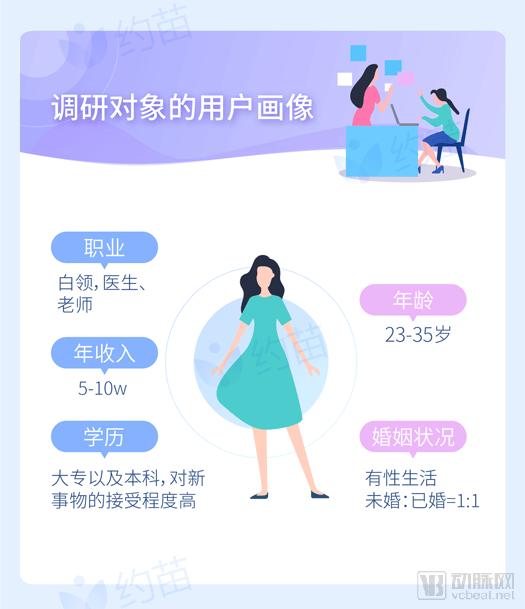
To assess public awareness of cervical cancer and HPV vaccines, and to provide data references for enhancing disease prevention knowledge among citizens and supporting further research, YueMiao, in collaboration with the Women’s Health Care Branch of the Chinese Preventive Medicine Association and the Special Committee on Cervical Cancer Prevention and Control Research under the Maternal and Child Health Research Association, collected and analyzed 10,000 survey responses from the YueMiao platform on September 19. The “Report on Chinese Women’s Awareness and Willingness Regarding HPV Vaccines” was subsequently released. VCBeat (WeChat ID: vcbeat) reported on this development.
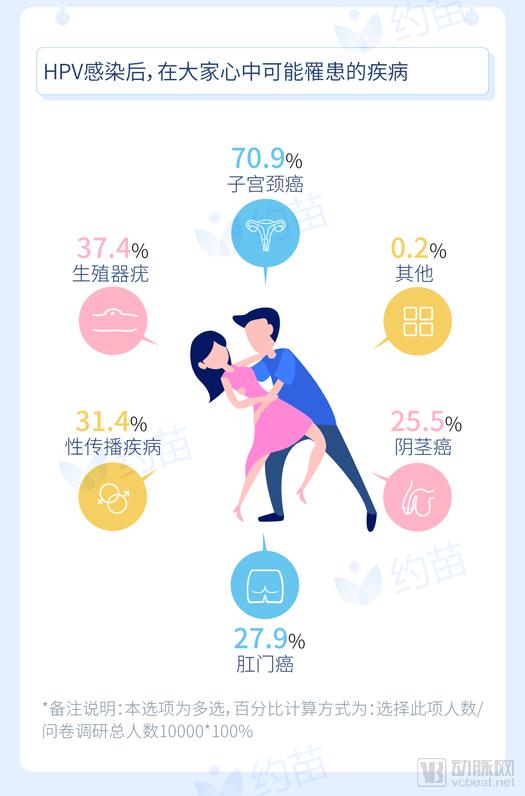
Human papillomavirus (HPV), also known as the human papillomavirus, can cause squamous epithelial proliferation of the skin and mucous membranes after infection, leading to cervical epithelial lesions. It can also trigger diseases such as common warts and genital warts (condyloma acuminatum) in areas including the vulva, perianal region, and oral cavity. Following HPV infection, the diseases that people commonly fear developing include cervical cancer, genital warts, sexually transmitted diseases, anal cancer, penile cancer, and others. Among these, 70.9% of individuals are concerned about developing cervical cancer.
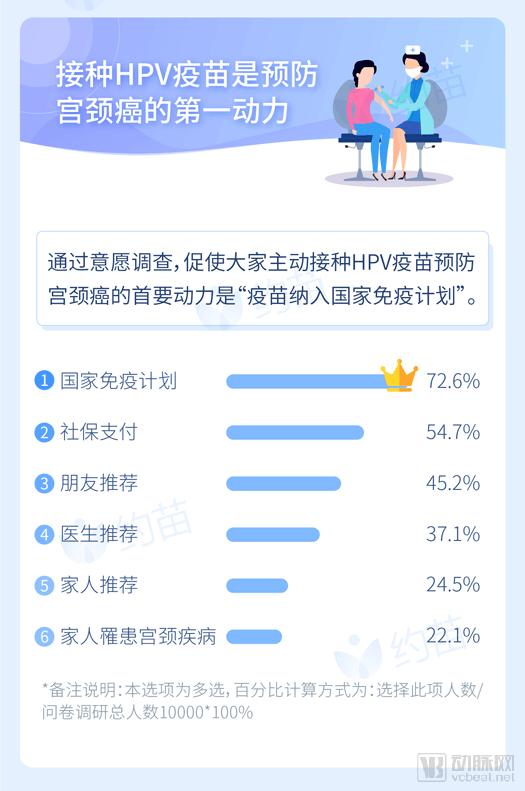
According to the willingness survey, the primary driver motivating individuals to proactively receive HPV vaccination for cervical cancer prevention is the “inclusion of the vaccine in the National Immunization Program.” This is followed by social insurance coverage, recommendations from friends, recommendations from physicians, and having family members affected by cervical diseases.
Among those unwilling to receive the HPV vaccine, reasons for refusal include high cost, the perception that the vaccine has not yet been widely promoted and used, and concerns about safety and efficacy. Notably, 35.5% of respondents chose not to get vaccinated because they believed they or their partners were not at risk of developing cervical cancer.
According to the report, assuming equal vaccine efficacy, 50% of respondents were indifferent to whether the vaccine was domestically produced or imported, while 20% and 30% chose domestically produced and imported vaccines, respectively.
Regarding the top concerns about HPV vaccination, vaccine efficacy and safety ranked highest, cited by 88.1% and 84.5% of respondents, respectively. Concerns about cost, vaccination timing, and pain associated with injection were reported by 64.9%, 43.5%, and 42.5% of respondents, respectively. (Note: This was a multiple-choice question; percentages were calculated as the number of respondents selecting each option divided by the total number of survey participants [10,000], multiplied by 100%.)
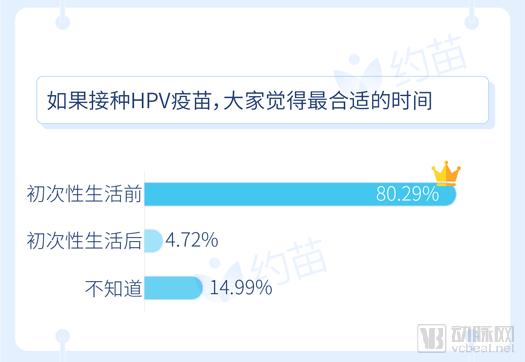
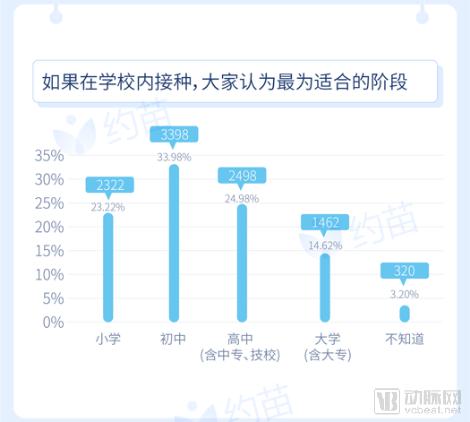
Regarding the optimal timing for HPV vaccination, 80.29% of respondents chose to receive the vaccine before their first sexual encounter. According to the World Health Organization (WHO), the recommended age range for vaccination is 9–14 years, with the period prior to sexual debut being the optimal time for administration.
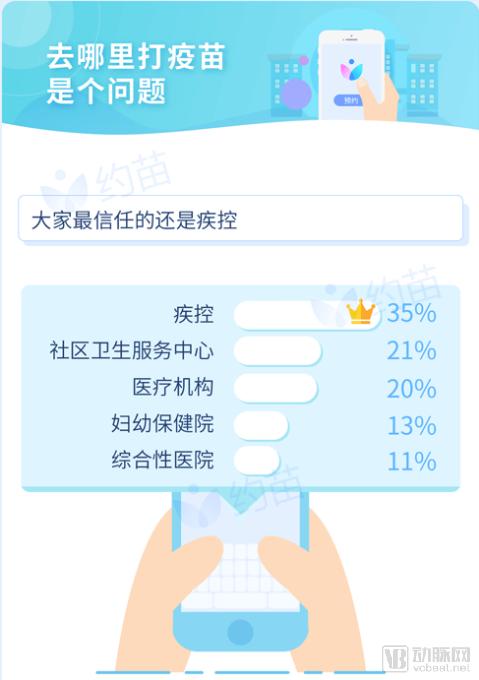
Regarding the choice of vaccination sites, the data reveals that the Centers for Disease Control and Prevention (CDC) are the most trusted, accounting for 35% of respondents. Community health service centers follow closely behind, while medical institutions, maternal and child health hospitals, and general hospitals were chosen by 20%, 23%, and 11% of respondents, respectively.
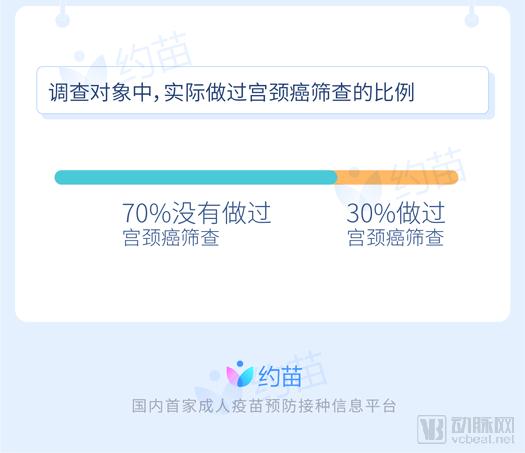
In addition to receiving the HPV vaccine, cervical cancer screening is more important as a preventive measure than treatment. The significance of cervical cancer screening lies in its ability to prevent disease, enable early detection, and facilitate early treatment. The "Chinese Guidelines for Comprehensive Prevention and Control of Cervical Cancer" recommend cervical cancer screening for women aged 25–64 years; however, only 30% of the respondents in this survey had actually undergone cervical cancer screening.
The above report presents only a subset of the survey findings. While ongoing health education and science popularization have fostered a basic public understanding of HPV vaccines, efforts to promote knowledge about HPV vaccines and cervical cancer must continue to expand in both scope and depth. The “Yue Miao” platform remains committed to refining its services, strengthening collaborations with Centers for Disease Control and Prevention (CDCs) and other major institutions, and delivering high-quality services to citizens, thereby raising broader awareness of the importance and significance of HPV vaccination.
To view the full report, clickLinkLearn more.