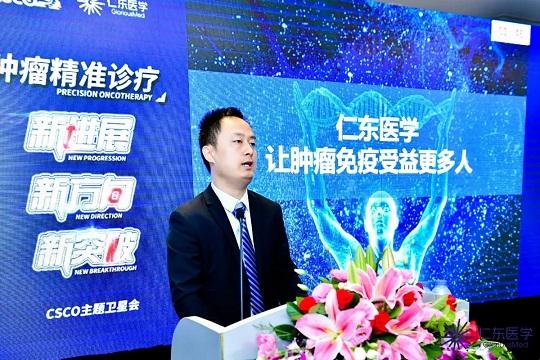
Rendu Medicine Unveils New Advances in Precision Immuno-Oncology at CSCO 2018 Satellite Symposium
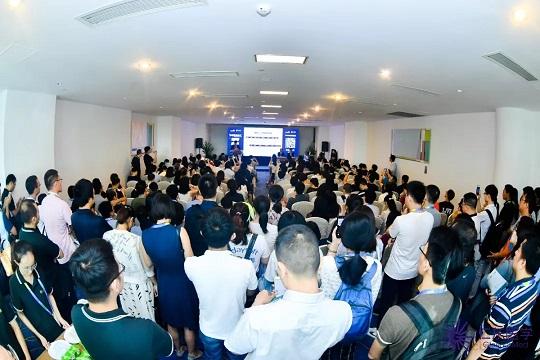
Recently, VCBeat (WeChat Official Account: vcbeat) learned that the 2018 CSCO Annual Academic Conference kicked off as scheduled in Xiamen. RenDong Medicine held a themed satellite symposium titled “New Advances, New Directions, and New Breakthroughs in Precision Diagnosis and Treatment of Cancer” at the conference, attracting widespread attention from experts and scholars in industry, academia, and research institutions both in China and abroad.
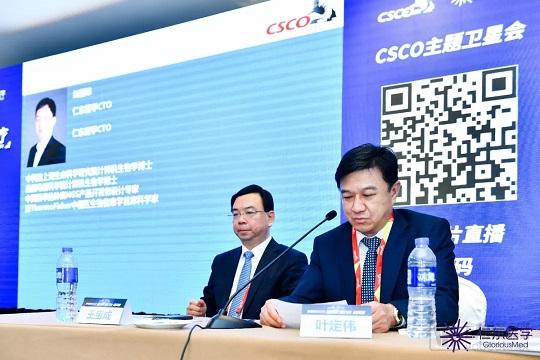
This satellite symposium, centered on “Precision Diagnosis and Treatment of Tumors,” was moderated by Professor Ye Dingwei, President of Fudan University Shanghai Cancer Center, and Professor Wang Baocheng, President of the General Hospital of Jinan Military Command. In his opening remarks, Professor Ye noted that immunotherapy, as a more universally applicable oncology treatment modality, has been approved for multiple indications. However, the current major challenges for both patients and clinicians include low overall response rates and poorly understood molecular mechanisms underlying drug resistance and non-response. Precisely identifying patient populations likely to benefit from immunotherapy has become a prominent focus in contemporary immuno-oncology research. The exploration of biomarkers for precision cancer immunotherapy has long remained a key area of scientific interest.
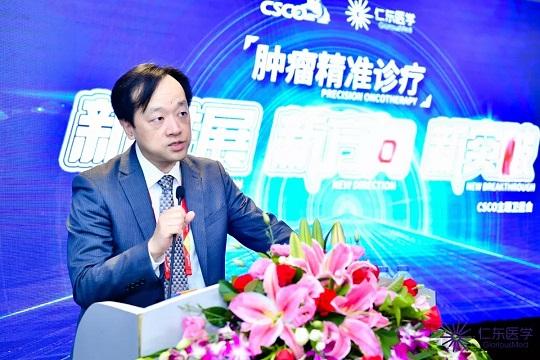
Subsequently, Professor Guo Ye from Shanghai East Hospital, Tongji University, shared insights on “New Advances in Tumor Immunotherapy Biomarkers.” Professor Guo noted that current research on biomarkers such as PD-L1, MSI, and TMB in precision tumor immunotherapy focuses on existing challenges with these markers, multi-dimensional multi-omics evaluation metrics, and combined indicators, which have become a major research hotspot. Currently, Professor Guo is collaborating with RenDong Medicine on a scientific research project aimed at screening precision immunotherapy biomarkers for head and neck tumors, with anticipation for further scientific data and outcomes.
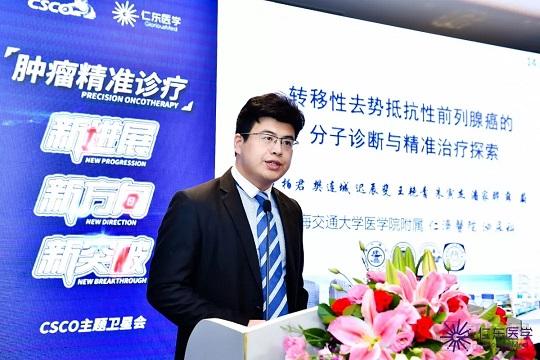
Subsequently, Professor Dong Bojun’s team from Renji Hospital, Shanghai Jiao Tong University School of Medicine, shared their explorations in molecular diagnostics and precision therapy for prostate cancer. The presentation began with the case of a patient with castration-resistant prostate cancer (CRPC) who had previously received abiraterone and docetaxel chemotherapy, highlighting the critical importance of genetic testing for such refractory advanced-stage patients. The team proposed that “small yet refined” gene panels offer greater clinical value and cost-effectiveness. The 66-gene test panel for precise diagnosis and treatment of prostate cancer, jointly developed by Renji Hospital and Rendong Medicine, fully aligns with clinical treatment pathways and the concept of precision medicine. The report also included an in-depth analysis of testing data from 60 CRPC patients.
At the conclusion of the conference, Dr. Zhao Guodong, CTO of RenDong Medicine, presented selected data highlighting the company’s current advancements in the field of precision immuno-companion diagnostics. Currently, RenDong Medicine has achieved a correlation coefficient as high as 0.991 between its panel-based tissue Tumor Mutational Burden (TMB) testing and Whole Exome Sequencing (WES). In an analysis of over 40 cases with complete follow-up data on immunotherapy efficacy, the company examined the correlations among PD-L1, Microsatellite Instability (MSI), and TMB, as well as immune microenvironment indicators, and evaluated the association between these biomarkers and patient treatment outcomes. Dr. Zhao noted that in the realm of precision immunotherapy, RenDong Medicine is not only dedicated to identifying the 20% of patients who benefit from immunotherapeutic agents but also committed to investigating the mechanisms underlying drug resistance or non-response. By combining immunotherapy with other treatment modalities or implementing personalized therapeutic strategies, the company aims to extend the benefits of tumor immunotherapy to a broader patient population.