

Hefei Genomics' PreCar Liver Cancer Early Screening Project Achieves Global-Leading Performance with 95% Specificity and Over 90% Sensitivity
On September 21, 2018, at the 2018 CSCO Annual Conference, Professor Chen Lei from the National Center for Liver Cancer presented the results of the PreCar (Prospective suRveillance for very Early hepatoCellular cARcinoma) pilot study on behalf of the research team.
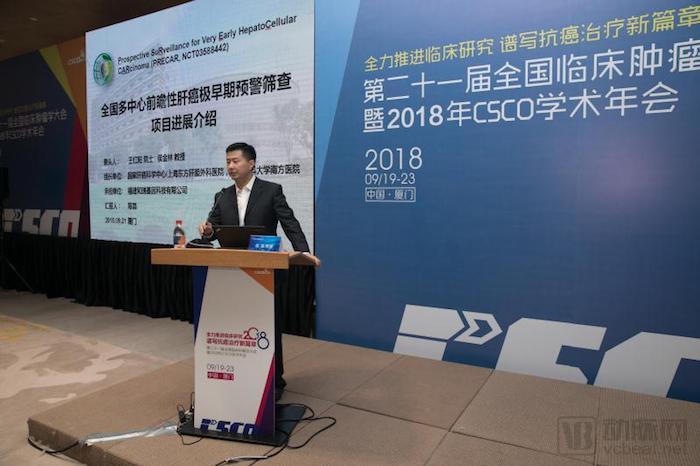
Data show that the sensitivity of liver cancer detection exceeded 90% at a specificity of 95%; even when the specificity threshold was set at 99%, the sensitivity still reached 87%. These figures underscore the encouraging interim results achieved by the largest and most comprehensive early screening study for liver cancer conducted in China to date. This landmark study was jointly led by the National Center for Liver Cancer/Shanghai Eastern Hepatobiliary Surgery Hospital, Guangzhou Nanfang Hospital, and Genetron Health, with participation from dozens of clinical centers.
Previous studies in the industry have typically set specificity levels at 95%. However, through communication between the PreCar project team and frontline clinicians, it was determined that higher specificity is particularly crucial for early cancer screening and diagnostic research. Taking into account Huirui Gene’s own technological capabilities, the final decision was made to raise the specificity threshold to 99%.
The results of the pilot study indicate that, compared with previous industry benchmarks, this approach can detect approximately 40% more early-onset tumors per 10,000 individuals while reducing false-positive results by about 80%. This marks a phased leading advantage for China’s liver cancer early screening research on a global scale. “This represents a solid step forward in domestic early warning and screening research for liver cancer,” stated Zhou Jun, General Manager of Huihe Gene, the project’s implementing organization.
The PreCar project is jointly initiated by Professor Wang Hongyang, an academician of the Chinese Academy of Engineering, Director of the National Center for Liver Cancer Science, and Deputy Chief Expert of the Ministry of Science and Technology’s Special Project on Infectious Diseases, and Professor Hou Jinlin, President of the Asian Pacific Association for the Study of the Liver and affiliated with Nanfang Hospital in Guangzhou, together with Genetron Health. The project has received strong support from multiple centers, hospitals, and platforms across China. It is currently the largest prospective cohort study on liver cancer being conducted in China, serving as a model of collaboration between leading institutions in clinical basic research on liver cancer and pioneering enterprises in tumor genetic testing.
1. Sensitivity exceeding 90% at 95% specificity, with further improvements to follow
The PreCar project’s pilot trial enrolled 1,500 volunteers, including over 500 patients with hepatocellular carcinoma (HCC) and more than 1,000 individuals from non-tumor high-risk or healthy populations. The project employed multi-category biomarker detection, comprehensively assessing various plasma indicators—including ctDNA point mutations, structural variations, epigenetic alterations, exogenous genomic integrations, and changes in expression levels—through Genetron Health’s experimental technologies such as cSMART, Home-Seq, and SNAPSHOT. By distinguishing molecular characteristics between tumor and non-tumor populations, the project has preliminarily completed the evaluation of classification feature values for early HCC screening.
After obtaining the raw data, researchers at Huirui Gene classified these indicators and continuously optimized the analytical process through machine learning, big data synthesis, and search algorithms to identify stable characteristic indicator values. Subsequently, based on integrated analysis and cross-validation of multi-indicator data, an independent sample set was used for validation. It was ultimately determined that a sensitivity of over 90% could be achieved at 95% specificity, while a sensitivity of 87% could be consistently maintained at 99% specificity.
China is a country with a high burden of liver disease. According to data released by the World Health Organization in 2014, Chinese patients account for more than 50% of new liver cancer cases worldwide each year. Liver cancer is an insidious disease, and most patients are already in the advanced stages at the time of diagnosis.
Early detection and early treatment are the guiding principles for cancer management. Taking clinical data on lung cancer as an example, the 5-year survival rate after treatment can reach 80% for Stage I, 60% for Stage II, and averages 20% for Stage III. For liver cancer, if treated at an early stage, the 5-year survival rate can also reach 80%.
Dean Liu Jingfeng of Mengchao Hepatobiliary Hospital of Fujian Medical University, a participant in the PreCar project, stated: “Through the administration of preventive vaccines, the hepatitis B virus (HBV) carrier rate has significantly decreased among individuals under 45 years of age. However, the carrier rate remains high among those aged 45 and above, constituting a high-risk population for liver cancer. Meanwhile, the number of patients with cirrhosis and liver cancer caused by alcoholic liver disease and non-alcoholic fatty liver disease is gradually increasing, presenting a severe challenge for liver cancer prevention and control.”
“Each year, 2–3% of patients with liver cirrhosis progress to liver cancer. The two most critical steps in the prevention and control of liver cancer are: first, primary prevention in individuals without existing disease; and second, regular screening among patients with liver disease, aiming for early detection.” stated Professor Qian Yunsong, Director of the Department of Liver Cirrhosis at Ningbo No. 2 Hospital and a participant in the PreCar project.
“For many years, the academic and clinical communities have been seeking effective diagnostic techniques to benefit patients with liver disease in China and to advance the prevention and control of liver diseases. We hope that early cancer screening technologies will enable early detection and treatment, thereby benefiting both patients and society. As high-throughput genetic testing technologies become increasingly mature, they have provided us with a novel approach to exploring methods for early cancer screening. Although the process will undoubtedly be fraught with challenges, it represents an important direction for concerted efforts in China and even globally,” stated Professor Wang Hongyang, Academician of the Chinese Academy of Engineering, Director of the National Center for Liver Cancer Science, and co-initiator of the PreCar project.
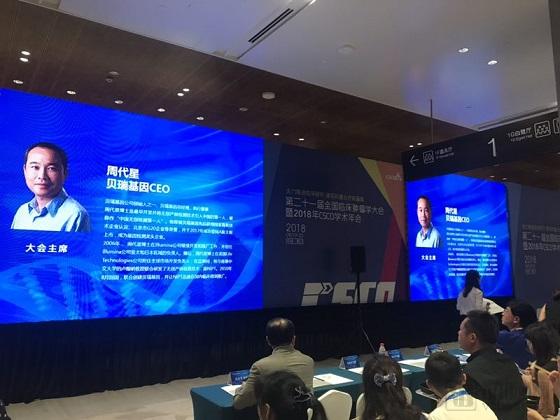
“Gene testing technology has witnessed rapid development in recent years. As an effective complement to existing clinical diagnostic techniques, it has opened up a new direction for addressing long-standing clinical challenges, such as early warning and screening for tumors.” Dr. Zhou Daixing, General Manager of Berry Genomics and Director of Huirui Genomics, stated, “We maintain a scientifically rigorous attitude toward achieving early diagnosis and screening of tumors, and we have full confidence in our proprietary technologies. With the iterative upgrades of our algorithms, our screening results will become increasingly accurate.”
2. The pilot study lays a solid foundation for the prospective cohort study of 10,000 participants
The preliminary success of the pilot study has established Huirui Gene’s multi-omics experimental protocol for early cancer screening. Meanwhile, it has also explored integrated analysis algorithms for multiple categories of biomarkers. However, this is merely the first step taken by Huirui Gene in the field of early cancer screening and warning.
The PreCar project is regarded as a significant milestone in research on early screening and diagnosis of liver cancer in China. Professor Chen Lei, a researcher at the National Center for Liver Cancer and the overall coordinator of the project, stated, “To successfully carry out the PreCar project, identifying molecular biomarkers and detection methods for early diagnosis and screening was a critical step. Due to the complexity of tumors, relying on a single molecular biomarker for early screening has a very low probability of success. Screening for multiple categories of molecular biomarkers is also highly challenging, as it requires not only selecting appropriate candidates from a vast array of biomarkers but also establishing various reliable techniques for low-frequency detection. The completion of the pilot study has validated our research approach and established the experimental technology and analytical algorithm framework for the entire study.”
“The establishment of the preliminary technical framework is crucial for the implementation of large-scale prospective cohorts,” stated Mr. Zhou Jun. “The entire study must be built upon relatively stable and robust technical foundations. With adequate preparation from pilot studies, the subsequent conduct of prospective cohort research proceeds more smoothly, thereby enabling more in-depth analysis of clinical data.”
3. Ultra-large-scale prospective cohort studies are an essential pathway for the clinical translation of early tumor diagnosis technologies from the laboratory
Pilot studies have validated the feasibility and reliability of early screening technologies for liver cancer, while prospective studies will conduct a three-year follow-up and observation of high-risk populations. By employing multi-time-point tracking and follow-up, the risk prediction model will be optimized until it meets the comprehensive performance metrics required for clinical application.
The PreCar project will recruit over 10,000 individuals at high risk for liver cancer (including more than 5,000 patients with liver cirrhosis and more than 5,000 patients with hepatitis B) to establish a follow-up monitoring cohort and conduct a three-year prospective cohort study. Leveraging technologies such as high-throughput genomic sequencing, the project aims to screen, identify, and apply ultra-early warning biomarkers for liver cancer in peripheral blood. With a total investment exceeding RMB 100 million, largely borne by Genetron Health, this project stands as a paradigmatic collaboration between a leading Chinese authority in clinical basic research on liver cancer and a pioneering enterprise in tumor genetic testing in China.
“Given the low incidence of cancer in the general population and the complexity of its pathogenesis, early diagnosis and screening for tumors cannot be discussed without ultra-large-scale prospective cohort studies. Therefore, establishing ultra-large-scale prospective cohorts as early as possible to gain a competitive edge in early screening research is a prerequisite for the clinical implementation of early screening,” stated Professor Chen Lei.
Mr. Zhou Jun shares this view, stating, “Gene testing technologies for early diagnosis and screening of tumors, originating from the laboratory, can only achieve clinical product translation after undergoing rigorous validation in large-scale prospective cohorts under the guidance of clinical experts, thereby proving their scientific and clinical robustness.”
The necessity of such large-scale population studies has reached a consensus among industry peers both domestically and internationally. In recent years, several representative companies in Europe and the United States have invested hundreds of millions of dollars in launching large-scale cohort trials. Chinese companies are poised to leverage their advantage of abundant domestic clinical resources to gain a competitive edge in similar research endeavors.
4. More early screening programs will be implemented in the future
“Screening, monitoring, and intervening in the disease at an early stage, before tumor cells have metastasized, represents the most ideal clinical solution for cancer currently. When we decided to pursue this endeavor, we engaged in extensive discussions and validations with numerous experts, as this has long been the direction they have been seeking. Meanwhile, we have accumulated substantial technological reserves over a prolonged period, giving us confidence that our technical approaches can help achieve clinical objectives. Although the path of early cancer screening is fraught with countless challenges, Huirui Genomics is fully prepared to meet them,” stated Mr. Zhou Jun.
These interim results demonstrate the potential of Huirui Gene’s hepatocellular carcinoma early screening technology in clinical applications, and will be further validated in prospective cohort studies. The company also revealed that it will gradually initiate service deployment and product commercialization at an appropriate time in the future.
“Soon, we will have multiple early tumor diagnosis research projects implemented,” added Mr. Zhou Jun.