

Sinopharm Online's 'Pharma + Internet' Strategy Amid Prescription Diversion and Pharmacy Tiering Reforms
When it comes to prescription outflow, many people believe that retail chain pharmacies are the primary beneficiaries. In reality, this is an incomplete and rather biased view. Currently, OTC channels lack the product resources and capabilities to absorb the outflowing prescriptions. In contrast, pharmaceutical commercial companies that originally specialized in hospital-centric products may have greater opportunities, as they possess both resources and product portfolios, giving them a natural first-mover advantage.
Moreover, following the introduction of policies for the tiered management of pharmacies, hospital-adjacent pharmacies and Direct-to-Patient (DTP) pharmacies newly established or acquired by commercial companies, as the primary recipients of prescription outflow, hold advantages in pharmaceutical operational expertise and in obtaining qualifications for pooled medical insurance reimbursement. Even in terms of profitability models, commercial companies possess inherent advantages over social retail pharmacies in supporting the zero-markup drug pricing model through logistics and distribution fees.
In the realm of pharmaceutical e-commerce, the online B2C model has become mired in cutthroat price wars among competitors. With high customer acquisition costs and a lack of autonomous control over traffic, investors are increasingly reluctant to support pharmaceutical e-commerce platforms that continue to “burn cash.” Consequently, B2C online pharmacy operators are actively pivoting, leveraging their unique resource advantages to develop distinct business models that are difficult to replicate.
The aforementioned insights come from Wang Letian, General Manager of Sinopharm Online. It is precisely based on these two core judgments that Sinopharm Online has pursued a distinctive path in the “pharmaceuticals + Internet” sector. In his office at Shanghai Hongqiao International Business Plaza, Wang Letian spoke candidly with VCBeat, reviewing Sinopharm Online’s previous development trajectory and analyzing current hot topics in the “Internet + Healthcare” industry.
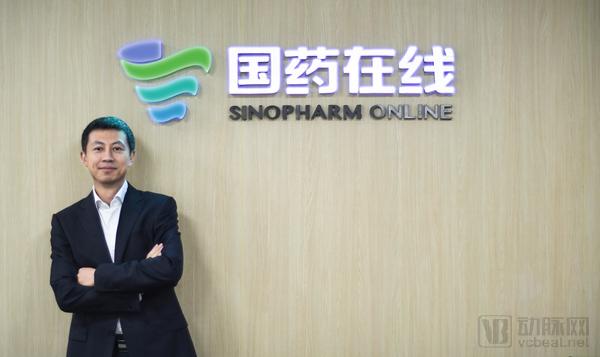
Wang Letian, General Manager of Sinopharm Online. Photo provided by the interviewee
In the rapidly evolving pharmaceutical market, numerous opportunities await exploration, including online pharmacies, pharmaceutical O2O (online-to-offline), pharmaceutical B2B (business-to-business), community pharmacies, and prescription-sharing platforms. In recent years, a cohort of innovative enterprises with sound strategic direction and strong execution capabilities has emerged.
Wang Letian’s choice to empower the traditional pharmaceutical industry with internet technology, pursuing a “pharmaceuticals + internet” model, is closely tied to his prior work experience. Coming from the internet sector, he has many years of experience in telecommunications value-added services, streaming media, music, and digital rights management. In 2013, he joined Haoyaoshi, an e-commerce subsidiary of Jointown Pharmaceutical Group, as Chief Technology Officer (CTO), where he helped establish Haoyaoshi’s B2C e-commerce system and gained a systematic understanding of traditional pharmaceutical commerce and pharmaceutical e-commerce.
In 2015, Wang Letian joined Sinopharm Group and participated in the establishment of Sinopharm Online. As the vehicle for Sinopharm Group’s retail transformation strategy, Sinopharm Online serves as the online external cooperation portal for hundreds of Sinopharm’s retail and distribution subsidiaries. In terms of management structure, it is affiliated with Sinopharm Holdings and operates as a first-tier subsidiary of Sinopharm Holdings.
Sinopharm Group’s high-quality resources provide strong endorsement for Sinopharm Online. Sinopharm Group is a large pharmaceutical and health industry conglomerate directly administered by the State-owned Assets Supervision and Administration Commission (SASAC) of the State Council. Its business activities encompass virtually all segments of the healthcare industry, with over 900 subsidiaries, including six listed companies: Sinopharm Holdings, Sinopharm Co., Ltd., Sinopharm Uni-Pharm, Tiantan Biological Products, Modern Pharmaceutical, and China Traditional Chinese Medicine Holdings. In 2017, Sinopharm Group reported operating revenues exceeding RMB 350 billion and ranked 194th on the Fortune Global 500 list.
Sinopharm Group is the largest single corporate shareholder of Sinopharm Online. As a national comprehensive pharmaceutical supply chain service provider, it offers distribution and delivery services for pharmaceuticals, medical devices, diagnostic reagents, and other products. By the end of 2017, Sinopharm Group’s distribution network had covered all 31 provinces, autonomous regions, and municipalities directly under the central government in China. Its direct customer base reached 15,032 entities (referring exclusively to tiered hospitals, including 2,301 top-tier Grade A tertiary hospitals), while its small-scale end customers (including primary healthcare institutions) totaled 128,000, along with 87,000 retail pharmacies.
Leveraging the premium resources of Sinopharm Group and Sinopharm Holdings, Sinopharm Online’s business is primarily divided into three segments.
E-Commerce Plus: Includes the self-built Sinopharm B2C e-commerce platform, as well as e-commerce operation services provided for other subsidiary companies under the Sinopharm Group, covering mainstream platforms such as Tmall and JD.com.
Retail+: Establishing retail outlets in collaboration with Sinopharm Group’s provincial distribution subsidiaries. These outlets serve as channels for Sinopharm’s multi-tiered distribution network to penetrate the retail market. By leveraging e-commerce technologies, commercial enterprises are empowered to extend their service capabilities to end consumers. This includes assisting local distributors with extended delivery of prescription medications, thereby addressing medication access challenges in third- and fourth-tier cities, primary healthcare institutions, and even rural medical facilities.
Distribution+: Collaborate with provincial distribution subsidiaries under Sinopharm Group to develop pharmacy businesses adjacent to hospitals, leveraging their drug portfolios and healthcare institution resources to target the prescription outflow market and meet medication demands for out-of-hospital prescriptions.
Wang Letian told VCBeat that Sinopharm Online is not a pharmaceutical e-commerce platform in the conventional sense; rather, it leverages internet technology to empower the pharmaceutical industry. “A more accurate definition would be ‘new retail’ for pharmaceuticals.” In terms of the company’s revenue structure, online platforms combining “Internet + healthcare” and over-the-counter (OTC) drugs do not account for a significant proportion. Instead, the core business focuses on providing prescription drug services that empower offline pharmacies located near hospitals.
Since its establishment in 2015, Sinopharm Online has achieved remarkable revenue growth: generating over RMB 30 million in just half a year in 2015, surpassing RMB 20 million in monthly sales in June 2016, and exceeding RMB 600 million in annual revenue for the full year 2016. Currently, its monthly sales have reached RMB 60–70 million, with the platform’s gross merchandise value (GMV) totaling RMB 850 million in fiscal year 2017. These impressive achievements have rapidly propelled Sinopharm Online into the top tier of China’s pharmaceutical e-commerce sector.
Capital is the driving force behind the sustained growth of innovative companies. Sinopharm Online has previously completed its angel and Series A financing rounds, with investors including Yunfeng Capital, Fosun Pharma, and Langsheng Investment. According to Wang Letian, the company’s latest round of financing is progressing smoothly, and new strategic investors are expected to join shortly.
The relatively low proportion of pure online and OTC businesses in Sinopharm Online’s revenue is closely related to Wang Letian’s understanding of the pharmaceutical market. Wang Letian stated that in the past, China’s pharmaceutical market was dominated by tiered hospital channels, which accounted for approximately 77% of the market. Hospitals and social retail pharmacies operated as two completely independent sales channels, with significant differences in product varieties, pricing, and business models. Even with the trend of prescription outflow from hospitals, purely social retail pharmacies have struggled to meet medication dispensing demands.
The optimal entities to accommodate the outflow of prescriptions are pharmacy stores located adjacent to hospitals. Many of these hospital-adjacent pharmacies are established by commercial companies engaged in pure hospital sales. Currently, major commercial distributors are aggressively expanding and acquiring such pharmacies through new establishments and acquisitions. Furthermore, due to their advantages in supply chain resources and operational management models, these commercial companies are better positioned to handle prescription outflows. Sinopharm Online is optimistic about this direction and will continue to strategically position itself in the hospital-adjacent pharmacy sector through collaborations with distribution companies and acquisitions. By leveraging the product portfolio strengths of distribution partners and supplementing them with internet e-commerce technological capabilities, Sinopharm Online aims to jointly facilitate the absorption of outflowing prescriptions.
Following the introduction of the tiered management policy for retail pharmacies, only a small fraction of pharmacies have secured support from medical insurance programs and pharmaceutical companies to capture outsourced prescriptions, constrained by factors such as operating area, licensed pharmacist services, and drug supply and storage capabilities. Other pharmacies are transitioning toward the concept of “health and wellness supermarkets,” providing residents with health products and over-the-counter (OTC) medications, thereby diminishing their role as channels for prescription drugs.
Currently, many investors are entering the chain pharmacy industry. Wang Letian believes that even if retail pharmacies cannot effectively absorb the outflow of prescriptions from hospitals, the broad prospects of the broader health market still make it a highly strategic area for investment. However, driven by capital influx, the cost of mergers and acquisitions in the retail pharmacy sector is rising steadily. This trend warrants attention to prevent irrational overheating of the market.
The concept of DTP (Direct-to-Patient) pharmacies has gained significant popularity recently. However, traditional DTP pharmacies are typically led by pharmaceutical companies, which aim to provide high-value medications and patient services through this channel. These pharmacies generally feature a limited product range, high average transaction values, and stringent service requirements, resulting in certain barriers to entry. Due to the dominance of pharmaceutical companies, DTP pharmacies have limited autonomy, making it challenging to scale up within niche market segments.
Currently, the leading players in the DTP pharmacy market are Sinopharm, Shanghai Pharma, and China Resources Pharmaceutical, which are also distributors with superior resource advantages. In the future, the "pan-DTP" model may serve as a breakthrough point, with high-value self-pay prescription drugs, diverse options, and high-quality pharmaceutical care services being the key to standing out.
In the case of online pharmacies, for a long period, traffic and sales volume were primarily driven by non-pharmaceutical products such as health supplements and family planning supplies. As the dividend from traffic growth has peaked, many pharmaceutical e-commerce enterprises are exploring "medicine + healthcare" and "online CSO" (Contract Sales Organization) models, marking a significant feature of their proactive transformation. Currently, the market landscape of online pharmacies has largely solidified. While there have been cases of public listings and substantial financing rounds, their success is not easily replicable, making it unlikely for powerful "disruptors" to emerge in the future.
Returning to the development of Sinopharm Online, Wang Letian stated that the company will continue to adhere to its “Internet+”-enabled pharmaceutical strategy, strengthen the layout of cloud pharmacies and hospital-adjacent stores, coordinate resources in a holistic manner, and tap into the out-of-hospital prescription drug market.