

International Medical Services and Management Committee of Chinese Hospital Association Established in Beijing: International Healthcare Emerges as a Market Catalyst, Driving Demand for Professionalization
Recently, the international healthcare market has attracted significant attention due to its broad prospects and rapid growth.
VCBeat (WeChat ID: vcbeat) has learned that the Inaugural Meeting of the International Medical Services and Management Professional Committee of the Chinese Hospital Association, along with the First Plenary Session of its First Committee, was held in Beijing on September 21. The committee is poised to play a pivotal role in facilitating the alignment and cooperation of international medical resources, establishing an international platform for medical exchange, and promoting the development and standardized management of international medical services.
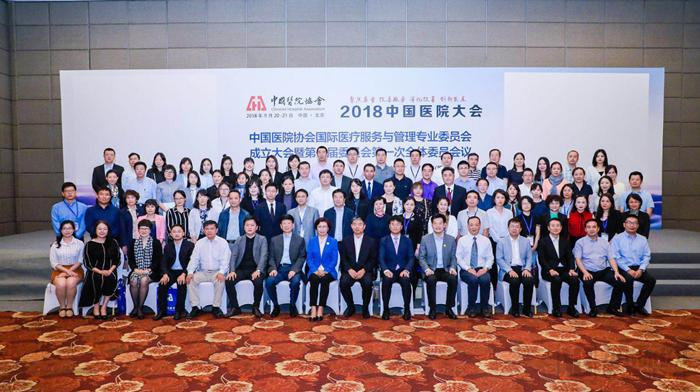
“Virtue is not left to stand alone; he who practices it will have neighbors.” On the fifth anniversary of the Belt and Road Initiative (BRI), President Xi Jinping once again emphasized the need to focus on regional sustainable development, uphold the principles of extensive consultation, joint contribution, and shared benefits, advocate for active alignment of development strategies, and prioritize enhancing cross-border infrastructure connectivity as well as trade and investment liberalization and facilitation. Notably, in the grand endeavor of implementing the BRI to build a community with a shared future for mankind, health has become an indispensable and vital component.
As international exchanges deepen and internet technology advances rapidly, demand for international medical services in China is surging. In recent years, the Chinese government has introduced multiple policies to vigorously encourage the development of health service industry clusters, strengthen international medical cooperation, and optimize a diversified landscape of healthcare provision. Particularly under General Secretary Xi Jinping’s strategic deployment of “Healthy China,” the concept that “there can be no comprehensive well-being without universal health” has taken deep root in public consciousness.
On the one hand, domestic patients in China are raising their expectations for healthcare service quality, leading to a growing number of individuals seeking medical treatment abroad. Meanwhile, an increasing number of overseas healthcare institutions are establishing representative offices or directly building medical facilities in China. On the other hand, as globalization accelerates—driven by increased corporate investment, business exchanges, and tourism—the demand for healthcare services among foreigners has risen, making expatriates in China an emerging patient demographic.
Data shows that the annual demand for international medical services in mainland China ranges from 30 million to 40 million people, with an estimated market size approaching RMB 100 billion, covering individuals across all age groups from newborns to 93-year-olds. International health insurance is also on the rise; in 2015, for example, premium income reached RMB 241.047 billion, a year-on-year increase of 51.87%, while claim payouts amounted to RMB 76.297 billion, representing a year-on-year growth of 33.58%.
Against this backdrop, the International Medical Services and Management Professional Committee of the Chinese Hospital Association was established in response to the times. At the inaugural meeting of the committee, Professor Zhang Shuyang, its first Chairman, Vice President of Peking Union Medical College and Deputy Director of Peking Union Medical College Hospital, stated that international medical services are an inevitable demand in the development of today’s healthcare market and must be introduced into hospitals across China in a specialized and standardized manner. Meanwhile, high-quality international medical services and management have become important factors in enhancing the country’s global influence and improving its investment environment.
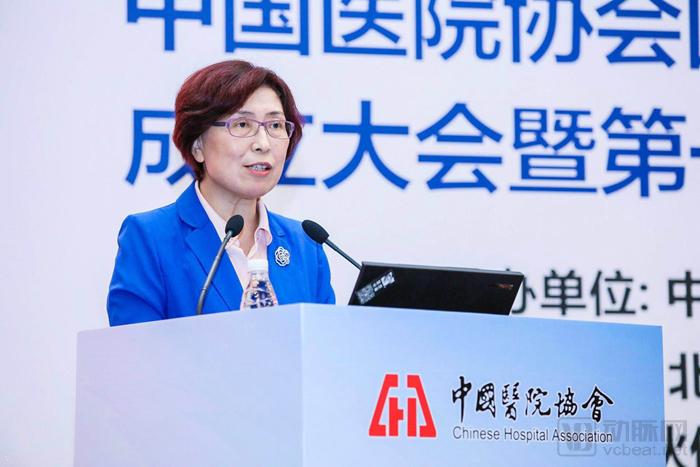
Chairman Zhang Shuyang pointed out that China’s international medical market currently suffers from inadequate supporting infrastructure, which severely hinders the industry’s rapid development. Key deficiencies include the absence of legal frameworks to protect industry growth, lack of organizations to facilitate coordination between foreign entities and domestic healthcare institutions entering the Chinese market, absence of insurance and financial payment integration platforms, lack of industry standards aligned with international norms, shortage of qualified professionals in service, management, insurance, and payment sectors, and insufficient industry representation.
Professional Committee on International Medical Services and Management, formerly known as the Cross-Border Healthcare and Health Management Salon established in 2014, was officially founded with the approval of the Chinese Hospital Association. It is a national secondary association composed voluntarily by relevant institutions and professionals possessing the capacity to deliver international-standard medical services, as well as expertise and experience in international medical service delivery and management. The committee is committed to building an internationalized, specialized, authoritative, and leading platform.
Mr. Zhang Baoku, Deputy Secretary-General of the Chinese Hospital Association (CHA), extended warm congratulations on behalf of the Association to the establishment of the CHA Professional Committee on International Medical Services and Management. He stated that the establishment of this Professional Committee has injected new vitality and vigor into the CHA. As the only professional committee within the Association dedicated to foreign-related medical service management, its creation marks the addition of a new organizational and business development platform in China’s international medical service provision, management, and industry regulation. This platform is led by a national-level social organization, involves participation from experts and scholars, and enjoys joint support from a wide range of medical institutions and enterprises. It holds significant importance for promoting the development of China’s international medical services industry.
Wang Haitao, Deputy Director and Secretary-General of the Special Committee, Dean of the School of Continuing Education at Peking Union Medical College, and Executive Deputy Director of the Training Center at Peking Union Medical College, stated, “The first committee engaged 131 top-tier hospitals across China, while also securing broad participation from enterprises such as FESCO (Beijing Foreign Enterprise Human Resources Service Co., Ltd.), Deloitte China, General Healthcare Group, and China Resources Health. This initiative spans multiple sectors, including large public hospitals, private medical institutions, insurance companies, investment firms, and pharmaceutical enterprises.”
This also means that the International Medical Services and Management Professional Committee of the Chinese Hospital Association will fully engage in cross-sectoral dialogue and carry out work in the following areas: research on international medical quality, service standards, and management assessment; international cooperation and exchange in healthcare technologies; development of international medical information platforms; clinical specialty research in international medicine; training and exchange of medical and industry professionals meeting international healthcare requirements; academic and managerial exchanges and collaboration among international medical organizations; and international financial cooperation in healthcare.
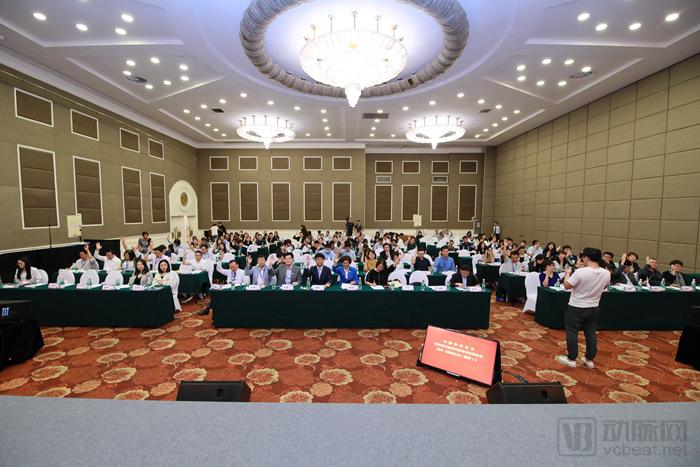
Strategic Partner of the Special Committee—Hao Jie, General Manager of Beijing Foreign Enterprise Human Resources Service Co., Ltd. (FESCO), stated, “We hope to promote the seamless integration of domestic health management services with international institutions through our participation in the Special Committee’s work, enabling them to reach international standards as soon as possible. This will not only provide convenience for clients but also assist hospitals in patient triage and management, facilitate precise matching with high-end medical services, and help enhance China’s international medical service and management capabilities.” As a pioneer and leading enterprise in China’s human resources service industry, FESCO currently serves nearly 30,000 Chinese and foreign corporate clients and approximately 2 million international talents.
In recent years, FESCO has vigorously expanded its health management services. To address the in-depth healthcare needs of high-end clients, it has established a comprehensive suite of closed-loop services, including: health examinations, family physician services, outpatient appointment scheduling, laboratory and diagnostic testing services, health record management, and health insurance selection and utilization. Currently, these services are integrated into FESCO’s service platform, enabling clients to make one-stop selections.
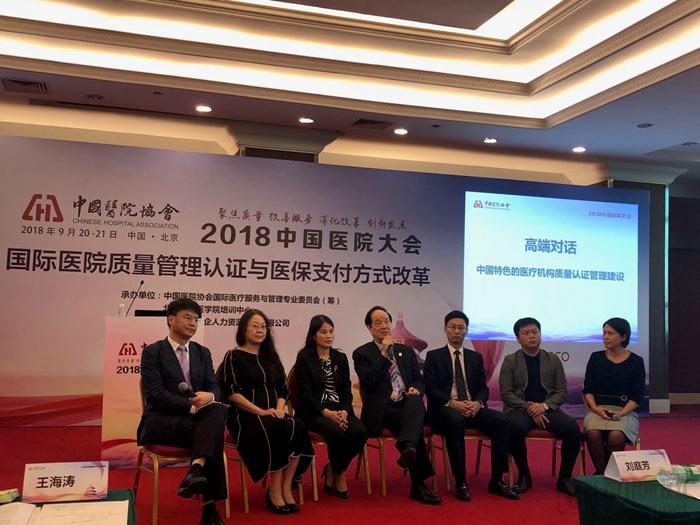
During the conference, the International Medical Services and Management Professional Committee of the Chinese Hospital Association also convened a sub-forum themed “International Hospital Quality Management Accreditation and Reform of Health Insurance Payment Methods.” Representatives from leading international third-party accreditation bodies, including JCI, DNV GL (Healthcare), and Bupa UK, along with attending guests, engaged in in-depth discussions on topics such as international medical tourism, healthcare pricing, health insurance payment mechanisms, and hospital quality accreditation management.
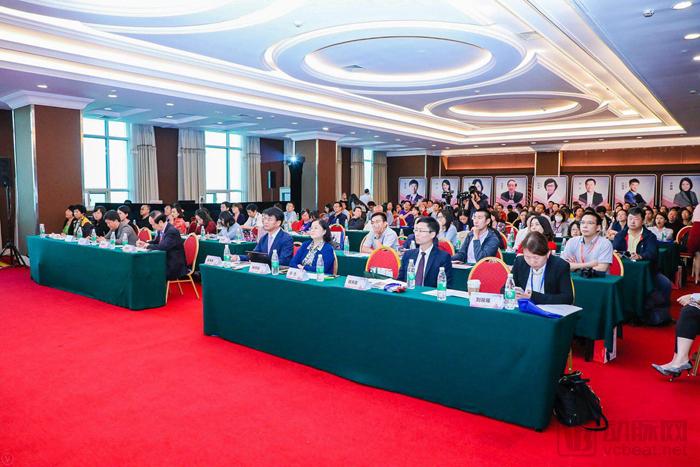
Seeking rational and efficient health insurance payment methods plays a crucial role in promoting the optimal allocation of healthcare resources, implementing the tiered diagnosis and treatment system, controlling medical costs, ensuring medical quality, and standardizing medical practices, thereby directly facilitating the optimization of the healthcare service system. As the core of healthcare system development, the relationship between “medical quality control” and health insurance payment has garnered significant attention in recent years, sparking intense discussion within the industry.
Notably, in the process of building medical quality control systems, an increasing number of hospitals are adopting various international hospital quality management accreditation systems as tools to accelerate improvements in hospital administration and medical quality control. This has also sparked discussions on whether foreign hospital quality management accreditations can help optimize structures, achieve cost containment, and provide robust support for health insurance payment systems.