

How HepGenomics Became an Industry Leader in Tumor Early Detection: From Inception to IPO
“Enable early diagnosis and treatment for all oncological diseases, and ensure precise therapy for every patient.” This is Dr. Zhou Daixing, co-founder of Berry Genomics’ vision for cancer prevention and control, as well as the original intention behind establishing Herui Genetics.
He Rui Genomics was established in August 2017, evolving from the oncology division of Berry Genomics, a leading enterprise in the genetics industry. With joint investments from Berry Genomics and professional investment institutions, He Rui Genomics has leveraged its multifaceted advantages in “technology, distribution channels, and capital” to fully continue Berry Genomics’ original oncology business, upholding its commitment to early screening and early treatment of tumors.
At the 2018 CSCO Annual Conference, Genetron Health announced the pilot study of its PreCar (Prospective suRveillance for very Early hepatoCellular cARcinoma) project for early screening of liver cancer. Preliminary results demonstrated excellent sensitivity and specificity in the pilot study, marking a qualitative leap in China’s liquid biopsy-based technology for early cancer screening and heralding promising prospects for achieving early warning and screening among high-risk populations for liver cancer.
As early as April 2018, Huirui Gene announced an investment of at least RMB 100 million to launch a prospective cohort study involving 10,000 participants, in collaboration with the National Center for Liver Cancer, Shanghai Eastern Hepatobiliary Surgery Hospital, and Guangzhou Nanfang Hospital. This is currently the only ongoing ultra-large-scale prospective cohort study on early liver cancer screening in China, marking a significant step forward in the early diagnosis and treatment of liver cancer in the country.
This startup, founded just one year ago, has become an industry leader at a remarkable pace. Conversations with its core team reveal a group with deep expertise in technology and resources, meticulously working on a significant endeavor to benefit humanity.
“Based on our assessment of the overall market, we believe that genetic testing for tumors is an inevitable trend in this field,” Mr. Zhou Jun, CEO of Genetron Health, told VCBeat. “To develop projects for early diagnosis, substantial capital investment is required to conduct prospective cohort studies, which are essential to validate whether the product can be commercialized.”
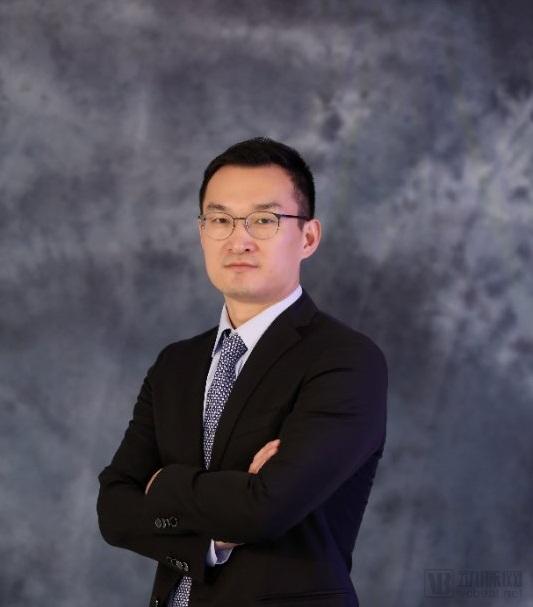
Zhou Jun, CEO of Herui Gene
In early 2018, after assisting Legend Capital in completing its investment in Huirui Gene, Zhou Jun joined the company as Chief Executive Officer, assuming full responsibility for its overall operations. He thus transitioned from an investor to an entrepreneur.
For Zhou Jun, making this decision was not easy. He has been an early participant and a witness to the entire development of China’s genetic testing industry. As one of the earliest practitioners in this field, Zhou Jun has accumulated 17 years of work experience. From serving as the head of the laboratory platform at China’s earliest genetic testing company at the beginning of this century, to joining SDIC Innovation Fund to complete investments in several representative enterprises in the industry, and then investing through Legend Capital and joining Huirui Gene, his role has shifted multiple times among manager, investor, and entrepreneur.
“Without this team, I might have needed to deliberate for a much longer time,” said Zhou Jun. He told VCBeat, “Through my interactions with the founding team of Berry Genomics over the past decade-plus—both during my time in industry and at Legend Capital—I have come to highly appreciate their values and approach to work.”
“People who are alike generate more synergy when working together and find it easier to get things done.” On this basis, joining Herui Gene no longer seemed like a difficult decision to him.
“After Huirui Gene completed its financing round, we had been contemplating how to assemble the management team and who should be responsible for building it,” recalled Zhou Daixing of Berry Genomics. They needed someone with a thorough understanding of both domestic and international landscapes, as well as solid technical expertise.
“I don’t think there is a more suitable candidate than Zhou Jun,” said Zhou Daixing.
Just as Newton built upon Descartes’ research to propose the renowned corpuscular theory of light, Berry Genomics, standing on the shoulders of giants, is poised to see even further. Years of accumulation by Berry Genomics have laid a solid foundation for He Rui Genomics; they did not start from scratch but instead assembled a team of outstanding scientists, thereby securing a remarkably high starting point.
As a member enterprise of Berry Genomics, Helio Genomics has obtained exclusive authorization within mainland China for Berry Genomics’ tumor-related technical patents and product services. Through this integration and alignment of oncology operations, Helio Genomics has secured a high starting point. The company can leverage existing resources to rapidly capture industry leadership, consolidating its leading position in areas such as liquid biopsy for mid-to-late stage cancers, tumor immunogenetic testing, and hereditary cancer testing. Furthermore, this arrangement has enabled Helio to significantly shorten the lengthy R&D cycle in the critical field of early cancer diagnosis, allowing it to swiftly enter the clinical validation phase.
At its inception, He Rui Genetics already had a team of approximately 150 members. The majority of these individuals were key R&D personnel and marketing elites from Berry Genomics’ former Oncology Business Unit. Their presence not only ensured the sales and operational success of He Rui Genetics’ mid-to-late-stage products but also injected vitality into the company’s future technological R&D and scientific research efforts. From day one, the company was fully equipped to engage directly in the frontline of market competition.
“These arrangements stem not only from the trust placed in us by Huirui Gene’s founding shareholders, but also from their strategic foresight amid the rapidly evolving landscape of the oncology genetic testing market,” said Zhou Jun. “We have a strong starting point and solid foundation, and we will leverage these resources to accelerate innovation. Currently, each of Huirui Gene’s business segments is delivering new technologies and products.”
Compared with other applications of genomics, tumor diagnosis and early screening are more technically challenging, but they are essentially quite similar to the former. With the development of next-generation sequencing (NGS) technology, sequencing itself is no longer an issue; the greater challenges lie in the stages before and after data generation.
ctDNA constitutes only a small fraction of cell-free DNA (cfDNA) in peripheral blood. Prior to data generation, the accurate detection and quantification of trace amounts of ctDNA represent a critical challenge that must be addressed for tumor detection based on ctDNA. Berry Genomics has independently developed a series of technologies, including cSMART and cSMART 2.0, which enable the labeling, circularization, amplification, and high-throughput sequencing of cfDNA fragments in peripheral blood. Leveraging these unique technical approaches, the detection sensitivity can reach 1/10,000.
Once data is generated, the greatest challenge lies in its analysis and interpretation. This is particularly true for complex diseases such as cancer, which require the support of big data and high-performance computing capabilities.
While integrating public databases, Berry Genomics is also leveraging its self-established whole-genome database of one million Chinese individuals and a database comprising over 10,000 Chinese cancer patients, in conjunction with artificial intelligence technologies currently under development, to annotate and interpret genomic data.
The Berry Genomics Digital Life Park, currently under construction, will integrate cutting-edge R&D, big data, clinical trials, gene sequencing, sample storage, cloud computing, artificial intelligence, and gene editing/therapy. It will provide faster and more precise big data support for genetic testing of diseases, including early cancer diagnosis, as well as comprehensive disease treatment services based on big data.
In November 2017, He Rui Gene signed agreements with strategic investors including Legend Capital, Boyu Investments, Qiming Venture Partners, and Hongling Capital, securing a one-time capital injection of RMB 800 million to fund the research and development of early cancer diagnosis as well as operational investments in other oncology-related businesses. This marked the largest single investment in China’s tumor genetic testing sector that year.
Undoubtedly, securing such a substantial amount of financing within just a few months of establishment is largely attributable to investors’ recognition of He Rui Gene’s technology, team, and strategic objectives. It is worth noting that most of these strategic investors were also previous investors in Berry Genomics. Through long-term tracking and collaboration, they have gained a deeper understanding of the team’s management philosophy, execution capabilities, and technological foundation, enabling them to make more rational investment decisions compared to typical institutional investors.
The financing not only provided funding support for Genetron Health’s subsequent research on early cancer screening, but also resulted in Berry Genomics holding less than 20% of Genetron Health’s shares following the entry of new investors. This means that Genetron Health has become a relatively independent corporate entity in legal terms.
Zhou Daixing stated, “Herui Gene will make decisions and pursue development independently. Both parties may engage in various forms of cooperation on an equal and fair basis in terms of technology, resources, and talent.” It is understood that although Berry Genomics is not currently the largest shareholder of Herui Gene, the company has retained a right of first refusal to repurchase Herui Gene’s shares.
HeRui Genomics has secured every advantage—technological, team-based, resource-wise, and financial—benefiting from favorable timing, geographic location, and strong teamwork. This sets the company apart from other cancer early-screening firms, giving it a remarkably high starting point. True to expectations, HeRui Genomics has taken its first step with both steadiness and speed.
China is a country with a high burden of liver disease and liver cancer. According to data released by the World Health Organization in 2014, Chinese patients accounted for more than 50% of newly diagnosed liver cancer cases globally each year. In particular, China has 93 million hepatitis B virus carriers and 6 million patients with liver cirrhosis, both of whom are at high risk of developing liver cancer over the long term.
Meanwhile, liver cancer is an insidious disease; most patients are already at an advanced stage by the time of diagnosis, which severely compromises treatment efficacy and five-year survival rates. Consequently, liver cancer has been prioritized as the primary focus in Huirui Gene’s early cancer screening strategy.
“From the perspective of Huirui’s technical practices and clinical insights, it is unrealistic to expect a single technology to conquer all types of cancer. Therefore, we did not initially opt for pan-cancer early screening; instead, we chose cancer types with distinct characteristics in China as our entry point,” Zhou Jun told VCBeat.
On April 22, 2018, Huirui Gene invested RMB 100 million to jointly launch the PreCar project with the National Center for Liver Cancer / Eastern Hepatobiliary Surgery Hospital of Naval Medical University and Guangzhou Nanfang Hospital. This marks Huirui Gene as the only company in China currently validating its technical solutions through a large-scale prospective cohort study for early cancer screening.
“Findings based solely on retrospective laboratory data cannot be directly extrapolated to warning and screening for populations at high risk of liver cancer; dynamic observation through large-scale prospective cohort studies is essential to effectively address the challenge of early tumor screening,” said Chen Lei, a researcher at the National Center for Liver Cancer, in an interview with VCBeat.
In other words, early diagnosis and treatment of cancer can effectively prolong patient survival and improve their quality of life. However, without large-scale prospective cohort studies, the clinical implementation of early cancer screening would be impossible.
“Therefore, only by establishing large-scale prospective cohorts as early as possible can we gain a competitive edge in early screening research,” he added.
This project will target a high-risk population of over 10,000 individuals for liver cancer (including approximately 5,000 patients with liver cirrhosis and 5,000 patients with hepatitis B), establish a follow-up monitoring cohort, and conduct a three-year prospective cohort study. Leveraging technologies such as high-throughput genomic sequencing, the project aims to screen, identify, and apply ultra-early warning biomarkers for liver cancer in peripheral blood. The overall experiments are expected to be completed in 2021. This is one of the largest ultra-early screening and warning projects for tumors, particularly liver cancer, in China.
Huirui Gene is responsible for providing technology and funding for the PreCar project. The collaborating hospitals will assist Huirui Gene in completing clinical work, including determining patient eligibility for enrollment and conducting subsequent follow-up monitoring.
As a retrospective study, the pilot experiment was initiated as early as early 2018, with the aim of establishing a technical platform for the subsequent cohort of 10,000 participants. The pilot experiment involved a total of 1,500 research subjects, including more than 500 patients.
Preliminary data reveal that sensitivity exceeds 90% at a specificity of up to 95%, and even when the specificity threshold is raised to 99%, a stable sensitivity of 87% can still be achieved. This breakthrough represents a significant step forward in translating tumor genetic testing from the laboratory to clinical application.
Regarding these data, Zhou Jun explained, “Specificity refers to the proportion of negative results detected among the disease-free control group. For example, if there are 100 healthy individuals without cancer, but the test results indicate that 99 are healthy and 1 is diagnosed with cancer, then the specificity is 99%. On the other hand, if there are 100 patients with tumors, and the test correctly identifies 90 as having the disease, then the sensitivity is 90%.”
Meanwhile, Zhou Jun also discussed RuiGene’s future plans for the entire project. He stated, “We will conduct a three-year prospective study by monitoring the incidence of disease in high-risk populations on a relatively established technical platform. Based on rigorous technology and reliable data, we will consider filing for regulatory approval of related products at an appropriate time.”
Building on its early liver cancer diagnosis initiative, Huirui Genomics plans to sequentially launch several early screening and diagnostic research programs targeting malignant tumors, thereby establishing new industry standards and further helping to solidify China’s international leadership in the early diagnosis and treatment of cancer.
Since its inception, Huirui Gene has consistently positioned early cancer diagnosis as both its strategic direction and corporate mission. In an interview with VCBeat, Zhou Daixing stated that he hopes the company will achieve two goals within the next five to ten years: first, to enable expectant parents to be informed about three categories of birth defects—those causing intellectual disability, physical disability, and mortality—before their children are born; and second, to allow patients to detect their condition through genetic testing at the early stages of cancer, when the disease is still curable.
Berry Genomics has already made initial progress toward the former goal and continues to strive for greater and better achievements. In the area of early cancer screening, its subsidiary Herui Gene will leverage its years of technical expertise and related research in tumor genetic testing, making targeted investments based on the clinical needs of the Chinese population. Ultimately, this effort aims to realize the vision repeatedly articulated by the senior management team: enabling early diagnosis and treatment for all cancers and ensuring precision therapy for every patient.