

Fu Gang of Baiyang Medical Group Outlines Three Key Pathways to Advance Industrialization of Smart Healthcare in China
VCBeat (WeChat Official Account: vcbeat) has learned that, to continuously enhance exchange and collaboration among physicians of Chinese descent worldwide and to promote the rapid development of their medical endeavors, the World Association of Chinese Physicians held the “2018 World Association of Chinese Physicians Annual Conference and High-Level Forum on Internet Healthcare and Quality Improvement” in Qingdao, Shandong Province, from September 20–21, 2018. The conference was jointly hosted by the World Association of Chinese Physicians, the Chinese Medical Doctor Association, and the Qingdao Municipal People’s Government, and co-organized by the Qingdao Municipal Health and Family Planning Commission, the Shibei District People’s Government of Qingdao, and Puti Medical Health Industry Group.
At the opening ceremony of the conference, the Shibei District Government of Qingdao and Baiyang Pharmaceutical Group signed an agreement on the construction of the core area of the Qingdao Grand Health Industrial Park and held an unveiling ceremony for the preparatory establishment of the World Chinese Physicians Building. As a key high-quality industrial resource within the Grand Health Industrial Park, Baiyang Pharmaceutical Group will join hands with the Shibei District Government to build an industrial park centered on health and medical care, setting a new benchmark for the regional transition from old to new growth drivers.
Meanwhile, to promote the development of smart healthcare in China, the Smart Healthcare Committee of the World Chinese Medical Association (hereinafter referred to as the “Smart Healthcare Committee”) was established at this annual conference. The committee features an honorary chairman, Dong Jiahong, Dean of Beijing Tsinghua Changgung Hospital; a chairman, Fu Gang, Chairman of Baiyang Pharmaceutical Group; and 15 vice chairmen: Jiang Zefei, Director of the Breast Cancer Department at Beijing 307 Hospital; Cai Xiujun, Dean of Sir Run Run Shaw Hospital in Zhejiang; Dong Qian, Dean of the Affiliated Hospital of Qingdao University; Zhang Man, Director of the Clinical Laboratory Center at Beijing Shijitan Hospital; Zhao Gang, Director of the Neurology Department at Xijing Hospital; Lu Qingjun, Director of the National Telemedicine and Internet Medicine Center; Yu Xuemei, Director of the Information Center at the Capital Institute of Pediatrics; Wang Renzhi, Director of the Neurosurgery Department at Peking Union Medical College Hospital; Zhang Hongqi, Director of the Neurosurgery Department at Xuanwu Hospital; Lv Qianzhou, Director of the Pharmacy Department at Zhongshan Hospital, Fudan University; Wang Jiawei, Assistant to the Dean of Beijing Tongren Hospital; Wang Wei, Vice Chancellor of Edith Cowan University in Australia; Zhang Hengzhi, President of the North American Medical Association; Li Jinghong, Attending Physician in the Division of Pulmonary and Critical Care Medicine at UC San Diego Health; and Wang Xiangdong, Distinguished Professor at Zhongshan Hospital, Fudan University.
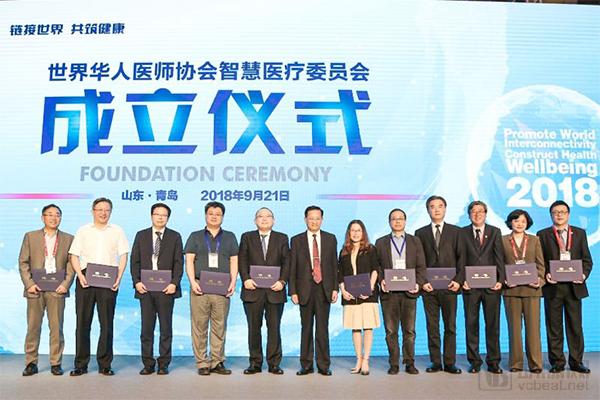
The Smart Healthcare Committee will align with the Outline of the “Healthy China 2030” Planning Program, focusing on promoting the application of artificial intelligence technologies in China’s healthcare sector. It aims to integrate China’s smart healthcare applications and technologies with international standards, while adapting advanced technologies and practices to China’s national context. The Committee will collaborate with the government, medical institutions, and physicians to jointly build a smart healthcare system, contributing to the intelligent development of China’s healthcare industry.
Currently, healthcare has become a key area for artificial intelligence (AI) research and application. IDC Digital, a globally authoritative market research firm, believes that AI will be widely adopted in the healthcare sector in the future, particularly in specialized scenarios such as assisted diagnosis and treatment, drug discovery, medical imaging, and genomics. The practical demands for advancements in healthcare have significantly driven the transformation and upgrading of the medical industry, with AI technology at its forefront.
Zhang Yanling, President of the World Association of Chinese Physicians, stated, “Artificial intelligence has been more widely applied in physicians’ daily practice, and the trend toward intelligent healthcare is now unstoppable. In the future, it will be difficult to become a qualified physician without understanding artificial intelligence and smart healthcare. As an international physicians’ association, we must accelerate the advancement of smart healthcare, which is precisely the original intention behind establishing the Smart Healthcare Committee.”
Zhang Yanling stated that the Smart Healthcare Committee is a highly specialized and promising secondary entity, which will focus on four core tasks once it becomes fully operational.
1. The Smart Healthcare Committee should keep pace with cutting-edge industry trends and advance the development of smart healthcare in light of the actual conditions within the medical sector;
2. The Smart Healthcare Committee shall assume responsibility for the integration, utilization, and sharing of high-quality resources;
3. In advancing intelligent healthcare, a set of “rules of the game” that align with China’s national conditions and are compatible with global standards should be established as soon as possible;
4. Actively promote domestic and international academic exchanges, strengthen the development of medical talent training platforms, and facilitate the implementation of new technologies and projects in China—including intelligent healthcare initiatives encompassing not only tumor diagnosis but also pathology, laboratory testing, and imaging—thereby contributing to the construction of China’s intelligent healthcare system.
In this regard, Fu Gang, Chairman of Baiyang Pharmaceutical Group, stated at the founding meeting: “In recent years, artificial intelligence has been increasingly integrated into the healthcare sector. As an interdisciplinary field, the mission of the Smart Healthcare Committee is to combine cutting-edge AI technologies with practical healthcare application scenarios to address real-world challenges within China’s healthcare system.”To truly achieve application-level artificial intelligence, we need doctors and technology companies to work together to industrialize it.”
According to Fu Gang, the industrialization of medical artificial intelligence can be advanced through the following three major pathways:
Group: In terms of component development, different scenarios can integrate various components to form a complete, personalized solution. Top-tier components are invariably those refined and accumulated by leading companies, such as Watson for Oncology, Watson for Genomics, and Philips’ intelligent imaging solutions. These represent distinct components that, when combined, constitute a comprehensive smart hospital solution.
Without data, artificial intelligence cannot be developed; however, without the involvement of physicians, data cannot be effectively processed. Therefore, only through collaboration between physicians and enterprises, leveraging data-sharing platforms, can a sufficient number of physicians be aggregated to unlock their professional value.
Distinct academic groups can be established across various fields, thereby creating benchmark models for smart healthcare. The Watson for Oncology AI solution under Baiyang Pharmaceutical Group has served as an excellent benchmark; currently, Watson has been deployed in 78 Grade A tertiary hospitals across 43 cities in 22 provinces in China. Meanwhile, Baiyang Intelligent Technology, a subsidiary of the group, has achieved ecological synergy in health data through its multi-dimensional AI applications in diverse medical scenarios.
To actively advance the research, development, and deployment of AI products, cloud platform construction, and medical data research, Baiyang Intelligent Technology, a subsidiary of Baiyang Pharmaceutical Group, has established a Joint Artificial Intelligence Laboratory with the Shanghai Jiao Tong University Institute of Artificial Intelligence. Together, they aim to promote the application of AI technologies in the Chinese market and accelerate the development of China’s smart healthcare system.