

2018 Report on Medical Artificial Intelligence in China: Maturity of First-Generation Products Confirmed Through Survey of 60 Domestic AI Healthcare Companies
In September 2017, VCBeat·VCBeat. Research Institute released the 《2017 Report on the Big Data and Artificial Intelligence Industry in Healthcare》, which reviews the past and present of medical artificial intelligence (AI), provides an in-depth analysis of its capabilities, application scenarios, cost structure, and talent landscape, offering a key reference for industry professionals and regulatory authorities and sparking widespread discussion.
A year later, AI companies are increasingly moving their products into clinical settings, with research into specific diseases and applications deepening continuously. AI products have become integrated into every aspect of medical workflows. After several years of development, some AI products have reached maturity, with increasingly clear business models. AI technology is continuously expanding its application boundaries in the healthcare sector, introducing many innovative approaches to medical operational processes.
Regulatory authorities have kept pace with technological advancements and actively participated in the wave of industrial upgrading. As regulatory frameworks become increasingly clear, the National Institutes for Food and Drug Control (NIFDC) has completed the construction of databases for color fundus photography in diabetic retinopathy and pulmonary nodule imaging. More than 30 Class III medical device products have been submitted for review, and it is anticipated that Class III AI-based medical products will soon reach the market.
At this same juncture, we are releasing our annual report on medical artificial intelligence. This report focuses primarily on the research and development (R&D) and application of AI-driven medical products, as well as their adoption by physicians. We conducted surveys of leading AI healthcare companies and interviewed physicians involved in the R&D or clinical use of these technologies. From an industry perspective, we present the current state of medical AI development in China and outline future directions for R&D.
Through field visits and research, we have derived the following key data and conclusions:
1. Commercialization Status and R&D Pipeline of Medical AI Products from Chinese Enterprises.
2. Leading medical AI enterprises have matured a generation of AI products, with increasingly clear business models, marking the industry’s entry into the “Leapfrog · Restart” phase.
3. The first batch of lung nodule screening and diabetic retinopathy projects has entered a phase of comprehensive positive feedback.
4. Regulatory authorities have responded swiftly, maintaining frequent communication and interaction with the industry; key points for review are expected to be issued in the near future.
5. In the next phase, primary healthcare will be the biggest beneficiary and main battleground of this wave of artificial intelligence.
6. Key R&D Directions for AI Companies: Enhancing Coverage of Specific Disease Subtypes and Exploring New Scenarios Based on Their Unique Business Characteristics.
7. AI technology in healthcare will become a fundamental societal capability.
Note: This article is excerpted from the latest report by VCBeat Research Institute: “2018 Medical Artificial Intelligence ReportThis report will be released at the “2018 World Forum on Medical Technology” on September 27, with interpretation provided by Luo Shiming, Senior Researcher at VCBeat. The full report can be accessed via the link at the end of this article.
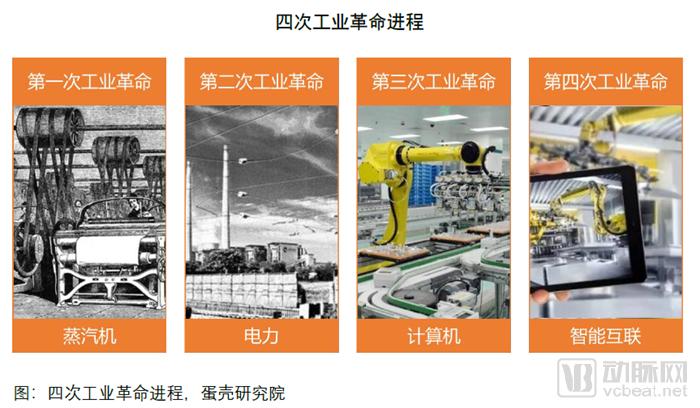
The rapid progress of modern human society has primarily relied on three industrial revolutions. The First Industrial Revolution was marked by the improvement of the steam engine, the Second by the widespread application of electricity, and the Third by the invention and use of computers. These three revolutions significantly transformed people’s modes of production and daily life, social structures, and even the global landscape. Intelligent interconnected technologies, represented by artificial intelligence, are now becoming the driving force behind the Fourth Industrial Revolution.
Artificial intelligence is a set of technologies that endow computers with the ability to perceive, learn, reason, and assist in decision-making, thereby solving problems in a manner similar to humans. In the past, computers could only operate according to pre-programmed, fixed routines; with these capabilities, however, the way computers understand and interact with the world will become significantly more natural and responsive than before.
Key Technologies of Artificial Intelligence Include:
Vision:The ability of computers to “see” by recognizing content in images or videos.
Voice:The ability of computers to understand human speech and transcribe it into text.
Language:The ability of computers to grasp the many subtle nuances and complexities in language (such as slang and idioms) and “understand” the meaning of utterances.
Cognitive Abilities:The ability of computers to perform "reasoning" by understanding the relationships among people, objects, locations, events, and so on.
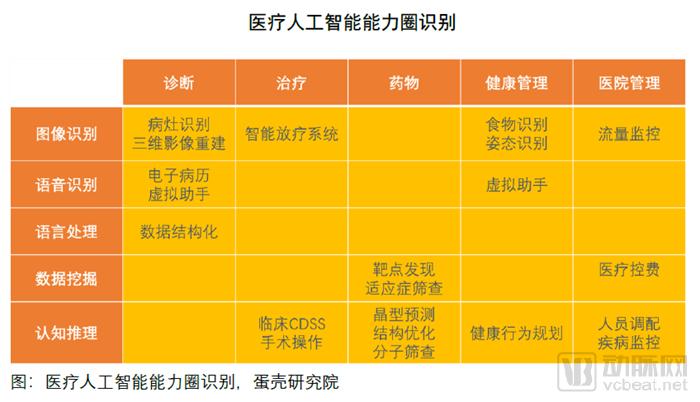
When applied to the healthcare sector, these AI capabilities enable medical artificial intelligence systems to engage in various forms of dialogue, facilitating information flow among individuals and enhancing patient understanding based on medical history. This allows healthcare enterprises to deliver compelling, personalized care recommendations to consumers. With observational and analytical abilities surpassing those of humans, AI systems can rapidly process vast amounts of medical and patient data, thereby freeing physicians to devote more time to direct patient care. By providing auxiliary recommendations based on comprehensive information, AI systems support clinical decision-making and reduce human bias. Continuously learning from the latest data, outcomes, and procedures, AI helps medical professionals make more informed and timely decisions. The boundless nature of artificial intelligence means that the scope of existing medical AI capabilities will continue to expand—and this transformation is already underway.
In early April 2018, the U.S. Food and Drug Administration (FDA) approved the software program for IDx-DR, the first autonomous artificial intelligence diagnostic device developed by IDx for use in primary care settings. This program can diagnose diabetic retinopathy by analyzing retinal images without the involvement of specialized physicians. The product’s journey to market approval spanned 21 years. Notably, communications between IDx and the FDA on how to evaluate the system and ensure its accuracy and safety alone took seven years.
Several AI products recently approved in the United States have all undergone the Class II clearance pathway, demonstrating safety and effectiveness through substantial equivalence to traditional Clinical Decision Support Systems (CDSS). In contrast, China’s regulatory framework is relatively more stringent, with particularly strict controls over the pathways for clinical evaluation.
Effective August 1, 2018, China’s new Medical Device Classification Catalog officially came into effect, establishing regulatory approval pathways for medical software as Class II and Class III medical devices.
“The Catalog” states that if diagnostic software provides diagnostic recommendations through its algorithms, serving only an auxiliary diagnostic function without directly issuing diagnostic conclusions, the relevant products in this subcategory shall be regulated as Class II medical devices. If the diagnostic software automatically identifies lesions through its algorithms and provides clear diagnostic prompts, its risk level is relatively higher, and the relevant products in this subcategory shall be regulated as Class III medical devices. Therefore, most of the AI products currently observed should be classified as Class III medical devices.
In response to this policy, most companies in China have adopted the strategy of adding or removing diagnostic functions, simultaneously submitting their products for registration as both Class II and Class III medical devices. Currently, many companies have taken the lead in obtaining Class II certifications. Prominent artificial intelligence enterprises, including Xishi Yigou, Yasen Technology, Huiyi Huiying, Tuma Shenwei, Infervision, Deepwise, Airdoc, Yitu Healthcare, and Shanggong Yixin, are actively pursuing Class III medical device registrations. Yitu Healthcare stated that its entire product portfolio is undergoing Class III certification, while Airdoc submitted for testing China’s first server equipped with AI software pending review. To date, no product has yet obtained a Class III certificate.
In accordance with the medical device registration process, a product must undergo six stages from application to final approval: product finalization, testing, clinical trials, registration submission, technical review, and administrative approval. Currently, most AI-based medical products applying for Class III device certification remain in the initial phase of registration submission.
As a national technical support institution for regulatory oversight, the National Institutes for Food and Drug Control (NIFDC) has undertaken the evaluation and research of medical artificial intelligence product quality. Leveraging its extensive expertise in medical device software testing, the Optoelectromechanical Laboratory has established a dedicated AI team to carry out this work.
The approval of AI-based medical products has long been a major concern within the industry. Ren Haiping, Director of the Optical, Mechanical, and Electrical Medical Device Testing Laboratory at the National Institutes for Food and Drug Control (NIFDC), stated in a public speech: “A distinctive aspect of our work involves research on platforms, testing methods, and evaluation standards for new products, particularly those lacking national or industry standards. The NIFDC has received applications from 30 to 40 AI products across China, and we have completed the preliminary work.”
Director Ren Haiping’s views can be summarized in three aspects: first, not all products require clinical trials prior to market launch; datasets derived from real-world data can be used for both preclinical and clinical evaluations; and clinical evaluations may employ either prospective or retrospective study designs.
The State imposes certain requirements on the quality evaluation of AI-based medical device products, including AI algorithms, medical devices, and software. Currently, the National Institutes for Food and Drug Control (NIFDC) primarily conducts AI quality evaluations based on the following three guidelines:
"Technical Review Guidelines for the Registration of Medical Device Software"
"Technical Guidelines for the Registration of Mobile Medical Devices"
“Guiding Principles for Technical Review of Cybersecurity Registration of Medical Devices”
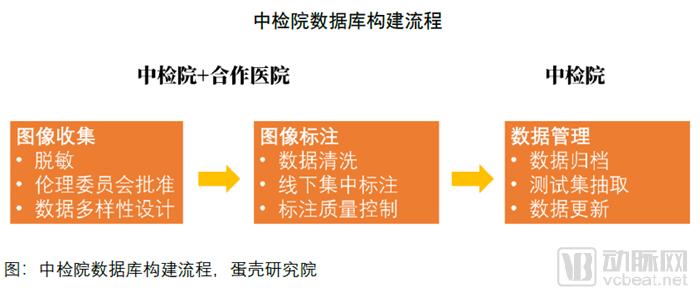
The AI-based medical device inspection system planned by the National Institutes for Food and Drug Control (NIFDC) comprises four steps: standard data, phantom testing, software performance, and simulated adversarial testing. Two databases have been established, one for color fundus images and the other for lung CT scans. The database construction process mainly includes three steps: data collection, image annotation, and data management. The data governance requirements during the software design and development process are similar.
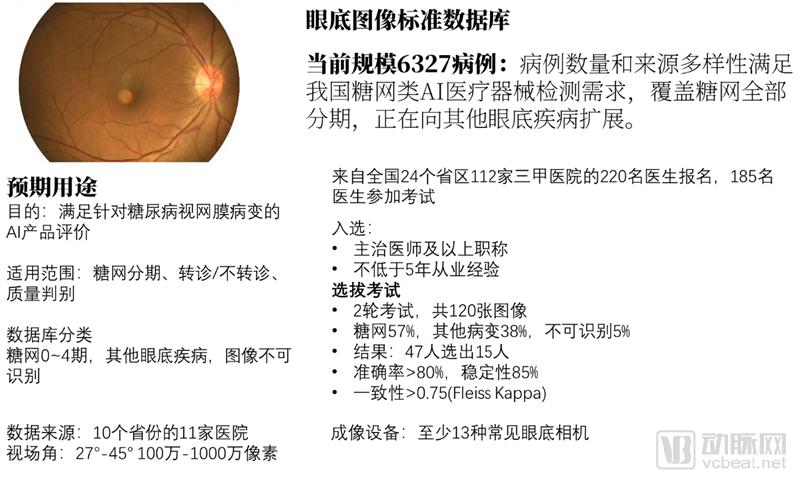
Standard Database of Fundus Images
The establishment of a standard database for fundus imaging began relatively early, and it has now grown into a database comprising 6,327 cases.
Standard Database of Pulmonary Imaging
Construction of the Standard Database for Pulmonary Imaging was initiated in February 2018. The recruitment of lung nodule image annotation experts across China began in April, followed by the completion of online examinations, selection, and training in early May. On June 10, the offline closed-door annotation process was completed, with case annotations jointly performed by 24 annotation experts and 15 arbitration experts.
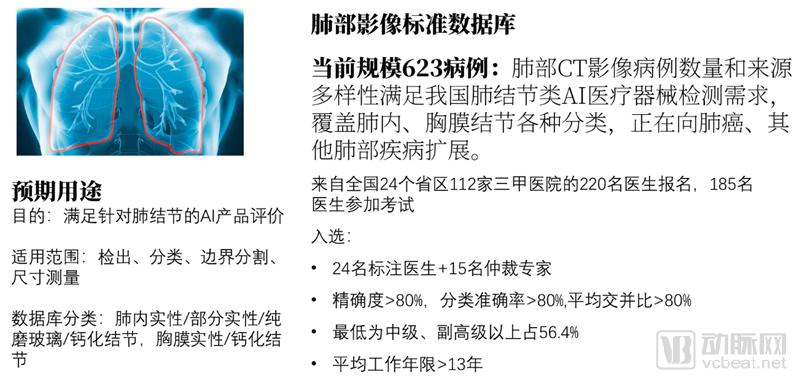
Following the completion of on-site calibration for lung nodule images in the standard test dataset for pulmonary imaging on June 10, the AI Team of the Division of Optical, Mechanical, and Electrical Engineering at the National Institutes for Food and Drug Control (NIFDC) issued a notice on June 15 to solicit feedback on the testing protocol for AI-based lung nodule detection products. This initiative aimed to expedite entry into the testing phase and covered the 11 companies that had submitted their products to the NIFDC for evaluation.
The 11 companies are as follows:Jianpei Technology, Tuxi Shenwei, LinkDoc Technology, Yitu Technology, Yunji Technology, Deepwise Medical, Huiyi Huiying, Infervision, Yasen Technology, Diannao Biology, Shijian Medical.
It is understood that the “Review Points for Medical Device Software with Deep Learning-Assisted Decision-Making” is about to enter the public consultation phase.
It has been seven years since Watson established its commercial direction in healthcare in 2011. During this period, artificial intelligence has flourished, with countless enterprises following the trend and deep learning algorithms undergoing multiple generations of iteration. However, after the tide receded, what remained were the remains of numerous pioneers.
Now, early survivors and new entrants have gradually formed the leading cohort in the field of medical artificial intelligence. Under deep learning frameworks, companies can all report impressive accuracy figures for their AI products. However, we have entered an era where algorithms alone no longer dominate; the quality of AI can no longer be judged solely by a single metric or by outcomes from human-versus-machine competitions. To survive in this industry, one must gain entry into hospitals.
Currently, competition in the AI healthcare industry is focused on implementation. Adopting the classification framework for medical AI application areas from our “2017 Medical Big Data and Artificial Intelligence Industry Report”—namely, medical imaging, case literature analysis, virtual assistants, new drug R&D, hospital management, health management, genomics, disease prediction and diagnosis, and intelligent devices—we categorized medical AI companies, compiled data on the current product directions of 108 active domestic medical AI enterprises, and conducted interviews and surveys with leading medical AI companies to understand their current product applications and next-generation product development status. The findings are presented below.
We have compiled statistics on the primary product lines of these 108 medical AI companies, yielding the following AI product directions and disease mapping.
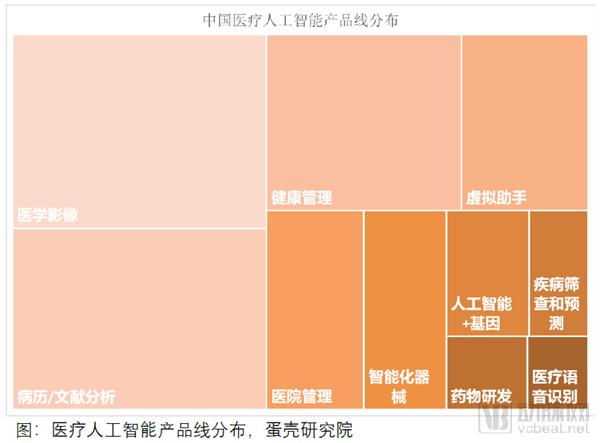
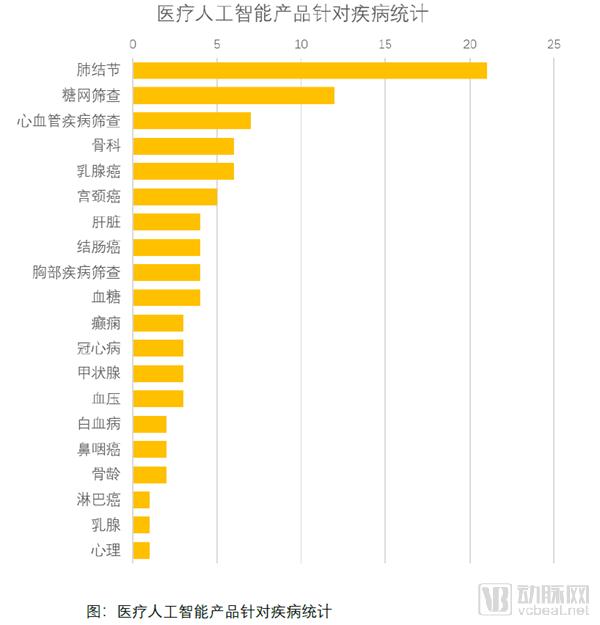
It is evident that the majority of AI companies have chosen to launch products in four key areas: medical imaging, case literature analysis, health management, and virtual assistants. Among these, lung nodule screening and diabetic retinopathy screening are the two most prominent directions, far ahead of others. However, a considerable number of companies are also focusing on cardiovascular diseases, leading to a dispersed trend in AI product development.
According to data from Global Market Insights, drug R&D holds the largest share of the global healthcare AI market by application, accounting for 35%. The intelligent medical imaging market is the second-largest segment, projected to grow at a rate exceeding 40% and reach a scale of $2.5 billion in 2024, representing a 25% share. These two areas are currently the most widely adopted applications of AI across various healthcare scenarios. In the following section, we will focus on these two domains to present an overview of AI implementation in China.
Applications of artificial intelligence in the field of medical imaging primarily include image or examination classification, localization of organs, regions, or landmarks, detection of targets and pathologies, segmentation of tissue structures, segmentation of lesion areas, and image registration. The main diseases targeted include pulmonary nodules, diabetic retinopathy, and stroke. The primary application directions fall into three categories: disease screening, lesion delineation, and 3D organ imaging. This article will discuss the current applications of AI in the most prominent areas: lung cancer screening, diabetic retinopathy screening, lesion delineation, and 3D organ imaging. We have conducted a brief statistical analysis of companies primarily involved in these disease areas and carried out interviews and research to assess the implementation status of representative companies’ products.
Pulmonary Nodule Screening
AI-powered medical products for pulmonary nodules are undoubtedly the hottest trend at present. According to incomplete statistics as of July 2018, more than 20 AI companies have launched specific products in the field of pulmonary nodule screening alone, and most of them have secured investment.
China ranks first globally in both the annual number of new lung cancer cases and lung cancer-related deaths. This has created a strong demand for early screening, leading to the widespread promotion of low-dose spiral CT. In terms of image quality, chest CT images feature thin slices, clear fields of view, minimal interference, and recognizable lesion characteristics, making them ideal for intelligent image interpretation. Coupled with the scarcity of radiologists in China and strong support from national policies, the foundation for application in this field is virtually perfect.
In 2017, major AI companies specializing in pulmonary nodule detection delivered impressive results, with sensitivity rates soaring to 95%, 96.5%, 98.8%, and beyond. Subtle pixel-level differences imperceptible to the human eye were laid bare by the formidable computational power of AI.
Excerpts on the Implementation Status of Lung Nodule Screening Products
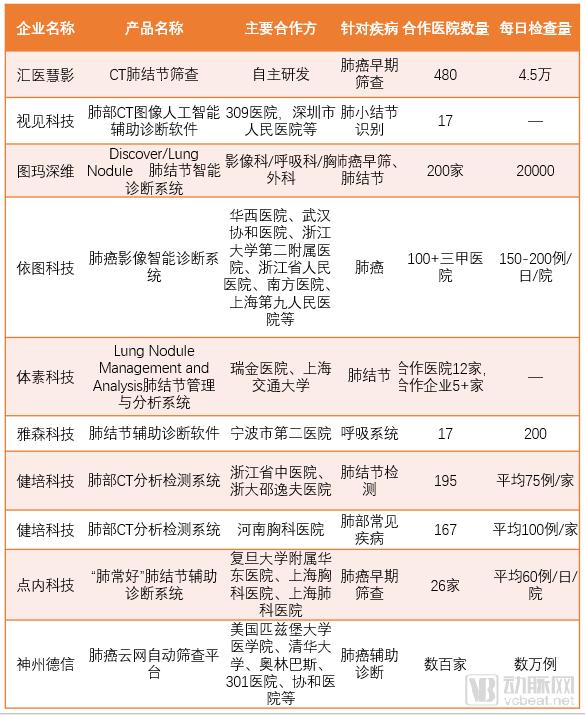
Figure: Excerpts on the Implementation of Lung Nodule Screening Products, VCBeat Eggshell Research Institute
In clinical practice, to ensure the accuracy of image interpretation, it is common for a licensed physician and an associate chief physician to jointly review the same patient’s chest X-ray. After the initial reading by the radiologist, a senior physician must re-examine the images and sign off for confirmation. The purpose of AI is precisely to replace this first step in the process, as AI systems not only possess exceptional “visual acuity,” capable of detecting nearly every tiny nodule, but also operate without fatigue, avoiding visual exhaustion and processing thousands of chest CT scans in mere milliseconds.
AI-based pulmonary nodule screening products have now been fully implemented in hospitals. Data show that leading AI companies are processing more than 100,000 examinations per day on average. Regarding collaboration models, as there are currently no clearly defined reimbursement items, pulmonary nodule screening products primarily enter hospitals through two approaches: first, by partnering with hospitals on research projects; second, by collaborating with medical device manufacturers to be included as part of an integrated service package.