

JD Cloud Enters the Healthcare Industry: Can It Build a New Ecosystem with Its Technology and Platform Advantages?
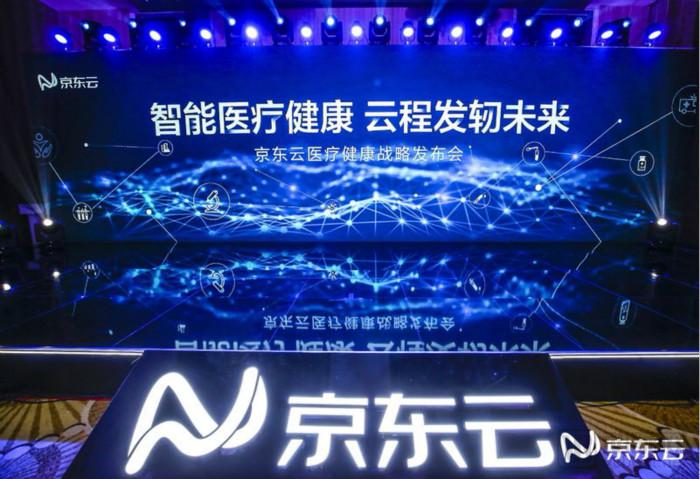
VCBeat (WeChat ID: vcbeat) has learned that JD Cloud recently held a press conference to unveil its long-awaited “Healthcare Strategy.” Leveraging its intelligent healthcare ecosystem, JD Cloud has initially integrated market and technological capabilities. By drawing on the JD Group’s advantageous resources—including its renowned logistics, fintech, insurance, pharmaceuticals, health services, internet hospitals, and JD Daojia—and adopting a model of “multi-channel online reach plus offline solution implementation,” JD Cloud is collaborating with professional partners in the healthcare industry to empower the medical sector through technology.
JD Cloud officially entered the commercial market in 2016, marking its entry into the cloud computing sector. After two years of technological accumulation, JD Cloud announced its smart education strategy two months ago. Now, JD Cloud is setting its sights on the healthcare industry. JD Cloud offers more than just B2B cloud services; leveraging JD’s existing strengths, it provides users with an integrated, closed-loop service ecosystem. This approach truly enables the flow of vast amounts of medical data previously trapped in “silos,” fostering a collaborative ecosystem. Users can fulfill all their healthcare needs through a single portal, starting with basic medical requirements and delivering specialized, efficiently integrated solutions.
The healthcare industry is often referred to as a perpetual sunrise sector, offering immense growth potential. Currently, China’s health industry accounts for only 5% of its GDP, compared with 17% in the United States, 11% in the European Union, and 10% in Japan. Per capita spending on health services in China stands at just RMB 5,300, roughly one-sixth of Japan’s level and one-fourteenth of the EU’s. The healthcare sector’s formidable entry barriers and stringent compliance requirements have slowed the pace of transformation and placed higher demands on those driving change. Nevertheless, the market value of the healthcare sector remains compelling enough to attract significant investment from many industry giants.
The technology market, which plays a driving role in this sector, remains undersaturated, creating an urgent opportunity for vendors with technological and capital advantages to enter. Companies capable of penetrating this vast market must, horizontally, provide integrated solutions spanning the entire continuum from medical care to pharmaceuticals to diagnostics; vertically, they must possess the ability to structure and standardize data across different specialized segments.
However, as the foundational material for healthcare informatization, data has not yet achieved effective circulation within the industry, failing to generate its due value. At the JD Cloud Healthcare Strategic Launch Event, Professor Li Yingxin, Executive Deputy Director of the Institute of Biomedical Engineering at the Chinese Academy of Medical Sciences, stated, “China’s health and medical big data currently faces two major challenges: first, the lack of a unified, authoritative, and interoperable population health information platform; and second, the shortage of data collection terminals compatible with health information systems and data application terminals. These two issues make it difficult to establish comprehensive, full-lifecycle health and medical data, thereby hindering the implementation of closed-loop health management for residents. Currently, most of our data originates from hospitals.”
JD Cloud’s Intelligent Medical and Health Ecosystem is built upon JD Cloud’s robust technological foundation. Leveraging AI, blockchain, cloud computing, cloud storage, and extensive SaaS service expertise, it serves enterprise (B-end) users, facilitates industry-wide digital transformation, and collaborates with high-quality partners to cultivate a premier medical cloud ecosystem.
JD Cloud Services aims to become the industry leader, with its primary advantage lying in technological superiority. JD Cloud provides full-stack, omni-channel, and all-scenario services.
Liu Zihao, Vice President of JD.com and Head of JD Cloud’s Ecosystem Business, stated, “JD.com possesses a global perspective while maintaining deep expertise in China’s industries. By partnering with JD Cloud, enterprises can not only leverage our cloud services but also capitalize on tangible business outcomes. We empower companies to rapidly establish their presence across both technological and commercial dimensions—spanning branding, sales channels, sales strategies, and various localized operational areas—thereby achieving resource sharing and efficient collaboration.”
Next are JD.com’s existing platforms and resources. JD.com currently operates JD Logistics, JD Daojia, JD Finance, and JD Health. These assets enable top-tier domestic and international healthcare companies to gain first-mover advantage by leveraging JD’s strengths as a leading e-commerce platform online and its offline logistics and retail channels, in conjunction with JD Cloud, to jointly build an ecosystem cloud platform.
For JD Cloud, its intelligent healthcare system can be integrated with JD’s existing offerings in urban cloud, education cloud, video cloud, and e-commerce cloud, thereby evolving from isolated breakthroughs in individual sectors to a comprehensive, ecosystem-wide layout.
Moreover, JD.com has accumulated extensive experience in scaling into a super e-commerce platform. This growth expertise can be similarly replicated in its cloud services sector. Transitioning from wholesale to retail, implementing multi-tenancy, and shifting operations from offline to online are all well-established models for JD.com. Liu Zihao boldly stated, “JD Cloud is deeply rooted in China. We are present not only in first- and second-tier cities but also in third-, fourth-, and fifth-tier cities. Our IDC network will cover the entire country.”
In addition to the three major advantages mentioned above, by empowering B-side enterprises and integrating with JD.com’s existing ecosystem, JD Cloud can provide C-side patients with a “one-stop” closed-loop service.
To illustrate with application scenarios, patients can receive remote consultations from medical institutions within the JD Cloud Intelligent Healthcare System or from JD Internet Hospital without leaving home, gaining a thorough understanding of their condition and treatment plan. Subsequently, they can purchase medications on JD Health’s pharmaceutical platform using the prescribed prescription and have the drugs delivered through JD Logistics’ efficient and compliant pharmaceutical distribution services. For users requiring urgent medication, JD Daojia offers secure and rapid O2O (online-to-offline) delivery. Furthermore, regarding payment settlement and insurance coverage—concerns often raised by patients—JD’s fintech and insurance subsidiaries will provide comprehensive solutions in the future.
Currently, JD Cloud’s healthcare and medical strategic system primarily serves over 300 domestic tertiary hospitals and more than 2,000 other medical institutions; it covers nearly 1,000 pharmaceutical companies and over 60,000 pharmacies; it encompasses dozens of major business scenarios and provides corresponding services to relevant government departments.
In summary, JD Cloud serves as a new form of “infrastructure” for the industry, providing comprehensive informatization empowerment services. By leveraging JD’s existing business foundation and experience in e-commerce, logistics, and finance, JD Cloud is better positioned to offer its intelligent healthcare ecosystem partners practical, implementable scenarios. With both robust “infrastructure” and tangible “implementation scenarios” in place, the blueprint for JD Cloud’s healthcare ecosystem holds significant promise.