

Dinggang Shen of United Imaging Intelligence Highlights AI's Broad Applications in Healthcare and the Critical Need for Interdisciplinary Talent at MTWF 2018

United Imaging
High-end Medical Device Developer
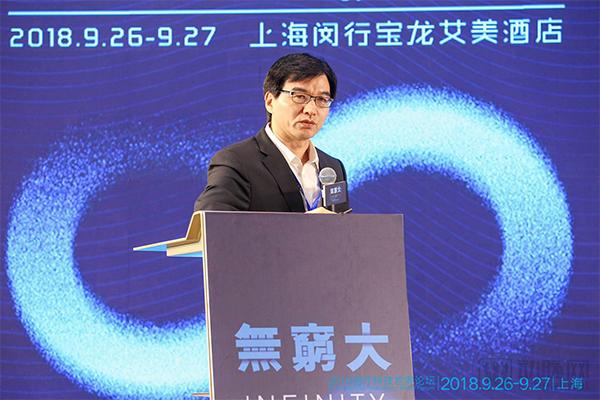
United Imaging Co-CEO Shen Dinggang Delivers Speech on “Artificial Intelligence in Medical Imaging: Potential Applications and Challenges”
Conference: 2018 World Forum on Medical Technology
Speaker: Shen Dinggang, Co-CEO of United Imaging Intelligence
On September 26–27, the 2018 Medical Technology World Forum (MTWF 2018) was held at the Le Meridien Minhang Shanghai. The forum was co-organized by the Industry-Academia-Research Cooperation Coordination Department of the China High-Tech Industrialization Research Association, VCBeat, and VBInsight, under the theme “INFINITY.”
Shen Dinggang, Co-CEO of United Imaging Intelligence, was invited to attend the summit and delivered a keynote speech titled “Artificial Intelligence in Medical Imaging: Potential Applications and Challenges” at the sub-forum on the development of intelligent imaging.
Regarding the future applications and development of artificial intelligence, Shen Dinggang’s speech can be summarized into three core viewpoints:
1. AI can benefit numerous primary healthcare institutions;
2. The medical AI industry urgently needs interdisciplinary talent who are proficient in both AI and clinical medicine;
3. Applications of AI in Vast Healthcare Scenarios.
The following is a summary of the speech compiled by VCBeat (WeChat Official Account: vcbeat).
“Doctors who understand AI can replace those who do not; AI that understands doctors can replace AI that does not.”
For a long time, the distribution of medical imaging hardware and infrastructure resources in China has been uneven. To address this dilemma, the government has implemented a tiered diagnosis and treatment policy. However, this policy has encountered various challenges in its implementation, with a shortage of talent—particularly high-quality physicians—being one of the core pain points.
United Imaging Intelligence’s parent company, United Imaging, is a high-end medical equipment enterprise that has launched 56 products to date, with over 4,300 installations across China, establishing a presence in hospitals nationwide through a node-like network.
Within a given region, provincial, county, and township hospitals can achieve cloud-based connectivity of their imaging equipment through an Imaging Cloud. This enables the formation of an interconnected imaging center with shared resources across all levels of care. In this context, AI-powered applications developed by United Imaging Intelligence to assist physicians in intelligent diagnosis and early screening can be shared via the cloud with primary-care hospitals. This helps grassroots physicians deliver smarter and more precise diagnoses, enhances the capabilities of primary-care institutions, and alleviates, to some extent, the shortage of radiologists.
“AI + Healthcare” differs significantly from “AI + Industry” and “AI + Autonomous Driving.” This distinction lies not only in the differences in application scenarios but also in the nature of data and algorithms. Mastering “AI + Healthcare” requires interdisciplinary talent proficient in both clinical medicine and artificial intelligence.
For enterprises to establish a strong foothold in the field of medical artificial intelligence, experienced talent is indispensable, particularly those with extensive industry experience and deep academic roots. Currently, United Imaging Intelligence has assembled a team comprising industrial elites from Apple, Google, and Tesla, as well as research experts such as associate professors from Cornell University. Leveraging this talent pool, United Imaging Intelligence has been able to develop full-stack medical AI solutions.
United Imaging Intelligence places particular emphasis on the cultivation of AI talent. As early as June this year, United Imaging Intelligence took the lead in advancing AI talent development by establishing the United Imaging Intelligence Medical-AI Collaborative Training and Research Center.
At this center, we aim to bring R&D professionals from science and engineering disciplines closer to physicians, serving and empowering them. We also encourage physicians, particularly young ones, to grow alongside these R&D professionals. For physicians, AI will not replace doctors; however, doctors who understand AI will replace those who do not. Under the guidance of senior scientists, young physicians and R&D professionals will naturally become strong partners, accelerating the integration of medicine and engineering.
AI has a wide range of application scenarios. Taking lung cancer as an example, artificial intelligence can assist in imaging, lung cancer screening, and follow-up. Physicians can compare the latest pulmonary nodule images of patients with historical images to diagnose and treat affected individuals accordingly. Meanwhile, physicians can also leverage AI for prognostic prediction during treatment. Throughout these processes, AI can significantly enhance physicians’ efficiency. In summary, AI enables process optimization across the entire continuum—from screening and follow-up to diagnosis, treatment, and prognosis. United Imaging Intelligence provides full-stack artificial intelligence solutions covering this entire workflow.
Artificial intelligence can also empower medical devices. In MRI and CT scans, physicians can perform one-click intelligent scanning to acquire three-dimensional images of the patient’s anatomy. As the patient lies on the scanner, AI identifies the location of the target organs, which is an application of computer vision.
Artificial intelligence can also perform a range of auxiliary diagnostic tasks. For instance, AI can automatically identify more than ten types of pulmonary diseases from chest X-rays, detect the location and parameters of tumors, and assess bone injuries based on CT images. These applications are particularly valuable in emergency settings. Furthermore, physicians can visualize blood flow, especially coronary blood flow, on CT images, thereby determining the appropriate stent for patients and consequently improving surgical success rates.
Additionally, during radiotherapy, physicians typically spend 20–30 minutes delineating a patient’s organs. In contrast, United Imaging Intelligence can automatically delineate an organ in just 0.7 seconds, enabling rapid organ segmentation.
AI can also perform automated parameter detection for arthritis. All AI applications can be hosted on the imaging cloud to facilitate remote auxiliary analysis via telemedicine.
Artificial intelligence can perform intelligent assessments of brain structure, enabling physicians to obtain diagnostic results for mild cognitive impairment and Alzheimer’s disease through AI. For example, by using AI to analyze a patient’s brain images acquired at ages 60, 61, and 62, we can identify changes in each region of the brain and generate structured reports to assist physicians in making precise diagnoses.
In addition, AI can facilitate intelligent tumor scanning. Once a physician confirms a tumor diagnosis, precise scanning of the patient can be initiated. After the initial image is acquired, the AI system can estimate the general tumor type and determine the parameters for the subsequent scan. The AI then integrates the newly acquired images with prior ones to plan the content of the third scan. This adaptive imaging approach yields images with superior diagnostic value.
In addition to routine image interpretation, AI can also be used for the secondary review of chest X-rays. Each night, after physicians have completed their diagnoses and reports, the AI system can review all reports and compare them with the corresponding images to identify potential issues that may have been overlooked. If any discrepancies are detected, the AI will alert the physicians, enabling them to conduct a re-evaluation the following day.
United Imaging Intelligence’s AI applications can also be used for pediatric growth assessment. The AI can estimate a child’s bone age within one second. More commonly, it is employed for the intelligent detection of fractures. The AI can localize the ribs, differentiate and label individual ribs, and generate structured reports.
In addition to the aforementioned applications, AI can also delineate non-small cell lung cancer (NSCLC) in the lungs, completing the segmentation in just 0.3 seconds, thereby saving substantial time for imaging research. Furthermore, using non-contrast chest CT scans, AI can not only detect pulmonary nodules but also provide early warnings for cardiomegaly and even fractures.
United Imaging Intelligence is currently building a deep research platform for medical imaging.
The platform comprises independent modules for image segmentation, object detection, image classification, image registration, and image mapping. Each module is standardized and can be freely combined. Once the platform is fully established, the previously lengthy process from algorithm development to application deployment will become significantly streamlined, accelerating the deployment of AI products.